Mannitol: What Patients Need to Know

Mannitol is an osmotic medicine most often given by IV in hospital settings. It is used to lower pressure in the brain or eyes and sometimes to support urine output in selected situations.
Key Takeaways
- Mannitol is an osmotic medicine most often given by IV in hospital settings.
- It is used to lower pressure in the brain or eyes and sometimes to support urine output in selected situations.
- Doctors monitor fluids, electrolytes, kidney function, and breathing closely during treatment.
- Mannitol is not appropriate for everyone, especially people with some heart, lung, or kidney problems.
- Patients should seek medical care promptly if symptoms such as severe headache, confusion, vision changes, or reduced urine output occur.
Mannitol is a prescription medication used mainly in hospitals to reduce pressure in the brain or eyes and to help the body remove extra fluid through urine. For patients, the most important point is that mannitol can be very helpful in urgent situations, but it needs careful monitoring because it can affect hydration, kidney function, and salt balance.
Overview: what mannitol is and why it is used
Mannitol is a prescription medicine that helps draw water out of certain body tissues and into the bloodstream, where it can then be removed by the kidneys in urine. In practical terms, doctors use mannitol to quickly reduce dangerous pressure, especially in the brain or the eye, and to manage fluid shifts in carefully selected patients.
It belongs to a group of medicines called osmotic agents. Rather than treating an infection or changing hormones, mannitol works by changing how water moves in the body. This makes it very different from common outpatient medicines and is one reason it is usually given in a hospital or closely supervised setting.
Patients may hear about mannitol during care for head injury, brain swelling, certain neurosurgical conditions, or sudden increases in eye pressure. It may also be used in some situations where doctors want to support urine flow while watching kidney function closely. Because its effects can be powerful, treatment decisions are individualized.
Mannitol is most often given as an intravenous infusion. The care team checks how the patient is responding with physical exams and tests, because the same fluid-shifting effect that makes mannitol useful can also cause side effects if not monitored carefully.
How mannitol works in the body
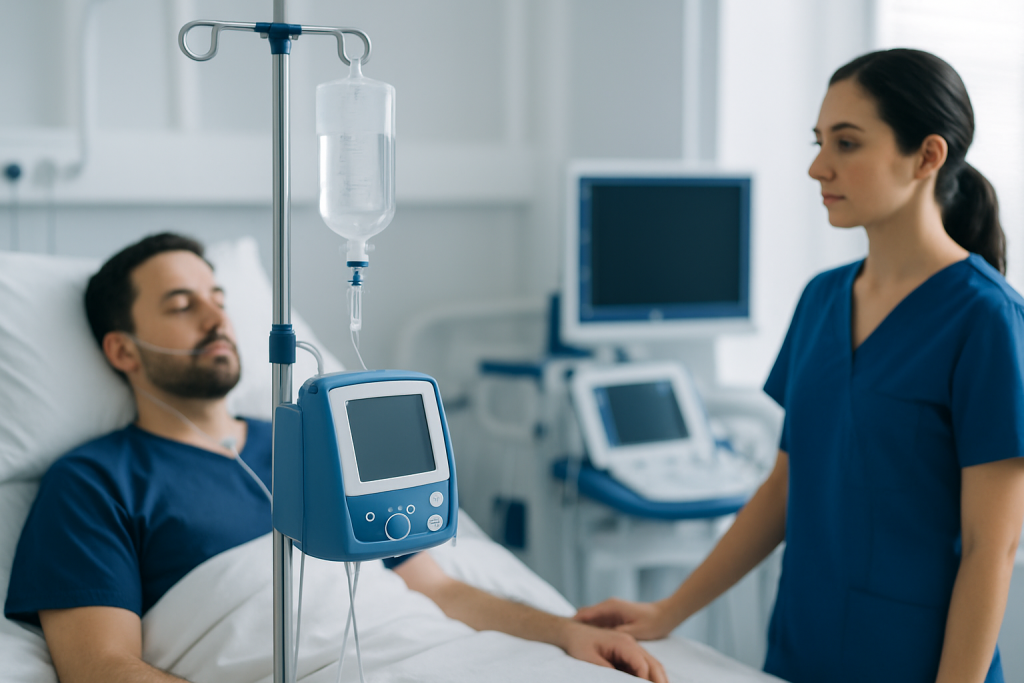
Mannitol works through osmosis, a basic process in which water moves across body compartments. After mannitol enters the bloodstream, it increases the concentration of particles in the blood. This encourages water to move out of swollen tissues and into the circulation.
In the brain, that fluid shift can help lower intracranial pressure. This is why mannitol may be used in emergencies involving brain swelling, severe head trauma, or some neurological conditions. In the eye, it can lower pressure by drawing fluid away from ocular tissues, which may help in urgent eye problems.
Mannitol also increases the amount of water reaching the kidneys, which can increase urine output. That effect can be helpful in some cases, but it can also strain the body if a person is dehydrated, has poor kidney function, or cannot tolerate sudden fluid shifts. Doctors therefore balance potential benefits against possible risks.
The effects of mannitol are time-sensitive and depend on the person’s circulation, kidney health, and overall medical condition. For that reason, it is not a medicine patients should think of as routine hydration support or a general-purpose diuretic without specific medical guidance.
Common medical uses of mannitol

Mannitol is most commonly used to reduce pressure inside the skull or inside the eye. In brain care, it may be part of treatment for swelling related to trauma, bleeding, surgery, or other serious neurological problems. If a patient is being evaluated for symptoms linked to a brain tumor or another condition causing raised pressure, mannitol may be used as temporary supportive treatment while the cause is being diagnosed and managed.
In eye care, mannitol may be used when pressure rises quickly and vision could be at risk. It is usually part of a broader plan rather than the only treatment. The goal is to stabilize the patient while doctors address the underlying reason for the pressure increase.
In some hospital situations, mannitol may also be used to promote urine output. This is not appropriate for every patient with kidney concerns, and it should not be viewed as a universal kidney treatment. Doctors may combine it with close monitoring, imaging, and specialist input, including neurosurgery or other urgent care when needed.
Because the medication is used in very specific circumstances, its benefits depend on the diagnosis. If the cause of symptoms is uncertain, clinicians focus not only on relieving pressure but also on identifying what is driving the problem, which may involve MRI or other tests.
Possible side effects and who may be at higher risk
Like all prescription medicines, mannitol can cause side effects. Some are relatively mild, while others need prompt attention. Possible side effects include headache, nausea, vomiting, thirst, dehydration, dizziness, or changes in urination. Because mannitol shifts fluid and salts, it can also affect sodium and other electrolyte levels.
More serious concerns include fluid overload in the bloodstream, worsening shortness of breath, chest discomfort, confusion, severe weakness, or worsening kidney function. In some patients, especially those with heart disease or reduced kidney reserve, the body may not handle these fluid changes well. This is why the care team watches blood pressure, oxygen levels, urine output, and lab results closely.
People may be at higher risk of complications if they already have kidney disease, severe dehydration, some types of heart failure, active bleeding in the brain where mannitol is not appropriate, or significant lung congestion. Doctors also use extra caution in older adults and in people taking other medicines that affect kidney function or body salts.
Patients and families should know that side effects do not necessarily mean the medicine was used incorrectly. Rather, they reflect how powerful and fast-acting this treatment can be. Safe use depends on careful selection, close monitoring, and adjustment if the patient’s condition changes.
How doctors decide if mannitol is appropriate
Before giving mannitol, doctors consider the reason for treatment, the urgency of the situation, and the patient’s overall medical condition. They review symptoms, perform an examination, and look for signs of increased pressure, fluid imbalance, or organ stress. The decision is based on whether the expected benefit clearly outweighs the risks.
Tests often include blood work to check kidney function and electrolyte levels, along with measurement of urine output. In urgent brain-related situations, imaging such as a CT scan or MRI may help identify swelling, bleeding, or a mass. In eye emergencies, an eye specialist may measure intraocular pressure and examine the eye directly.
Mannitol is generally not a medicine people take casually or start on their own. It is a targeted treatment used after clinical assessment. Doctors may choose an alternative approach if a patient has severe kidney impairment, unstable circulation, or signs that fluid shifts could cause more harm than benefit.
When the underlying problem is complex, care may involve several specialists. Depending on the cause, this can include neurology, intensive care, ophthalmology, nephrology, or surgeons. For conditions such as brain hemorrhage, treatment usually goes beyond mannitol and focuses on the primary cause as well.
What to expect during treatment and monitoring
Most patients receive mannitol through an IV line in a hospital. During treatment, nurses and doctors monitor how the patient feels, how much urine they produce, and whether symptoms such as headache, confusion, or vision changes improve. Monitoring is especially important because the response can change over hours rather than days.
Blood tests may be repeated to measure sodium, potassium, kidney function, and serum osmolality or other markers the team considers relevant. Vital signs are also checked regularly. If the patient develops breathing difficulty, swelling, or a drop in urine output, the team may slow, stop, or reconsider treatment.
Mannitol is not always a long-term therapy. In many cases, it is used to stabilize the patient while doctors provide more definitive care, such as pressure control, surgery, or treatment of the underlying disease. For some neurological emergencies, further evaluation may lead to brain surgery or other procedures.
Near the end of treatment, the care team continues to watch for rebound fluid shifts, changes in mental status, or kidney-related problems. Patients and families are encouraged to ask what the treatment is intended to do, what side effects are being watched for, and what the next step in care will be.
Prevention, self-care, and questions patients can ask
Because mannitol is usually used in acute medical care, prevention focuses less on the medicine itself and more on reducing the chances of the conditions that may make it necessary. Examples include protecting the head during sports and travel, managing blood pressure, following treatment plans for neurological and eye conditions, and seeking early evaluation for sudden severe symptoms.
Patients should tell their doctors about kidney disease, heart problems, breathing issues, dehydration, and all medicines they take, including over-the-counter drugs and supplements. This helps the team judge whether mannitol is suitable and whether extra precautions are needed.
Helpful questions to ask include:
- Why is mannitol being recommended in this situation?
- What improvement is the team expecting to see?
- How will kidney function and electrolytes be monitored?
- What warning signs should family members report right away?
- What treatment is planned for the underlying cause?
For international patients who need coordinated evaluation, Acibadem International’s multidisciplinary specialists and JCI-accredited hospitals diagnose and treat complex neurological, eye, and critical care conditions with individualized planning. The most suitable treatment pathway depends on the patient’s diagnosis and overall health status.
When to seek medical care
Urgent medical care is needed if a person has symptoms that could suggest increased pressure in the brain or eye, or a serious reaction to treatment. Warning signs include a sudden severe headache, confusion, reduced alertness, seizures, weakness on one side, sudden vision loss, severe eye pain, or repeated vomiting.
Medical attention is also important if someone receiving mannitol develops shortness of breath, chest discomfort, markedly reduced urine output, severe swelling, or unusual drowsiness. These symptoms can point to fluid balance problems, kidney stress, or other complications that require prompt review.
Even when symptoms seem less dramatic, patients should contact a qualified doctor if they have ongoing concerns about side effects, dehydration, or worsening of the condition that led to treatment. Mannitol is a medicine that should always be assessed in clinical context rather than judged on symptoms alone.
If the underlying cause may involve a neurological emergency, doctors may arrange rapid imaging, hospital observation, or consultation with specialists in neurology. Early evaluation can help protect organ function and guide the right treatment plan.
Frequently asked questions
What is mannitol used for?
Mannitol is mainly used to lower pressure in the brain or eyes and, in selected cases, to increase urine output under close supervision. It is most often used in hospital settings where doctors can monitor fluid balance, kidney function, and electrolytes.
Is mannitol a diuretic?
Mannitol is considered an osmotic diuretic, but it works differently from many common water pills. It pulls water into the bloodstream and then helps the kidneys remove it, which is why it can be useful in certain urgent situations.
How is mannitol given?
Mannitol is usually given through an intravenous infusion. Because it can rapidly change fluid and salt balance, it is typically administered in a hospital or similarly supervised setting rather than used as a routine home medicine.
What are the side effects of mannitol?
Possible side effects include thirst, headache, nausea, dehydration, and changes in urination. More serious problems can include electrolyte imbalance, breathing difficulty, fluid overload, or worsening kidney function, which is why close monitoring is important.
Who should not receive mannitol?
Mannitol may not be suitable for people with certain kidney problems, severe dehydration, some forms of heart failure, or conditions where fluid shifts could be harmful. Only a qualified clinician can decide whether it is safe based on the person’s overall medical situation.
Can mannitol treat the underlying cause of brain swelling or high eye pressure?
Usually, no. Mannitol is often used to relieve pressure temporarily or as part of emergency stabilization, while doctors diagnose and treat the underlying cause. Additional care may include surgery, other medications, or specialist treatment depending on the diagnosis.
References
- U.S. Food and Drug Administration
- MedlinePlus
- Merck Manual Professional Edition
- National Institute of Neurological Disorders and Stroke
- American Academy of Ophthalmology
This article is for general information only and is not a substitute for professional medical advice. Please consult a qualified doctor about your individual situation.
Explore treatments in Turkey — costs, top hospitals & a free quote
JCI-accredited · board-certified surgeons · reply within 24h
Add us as a Preferred Source to see more of our trusted health content across Google Search, AI Overviews and Discover.

More from the Health Library

Hydrocortisone Suppository: A Complete Medical Overview

Low Impact Cardio: What Patients Need to Know

Non Comedogene: An Evidence-Based Guide for Patients

Koilonychia — Explained by Medical Evidence, Not Myths

Low Glycemic Fruits: A Complete Medical Overview