Medial Meniscus: A Complete Medical Overview
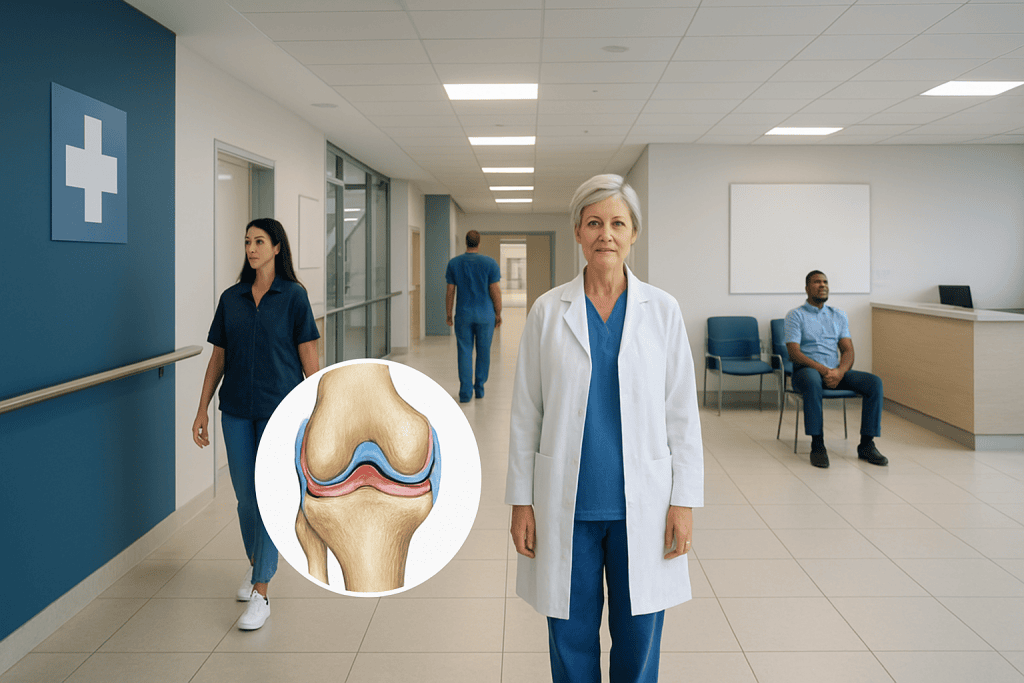
The medial meniscus cushions and stabilizes the inner part of the knee joint. A medial meniscus tear may happen suddenly with twisting or develop gradually from wear over time.
Key Takeaways
- The medial meniscus cushions and stabilizes the inner part of the knee joint.
- A medial meniscus tear may happen suddenly with twisting or develop gradually from wear over time.
- Common symptoms include inner knee pain, swelling, stiffness, and catching or locking sensations.
- Diagnosis is based on medical history, physical examination, and sometimes MRI or X-rays.
- Treatment ranges from rest and physiotherapy to surgery, depending on the tear and the patient’s needs.
- Early evaluation is important if the knee locks, gives way, or remains swollen and painful.
The medial meniscus is the C-shaped cartilage on the inner side of the knee that helps absorb shock and stabilize movement. When it is strained or torn, symptoms may include inner knee pain, swelling, catching, or a feeling that the knee is not moving normally.
Overview: what the medial meniscus is
The medial meniscus is one of two pieces of cartilage inside the knee. It sits on the inner side of the joint between the thigh bone and shin bone, where it helps spread body weight, absorb shock, and improve stability. Because it is less mobile than the outer meniscus, it is more likely to be injured during twisting movements or over time as the knee ages.
When people ask about the medial meniscus, they are usually referring to a tear or irritation in this cartilage. These problems can happen after sports injuries, awkward turns, kneeling, squatting, or gradual wear related to aging and joint degeneration. Not every tear causes severe symptoms, but some can interfere with walking, exercise, or daily activities.
A useful way to understand the condition is to think of the medial meniscus as both a cushion and a guide for knee motion. If the tissue frays or tears, the knee may become painful, swollen, stiff, or mechanically blocked. The right treatment depends on the person’s age, activity level, symptoms, and the location and pattern of the tear.
How a medial meniscus problem feels

Symptoms vary from mild discomfort to clear limitation of movement. Pain is usually felt along the inner side of the knee, especially with twisting, deep bending, squatting, or standing up from a seated position. Some people notice swelling soon after an injury, while others develop swelling gradually over a day or two.
Another clue is a mechanical sensation inside the joint. The knee may catch, click, or feel as though something is interfering with smooth motion. In some cases, the knee may seem to lock temporarily or not fully straighten. A sense of instability can also occur, although true giving way may suggest other structures are involved as well.
Common symptoms include:
- Inner knee pain
- Swelling or stiffness
- Pain with twisting or squatting
- Catching, clicking, or locking sensations
- Reduced range of motion
- Discomfort during walking, stairs, or sports
Symptoms do not always match the size of the tear. A small tear in a sensitive area can be quite uncomfortable, while some degenerative tears are found on imaging in people with only mild symptoms. This is one reason why treatment decisions are based on the whole clinical picture, not on MRI findings alone.
Causes and risk factors

Medial meniscus injuries are often grouped into traumatic tears and degenerative tears. A traumatic tear is more common in younger or active people and usually happens when the knee twists while the foot is planted. This may occur during football, basketball, tennis, skiing, or sudden directional changes. Sometimes the injury happens together with ligament damage, especially an ACL tear.
Degenerative tears are more common in middle-aged and older adults. In these cases, the cartilage becomes less resilient over time, so a simple movement such as kneeling, rising from a squat, or turning can trigger symptoms. These tears often occur alongside cartilage wear and osteoarthritis of the knee.
Several factors can increase the risk:
- Sports that involve pivoting, cutting, or rapid stops
- Work or hobbies with frequent squatting or kneeling
- Previous knee injury
- Age-related joint wear
- Weak thigh and hip muscles
- Excess body weight, which increases load through the knee
The tear’s location also matters. The outer edge of the meniscus has a better blood supply than the inner portion, so some tears have a better healing potential than others. This difference often influences whether conservative treatment or surgery is more likely to help.
How doctors diagnose a medial meniscus tear
Diagnosis begins with a careful history. A doctor will ask how the symptoms started, whether there was a twist or pop, where the pain is felt, and whether the knee swells, catches, or locks. It is also important to know the person’s age, sports activity, previous injuries, and whether symptoms suggest related problems in ligaments, cartilage, or bone.
The physical examination focuses on tenderness along the inner joint line, swelling, range of motion, and tests that stress the meniscus. The doctor may also assess ligament stability and alignment. This matters because knee pain can come from several causes, including sprains, cartilage damage, bursitis, or conditions such as knee pain linked to overuse or degeneration.
Imaging is used when needed. X-rays do not show the meniscus itself, but they can help identify arthritis, fractures, or alignment issues. MRI is the most common test for confirming a meniscus tear and seeing its type, location, and any associated injuries. However, imaging findings are interpreted alongside symptoms and examination because not all visible tears need surgery.
In many patients, a clear diagnosis can be made without urgent advanced testing. If the knee is severely locked, very swollen, or unstable, faster specialist evaluation is often recommended.
Treatment options and recovery
Treatment depends on the tear pattern, symptom severity, age, activity level, and whether the knee has mechanical blockage. Many patients improve with non-surgical care. Early measures often include activity modification, relative rest, ice, compression, elevation, and short-term pain relief as advised by a doctor. Physiotherapy is a central part of treatment because it helps restore movement, strengthen the muscles that support the knee, and improve balance and walking mechanics.
Non-surgical treatment is often appropriate for small stable tears, degenerative tears, or cases where symptoms are improving. A structured rehabilitation program may focus on quadriceps and hip strength, flexibility, and gradual return to daily activity or sport. Some patients also benefit from broader physical therapy and rehabilitation plans tailored to knee function and recovery goals.
Surgery may be considered if the knee locks, symptoms persist despite rehabilitation, or the tear is unlikely to heal on its own. Procedures are usually done arthroscopically. Depending on the tear, the surgeon may repair the meniscus or remove only the unstable damaged fragment while preserving as much healthy tissue as possible. In selected cases, patients may be treated with knee arthroscopy as part of specialist orthopedic care.
Recovery time varies. Some people return to normal daily activity within weeks after conservative care, while return to sports after surgery may take longer, especially after a repair that needs protection while healing. Individual recovery should follow the plan recommended by the treating orthopedic team.
Prevention and self-care for knee health
Not every medial meniscus injury can be prevented, but good knee habits can lower risk. Strengthening the thigh, hip, and core muscles helps the leg absorb force more effectively. Warm-up before sport, gradual training progression, and attention to movement technique are also important, especially in activities that involve landing, pivoting, and sudden changes of direction.
Footwear and training surfaces can matter as well. Supportive shoes suited to the activity may improve control, while avoiding sudden increases in training intensity can reduce overload. For people who work in jobs with repetitive kneeling or squatting, taking breaks and adjusting body mechanics may help reduce strain on the knee.
Self-care after a mild flare-up includes reducing painful activity, using ice for short periods, and avoiding deep twisting or squatting until symptoms improve. Gentle exercises may be useful, but a person should avoid pushing through significant pain, swelling, or locking. If symptoms persist, assessment by a qualified clinician is the safest next step.
People with recurrent symptoms or existing joint degeneration may benefit from long-term support through orthopedic rehabilitation, especially if they want to stay active while protecting knee function.
When to seek medical care
Medical evaluation is advisable if inner knee pain follows a twist, if swelling develops, or if the knee does not return to normal over several days. A doctor should also assess pain that keeps coming back with exercise, stairs, squatting, or turning movements. Persistent symptoms can sometimes reflect a meniscus tear or another knee problem that needs targeted treatment.
More urgent assessment is important if the knee locks and cannot fully bend or straighten, if it gives way repeatedly, or if the person cannot bear weight comfortably. Fever, marked redness, or severe swelling also need prompt attention because they can suggest conditions other than a simple cartilage injury.
For international patients who need specialist assessment, Acibadem International’s multidisciplinary teams in JCI-accredited hospitals diagnose and treat knee conditions with orthopedic, imaging, and rehabilitation support. Care may include evaluation for non-surgical recovery plans as well as advanced procedures such as knee treatment options when joint damage is more extensive.
Frequently asked questions
What does the medial meniscus do in the knee?
The medial meniscus is a piece of cartilage on the inner side of the knee. It helps absorb shock, distribute weight across the joint, and improve stability during movement.
Can a medial meniscus tear heal on its own?
Some tears can improve without surgery, especially small stable tears or degenerative tears with manageable symptoms. Healing depends on the tear’s location, because the outer part of the meniscus has a better blood supply than the inner part.
Is walking good for a medial meniscus injury?
Gentle walking may be acceptable if it does not worsen pain or swelling. However, a person should avoid twisting, deep squatting, running, or pushing through significant symptoms until a clinician advises that activity is safe.
Do all medial meniscus tears need surgery?
No. Many people improve with rest, activity modification, and physiotherapy. Surgery is more often considered when symptoms persist, the knee locks, or the tear pattern is unlikely to respond well to conservative treatment.
How is a medial meniscus tear diagnosed?
Doctors diagnose it using the story of how symptoms started, a physical examination, and sometimes imaging. MRI is the most common test when confirmation is needed or when other internal knee injuries are suspected.
What is the difference between a traumatic and a degenerative tear?
A traumatic tear usually happens after a forceful twist or sports injury, often in younger or active people. A degenerative tear develops as the cartilage weakens over time and may appear after a smaller movement in middle-aged or older adults.
References
- American Academy of Orthopaedic Surgeons
- National Institute of Arthritis and Musculoskeletal and Skin Diseases
- American Orthopaedic Society for Sports Medicine
- National Health Service
- Mayo Clinic
This article is for general information only and is not a substitute for professional medical advice. Please consult a qualified doctor about your individual situation.
Joint and spine care in Turkey — expert assessment & treatment
JCI-accredited · board-certified surgeons · reply within 24h
Add us as a Preferred Source to see more of our trusted health content across Google Search, AI Overviews and Discover.

More from the Health Library



Related Specialists

Dt. Nadin Gemrekoğlu
Oral & Dental Health
Prof. Dr. Cem Fıçıcıoğlu
Gynecology & Obstetrics
Assoc. Prof. Dr. Zerrin Boyacı
Otorhinolaryngology
Prof. Dr. Hayati Özkan
Cardiovascular Surgery