Minoxidil for Hair Loss: How It Works, Results, and What Happens If You Stop

Minoxidil can help slow hair loss and support regrowth, but it usually needs consistent long-term use. Early changes may include temporary shedding before visible improvement begins.
Key Takeaways
- Minoxidil can help slow hair loss and support regrowth, but it usually needs consistent long-term use.
- Early changes may include temporary shedding before visible improvement begins.
- Most people need several months to judge minoxidil results fairly.
- Stopping minoxidil often leads to a gradual return of hair loss within months.
- A medical evaluation can help confirm the cause of hair loss and rule out treatable conditions.
Minoxidil results are gradual: many people notice reduced shedding first, then thicker or denser hair over several months of regular use. If minoxidil is stopped, the benefits usually fade over time because it does not cure the underlying cause of hair loss.
Overview: What to Expect From Minoxidil Results
Minoxidil results are usually gradual rather than immediate. In most people, the first benefit is not dramatic regrowth but a slowing of hair shedding, followed later by fuller-looking hair or improved density in areas where follicles are still active. This means the treatment often works best when started early, before hair follicles have been inactive for a long time.
Minoxidil is a topical medication commonly used for pattern hair loss in men and women. It does not permanently cure hair loss, but it can help extend the growth phase of the hair cycle and support thicker, longer-growing strands. Because hair grows slowly, visible improvement often takes several months of steady use.
A common question is what happens if minoxidil is stopped. In most cases, the hair supported by treatment gradually sheds over time, and the scalp tends to return toward its previous pattern of hair loss. For people looking for a longer-term plan, doctors may also discuss other options such as hair transplant treatment or assessment for related conditions such as androgenetic alopecia.
How Minoxidil Works on the Scalp
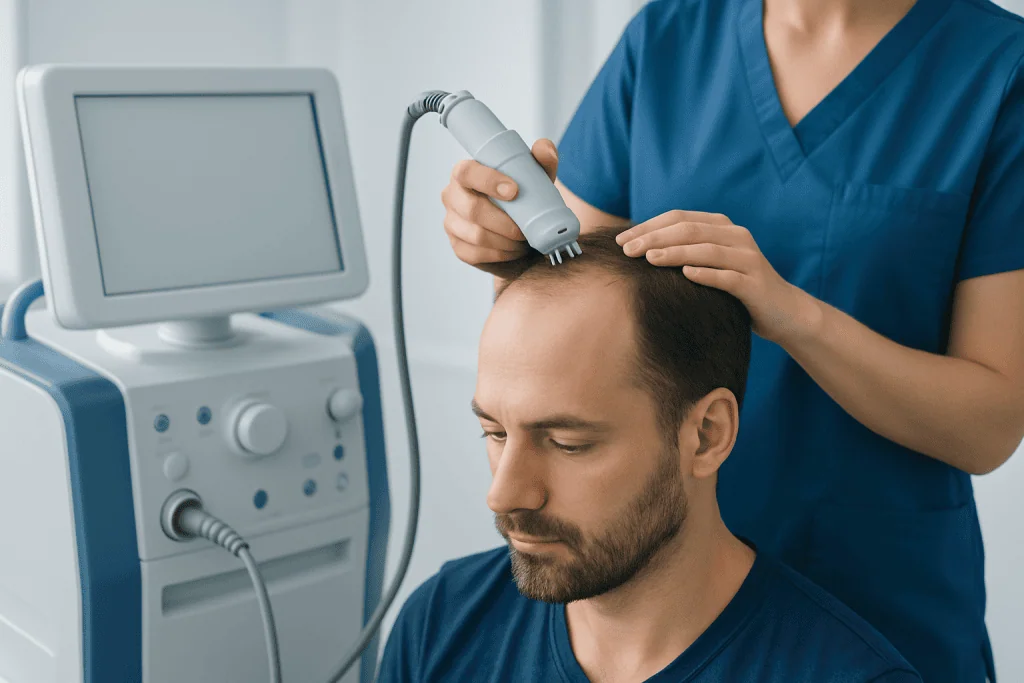
Minoxidil is thought to work mainly by helping hair follicles stay in the active growth phase, called anagen, for longer. It may also improve blood flow around the follicle and influence local signaling that supports hair growth. The exact mechanism is complex, but the practical effect is that some follicles produce stronger, thicker hairs for longer periods.
Hair follicles cycle through growth, transition, rest, and shedding. In pattern hair loss, follicles gradually shrink, producing finer and shorter hairs over time. Minoxidil does not reverse every stage of this process in every person, but it may slow miniaturization and improve the quality of existing hairs where follicles are still viable.
This is why minoxidil tends to help more in thinning areas than in completely smooth bald areas. It supports follicles that are weakened, not follicles that are no longer functioning. For people with more advanced loss, doctors may review the extent of thinning alongside related topics such as the Norwood scale when planning treatment.
Timeline: When Minoxidil Results Usually Appear

Minoxidil requires patience. Many people use it daily for several weeks before noticing any change, and visible improvement often takes around three to six months. In some cases, fuller results may take longer. Early expectations should be realistic: treatment is often measured in months, not days or weeks.
One early change can be temporary increased shedding. This can happen when hairs in a resting phase are pushed out as follicles shift into a new growth cycle. While this can feel discouraging, it does not always mean the treatment is failing. Still, any sudden or severe hair shedding should be reviewed by a doctor to make sure another cause is not being missed.
Minoxidil results vary from person to person based on age, genetics, duration of hair loss, scalp health, and consistency of use. Some people mainly notice reduced shedding, while others see thicker hair or better scalp coverage. Tracking progress with monthly photos in the same lighting can be more useful than relying on day-to-day impressions.
- First weeks: often no visible change
- First 1 to 2 months: possible temporary shedding
- About 3 to 6 months: reduced shedding or early thickening may appear
- Beyond 6 months: fuller benefit may become easier to assess
Who May Benefit Most and What Affects Results
Minoxidil is commonly used for pattern hair loss, especially when thinning is still relatively early or moderate. People with active follicles in thinning areas are generally more likely to respond than those with long-standing, completely bald areas. It may be used by both men and women, but the treatment plan should reflect the individual pattern and cause of hair loss.
Several factors influence minoxidil results. These include how long hair loss has been present, whether the scalp condition is healthy, how regularly the treatment is used, and whether there is an underlying condition such as iron deficiency, thyroid disease, or inflammation affecting the follicles. If the true cause of shedding has not been identified, response may be limited.
Doctors may also look for other diagnoses that overlap with pattern loss, including alopecia areata or telogen effluvium. In some people, minoxidil may be only one part of care, with treatment focused on correcting the underlying trigger, improving scalp health, or considering procedural options if appropriate.
What Happens If You Stop Minoxidil
If minoxidil is stopped, the benefits usually do not continue indefinitely. The medication supports hair follicles while it is being used, but it does not permanently change the underlying tendency toward pattern hair loss. As a result, any hairs maintained or improved by treatment may gradually shed once the medication is discontinued.
This change does not usually happen overnight. Over the following months, the hair cycle shifts back toward its previous pattern, and thinning often becomes more noticeable again. Many people interpret this as minoxidil causing hair loss, but in reality it is more accurate to say that the treatment effect has ended and the natural process is resuming.
For this reason, minoxidil is generally considered a maintenance treatment. Anyone thinking about stopping because of side effects, irritation, pregnancy planning, or lack of results should speak with a qualified doctor first. There may be ways to adjust the formulation, confirm the diagnosis, or discuss alternatives, including PRP for hair loss in selected cases.
Side Effects, Safety, and Practical Use
Minoxidil is generally well tolerated when used as directed, but side effects can occur. Common issues include scalp itching, dryness, flaking, redness, or irritation. Some people also notice unwanted facial hair growth if the product spreads beyond the scalp. These effects are often manageable, but persistent irritation should be reviewed.
In a small number of people, systemic absorption may lead to symptoms such as dizziness, rapid heartbeat, swelling, or shortness of breath. These are not typical and need medical attention. Minoxidil should also be used carefully in people with certain medical conditions, and the product instructions should be followed closely.
Practical consistency matters. Applying more than recommended does not usually produce faster results and may increase side effects. It is also important to let the product dry properly and to understand that missed applications can reduce benefit over time. If scalp disease such as significant dandruff, psoriasis, or dermatitis is present, treatment of the scalp condition may improve comfort and adherence.
Diagnosis and Other Treatment Options
Hair loss is a symptom, not a diagnosis by itself. Before relying on minoxidil alone, it is helpful to confirm the type of hair loss. A doctor may ask about family history, recent illness, stress, medications, hormonal changes, nutrition, and the pattern of shedding. Examination of the scalp and hair shafts can provide important clues, and some people may need blood tests or dermoscopy.
Minoxidil may be part of a wider treatment strategy. Depending on the cause, care may include treatment of nutritional deficiencies, management of thyroid or hormonal issues, anti-inflammatory treatment for scalp disorders, or procedural approaches. In stable pattern hair loss, some people may eventually consider hair mesotherapy or surgical restoration if medical therapy alone does not meet their goals.
At the end of the evaluation and treatment pathway, care should be individualized. Acibadem International’s multidisciplinary specialists in JCI-accredited hospitals diagnose and treat hair loss for international patients, combining dermatologic assessment with procedural options when needed.
When to Seek Medical Care
Medical advice is important if hair loss is sudden, patchy, painful, associated with scaling, or accompanied by symptoms such as fatigue, weight change, heavy menstrual bleeding, or signs of hormonal imbalance. These features can suggest causes other than straightforward pattern hair loss and may need targeted treatment.
A doctor should also be consulted if minoxidil causes significant irritation, swelling, dizziness, palpitations, or breathing symptoms. It is wise to seek medical guidance if there is no clear benefit after several months of correct use, since the diagnosis may need to be reconsidered and another treatment plan discussed.
In general, earlier assessment gives more options. Hair follicles tend to respond better when treatment begins before thinning becomes advanced, so persistent or progressive hair loss should not be ignored.
Frequently asked questions
How long does it take to see minoxidil results?
Minoxidil results usually take several months to judge properly. Some people notice reduced shedding first, while visible thickening or improved density may appear after about three to six months of regular use.
Does minoxidil cause shedding at first?
It can. Early shedding may happen when older resting hairs fall out as follicles shift into a new growth cycle. This is not always a sign of failure, but severe or sudden shedding should be assessed by a doctor.
What happens if someone stops using minoxidil?
The benefits usually fade over time after stopping. Hair that was maintained or improved by minoxidil often sheds gradually, and the scalp tends to return toward its previous pattern of hair loss within months.
Can minoxidil regrow hair on completely bald areas?
It is generally more helpful in thinning areas where follicles are still active. Completely smooth or long-standing bald areas are less likely to respond because the follicles may no longer be functioning well.
Is minoxidil a permanent cure for hair loss?
No. Minoxidil is better understood as an ongoing treatment that helps manage certain types of hair loss, especially pattern hair loss. It can support growth and slow thinning, but it does not remove the underlying tendency.
Who should talk to a doctor before using minoxidil?
Anyone with sudden, patchy, painful, or unexplained hair loss should seek medical advice first. It is also sensible to consult a doctor if there is scalp disease, significant medical history, pregnancy planning, or troublesome side effects.
References
- American Academy of Dermatology
- National Health Service
- Mayo Clinic
- MedlinePlus
- British Association of Dermatologists
This article is for general information only and is not a substitute for professional medical advice. Please consult a qualified doctor about your individual situation.
Hair transplant in Turkey — costs, graft counts & a free assessment
JCI-accredited · board-certified surgeons · reply within 24h
Add us as a Preferred Source to see more of our trusted health content across Google Search, AI Overviews and Discover.

More from the Health Library



Related Specialists

Prof. Dr. Zeynep Yezdan Fırat
Otorhinolaryngology
Dr. Ece Çetin
Pediatrics
Prof. Dr. Önder Us
Neurology
Prof. Dr. Hüseyin Bayram
Orthopedic Surgery & Traumatology