Mirena Intrauterine Contraceptive Device: An Evidence-Based Guide for Patients

Mirena is a hormonal intrauterine device that provides long-term, reversible contraception. It releases levonorgestrel locally in the uterus and may also reduce heavy menstrual bleeding.
Key Takeaways
- Mirena is a hormonal intrauterine device that provides long-term, reversible contraception.
- It releases levonorgestrel locally in the uterus and may also reduce heavy menstrual bleeding.
- Insertion and removal must be done by a trained healthcare professional.
- Changes in bleeding patterns are common in the first months after placement.
- It does not protect against sexually transmitted infections, so condoms may still be important.
- Prompt medical review is needed for severe pain, fever, very heavy bleeding, or concerns about device displacement.
The mirena intrauterine contraceptive device is a small hormonal IUD placed in the uterus to provide long-acting, reversible birth control and, in many people, lighter menstrual bleeding. For suitable candidates, it is a highly effective option that does not require daily action, but it should be chosen with a clinician after reviewing benefits, side effects, and individual health needs.
Overview: what Mirena is and what it does
The mirena intrauterine contraceptive device is a small, T-shaped device that a trained clinician places inside the uterus. It releases a low dose of levonorgestrel, a type of progestin, directly into the uterine lining. This helps prevent pregnancy for several years while remaining fully reversible, meaning fertility usually returns after removal.
Many patients choose Mirena because it combines convenience with long-term effectiveness. Unlike pills, patches, or rings, it does not require daily or weekly action. It is often discussed as a form of long-acting reversible contraception, sometimes called LARC, alongside the copper IUD and contraceptive implant.
Mirena may also be used for non-contraceptive reasons. In appropriate patients, it can lessen heavy menstrual bleeding and reduce cramping over time. Some people eventually have very light periods or no periods at all while using it, which can be expected and is not usually harmful.
How the Mirena IUD works and who may benefit
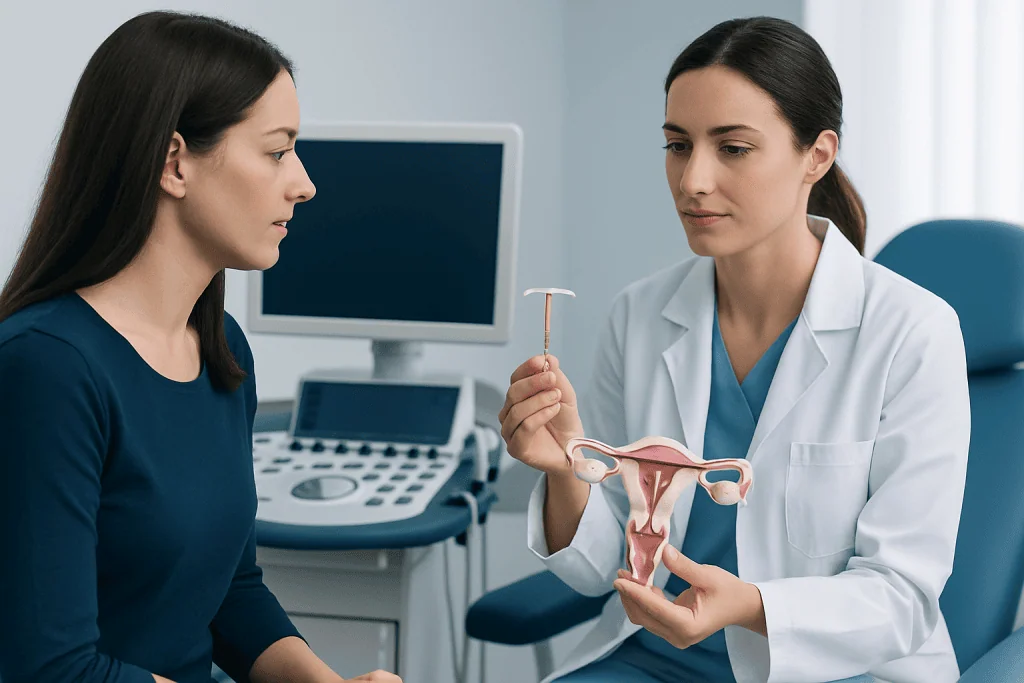
Mirena mainly works by thickening cervical mucus so sperm have difficulty reaching an egg. It also thins the uterine lining and can sometimes suppress ovulation in some users, although this is not its main effect. Because the hormone acts mostly inside the uterus, the overall hormone exposure is lower than with some other hormonal contraceptive methods.
This option may suit people who want reliable contraception without remembering a daily medication. It may also be considered in those who cannot use estrogen-containing contraception or who prefer a method that can remain in place for years but be removed at any time if pregnancy is desired.
It can be especially helpful for patients with heavy menstrual bleeding, though a proper evaluation is important because heavy bleeding can have several causes, including fibroids, polyps, thyroid disorders, bleeding disorders, or endometriosis. A gynecologist can help determine whether Mirena is appropriate or whether another treatment would better address the underlying problem.
Mirena is not the right choice for everyone. A clinician will review pregnancy status, unexplained vaginal bleeding, current pelvic infection, certain uterine abnormalities, hormone-sensitive conditions, and other medical factors before recommending it.
Expected effects, common side effects, and possible risks
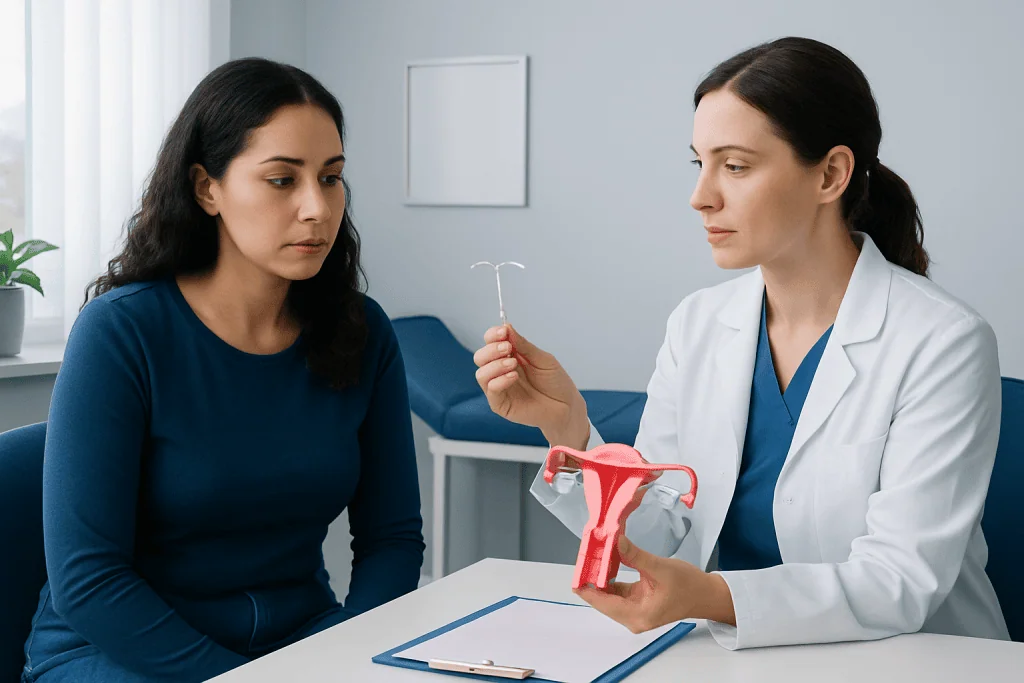
Changes in bleeding are among the most common effects after insertion. During the first three to six months, spotting, irregular bleeding, or lighter but unpredictable periods can occur. For many people, bleeding gradually becomes lighter and less frequent over time.
Other possible side effects include cramping after placement, headache, breast tenderness, acne, mood changes, or ovarian cysts that often resolve on their own. Not everyone experiences these effects, and many users tolerate Mirena well. A clinician can help weigh side effects against the advantages of long-term contraception and lighter periods.
Although serious complications are uncommon, patients should understand them. These include device expulsion, meaning Mirena partially or completely comes out of the uterus; perforation, where the device passes through the uterine wall during insertion; pelvic infection, especially in the weeks after placement; and pregnancy with the device in place, including ectopic pregnancy. These events are unusual but important to recognize promptly.
- Common early effects: cramping, spotting, irregular bleeding
- Common longer-term effects: lighter periods, less menstrual pain, sometimes no bleeding
- Less common but important risks: expulsion, perforation, infection, pregnancy with device in place
Before insertion: evaluation, timing, and preparation
Before placing the mirena intrauterine contraceptive device, a healthcare professional usually reviews medical history, menstrual history, pregnancy risk, and sexual health. Depending on symptoms and individual risk factors, the visit may include a pelvic examination, pregnancy test, or screening for sexually transmitted infections. In some cases, ultrasound may be helpful if the uterus is difficult to assess or if there are concerns about fibroids or anatomy.
Timing of insertion can vary. Some clinicians place Mirena during a menstrual period because the cervix may be slightly more open and pregnancy is easier to exclude, but this is not always necessary. It can also be inserted at other points in the cycle when the clinician is confident the patient is not pregnant.
Patients often want to know how to prepare. It can help to ask in advance what to expect during and after the procedure, whether someone should accompany them, and when normal activities can be resumed. Mild cramping during and after insertion is common, so planning a lighter schedule that day may be useful.
If symptoms suggest another gynecologic condition, the clinician may recommend additional evaluation before insertion. For example, symptoms such as pelvic pain or very heavy periods may sometimes lead to a workup for uterine fibroids or other uterine conditions.
Insertion, follow-up, and what daily life is like with Mirena
Insertion is typically an outpatient procedure. A speculum is placed in the vagina, the cervix is cleaned, and the clinician gently inserts the device through the cervical canal into the uterus. The strings are then trimmed so they extend slightly into the vagina, which allows future checking and removal.
Some cramping, dizziness, or light bleeding may happen shortly after placement, but these symptoms usually improve. Many people return to normal activities within a day, although comfort levels vary. The clinician may explain how to feel for the strings and when to return for follow-up if needed.
Living with Mirena generally becomes routine after the initial adjustment period. It does not interfere with everyday movement, exercise, or most sexual activity. However, it does not protect against sexually transmitted infections, so condoms may still be recommended depending on the person’s situation.
If placement is difficult because of anatomy, pain, or underlying gynecologic issues, further assessment may be needed. In some patients, comprehensive women’s health care may include treatments such as gynecology evaluation or hysteroscopy to investigate abnormal bleeding or uterine cavity problems.
Removal, replacement, and treatment alternatives
Mirena can be removed at any time by a trained clinician if the patient wants to become pregnant, change methods, or stop because of side effects. Removal is usually quicker than insertion. If continued contraception is desired, a new device can often be inserted during the same visit.
Fertility usually returns soon after removal, although the timing of pregnancy varies from person to person. This is one reason many patients view Mirena as a flexible option: it offers long-term contraception without causing permanent infertility.
Alternatives include the copper IUD, contraceptive implant, birth control pills, patches, vaginal rings, injections, and barrier methods. The best choice depends on bleeding preferences, hormone tolerance, medical history, and reproductive goals. For those with troublesome bleeding or pelvic symptoms, treatment may need to address the underlying condition as well as contraception.
When heavy bleeding, chronic pain, or uterine pathology is present, a clinician may discuss broader treatment pathways. In selected patients, care can include obstetrics and gynecology assessment to match the contraceptive method to overall gynecologic health.
When to seek medical care
Most people do well after insertion, but some symptoms should prompt timely medical advice. A patient should contact a healthcare professional if there is severe or worsening pelvic pain, fever, foul-smelling discharge, very heavy bleeding, pain during intercourse, or concern that the device has moved. Inability to feel the strings, or feeling the hard plastic of the device at the cervix, can also suggest expulsion or displacement.
Pregnancy symptoms while using Mirena should not be ignored. Although pregnancy is uncommon, urgent assessment is important because a pregnancy with an IUD in place can carry special risks, including ectopic pregnancy. Sudden one-sided pelvic pain, faintness, or shoulder pain warrants urgent medical evaluation.
Regular gynecologic care remains important even with a long-acting method. A clinician can review bleeding changes, side effects, and whether the device is still suitable over time. For international patients who need specialist assessment, Acibadem International’s multidisciplinary teams in JCI-accredited hospitals diagnose and treat gynecologic conditions, including contraceptive counseling and IUD-related concerns.
Frequently asked questions
How effective is the mirena intrauterine contraceptive device?
Mirena is considered one of the most effective reversible contraceptive methods because it works continuously and does not depend on daily use. A doctor or family planning specialist can explain how its effectiveness compares with pills, implants, and copper IUDs in an individual case.
Does Mirena stop periods completely?
Some users continue to have monthly bleeding, while others have very light periods or no bleeding after several months. This change happens because the uterine lining becomes thinner, and it is usually not harmful. However, new bleeding patterns should still be discussed with a clinician if they are concerning.
Is Mirena insertion painful?
Pain levels vary from person to person. Many people feel cramping or pressure during insertion, followed by mild to moderate cramps for a short time afterward. A healthcare professional can discuss ways to make the procedure more comfortable and what recovery is typically like.
Can someone get pregnant after Mirena is removed?
Yes. Mirena is reversible, and fertility often returns soon after removal. The exact time to conception can vary, so patients planning pregnancy may benefit from preconception advice from a doctor.
Who should not use Mirena?
Mirena may not be suitable for people with certain conditions, such as current pelvic infection, unexplained vaginal bleeding, some uterine abnormalities, or specific hormone-sensitive diseases. A clinician should review medical history carefully before insertion to make sure it is a safe option.
Does Mirena protect against sexually transmitted infections?
No, Mirena does not protect against sexually transmitted infections. If STI prevention is needed, condoms and appropriate sexual health screening remain important even when an IUD is in place.
References
- World Health Organization
- American College of Obstetricians and Gynecologists
- Centers for Disease Control and Prevention
- Faculty of Sexual and Reproductive Healthcare
- Mayo Clinic
This article is for general information only and is not a substitute for professional medical advice. Please consult a qualified doctor about your individual situation.
IVF & fertility treatment in Turkey — success rates and costs
JCI-accredited · board-certified surgeons · reply within 24h
Add us as a Preferred Source to see more of our trusted health content across Google Search, AI Overviews and Discover.
Check your numbers in seconds
BMI, calories, due date, blood pressure and 30+ more clinical calculators — free, instant, doctor-reviewed ranges.

More from the Health Library



Related Specialists

Prof. Dr. Deniz Konya (m)
Neurosurgery
Dr. Ahmet Temizyürek
Anesthesiology
Asst. Prof. Dr. Yiğit Umur Cırdı
Orthopedic Surgery & Traumatology
Dr. Zeynep Ece Demirbaş
Internal Medicine