Myopia in Children: Nearsightedness and Progression Control
Myopia means the eye focuses images in front of the retina, making distance vision blurry. Childhood myopia can progress as the eye grows, especially during school years.
Key Takeaways
- Myopia means the eye focuses images in front of the retina, making distance vision blurry.
- Childhood myopia can progress as the eye grows, especially during school years.
- Regular comprehensive eye exams are essential because children may not always report blurry vision.
- Progression control may include special glasses, contact lenses, low-concentration atropine eye drops, and lifestyle guidance.
- More outdoor time and balanced near-work habits support healthy eye development.
- Parents should consult a qualified eye care professional before starting any myopia control treatment.
Myopia in children, also called nearsightedness, is a common vision condition in which distant objects look blurry while near work is usually clear. Early eye examinations, healthy visual habits, and evidence-based progression control can help protect a child's vision over time.
Overview
Myopia in children is a refractive error in which the eye is usually longer than average from front to back, or the focusing power of the eye is too strong. As a result, light focuses in front of the retina rather than directly on it. This makes objects in the distance, such as a classroom board, road signs, or a television across the room, appear blurred.
Childhood nearsightedness often becomes noticeable during the early school years, although it can appear earlier or later. It may progress as a child grows, particularly during periods of rapid eye growth. Progression does not mean that vision is being lost, but stronger prescriptions may be needed over time to keep distance vision clear.
Modern eye care aims not only to correct blurry vision, but also to monitor and, in some children, slow the rate of myopia progression. This is important because higher levels of myopia can be associated with increased risk of certain eye problems later in life. With regular eye examinations and an individualized plan, most children with myopia can see well and participate fully in school, sports, and daily activities.
Symptoms and Signs Parents May Notice
Children do not always recognize that their vision is blurry, especially if the change develops gradually or affects both eyes. A child may assume that everyone sees the same way. For this reason, parents and teachers are often the first to notice changes in behavior that may suggest myopia.
Common signs of myopia in children include squinting to see distant objects, sitting very close to the television, moving closer to the board at school, or difficulty recognizing people or objects from a distance. Some children may complain of headaches, eye strain, or tired eyes after trying to focus for long periods, although these symptoms can also have other causes.
- Frequent blinking or rubbing the eyes
- Holding books or screens very close
- A drop in school performance related to seeing the board
- Avoiding sports or activities that require good distance vision
- Closing one eye to see more clearly
Any of these signs should prompt a comprehensive eye examination. Vision screening at school can be helpful, but it is not the same as a full eye exam by an ophthalmologist or optometrist, especially when myopia progression control is being considered.
Causes and Risk Factors
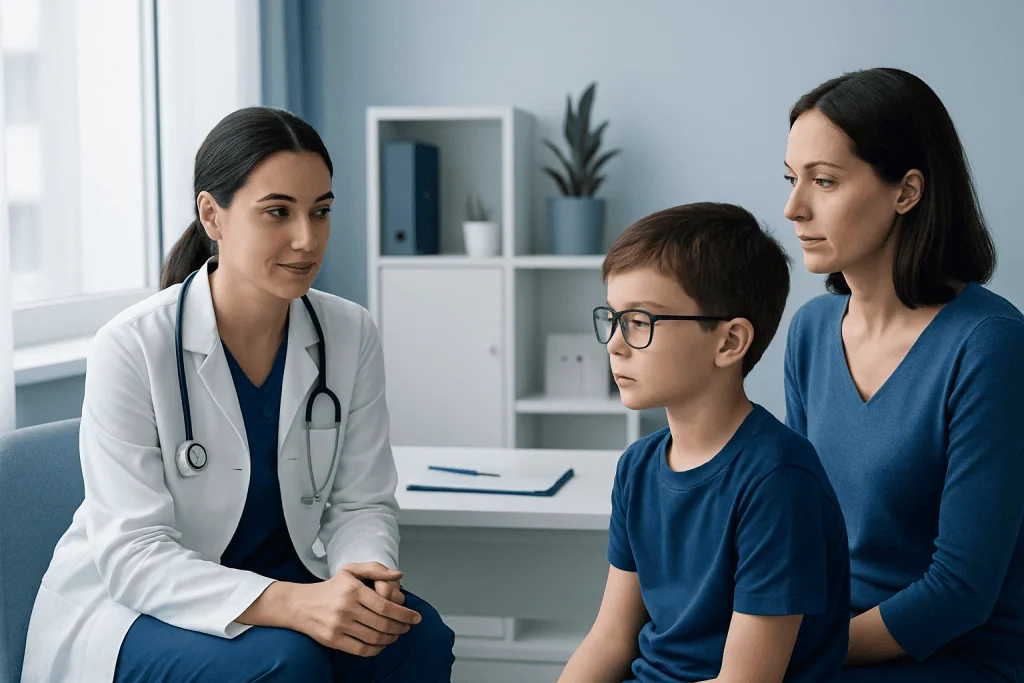
Myopia develops through a combination of genetic and environmental factors. Children with one or both parents who have myopia are more likely to become nearsighted. However, genetics is not the only factor; children without a family history can also develop myopia.
Eye growth plays a central role. In many children with myopia, the eyeball becomes slightly too long. Even small changes in eye length can affect how sharply light focuses on the retina. Because the eye may continue to grow during childhood and adolescence, prescriptions can change from year to year.
Lifestyle and visual environment may also influence myopia development and progression. Spending long periods on near tasks, such as reading, homework, tablets, or smartphones, may contribute, particularly when breaks are limited. Less time outdoors has also been associated with a higher risk of developing myopia. Outdoor light exposure is thought to support healthier eye development, although it does not replace medical care once myopia is present.
Risk can also be affected by age of onset. Children who develop myopia at a younger age may have more years for it to progress. For these children, early monitoring and discussion of progression control options may be especially helpful.
Diagnosis and Monitoring
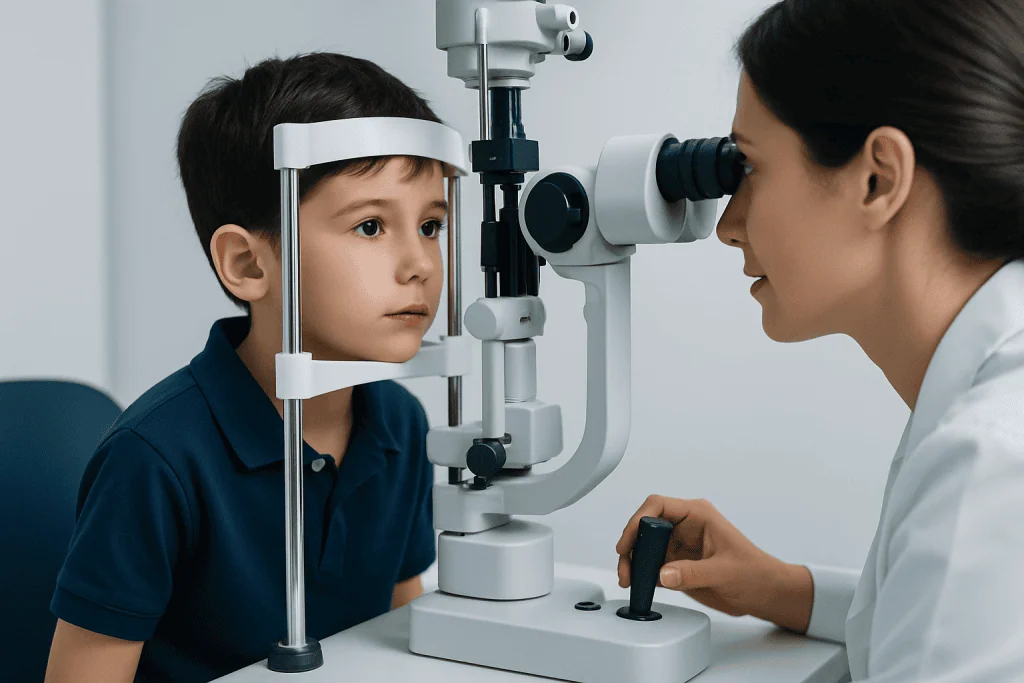
Diagnosis begins with a comprehensive eye examination. The eye care professional checks visual acuity, measures the refractive error, and examines the health of the eyes. In children, drops may be used to temporarily relax focusing muscles, a process called cycloplegic refraction. This helps obtain a more accurate prescription, especially when a child has strong focusing ability.
Monitoring is just as important as the first diagnosis. The clinician may compare prescriptions over time and, when available, measure axial length, which is the length of the eye from front to back. Axial length measurement can help assess whether the eye is growing faster than expected and can guide decisions about myopia progression control.
The frequency of follow-up depends on the child’s age, prescription, rate of change, family history, and treatment plan. Some children need annual exams, while others with active progression may be reviewed more often. Follow-up visits allow the clinician to check visual clarity, comfort, treatment adherence, and eye health.
A complete evaluation also helps rule out other conditions that can affect vision, such as amblyopia, strabismus, or eye surface problems. This is one reason professional assessment is important before purchasing glasses or contact lenses based only on a simple screening result.
Treatment Options and Myopia Progression Control
The first goal of treatment is to provide clear and comfortable vision. Standard eyeglasses are often the simplest and safest way to correct myopia in children. Contact lenses may be suitable for some older or responsible children, depending on maturity, hygiene, and family support.
Progression control focuses on slowing the worsening of myopia rather than reversing it. Options may include specially designed spectacle lenses, multifocal soft contact lenses, orthokeratology lenses worn overnight, or low-concentration atropine eye drops prescribed by an eye specialist. Each option has benefits, limitations, and safety considerations, and not every child is a candidate for every treatment.
Orthokeratology uses rigid lenses worn during sleep to temporarily reshape the front surface of the eye, allowing clearer daytime vision without glasses. It requires careful cleaning, regular follow-up, and prompt attention to redness, pain, or light sensitivity. Multifocal contact lenses and myopia-control spectacle lenses work by changing how light focuses across different parts of the retina, which may help influence eye growth in selected children.
Low-concentration atropine eye drops may be recommended for some children to slow progression. The exact treatment plan, duration, and monitoring schedule should be decided by a qualified eye doctor. Parents should not use eye drops, contact lenses, or imported products for myopia control without medical supervision, as safety and suitability are essential in children.
Prevention and Self-care Habits
Not all cases of myopia can be prevented, especially when there is a strong family history. However, healthy daily habits may reduce the risk of developing myopia and can support a treatment plan for children who are already nearsighted. These habits are most effective when started early and maintained consistently.
Outdoor time is one of the most important lifestyle measures for eye health in children. Regular time outside during daylight hours is associated with a lower risk of developing myopia. Families should balance this with sun safety, including hats, shade when appropriate, and sunglasses if recommended.
- Encourage regular breaks during reading, homework, and screen use.
- Keep books and screens at a comfortable distance rather than very close to the face.
- Use good lighting for near work.
- Avoid long, uninterrupted periods of screen viewing.
- Support adequate sleep and a balanced daily routine.
Parents can also help by ensuring that prescribed glasses or contact lenses are used as directed. Children may resist wearing glasses at first, so reassurance and proper frame fitting can make a difference. If a child complains that glasses are uncomfortable or vision remains blurry, the prescription and fit should be checked.
When to See a Doctor
A child should have an eye examination if there are signs of blurred distance vision, frequent squinting, headaches during schoolwork, or difficulty seeing the board. An exam is also important if a parent or sibling has significant myopia, even if the child has not reported symptoms. Early assessment can identify vision problems before they interfere with learning or daily activities.
Parents should seek prompt medical advice if a child using contact lenses develops eye pain, redness, discharge, sudden light sensitivity, or reduced vision. These symptoms need timely evaluation. Children receiving myopia control treatment should also attend all scheduled follow-up visits, even when they appear to be seeing well.
Emergency eye care is needed for sudden vision loss, eye injury, or new flashes and floaters, although these are less common in children. For routine care, a pediatric ophthalmologist, ophthalmologist, or optometrist can assess vision and recommend appropriate options based on the child’s age and eye health.
Acibadem International’s multidisciplinary specialists and JCI-accredited hospitals diagnose and treat childhood eye conditions, including myopia, for international patients. Families considering care abroad should bring previous prescriptions, eye measurements, treatment records, and any current glasses or contact lenses to help the medical team evaluate progression accurately.
Frequently asked questions
What is myopia in children?
Myopia in children is nearsightedness, meaning a child sees close objects more clearly than distant objects. It usually happens because the eye is slightly too long or focuses light too strongly. A comprehensive eye exam can confirm the diagnosis and determine the right prescription.
Can childhood myopia get worse over time?
Yes, myopia often progresses during childhood and adolescence as the eye grows. The rate of progression varies from child to child. Regular follow-up helps the eye care professional decide whether standard correction is enough or whether myopia control treatment should be considered.
Do glasses make myopia worse?
No, properly prescribed glasses do not make myopia worse. Glasses help the child see clearly and reduce the need to squint or strain. If the prescription increases over time, it is usually because the eye is growing, not because the child wore glasses.
How can parents help slow myopia progression?
Parents can support healthy habits by encouraging outdoor time, limiting long uninterrupted near work, and ensuring that the child attends regular eye exams. If myopia is progressing, an eye care professional may discuss special lenses, contact lenses, or prescribed eye drops. The best option depends on the child's age, prescription, eye health, and ability to follow instructions.
Are contact lenses safe for children with myopia?
Contact lenses can be safe for selected children when they are fitted professionally and handled with good hygiene. The child and family must be able to follow cleaning, wearing, and follow-up instructions carefully. Any redness, pain, or sudden vision change while using contact lenses should be checked promptly.
At what age should a child have an eye exam?
Children should have vision checked at recommended pediatric visits and should receive a comprehensive eye exam if there are symptoms, a failed screening, or a family history of significant eye problems. School-age children with myopia usually need regular follow-up. The eye doctor will advise the best schedule based on the child's findings.
This article is for general information only and is not a substitute for professional medical advice. Please consult a qualified doctor about your individual situation.
Myopia in Turkey — costs, top hospitals & a free quote
JCI-accredited · board-certified surgeons · reply within 24h
Add us as a Preferred Source to see more of our trusted health content across Google Search, AI Overviews and Discover.

Related Treatments
More from the Health Library
Can You Get LASIK Twice? Enhancement Surgery Explained
Contact Lenses vs Glasses: How to Choose What Fits Your Vision Needs
What Is LASIK Eye Surgery? A Beginner’s Guide
LASIK Eye Surgery: Eligibility, Benefits, and Recovery
Femto LASIK Cost in Turkey: What Is Included and What Changes the Price?