Neurological Diseases Explained: Which Conditions Are Neurodegenerative?

Neurodegenerative diseases involve progressive damage or loss of nerve cells. Common examples include Alzheimer’s disease, Parkinson’s disease, Huntington’s disease, ALS, and some forms of dementia.
Key Takeaways
- Neurodegenerative diseases involve progressive damage or loss of nerve cells.
- Common examples include Alzheimer’s disease, Parkinson’s disease, Huntington’s disease, ALS, and some forms of dementia.
- Symptoms depend on which parts of the nervous system are affected and may include memory problems, tremor, stiffness, weakness, or changes in behavior.
- Diagnosis usually combines medical history, neurological examination, brain imaging, and sometimes genetic or laboratory tests.
- Treatment often focuses on symptom control, rehabilitation, safety, and long-term care planning.
Neurodegenerative diseases are neurological conditions in which nerve cells in the brain, spinal cord, or peripheral nervous system gradually lose function over time. They can affect movement, memory, speech, behavior, and independence, but early evaluation and supportive treatment can help people manage symptoms and plan care.
Overview: What Are Neurodegenerative Diseases?
Neurodegenerative diseases are a group of disorders that cause nerve cells, also called neurons, to gradually become damaged or die. Because neurons do not easily regenerate, this process can lead to slowly worsening problems with thinking, memory, movement, balance, speech, swallowing, sensation, or muscle strength. The exact pattern depends on which part of the nervous system is affected.
Not all neurological diseases are neurodegenerative. Neurological diseases is a broad term that includes stroke, epilepsy, migraine, infections, nerve injuries, autoimmune disorders, and many other conditions. A disease is considered neurodegenerative when it involves progressive degeneration of nervous system tissue over time, rather than a single sudden event or a temporary problem.
These conditions are more common with increasing age, but some can begin in midlife or, more rarely, earlier. Although many neurodegenerative diseases cannot yet be cured, treatment can often improve symptoms, support daily function, and help patients and families prepare for future needs. Early assessment is important because some symptoms may overlap with treatable conditions such as vitamin deficiencies, thyroid disease, medication side effects, depression, or <a href="https://acibademinternational.com/diseases/normal-pressure-hydrocephalus/”>normal pressure hydrocephalus.
Which Conditions Are Considered Neurodegenerative?
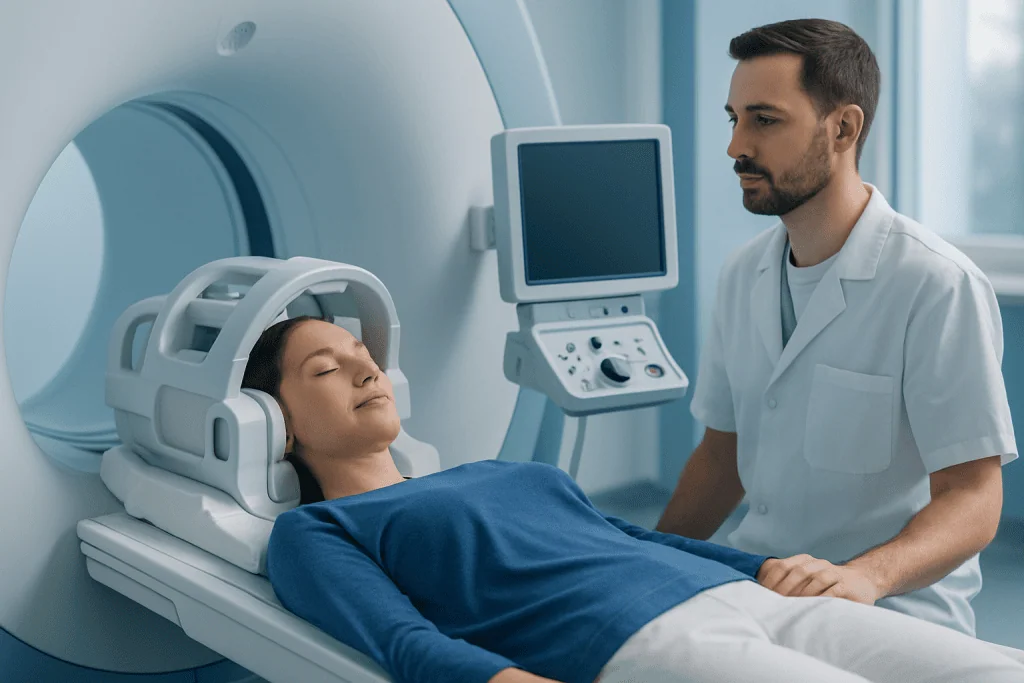
Several well-known conditions fall into the neurodegenerative category. They are usually grouped by the main problems they cause, such as memory loss, movement changes, or muscle weakness. Some diseases affect more than one function at the same time, which is why specialist evaluation is often needed.
Common examples include Alzheimer’s disease, which mainly affects memory and thinking; Parkinson’s disease, which commonly causes slowness, stiffness, and tremor; Huntington’s disease, an inherited disorder that can affect movement, mood, and cognition; and amyotrophic lateral sclerosis, or ALS, which damages the nerve cells that control voluntary muscles. Other neurodegenerative conditions include frontotemporal dementia, dementia with Lewy bodies, multiple system atrophy, progressive supranuclear palsy, corticobasal syndrome, and some spinocerebellar ataxias.
Some forms of dementia are neurodegenerative, but not every cause of memory loss is dementia and not every dementia has the same underlying disease. For example, Parkinson’s disease can be linked with later cognitive changes, while ALS mainly affects movement and muscle control. Understanding the specific diagnosis helps guide treatment, prognosis, rehabilitation, and family support.
- Cognitive-predominant disorders: Alzheimer’s disease, frontotemporal dementia, dementia with Lewy bodies
- Movement-predominant disorders: Parkinson’s disease, Huntington’s disease, multiple system atrophy, progressive supranuclear palsy
- Motor neuron disorders: ALS and related conditions
- Coordination and balance disorders: cerebellar degenerations and some hereditary ataxias
Symptoms and Early Warning Signs

Symptoms vary widely because different diseases affect different nerve pathways. In some people, the earliest signs are subtle memory lapses, difficulty finding words, or trouble planning familiar tasks. In others, the first changes may involve slowed walking, tremor, stiffness, poor balance, muscle twitching, weakness, swallowing difficulty, or changes in facial expression. Behavioral or mood changes can also appear early in certain disorders.
Warning signs that deserve medical attention include frequent falls, worsening forgetfulness that interferes with daily life, getting lost in familiar places, repeated choking or swallowing problems, slurred speech, unexplained weakness, or marked changes in personality. Sleep disturbances, constipation, reduced sense of smell, anxiety, depression, and vivid dreams may also occur in some movement-related neurodegenerative conditions.
Symptoms usually develop gradually rather than suddenly. However, a sudden change in speech, weakness, confusion, vision, or balance should be treated as urgent because it may point to a stroke or another medical emergency rather than a slowly progressive degenerative disorder. A doctor can help distinguish between these possibilities and arrange the right tests.
Causes and Risk Factors
The exact cause of many neurodegenerative diseases is not fully understood. Researchers believe they often result from a combination of aging, genetic susceptibility, abnormal protein buildup, inflammation, mitochondrial dysfunction, oxidative stress, and other cellular changes that gradually harm neurons. Different diseases are linked to different proteins, such as amyloid and tau in Alzheimer’s disease, alpha-synuclein in Parkinson’s disease and Lewy body disorders, or mutant huntingtin in Huntington’s disease.
Age is one of the strongest risk factors for many neurodegenerative disorders, but family history can also play an important role. Some conditions, including Huntington’s disease and certain inherited ataxias, are strongly genetic. Others may have both inherited and non-inherited forms. Environmental exposures, head injury history, vascular health, and lifestyle factors may contribute in some cases, though they do not fully explain why one person develops disease and another does not.
It is important to know that neurodegenerative diseases are not caused by personal weakness or normal aging alone. While mild slowing or occasional forgetfulness can happen with age, progressive decline that interferes with work, communication, mobility, or self-care should be assessed. Understanding risk factors can support earlier recognition, but only a qualified clinician can make a diagnosis.
How Neurodegenerative Diseases Are Diagnosed
Diagnosis begins with a detailed history of symptoms, how they started, and how they have changed over time. A neurologist will usually ask about memory, movement, mood, sleep, swallowing, bowel and bladder symptoms, family history, medications, and daily functioning. Input from a family member or caregiver is often helpful, especially when memory or behavior changes are involved.
The neurological examination may assess strength, reflexes, muscle tone, coordination, gait, sensation, eye movements, speech, and cognitive abilities. Depending on the presentation, testing may include blood tests to rule out reversible causes, neuropsychological assessment for thinking and memory, MRI or CT imaging, and in selected cases PET imaging, spinal fluid studies, electromyography, or genetic testing. These tools help doctors determine whether symptoms fit a neurodegenerative pattern and which condition is most likely.
Because symptoms can overlap, diagnosis is sometimes a step-by-step process rather than a single visit answer. Follow-up over time may be needed to observe progression and refine the diagnosis. In specialized centers, patients may be assessed by teams that include neurologists, neuroradiologists, rehabilitation specialists, speech therapists, and mental health professionals to build a complete care plan.
Treatment Options and Ongoing Care
Treatment depends on the specific condition and the symptoms it causes. In general, care aims to relieve symptoms, maintain independence, support mobility and communication, and improve quality of life. Some medications can ease tremor, stiffness, mood symptoms, sleep problems, or cognitive symptoms in selected patients, but treatment plans are individualized and should be reviewed regularly by a doctor.
Rehabilitation is a major part of care. Physical therapy may help with balance, flexibility, walking, and fall prevention. Occupational therapy can support home safety and daily activities such as dressing or eating. Speech and language therapy may assist with speech clarity, communication tools, and swallowing strategies. Nutritional support, mental health care, and caregiver education are also important, especially as needs change over time.
In some situations, advanced therapies may be discussed. For example, selected patients with movement symptoms related to Parkinson’s disease may be evaluated for deep brain stimulation. When symptom control, diagnosis, or progression becomes complex, referral to specialized neurology care or physical therapy and rehabilitation can be helpful. Near the end of the care journey, palliative care can provide added support for comfort, communication, and decision-making.
Prevention, Self-care, and Living With the Condition
There is no guaranteed way to prevent all neurodegenerative diseases, but healthy habits may support overall brain and nervous system health. Regular physical activity, good sleep, a balanced diet, blood pressure and diabetes control, social engagement, hearing and vision care, and avoiding smoking are sensible steps. Staying mentally active and managing cardiovascular risk factors may be especially helpful for long-term cognitive health.
For people already diagnosed, daily routines can make life safer and more manageable. Helpful strategies include using calendars and reminders, simplifying home layouts, removing fall hazards, wearing supportive footwear, keeping medications organized, and planning meals that match swallowing ability and nutritional needs. Families may also benefit from discussing driving safety, work adjustments, legal planning, and future caregiving needs early rather than waiting for a crisis.
Living with a progressive neurological disease can affect emotions as much as physical function. Support groups, counseling, and caregiver respite may reduce stress and isolation. When specialist assessment is needed, Acibadem International’s multidisciplinary specialists and JCI-accredited hospitals diagnose and treat neurodegenerative conditions for international patients, including access to brain and nerve check-up services when appropriate.
When to See a Doctor
A person should see a doctor if they or their family notice persistent memory loss, difficulty completing familiar tasks, personality changes, tremor, slowed movement, repeated falls, unexplained weakness, or changes in speech or swallowing. These symptoms do not always mean a neurodegenerative disease is present, but they do deserve evaluation. Early diagnosis can help identify treatable causes, start supportive therapies, and improve planning.
Urgent medical attention is needed for sudden confusion, a new facial droop, sudden weakness on one side, abrupt vision loss, severe difficulty speaking, or sudden inability to walk. These symptoms may suggest stroke or another emergency rather than a slowly progressive condition. New choking episodes, unexplained weight loss, or breathing problems should also be assessed promptly.
If there is a strong family history of inherited neurological disease, a doctor may recommend genetic counseling before or after testing. This can help patients understand what testing may and may not show, possible emotional effects, and how results could relate to other family members. Ongoing follow-up is often an important part of good care.
Frequently asked questions
What does neurodegenerative disease mean?
A neurodegenerative disease is a condition in which nerve cells in the brain or nervous system gradually lose function or die over time. This can lead to progressive symptoms such as memory loss, movement problems, weakness, or changes in speech and behavior.
Are all neurological diseases neurodegenerative?
No. Neurological diseases include many different conditions, such as stroke, epilepsy, migraine, infections, and nerve injuries. Only some are neurodegenerative, meaning they involve ongoing degeneration of nerve cells over time.
What are the most common neurodegenerative diseases?
Common examples include Alzheimer’s disease, Parkinson’s disease, amyotrophic lateral sclerosis (ALS), Huntington’s disease, and some forms of dementia such as frontotemporal dementia and dementia with Lewy bodies. Each affects the nervous system in a different way.
Can neurodegenerative diseases be cured?
Many neurodegenerative diseases cannot currently be cured, but treatment can often help manage symptoms and support independence. Rehabilitation, medication, nutrition, and mental health support can all play important roles in care.
How are neurodegenerative diseases diagnosed?
Doctors usually diagnose these conditions through a combination of medical history, neurological examination, brain imaging, and selected laboratory or cognitive tests. In some cases, genetic testing or specialized studies are also needed.
At what age do neurodegenerative diseases begin?
Many begin later in life, especially after age 60, but some can appear much earlier. Inherited conditions and certain movement or motor neuron disorders may start in midlife or, less commonly, at younger ages.
When should someone worry about memory loss or movement changes?
A medical review is a good idea when symptoms are persistent, worsening, or interfering with daily life. Repeated falls, getting lost, personality change, tremor, weakness, or swallowing problems should not be ignored.
References
- World Health Organization
- National Institute of Neurological Disorders and Stroke
- Alzheimer's Association
- Parkinson's Foundation
- National Institute on Aging
This article is for general information only and is not a substitute for professional medical advice. Please consult a qualified doctor about your individual situation.
Joint and spine care in Turkey — expert assessment & treatment
JCI-accredited · board-certified surgeons · reply within 24h
Add us as a Preferred Source to see more of our trusted health content across Google Search, AI Overviews and Discover.