Neuromuscular Diseases: How Doctors Find the Cause of Progressive Weakness
Neuromuscular diseases can affect muscles, peripheral nerves, motor neurons, or the neuromuscular junction. Progressive weakness is not a diagnosis by itself; doctors look for the exact pattern and cause.
Key Takeaways
- Neuromuscular diseases can affect muscles, peripheral nerves, motor neurons, or the neuromuscular junction.
- Progressive weakness is not a diagnosis by itself; doctors look for the exact pattern and cause.
- Diagnosis often combines medical history, neurological examination, blood tests, EMG and nerve conduction studies, imaging, and sometimes genetic testing or biopsy.
- Some neuromuscular conditions are treatable, especially when identified early.
- New or rapidly worsening weakness, trouble breathing, or swallowing difficulty needs urgent medical attention.
Neuromuscular diseases are conditions that affect the nerves, muscles, or the connection between them, often leading to progressive weakness. Careful evaluation helps doctors identify the cause and guide treatment, symptom control, and long-term support.
Overview
Neuromuscular diseases are a broad group of disorders that interfere with how muscles and nerves work together. They may affect the muscle itself, the peripheral nerves that carry signals, the motor neurons that control movement, or the neuromuscular junction where nerves communicate with muscles. A common symptom across many of these conditions is progressive weakness, meaning strength declines gradually over time.
Progressive weakness can look different from one person to another. Some people first notice trouble climbing stairs, lifting objects, or rising from a chair. Others develop hand weakness, foot drop, muscle cramps, twitching, numbness, or fatigue with repeated activity. Because these symptoms overlap across many conditions, doctors do not rely on one symptom alone.
The main goal of evaluation is to answer a key question: where in the movement system is the problem happening? Once doctors determine whether weakness comes from muscle, nerve, motor neuron, or the neuromuscular junction, they can narrow the list of possible causes. This step-by-step approach helps distinguish neuromuscular diseases from other conditions such as stroke, joint disease, spinal problems, or general deconditioning.
Symptoms and Patterns Doctors Look For
Doctors pay close attention to the pattern of weakness because it provides important clues. Weakness in the shoulders and hips, called proximal weakness, may suggest a muscle disorder. Weakness in the hands, feet, or lower legs may point more toward nerve involvement. Fluctuating weakness that worsens with activity and improves with rest can suggest a neuromuscular junction disorder.
Other symptoms often help refine the picture. These may include muscle pain, cramps, stiffness, muscle wasting, involuntary twitching, numbness, tingling, balance problems, drooping eyelids, double vision, speech changes, swallowing difficulty, or shortness of breath. Some people also have a family history of similar symptoms, which may suggest an inherited condition.
Doctors also look at the speed of progression. Weakness that develops over hours or days raises different concerns than weakness that slowly evolves over months or years. Symptoms can vary depending on the underlying diagnosis, such as amyotrophic lateral sclerosis, inherited muscular dystrophies, inflammatory muscle diseases, peripheral neuropathies, or disorders such as myasthenia gravis.
- Difficulty climbing stairs or getting up from a seated position
- Frequent tripping, foot drop, or reduced grip strength
- Drooping eyelids, double vision, or fatigue with chewing
- Muscle twitching, cramps, or visible muscle loss
- Numbness, burning, or tingling in the limbs
- Breathing or swallowing changes in more advanced disease
Causes and Risk Factors
Neuromuscular diseases have many possible causes. Some are inherited and caused by changes in genes involved in muscle or nerve function. Others are acquired later in life due to autoimmune disease, infection, inflammation, metabolic disorders, vitamin deficiencies, medication effects, toxin exposure, or chronic illnesses such as diabetes, kidney disease, or thyroid disorders.
In some conditions, the immune system mistakenly attacks nerves, muscles, or the neuromuscular junction. In others, the main issue is degeneration of motor neurons or damage to the protective covering of nerves. There are also mitochondrial and metabolic muscle disorders that affect how muscle cells produce and use energy. Doctors consider all of these possibilities when evaluating progressive weakness.
Risk factors depend on the specific disease. Family history may increase the likelihood of inherited disorders. Older age can be associated with some acquired neuromuscular conditions, while others begin in childhood or early adulthood. A personal history of autoimmune disease, recent infection, long-term alcohol use, certain medications, or occupational toxin exposure may also be relevant. Even with a thorough workup, some cases remain challenging and require ongoing follow-up before a clear diagnosis emerges.
How Doctors Find the Cause
The diagnostic process usually begins with a detailed medical history and neurological examination. Doctors ask when symptoms started, how fast they progressed, which muscles are affected, whether weakness fluctuates, and whether there are associated symptoms such as pain, numbness, breathing changes, or trouble swallowing. They also review medications, medical conditions, and family history.
On examination, the doctor assesses muscle strength, tone, reflexes, coordination, sensation, and gait. This helps identify whether the pattern fits a muscle disorder, peripheral neuropathy, motor neuron disease, or neuromuscular junction problem. Although this step may seem simple, it often provides the framework for the rest of the evaluation.
Laboratory tests may include muscle enzymes such as creatine kinase, thyroid tests, vitamin levels, blood sugar evaluation, markers of inflammation, and tests for autoimmune causes. In selected cases, doctors may order infection-related tests or specialized antibody panels. If an inherited disorder is suspected, genetic testing may be recommended to look for disease-causing variants.
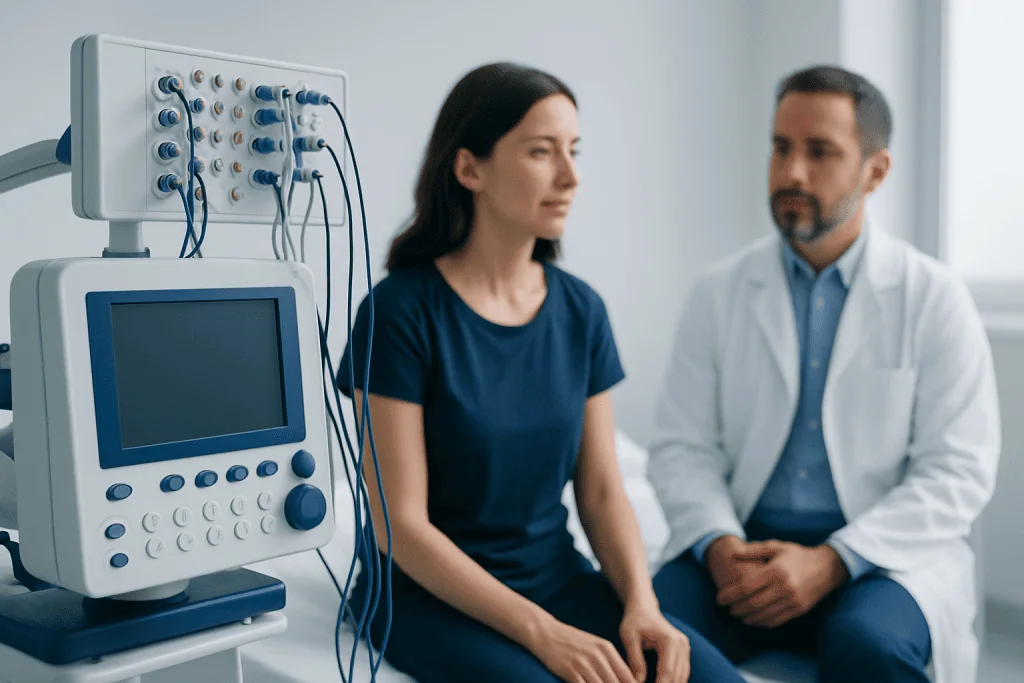
Electrodiagnostic studies are often central to diagnosis. Electromyography and nerve conduction studies can show whether weakness is coming from muscle, nerve, or the communication between them. Imaging such as MRI may help evaluate muscles, the spine, brain, or peripheral nerves when needed. In some cases, a doctor may recommend a muscle or nerve biopsy, pulmonary function testing, or additional specialist evaluations to confirm the diagnosis and assess severity.
Common Conditions in the Differential Diagnosis
Progressive weakness can result from many different neuromuscular disorders, so doctors build a differential diagnosis rather than assuming one cause. Muscle diseases include muscular dystrophies, inflammatory myopathies, metabolic myopathies, and toxic or drug-related myopathies. Nerve-related causes include inherited neuropathies, diabetic neuropathy, inflammatory neuropathies, and nerve compression syndromes.
Motor neuron disorders affect the cells that control voluntary movement. These conditions can cause weakness, muscle wasting, and twitching without the sensory symptoms that are more common in many neuropathies. Neuromuscular junction disorders, such as myasthenia gravis, often cause fatigable weakness and may affect the eyes, face, speech, or swallowing.
Doctors also consider conditions outside the neuromuscular system. Cervical or lumbar spine disease, brain disorders, systemic illness, severe electrolyte problems, and some endocrine disorders can all cause weakness. Because the symptoms may overlap, careful testing helps ensure that treatment is directed at the true cause rather than only the symptom of weakness.
Treatment Options and Long-Term Care
Treatment depends on the underlying diagnosis. Some neuromuscular diseases can be treated directly with immunotherapy, targeted medications, metabolic correction, respiratory support, or other disease-specific approaches. In other conditions, treatment focuses on slowing progression where possible, managing symptoms, preventing complications, and preserving function and quality of life.
Rehabilitation is often an important part of care. Physical therapy can help with strength, flexibility, and safe mobility, while occupational therapy may support hand function and daily activities. Speech and swallowing assessment may be needed if bulbar muscles are affected. Some people benefit from braces, mobility aids, nutritional support, or monitored exercise plans tailored to their condition.
When breathing muscles are involved, respiratory monitoring becomes especially important. Doctors may recommend pulmonary testing, cough assistance strategies, or noninvasive ventilation in selected cases. If symptoms suggest a structural nerve problem or a related condition affecting the spine, further evaluation with neurosurgical assessment or other specialty care may be considered when appropriate.
Care is often multidisciplinary because these conditions can affect many aspects of health. Near the end of the diagnostic journey, patients may benefit from coordinated support from neurology, neurophysiology, rehabilitation, pulmonology, genetics, nutrition, and other specialists. Acibadem International’s multidisciplinary specialists and JCI-accredited hospitals diagnose and treat neuromuscular diseases for international patients.
Prevention, Self-care, and Monitoring
Not all neuromuscular diseases can be prevented, especially inherited conditions. However, good general health habits can support muscle and nerve function and may reduce the impact of some acquired causes. This includes balanced nutrition, regular medical follow-up for conditions such as diabetes or thyroid disease, limiting alcohol, avoiding toxin exposure when possible, and using medications only as prescribed.
People with progressive weakness may benefit from practical self-care measures. Energy conservation, home safety changes, fall prevention strategies, and well-fitted supportive devices can reduce injury risk. Gentle, clinician-guided exercise is often more helpful than complete inactivity, but exercise plans should be individualized because overexertion can worsen symptoms in some disorders.
Monitoring is an important part of care even after diagnosis. Changes in mobility, swallowing, breathing, sleep quality, speech, or weight may signal a need to adjust treatment. Keeping track of symptom progression and sharing these changes with the medical team can help doctors respond early and maintain independence for as long as possible.
When to See a Doctor
Anyone with unexplained weakness that is getting worse over time should see a doctor. Evaluation is especially important if weakness affects daily activities, causes frequent falls, or involves the hands, feet, face, or breathing muscles. Early assessment may identify treatable causes and help prevent complications.
Urgent medical care is needed if weakness comes on suddenly, rapidly worsens, or is accompanied by shortness of breath, choking, severe swallowing problems, new speech difficulty, or inability to walk. These symptoms may indicate a serious neurological or respiratory problem that needs prompt attention.
Even when symptoms seem mild, it is useful to seek medical advice if there is persistent muscle wasting, numbness, muscle twitching, double vision, or a strong family history of neuromuscular disease. A qualified neurologist or neuromuscular specialist can guide the next steps and decide which tests are most appropriate.
Frequently asked questions
What are neuromuscular diseases?
Neuromuscular diseases are disorders that affect muscles, peripheral nerves, motor neurons, or the junction between nerves and muscles. They can lead to weakness, fatigue, muscle wasting, sensory symptoms, or problems with movement, swallowing, or breathing depending on the cause.
Does progressive weakness always mean a serious neurological disease?
Not always. Progressive weakness can result from many conditions, including treatable problems such as medication effects, vitamin deficiencies, thyroid disease, inflammatory disorders, or nerve compression. Because the causes vary widely, medical evaluation is important to find the reason.
What tests are commonly used to diagnose neuromuscular diseases?
Doctors often use a combination of medical history, neurological examination, blood tests, and electrodiagnostic studies such as EMG and nerve conduction studies. Depending on the suspected condition, they may also order MRI, genetic testing, pulmonary function tests, antibody tests, or muscle or nerve biopsy.
Can neuromuscular diseases be treated?
Some can be treated directly, especially autoimmune, inflammatory, metabolic, or certain inherited conditions with specific therapies. Even when a condition cannot be cured, rehabilitation, symptom management, respiratory care, and supportive treatment can improve function and quality of life.
When is weakness a medical emergency?
Weakness needs urgent attention if it appears suddenly, rapidly worsens, or is associated with trouble breathing, choking, severe swallowing difficulty, or inability to walk. These symptoms can signal a serious problem affecting the nervous system or breathing muscles.
Is family history important in neuromuscular disease evaluation?
Yes. A family history of weakness, walking difficulty, muscle disease, neuropathy, or unexplained disability can suggest an inherited condition. This information may guide the choice of genetic testing and help doctors interpret symptoms more accurately.
References
- World Health Organization
- National Institute of Neurological Disorders and Stroke
- Muscular Dystrophy Association
- National Institute of Arthritis and Musculoskeletal and Skin Diseases
- American Academy of Neurology
This article is for general information only and is not a substitute for professional medical advice. Please consult a qualified doctor about your individual situation.
Neuromuscular Diseases in Turkey — costs, top hospitals & a free quote
JCI-accredited · board-certified surgeons · reply within 24h
Add us as a Preferred Source to see more of our trusted health content across Google Search, AI Overviews and Discover.

Physical Medicine & Rehabilitation
Restoring movement and function after injury, surgery or neurological conditions.
150 specialists in this unit