Neuropsychological Testing for Adults: Memory, Attention, and Daily Function

Neuropsychological testing measures thinking skills and emotional factors through standardized tasks, questionnaires, and clinical interview. Adults may be referred for concerns related to memory, attention, concussion, stroke, dementia, epilepsy, movement disorders, mood disorders, or medical illness.
Key Takeaways
- Neuropsychological testing measures thinking skills and emotional factors through standardized tasks, questionnaires, and clinical interview.
- Adults may be referred for concerns related to memory, attention, concussion, stroke, dementia, epilepsy, movement disorders, mood disorders, or medical illness.
- Results do not simply label a person as normal or abnormal; they describe strengths, weaknesses, and likely causes of cognitive changes.
- Testing can guide treatment, rehabilitation, workplace or academic accommodations, safety planning, and follow-up care.
- A qualified neuropsychologist interprets results in the context of medical history, education, culture, language, sleep, medications, and mood.
Neuropsychological testing for adults is a structured way to understand how the brain is supporting memory, attention, language, problem-solving, mood, and everyday functioning. It helps doctors clarify diagnoses, plan treatment, monitor change, and recommend practical support for work, home, and daily life.
Overview
Neuropsychological testing for adults is an in-depth evaluation of thinking, behavior, and daily function. It is usually performed by a clinical neuropsychologist, a psychologist with specialized training in how brain conditions affect cognition, emotion, and behavior. The assessment combines an interview, standardized paper-and-pencil or computer-based tasks, questionnaires, and review of medical records.
The goal is not to catch mistakes or judge intelligence. Instead, the evaluation creates a detailed cognitive profile. It may examine memory, attention, processing speed, language, visual-spatial skills, planning, judgment, problem-solving, learning, motor speed, mood, and the ability to manage daily responsibilities. This profile can help explain why a person is struggling at work, forgetting appointments, losing focus, or having difficulty organizing tasks.
Neuropsychological testing is often used alongside neurological examination, laboratory tests, brain imaging, and other assessments. For example, someone with memory symptoms may also need geriatric neurology evaluation, while a person with complex mood and cognitive symptoms may benefit from neuropsychiatry assessment. The test results help the care team understand the whole person rather than one symptom alone.
When Adults Are Referred for Testing
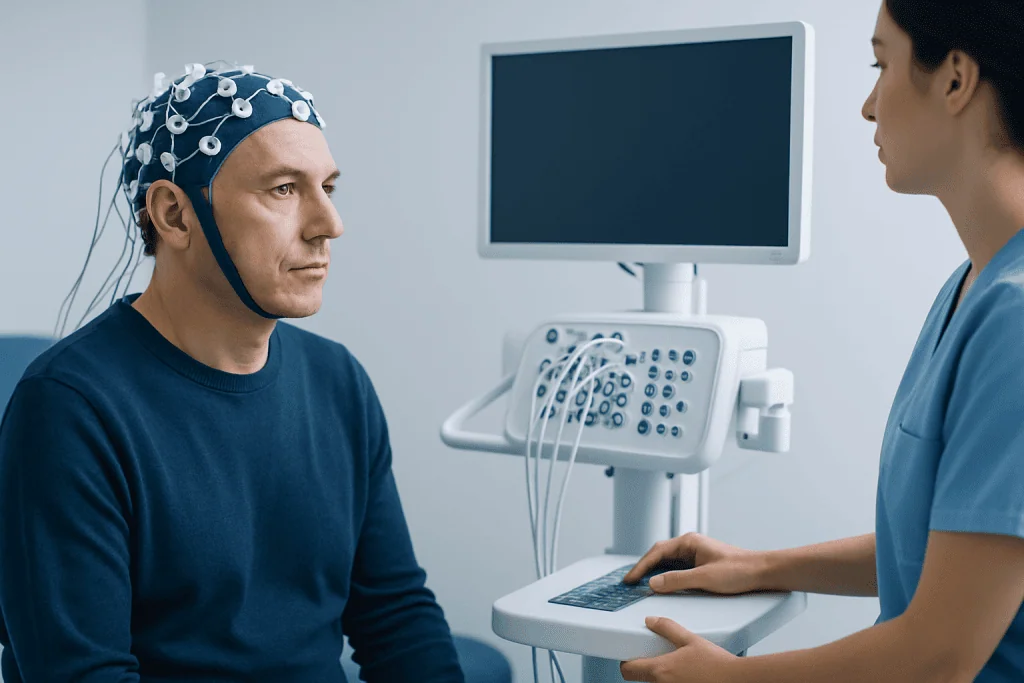
Adults are commonly referred when they or their family notice changes in memory, concentration, word-finding, decision-making, personality, or daily independence. A referral may also be made before or after certain treatments, after a brain injury, or when a physician needs a baseline measure to monitor change over time.
Neuropsychological testing may be useful for many situations, including suspected mild cognitive impairment or dementia, stroke, traumatic brain injury, epilepsy, multiple sclerosis, Parkinson’s disease, movement disorders, brain tumors, infections affecting the nervous system, chronic pain, sleep disorders, attention-deficit/hyperactivity disorder in adulthood, depression, anxiety, or complex medical illness. It may also help clarify whether cognitive symptoms are mainly related to a neurological condition, mood, stress, fatigue, medication effects, sleep disruption, or a combination of factors.
Common reasons for referral include:
- New or worsening memory problems that interfere with daily routines
- Difficulty focusing, multitasking, planning, or completing work tasks
- Changes after concussion, stroke, surgery, or neurological illness
- Questions about driving, finances, medication management, or independent living
- Need for documentation for workplace, school, legal, or disability-related support
- Monitoring progression or treatment response over months or years
What the Testing Measures

A neuropsychological evaluation looks at several thinking systems that work together in daily life. Memory testing may include learning a list of words, recalling a story, recognizing information after a delay, or remembering visual designs. Attention testing may involve listening carefully, responding quickly, switching between tasks, or resisting distractions.
Other tasks assess language skills, such as naming objects, understanding instructions, or finding words under time limits. Visual-spatial testing may ask a person to copy designs, judge locations, or work with patterns. Executive function tests measure planning, mental flexibility, organization, impulse control, and problem-solving. Some evaluations also include fine motor speed, coordination, social cognition, and practical judgment.
Mood, anxiety, sleep, pain, and fatigue are also important. These factors can strongly affect attention and memory, even when the brain structures involved in memory are healthy. Questionnaires and interview questions help the neuropsychologist understand emotional wellbeing, stress levels, daily functioning, and how symptoms affect relationships, work, and independence. This is one reason neuropsychological testing is more informative than a simple memory screen.
What to Expect During the Appointment
The process usually begins with a clinical interview. The neuropsychologist asks about symptoms, medical history, medications, education, work, sleep, mood, substance use, family history, and daily activities. With permission, a family member or close friend may be interviewed because they may notice changes that are hard for the patient to recognize or describe.
The testing portion can last several hours, depending on the referral question and the person’s stamina. Breaks are usually provided. The tasks vary in difficulty by design, so no one is expected to answer everything perfectly. Some tasks may feel easy, while others may be challenging or tiring. Effort and consistency are measured as part of a fair and accurate evaluation, not as a judgment of character.
Preparation is simple. Adults should bring glasses, hearing aids, a medication list, relevant medical records, and prior testing if available. It is helpful to sleep as well as possible the night before, eat normally unless instructed otherwise, and take prescribed medications as directed by the treating doctor. If the patient has language, hearing, vision, mobility, or cultural needs, the clinic should be told in advance so appropriate arrangements can be considered.
How Results Are Interpreted
Results are compared with norms for people of similar age and, when available, education and background. The neuropsychologist looks for patterns rather than focusing on one score. For example, difficulty recalling information that improves with cues may suggest a different cause than difficulty learning information in the first place. Slow processing speed with intact memory may point to a different treatment plan than a primary memory-storage problem.
Interpretation also considers medical conditions, sleep quality, pain, medications, mood, fatigue, sensory changes, education, language, and cultural background. This context is essential. A low score in one area does not automatically mean dementia or permanent brain damage. Likewise, high performance in some areas does not rule out real difficulties in daily life.
The final report usually includes the reason for referral, history, tests used, behavioral observations, results, diagnostic impressions when appropriate, and practical recommendations. Recommendations may include medical follow-up, cognitive rehabilitation, psychotherapy, sleep evaluation, medication review, occupational therapy, speech-language therapy, safety strategies, or accommodations at work or school. In some cases, findings may be integrated with neuroradiology findings or other neurological tests to support a clearer diagnosis.
How Testing Guides Treatment and Daily Life
One of the most valuable parts of neuropsychological testing is the guidance it provides after the appointment. A diagnosis can be helpful, but day-to-day recommendations often matter just as much. The report may suggest memory notebooks, phone reminders, simplified routines, medication organizers, reduced multitasking, structured work breaks, or environmental changes that reduce distractions.
For adults recovering from brain injury or stroke, testing can guide rehabilitation goals and track improvement. For adults with suspected neurodegenerative conditions, it can help establish a baseline and identify which abilities remain strong. For adults with mood, sleep, or attention-related symptoms, results may support targeted treatment that improves functioning. In some cases, evaluation through clinical neuropsychology services becomes part of ongoing care, especially when symptoms change over time.
Testing can also support conversations about safety and independence. This may include whether someone can manage finances, take medication reliably, return to work, continue driving, or live alone with support. These discussions are handled carefully and respectfully, with the aim of preserving independence whenever safely possible while reducing avoidable risks.
When to See a Doctor
Adults should consider speaking with a doctor when cognitive changes are new, worsening, noticeable to others, or interfering with work, relationships, finances, medication use, driving, or household responsibilities. It is also appropriate to seek help after concussion, stroke, seizure, serious infection, major surgery, or a new neurological diagnosis if thinking or behavior has changed.
Some symptoms need prompt medical attention, especially sudden confusion, sudden weakness or numbness, trouble speaking, severe new headache, seizure, loss of consciousness, or abrupt changes in vision or balance. These may require urgent evaluation before any outpatient cognitive testing is considered. For non-urgent concerns, a primary care doctor, neurologist, psychiatrist, or psychologist can help determine whether neuropsychological testing is appropriate.
Acibadem International’s multidisciplinary specialists and JCI-accredited hospitals provide diagnostic evaluation and treatment planning for international patients with neurological and cognitive concerns. Patients should bring prior records and imaging when possible, so the care team can place test results in the full medical context.
Frequently asked questions
Is neuropsychological testing the same as a dementia test?
No. Neuropsychological testing can help evaluate dementia, but it is broader than a dementia test. It measures many areas of thinking and daily function, and it can also help assess brain injury, stroke, ADHD, mood-related cognitive symptoms, epilepsy, movement disorders, and other conditions.
How long does neuropsychological testing take?
The length varies depending on the referral question, the person’s stamina, and the tests needed. Many adult evaluations take several hours, often with breaks. Some clinics divide the assessment into more than one visit if fatigue, medical issues, or scheduling make that easier.
Can someone fail a neuropsychological test?
There is no pass or fail. The purpose is to understand how a person’s brain is functioning across different skills. Some tasks are intentionally difficult so the neuropsychologist can identify strengths, weaknesses, and patterns that guide care.
Will testing show whether memory problems are caused by stress or a brain condition?
Testing can often help distinguish patterns linked with stress, depression, anxiety, sleep problems, medication effects, or neurological disease. However, interpretation works best when combined with medical history, examination, laboratory tests, and imaging when needed. Sometimes more than one factor is contributing.
Should a family member attend the appointment?
A family member or trusted companion can be helpful, especially when the concern involves memory, behavior, or daily function. They may provide examples of changes at home, work, or in social life. The patient’s permission is usually needed before private health information is discussed.
How should an adult prepare for neuropsychological testing?
It is helpful to sleep as well as possible, eat normally unless instructed otherwise, and bring glasses, hearing aids, medication lists, and relevant medical records. Patients should take prescribed medications as directed by their doctor unless told otherwise. They should also tell the clinic in advance about language, vision, hearing, mobility, or fatigue concerns.
References
- American Psychological Association
- International Neuropsychological Society
- National Institute on Aging
- American Academy of Neurology
- World Health Organization
This article is for general information only and is not a substitute for professional medical advice. Please consult a qualified doctor about your individual situation.
Explore treatments in Turkey — costs, top hospitals & a free quote
JCI-accredited · board-certified surgeons · reply within 24h

Related Treatments
Related Conditions
More from the Health Library



Related Specialists

Prof. Dr. Ayşe Sağduyu Kocaman
Neurology
Prof. Dr. Mehmet Zafer Berkman
Neurosurgery
Prof. Dr. Pınar Yalınay Dikmen
Neurology
Prof. Dr. Elif Ilgaz Aydınlar
Neurology