Nodule: What Patients Need to Know

A nodule is a small, solid lump that may be found under the skin or inside an organ. Many nodules are benign, but their location, size, growth, and appearance help guide next steps.
Key Takeaways
- A nodule is a small, solid lump that may be found under the skin or inside an organ.
- Many nodules are benign, but their location, size, growth, and appearance help guide next steps.
- Evaluation may include a physical exam, imaging tests, blood work, or a biopsy.
- Treatment depends on the cause and may range from observation to medication or a procedure.
- Prompt medical review is important if a nodule is new, growing, painful, hard, or linked with other symptoms.
A nodule is a small lump or growth that can develop in many parts of the body, including the skin, thyroid, lungs, breasts, and soft tissues. Many nodules are harmless, but some need testing to learn whether they are benign, inflamed, infectious, or less commonly cancerous.
Overview: what a nodule means
A nodule is a small lump of tissue that can be felt on the body or seen on an imaging test. It is a descriptive term rather than a single diagnosis. In other words, a nodule can have many causes, from a harmless benign growth to inflammation, infection, scarring, cyst-like change, or, less commonly, cancer.
Nodules can form in many places. Common examples include skin nodules, thyroid nodules, lung nodules, breast nodules, and nodules in tendons or soft tissue. Because the meaning of a nodule depends heavily on where it is located and how it behaves over time, medical evaluation focuses on the full picture rather than the word alone.
For patients, the most important point is reassuring and practical: many nodules are not dangerous, but they should not be ignored if they are new, changing, or unexplained. A clinician uses the nodule’s size, texture, growth pattern, associated symptoms, and test results to decide whether it can be safely watched or needs further assessment.
Where nodules can appear and how they may feel
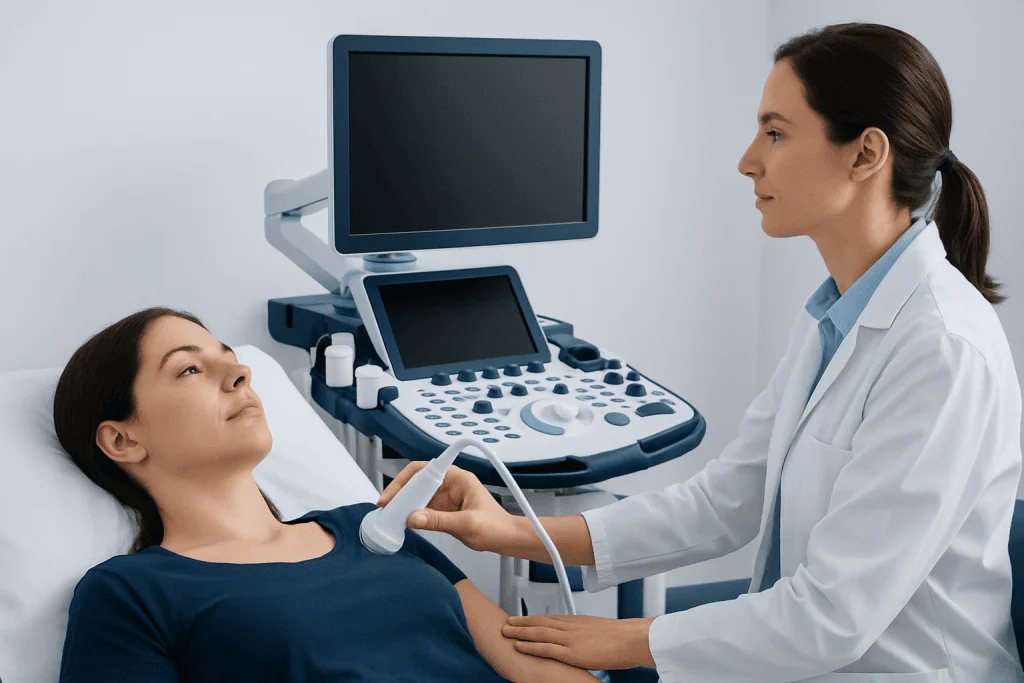
Nodules may develop on the skin, beneath the skin, or inside an organ. A skin nodule may look like a raised bump or feel like a firm pea-sized lump. A thyroid nodule may be noticed as a lump in the front of the neck or may only be found during an ultrasound. A lung nodule usually does not cause symptoms and is often discovered incidentally on a chest X-ray or CT scan.
Some nodules are soft and mobile, while others are firm or fixed in place. They may be smooth or irregular, tender or painless, single or multiple. These features do not give a final diagnosis on their own, but they help doctors estimate the likely cause and determine which tests are most appropriate.
Patients may also hear related terms. A cyst is usually fluid-filled, while a nodule is more often solid. A mass is a broader term that may refer to a larger abnormal area. In the thyroid, clinicians may compare a thyroid nodule with goiter, which refers to enlargement of the gland itself rather than a single lump.
- Skin and scalp
- Thyroid gland
- Lungs
- Breast tissue
- Lymph nodes and soft tissues
- Vocal cords, tendons, or other structures
Symptoms and warning signs

Some nodules cause no symptoms at all. They are discovered during a routine exam or imaging done for another reason. Others become noticeable because they can be seen, felt, or because they press on nearby tissue.
Symptoms vary by location. A skin nodule may be itchy, red, or tender. A thyroid nodule can sometimes cause a visible neck lump, trouble swallowing, a sense of pressure, or hoarseness. A lung nodule usually has no symptoms, but if a person has cough, shortness of breath, or coughing up blood, the doctor looks carefully for other causes in the lungs as well.
Features that deserve prompt medical attention include a nodule that grows steadily, feels very hard, becomes fixed, bleeds, ulcerates, or is associated with fever, weight loss, night sweats, or swollen lymph nodes. These signs do not prove a serious condition, but they are important clues that the nodule should be assessed without delay.
Causes and risk factors
Nodules can develop for many reasons. Benign causes include scar tissue, lipomas, fibrous tissue changes, noncancerous thyroid growths, healing after minor injury, and inflammatory conditions. Infection can also produce a lump, either in the skin and soft tissues or in a deeper organ. In some cases, a nodule represents a normal tissue overgrowth rather than disease.
Autoimmune disease, chronic irritation, smoking, environmental exposures, prior radiation, family history, and increasing age may all raise the likelihood of certain kinds of nodules. For example, thyroid nodules become more common with age, while lung nodules are assessed differently in people with a history of smoking or previous cancer.
Doctors also consider whether the nodule might be linked to an underlying condition. A thyroid lump may need evaluation alongside other endocrine concerns such as thyroid cancer or benign thyroid disease. In the lungs, clinicians distinguish between scarring, infection, inflammation, and a possible lung cancer process based on imaging features and the patient’s medical history.
How a nodule is diagnosed
Diagnosis begins with a detailed history and physical examination. The clinician asks when the nodule first appeared, whether it has changed, whether it causes pain or pressure, and whether there are related symptoms such as fever, cough, swallowing difficulty, skin changes, or unexplained weight loss. Past illnesses, smoking history, family history, and medication use also matter.
Testing depends on the location. Imaging is often helpful. Ultrasound is commonly used for thyroid, breast, and soft tissue nodules because it can show whether a lump is solid or cystic and whether it has suspicious features. CT scans are important in assessing lung nodules and some deeper soft tissue abnormalities. In selected cases, MRI or other imaging may be recommended.
Blood tests can support the evaluation when hormone levels, infection, inflammation, or organ function are relevant. Sometimes the only way to know what a nodule is made of is to sample it directly. This may be done with a needle biopsy, such as thyroid biopsy for a thyroid nodule, or with a tissue biopsy of skin or soft tissue. If imaging suggests a concerning lung nodule, doctors may consider further tests and, when appropriate, bronchoscopy to examine the airways and collect samples.
Not every nodule needs immediate biopsy. Some can be monitored with repeat examination or follow-up imaging over time. The choice depends on the estimated risk, the patient’s symptoms, and whether the result would change treatment.
Treatment options and follow-up
Treatment is guided by the cause of the nodule, not simply by its presence. Many benign nodules need no active treatment and can be watched safely. This approach is common when a nodule is small, stable, and has reassuring features on exam or imaging. Follow-up may involve repeat ultrasound, repeat chest imaging, or routine clinical review.
If a nodule is caused by infection or inflammation, treatment may focus on the underlying problem. This could include antibiotics when a bacterial infection is confirmed, anti-inflammatory treatment, or management of an autoimmune condition. If a nodule causes pain, pressure, cosmetic concern, or difficulty swallowing or breathing, treatment may be advised even when the growth is benign.
Some nodules require a procedure or surgery. Suspicious or confirmed cancerous nodules are managed according to their location and pathology. Thyroid nodules that are concerning on biopsy may lead to thyroid surgery, while selected lung nodules may need further imaging, biopsy, or specialist care. Decisions are individualized and often made by a multidisciplinary team.
Near the end of the diagnostic pathway, patients may benefit from coordinated specialty care. Acibadem International’s multidisciplinary specialists and JCI-accredited hospitals diagnose and treat conditions associated with nodules for international patients when advanced evaluation is needed.
Prevention and self-care
Not all nodules can be prevented, but healthy habits can reduce risk in some situations and make changes easier to notice early. Avoiding tobacco is especially important because smoking increases the risk of several lung conditions, including cancers that may first appear as a nodule on imaging. Protecting the skin from excessive sun exposure and checking the skin regularly can also help identify new or changing lumps.
General self-care includes paying attention to new body changes without becoming alarmed. Patients should avoid squeezing, picking, or repeatedly pressing on a lump, since this can irritate the area and make assessment more difficult. Keeping a simple note of when the nodule was first noticed and whether it has grown or changed can be useful at the appointment.
If a doctor recommends observation, follow-up matters. Repeat scans or exams are part of safe care because stability over time often supports a benign diagnosis, while change may signal the need for further testing. Patients should also continue management of any underlying conditions, such as thyroid disease, chronic inflammatory disorders, or previous cancer surveillance.
When to seek medical care
A patient should arrange medical evaluation if a nodule is new, enlarging, painful, persistent, or unexplained. Assessment is also important if the nodule feels hard, seems fixed to deeper tissue, causes visible skin changes, or appears together with swollen lymph nodes.
More urgent review is sensible when a person has trouble swallowing, breathing changes, ongoing hoarseness, unexplained weight loss, fever, night sweats, coughing up blood, or a lump after a history of cancer. These symptoms do not automatically mean something serious, but they do justify timely medical attention.
In many cases, seeing a primary care doctor is the right first step. Depending on the location of the nodule, the patient may then be referred to a dermatologist, endocrinologist, pulmonologist, general surgeon, ENT specialist, or oncologist for targeted testing and treatment planning.
Frequently asked questions
Is a nodule always cancer?
No. Many nodules are benign and may be related to inflammation, infection, scar tissue, or noncancerous tissue growth. The risk depends on where the nodule is, how it looks on examination or imaging, and whether it changes over time.
What is the difference between a nodule and a cyst?
A nodule is usually a solid lump of tissue, while a cyst is typically a sac filled with fluid or semi-fluid material. Doctors often use ultrasound or other imaging to help tell the difference.
Can a nodule go away on its own?
Some can, especially if they are related to temporary inflammation or infection. Others remain stable for years without causing harm. A doctor can advise whether observation is appropriate or whether testing is needed.
How do doctors decide if a biopsy is needed?
They consider the nodule’s size, appearance, location, growth pattern, and the patient’s risk factors and symptoms. If the findings suggest uncertainty or a meaningful risk of a serious cause, a biopsy may be recommended to identify the tissue type.
Are lung nodules common?
Yes. Lung nodules are commonly found during imaging, especially CT scans done for other reasons. Many are benign, but doctors assess them carefully based on size, shape, smoking history, and whether they change on follow-up scans.
Do thyroid nodules usually cause symptoms?
Often they do not. Many thyroid nodules are found incidentally on ultrasound or a routine neck exam. Larger nodules may cause a visible lump, pressure in the neck, swallowing difficulty, or voice changes.
References
- World Health Organization
- American Thyroid Association
- American College of Radiology
- National Cancer Institute
- Mayo Clinic
This article is for general information only and is not a substitute for professional medical advice. Please consult a qualified doctor about your individual situation.
Oncology care in Turkey — second opinion and treatment plan
JCI-accredited · board-certified surgeons · reply within 24h
Add us as a Preferred Source to see more of our trusted health content across Google Search, AI Overviews and Discover.