Nystagmus — Explained by Medical Evidence, Not Myths
Nystagmus means involuntary, rhythmic eye movements that can affect vision and balance. Some people are born with nystagmus, while others develop it later because of an inner ear, neurological, eye, or medication-related problem.
Key Takeaways
- Nystagmus means involuntary, rhythmic eye movements that can affect vision and balance.
- Some people are born with nystagmus, while others develop it later because of an inner ear, neurological, eye, or medication-related problem.
- Diagnosis usually includes an eye examination and may also involve balance, hearing, neurological, or imaging tests.
- Treatment depends on the cause and may include glasses, contact lenses, vision support, medication changes, vestibular care, or surgery in selected cases.
- Sudden-onset nystagmus, especially with dizziness, weakness, double vision, or severe headache, needs prompt medical assessment.
Nystagmus is a condition in which the eyes move repeatedly and uncontrollably, often side to side, up and down, or in a circular pattern. It is not a myth or a personality trait; it is a medical sign that may be present from infancy or develop later, and evaluation focuses on finding the cause and improving vision, balance, and daily function.
Overview: what nystagmus really is
Nystagmus is involuntary, repetitive movement of the eyes. The movement may be horizontal, vertical, or rotary, and it can be constant or appear only in certain gaze positions. Many people describe the result as shaky vision, poor focus, difficulty judging depth, or trouble maintaining balance.
Medical evidence shows that nystagmus is not one single disease. Instead, it is a sign that can occur for different reasons, including congenital visual pathway differences, inner ear disorders, neurological conditions, head injury, or medication effects. In some people it begins in early infancy; in others it starts later in life and may need urgent evaluation.
The effect on daily life varies widely. Some people mainly notice reduced visual clarity, while others are more affected by dizziness, light sensitivity, head posture changes, or problems with reading and driving. Understanding the type of nystagmus helps guide treatment and separate facts from common myths.
Symptoms and how nystagmus may feel
The core sign of nystagmus is repeated eye movement that a person cannot control. In some cases the movement is visible to others; in others it is subtle and found during an examination. Vision may be blurred because the eyes cannot hold a steady target for long enough to create a clear image.
Symptoms can include oscillopsia, a sensation that the environment is moving or shaking, although this is more common in acquired nystagmus than in infantile forms. Some people also experience dizziness, unsteadiness, nausea, sensitivity to busy visual environments, or difficulty following moving objects.
Children with nystagmus may adopt a head turn or tilt to place the eyes in a position where the movement becomes quieter and vision improves. This is called a null point. Adults may notice symptoms when looking to one side, in dim light, during fatigue, or when trying to focus on fine detail.
- Blurred or unstable vision
- Difficulty with depth perception
- Head turn or unusual head posture
- Dizziness or balance problems
- Light sensitivity or eye strain
- Trouble reading, tracking, or driving
Types, causes, and risk factors

A practical way to understand nystagmus is to divide it into infantile and acquired forms. Infantile nystagmus usually appears in the first months of life and may be linked to conditions affecting visual development, such as albinism, congenital cataract, retinal disorders, optic nerve problems, or isolated infantile nystagmus syndrome. Some children have a family history, while others do not.
Acquired nystagmus begins later and often points to a new medical issue. Common causes include inner ear and balance disorders, medication or alcohol effects, multiple sclerosis, stroke, brain or cerebellar disease, migraine-related vestibular disorders, head trauma, and metabolic or nutritional problems. When dizziness is prominent, clinicians may also consider vestibular conditions such as vertigo.
Risk factors depend on the cause. They may include a history of neurological illness, ear disease, significant vision disorders, recent infection, head injury, or use of medicines that affect the brain or balance system. The movement pattern itself can also suggest where the problem may be arising, which is why careful observation is important.
Not every eye wobble is the same. Some forms are jerk nystagmus, in which the eyes drift one way and quickly reset; others are pendular, with a more equal back-and-forth motion. Distinguishing between these patterns helps doctors decide whether the source is primarily ocular, vestibular, or neurological.
How doctors diagnose nystagmus
Diagnosis starts with a detailed history. A doctor will ask when the movements began, whether symptoms are constant or sudden, what makes them worse, and whether there are associated symptoms such as hearing changes, double vision, headache, weakness, numbness, recent infection, or medication use. In infants and children, pregnancy, birth, developmental, and family history may also matter.
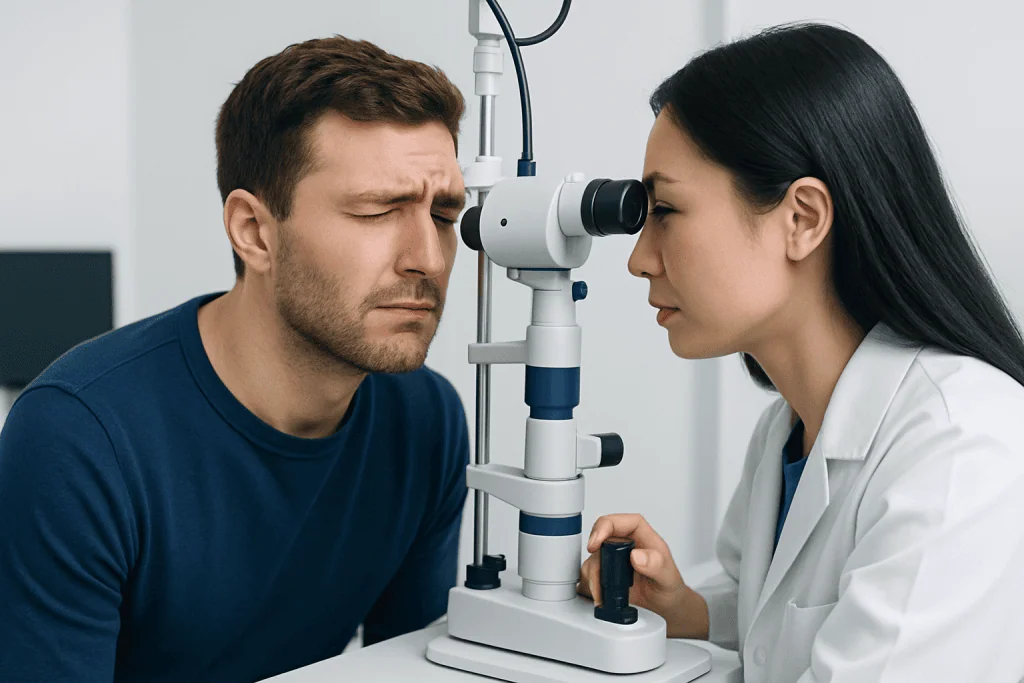
An eye examination is central. This may include assessment of visual acuity, refraction, eye alignment, pupil responses, retinal and optic nerve health, and the direction and timing of the eye movements in different gaze positions. In many cases, patients benefit from evaluation by specialists in ophthalmology or neuro-ophthalmology when available.
Additional tests depend on what the examination suggests. These can include vestibular or hearing tests, optical coherence tomography, electrodiagnostic studies of the retina, blood tests, and brain imaging such as MRI if a neurological cause is suspected. If sudden dizziness or a balance disorder is part of the picture, assessment by teams experienced in neurology may be appropriate.
The goal is not only to confirm that nystagmus is present but to identify whether there is a treatable underlying condition. This is especially important when the problem is new, rapidly changing, or accompanied by other neurological or ear-related symptoms.
Treatment options and living with nystagmus
Treatment is based on cause, age, and the symptoms that matter most to the patient. In infantile nystagmus, care often focuses on maximizing vision, correcting refractive error, treating associated eye disease, and supporting school and daily function. Glasses or contact lenses may improve visual performance, and low-vision support can be valuable for reading, contrast, and lighting needs.
For acquired nystagmus, the first priority is to treat the underlying problem whenever possible. This may include managing an inner ear disorder, reviewing medications, treating inflammation or neurological disease, or addressing metabolic causes. If nystagmus is related to another eye problem, treatment may overlap with care pathways used for strabismus or other disorders of eye alignment and binocular vision.
Some patients benefit from prisms, contact lenses, or specific strategies to reduce an abnormal head posture. In selected cases, eye muscle surgery may help reposition the eyes toward a null point or improve head posture, although it is not suitable for everyone and does not cure all forms. When a structural eye condition contributes to visual impairment, treatment through eye surgery may be considered where appropriate.
Rehabilitation is also important. People may benefit from occupational therapy, vestibular therapy, visual aids, large-print devices, screen adjustments, and practical counseling for school, work, and driving regulations. The aim is realistic improvement in comfort, safety, and visual function rather than a one-size-fits-all solution.
Self-care, daily strategies, and prevention
There is no universal way to prevent nystagmus because many causes are congenital or arise from conditions that are not fully preventable. Even so, reducing risk where possible is helpful. This includes taking medications exactly as prescribed, avoiding excess alcohol or recreational substances, protecting the head from injury, and seeking care for new ear, balance, or neurological symptoms.
For people already living with nystagmus, daily strategies can make a meaningful difference. Good lighting, larger text, regular breaks during visually demanding tasks, and arranging reading material or screens at a comfortable angle may reduce strain. If a person has a preferred head position, work and study spaces can be adapted to support a more comfortable posture.
Parents of children with nystagmus can help by arranging regular eye follow-up, discussing classroom seating, and asking about visual aids or educational support if needed. Adults should speak with a doctor about driving safety, workplace adjustments, and whether dizziness or visual instability requires referral for balance rehabilitation.
Near the end of the care pathway, some patients seek coordinated evaluation across specialties. Acibadem International’s multidisciplinary specialists and JCI-accredited hospitals diagnose and treat nystagmus and related eye, balance, and neurological conditions for international patients when comprehensive assessment is needed.
When to seek medical care
Medical review is advisable whenever nystagmus is newly noticed, affects daily life, or is associated with reduced vision, reading difficulty, school concerns, or a persistent head turn. Babies with unusual eye movements should be evaluated promptly because early assessment can identify vision problems that benefit from timely treatment and support.
Urgent medical attention is important if nystagmus begins suddenly, especially with severe dizziness, double vision, weakness, numbness, new trouble speaking, severe headache, difficulty walking, or recent head injury. These symptoms can suggest a neurological or inner ear condition that needs prompt evaluation.
People should also seek care if symptoms change, become more frequent, or appear after starting a new medication. A qualified doctor can determine whether the eye movements are benign, whether further tests are needed, and which treatments may improve comfort and function.
Frequently asked questions
Is nystagmus a disease or a symptom?
Nystagmus is best understood as a clinical sign rather than a single disease. It describes involuntary eye movements that may occur on their own or as part of an eye, inner ear, or neurological condition.
Can nystagmus go away on its own?
That depends on the cause. Some temporary forms improve when the underlying trigger, such as a medication effect or inner ear problem, is treated, while congenital forms usually persist but can often be managed to improve daily function.
Does nystagmus always mean a serious brain problem?
No. Nystagmus can occur for many reasons, including non-dangerous visual developmental conditions present from infancy. However, sudden new nystagmus in an adult, especially with other neurological symptoms, should be assessed promptly.
Can people with nystagmus drive?
Some can, and some cannot; it depends on visual acuity, visual stability, local legal standards, and whether symptoms interfere with safe driving. A doctor or eye specialist can advise based on formal vision testing and the person’s specific type of nystagmus.
Is nystagmus hereditary?
It can be. Certain forms of infantile nystagmus and some related eye conditions may run in families, but many cases are not inherited in a simple way. Family history is one part of the medical assessment.
What kind of doctor treats nystagmus?
Treatment may involve an ophthalmologist, neuro-ophthalmologist, neurologist, ENT specialist, pediatric specialist, or vestibular rehabilitation team, depending on the cause. Because nystagmus can affect both vision and balance, multidisciplinary care is often helpful.
References
- National Eye Institute
- American Academy of Ophthalmology
- National Institute of Neurological Disorders and Stroke
- American Academy of Neurology
- Mayo Clinic
This article is for general information only and is not a substitute for professional medical advice. Please consult a qualified doctor about your individual situation.
Explore treatments in Turkey — costs, top hospitals & a free quote
JCI-accredited · board-certified surgeons · reply within 24h
Add us as a Preferred Source to see more of our trusted health content across Google Search, AI Overviews and Discover.

More from the Health Library

Meatus: Symptoms, Causes, and Treatment — Complete Patient Guide

Ferulic Acid: A Complete Medical Overview

Pimple Popping: A Complete Medical Overview

Stool Is Yellow Mucus: A Complete Medical Overview

Myelogram: What Patients Need to Know