Ortho Surgeon: An Evidence-Based Patient Guide

Orthopedic surgeons treat bones, joints, muscles, tendons, ligaments and related nerves. The best specialist is one whose training and experience match the patient’s specific condition and treatment needs.
Key Takeaways
- Orthopedic surgeons treat bones, joints, muscles, tendons, ligaments and related nerves.
- The best specialist is one whose training and experience match the patient’s specific condition and treatment needs.
- A careful orthopedic assessment usually includes a history, physical examination and targeted imaging or laboratory tests when needed.
- Surgery is considered when expected benefits outweigh risks and appropriate nonsurgical treatment has not provided enough relief.
- Recovery depends on the procedure, overall health, rehabilitation plan and the physical demands of daily life or work.
An ortho surgeon, also called an orthopedic surgeon, is a doctor who diagnoses and treats conditions and injuries affecting the musculoskeletal system. Surgery is only one part of orthopedic care; many people improve with rehabilitation, medicines, injections, activity changes or other nonsurgical options.
What an ortho surgeon does
An ortho surgeon is a physician trained to diagnose, prevent and treat disorders of the musculoskeletal system: bones, joints, cartilage, muscles, tendons, ligaments and some related nerve problems. The specialty is often called orthopedics or orthopedic surgery. Orthopedic surgeons care for people of all ages, from children with growth-related bone concerns to older adults with arthritis or fractures.
Despite the name, an orthopedic surgeon does not automatically recommend an operation. Their role includes identifying the cause of pain or reduced function, explaining realistic options and guiding patients toward the least invasive effective treatment. This may include physical therapy, exercise guidance, braces, medicines, injections, monitoring or referral to another specialist.
Many orthopedic surgeons develop focused expertise in an area such as hip and knee replacement, sports injuries, shoulder and elbow conditions, hand surgery, foot and ankle surgery, spine care, orthopedic trauma, pediatric orthopedics or orthopedic oncology. Choosing a clinician with experience relevant to the affected body part and proposed treatment can be helpful.
Conditions an orthopedic surgeon may treat
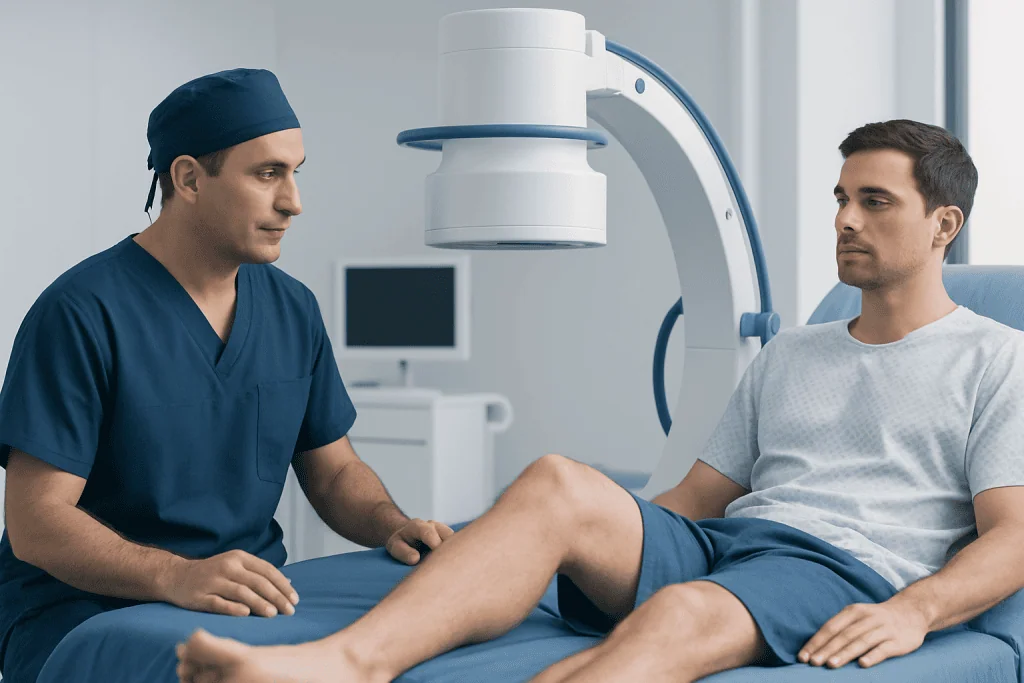
People may see an orthopedic surgeon after an injury, for persistent pain, or because movement has become difficult. Common reasons include fractures, sprains, tendon tears, ligament injuries, meniscus injuries, dislocations, shoulder instability, carpal tunnel syndrome, back or neck pain, deformities and sports-related injuries.
Orthopedic care is also central to chronic conditions such as osteoarthritis, inflammatory joint disease-related damage, osteoporosis-related fractures and degenerative spine conditions. For example, a person whose knee arthritis continues to limit sleep, walking or daily activities despite appropriate nonsurgical care may discuss osteoarthritis management and whether surgery could be suitable.
Symptoms can arise from more than one cause. Hip-region pain may originate in the hip joint, spine, muscles or nearby structures, while arm numbness may involve the neck, shoulder, elbow or wrist. A good assessment considers these possibilities rather than assuming that a scan finding is the sole source of symptoms.
- Acute injuries, including suspected fractures or dislocations
- Joint pain, swelling, stiffness or instability
- Reduced range of movement or loss of strength
- Persistent tendon, muscle or ligament symptoms
- Difficulty walking, using a hand, working or participating in usual activities
How orthopedic assessment and treatment planning work
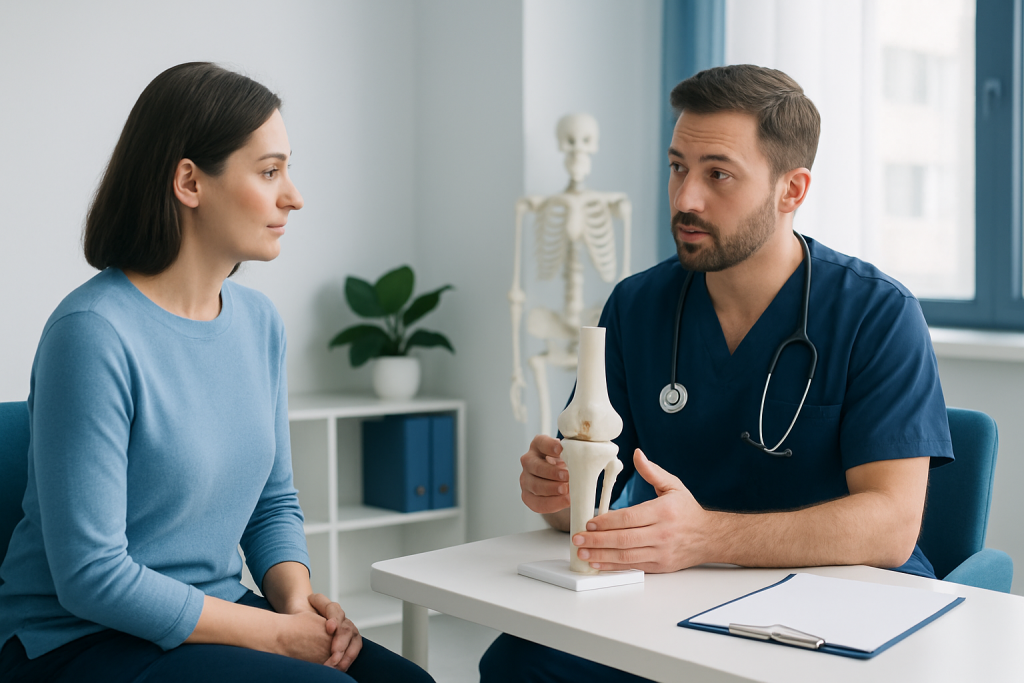
The first consultation generally starts with a detailed history. The orthopedic surgeon may ask when symptoms started, what makes them better or worse, whether there was an injury, how symptoms affect work and daily activities, and what treatments have already been tried. Medical conditions, medicines, previous operations and personal goals are also important to treatment planning.
A focused physical examination follows. This may include observing posture and walking, checking swelling or tenderness, measuring movement, testing strength and stability, and assessing sensation and circulation. Depending on the concern, tests can include X-rays, ultrasound, magnetic resonance imaging (MRI), computed tomography (CT), blood tests or nerve studies. Not every patient needs every test.
The surgeon then discusses the working diagnosis and available options, including no immediate intervention when that is appropriate. Shared decision-making is important: the patient and clinician should weigh symptom severity, likely natural course, activity goals, work demands, health status, possible benefits, limitations and risks. A second opinion can be reasonable, particularly before major elective surgery or when options are unclear.
How orthopedic procedures work: candidacy and step-by-step care
Orthopedic procedures range from simple fracture stabilization to complex reconstruction and joint replacement. Some are performed through small incisions using a camera and specialized instruments, known as arthroscopy. Others require an open incision to repair, realign, remove or replace damaged structures. The procedure selected depends on the diagnosis, anatomy, severity of damage and the person’s health and priorities.
Candidacy is individualized. Surgery may be considered when a structural problem is likely to respond to an operation and symptoms remain significant despite appropriate conservative care, or when urgent treatment is needed, such as for certain fractures, infections, nerve compression or loss of blood supply. Age alone does not determine suitability; overall health, bone quality, smoking status, infection risk, ability to participate in rehabilitation and expected benefit all matter.
Although details vary, the care pathway commonly includes preparation before surgery, anesthesia planning, the procedure itself, pain and clot-prevention measures when indicated, early movement or protection of the operated area, and a rehabilitation program. For advanced joint damage, joint replacement surgery may remove damaged joint surfaces and replace them with artificial components designed to restore movement and reduce pain. The surgeon explains the planned approach, alternatives and expected restrictions before consent is given.
After surgery, follow-up appointments monitor wound healing, movement, strength and recovery progress. Rehabilitation may involve a physiotherapist, occupational therapist, pain specialist, primary care clinician and other professionals. Patients should understand their weight-bearing, lifting, driving and return-to-work instructions, since these vary substantially between procedures.
Benefits, risks and recovery timeline
The intended benefits of orthopedic treatment may include less pain, better stability, improved movement, healing of an injury and greater ability to manage daily activities. Results are influenced by the underlying condition, procedure, rehabilitation, overall health and expectations. An operation may improve function without making a joint or limb feel exactly as it did before injury or disease.
All procedures have potential risks. These can include bleeding, infection, blood clots, anesthesia-related complications, nerve or blood-vessel injury, persistent pain or stiffness, delayed healing, implant problems, failure of repair, the need for further treatment and complications specific to the procedure. The likelihood of a complication differs between individuals and surgeries. The surgical team can explain the risks most relevant to the patient.
Recovery is not identical for everyone. Minor soft-tissue procedures may allow a return to desk-based activities within days or weeks, while fracture repair, tendon reconstruction, spinal procedures and joint replacement may require weeks to months of healing and structured rehabilitation. Returning to strenuous work, driving, sports or impact activity often takes longer than returning to basic self-care.
Following rehabilitation advice, attending follow-up visits, protecting the surgical area as instructed and discussing concerns early can support safer recovery. Smoking cessation, balanced nutrition, sleep and management of conditions such as diabetes may also help healing. Pain, swelling and fatigue can fluctuate during recovery, but new or worsening symptoms should be reviewed by the care team.
How do I know if my orthopedic surgeon is good?
A good orthopedic surgeon is appropriately licensed and trained, communicates clearly, performs a careful assessment and makes recommendations that fit the individual rather than offering a one-size-fits-all solution. Patients can ask about board certification or equivalent specialist credentials, fellowship training, experience with their condition and how often the clinician performs a proposed procedure.
It is also reasonable to ask what nonsurgical choices are available, what may happen without surgery, what recovery is likely to involve, and what risks or limitations should be expected. A trustworthy clinician welcomes questions, explains uncertainty honestly and gives the patient time to consider a non-emergency decision. Clear written instructions and coordinated rehabilitation planning are positive practical signs.
Online reviews can describe personal experiences, but they cannot reliably measure technical quality or determine which clinician is best for a specific case. Hospital quality processes, infection prevention practices, access to anesthesia and rehabilitation services, and the availability of a second opinion can be important considerations. Patients should seek urgent care rather than delay if an injury requires immediate treatment.
Who is the best orthopedic surgeon in Louisville, KY?
There is no single objectively “best” orthopedic surgeon in Louisville, KY, for every person or condition. The most appropriate clinician depends on the problem being treated, such as a shoulder tendon tear, hip arthritis, a complex fracture, a hand condition or a spine-related concern. A surgeon who specializes in one area may not be the right match for another.
People looking for care in Louisville can start by checking physician credentials through recognized medical licensing and specialty-certification resources, confirming that the surgeon treats their specific condition, and asking about the hospital or surgical center where care is provided. A primary care clinician, physiotherapist or trusted local health professional may also help identify suitable referral options.
For a planned, non-urgent operation, a second orthopedic opinion can help patients compare recommendations and feel confident about the diagnosis and care plan. It is useful to bring prior imaging reports, treatment records and a list of goals and questions to each appointment.
What is the most difficult surgery for an orthopedic?
There is no universally accepted single “most difficult” orthopedic surgery. Complexity depends on the anatomy involved, severity of injury or disease, prior operations, bone and soft-tissue quality, infection risk, medical conditions and whether reconstruction must be performed urgently. The difficulty of a case is assessed by the surgical team, not by a simple ranking of procedures.
Examples of technically demanding work can include revision joint replacement after an implant problem or infection, reconstruction after severe trauma, complex pelvic or acetabular fractures, limb-sparing surgery for bone tumors, major spinal deformity correction and some microsurgical hand or limb reconstructions. These cases may require coordinated care from orthopedic subspecialists, anesthesiologists, radiologists, rehabilitation professionals and other teams.
For patients, the more useful question is whether the surgeon and hospital have the relevant expertise, facilities and team support for the proposed procedure. The clinician should explain why a procedure is recommended, what alternatives exist and how risks are managed in the person’s individual situation.
Who are the best orthopedic surgeons in Iowa City?
It is not possible to name the best orthopedic surgeons in Iowa City without knowing the patient’s diagnosis, treatment needs, insurance or access considerations, and personal preferences. Orthopedic care is highly specialized, so the best match for knee replacement may differ from the best match for a sports injury, scoliosis, hand problem or traumatic fracture.
A practical approach is to identify surgeons whose stated subspecialty and training fit the condition, verify current licensure and specialist certification, and ask about their approach to both nonsurgical and surgical care. Patients may also consider the availability of imaging, anesthesia, infection prevention, rehabilitation and multidisciplinary care at the facility.
When surgery is elective, requesting a second opinion is a reasonable way to clarify the diagnosis and compare options. The patient should prioritize understandable communication, a shared decision-making approach and a plan that accounts for recovery support at home, work and personal activity goals.
When to seek medical care
Prompt medical assessment is advisable for persistent or worsening joint, bone, muscle or tendon symptoms that interfere with walking, sleep, work or normal daily activities. An orthopedic consultation may also be appropriate after an injury that has not improved with initial care, repeated joint instability, progressive loss of movement, or pain that continues despite rest and guided conservative treatment.
Emergency evaluation is needed for a visibly deformed limb or joint, an inability to bear weight after a significant injury, uncontrolled bleeding, a cold or pale limb, new weakness or numbness after trauma, or severe pain with rapidly increasing swelling. Fever, redness, warmth and severe pain around a joint or surgical wound also require urgent medical advice, as infection must be assessed promptly.
Acibadem International’s multidisciplinary specialists and JCI-accredited hospitals diagnose and treat orthopedic conditions for international patients, with rehabilitation and other relevant services involved when needed. A qualified clinician can determine whether symptoms need orthopedic treatment, another specialty assessment or urgent care.
Frequently asked questions
Is an ortho surgeon the same as an orthopedic surgeon?
Yes. “Ortho surgeon” is an informal shortened term for an orthopedic surgeon. Both refer to a doctor who specializes in conditions affecting the musculoskeletal system.
Do I need a referral to see an orthopedic surgeon?
This depends on the healthcare system, insurance plan and local referral rules. Some people can book directly, while others need a referral from a primary care clinician or another specialist.
Will an orthopedic surgeon always recommend surgery?
No. Orthopedic surgeons commonly use nonsurgical treatments such as rehabilitation, activity modification, braces, medicines or injections. Surgery is generally considered when it is likely to offer meaningful benefit or when urgent structural treatment is needed.
What should I bring to an orthopedic appointment?
Bring a list of symptoms, medicines, allergies, prior treatments and relevant medical conditions. Previous imaging discs or reports, operative notes and a list of questions can also help the consultation.
How long does it take to recover from orthopedic surgery?
Recovery can range from days to many months, depending on the procedure and the person’s health and rehabilitation needs. The surgeon and rehabilitation team can provide procedure-specific milestones, but healing rates vary.
Can I get a second opinion before orthopedic surgery?
Yes. A second opinion is often appropriate for non-emergency surgery, especially if the diagnosis is uncertain or major surgery is being considered. It can help confirm the diagnosis and allow discussion of alternative approaches.
References
- American Academy of Orthopaedic Surgeons
- National Institute of Arthritis and Musculoskeletal and Skin Diseases
- National Health Service
- Centers for Disease Control and Prevention
- World Health Organization
This article is for general information only and is not a substitute for professional medical advice. Please consult a qualified doctor about your individual situation.
Joint and spine care in Turkey — expert assessment & treatment
JCI-accredited · board-certified surgeons · reply within 24h
Add us as a Preferred Source to see more of our trusted health content across Google Search, AI Overviews and Discover.

More from the Health Library



Related Specialists

Dr. Ayten Güner Akbıyık
Thoracic Surgery
Assoc. Prof. Dr. Aslıhan Demirel
Infectious Diseases & Clinical Microbiology
Assoc. Prof. Dr. Emrullah Hayta
Physical Medicine & Rehabilitation
Assoc. Prof. Dr. Mustafa Zungur
Cardiology