

Otoplasty: Prominent Ear Correction and Recovery After Ear Surgery

Otoplasty can reposition, reshape, or reduce the visible prominence of the outer ears without affecting hearing. The procedure may be suitable for children whose ears have nearly reached adult size, as well as for teenagers and adults.
Key Takeaways
- Otoplasty can reposition, reshape, or reduce the visible prominence of the outer ears without affecting hearing.
- The procedure may be suitable for children whose ears have nearly reached adult size, as well as for teenagers and adults.
- Recovery usually involves wearing a protective headband, avoiding pressure on the ears, and following wound-care instructions carefully.
- Temporary swelling, bruising, tightness, or mild discomfort are expected after surgery and typically improve gradually.
- A qualified plastic surgeon should assess ear anatomy, medical history, and expectations before recommending treatment.
Otoplasty is a plastic surgery procedure that reshapes or repositions the outer ears, most often to reduce the appearance of prominent ears. Understanding the procedure, recovery steps, and realistic expectations can help patients and families make informed decisions.
Overview
Otoplasty is a surgical procedure that changes the shape, position, or proportion of the outer ear. It is commonly known as prominent ear correction or ear pinning surgery when the goal is to bring ears closer to the head. The operation focuses on the visible cartilage and skin of the external ear and does not treat hearing problems or conditions inside the ear canal.
Many people seek otoplasty because the ears appear to project more than desired, are uneven, or have an underdeveloped natural fold. Prominent ears are usually a normal variation in ear shape, not a disease. However, they may affect self-confidence, especially in school-age children or adults who feel uncomfortable with their ear appearance.
Otoplasty is considered an individualized procedure. A surgeon evaluates ear size, cartilage strength, symmetry, skin quality, age, and personal goals before recommending a plan. The aim is a natural-looking ear position that fits the person’s facial features, while preserving ear function and comfort.
Who May Be a Candidate for Otoplasty?
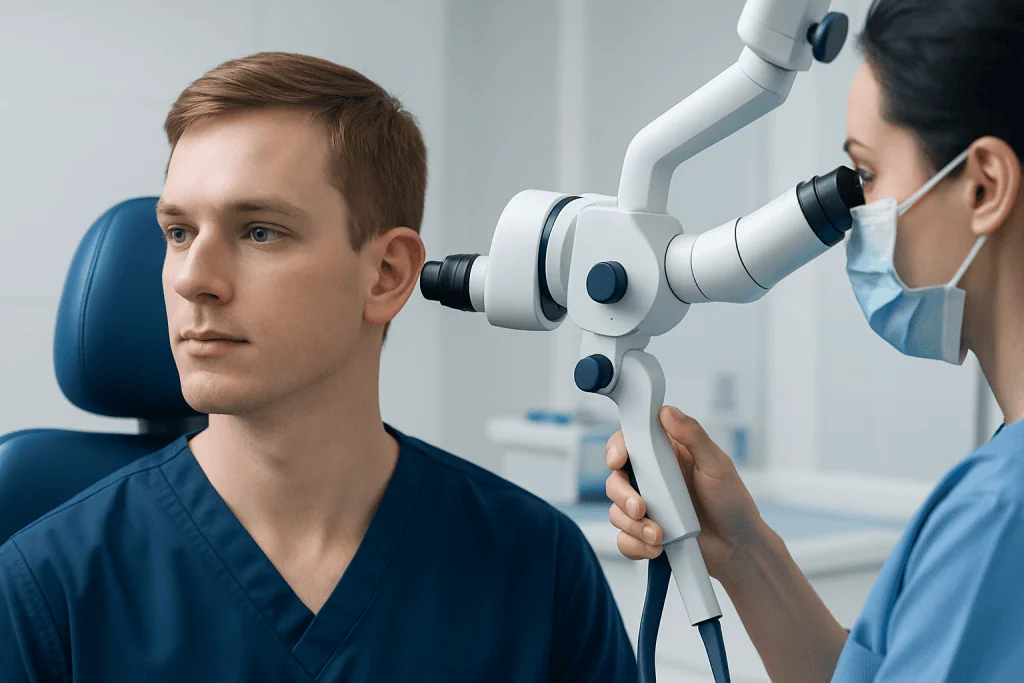
Otoplasty may be considered for children, teenagers, and adults who are bothered by prominent, asymmetrical, or misshapen ears. In children, the procedure is usually discussed once the ear has reached most of its adult size, often around early school age. The child should also be able to cooperate with aftercare, such as keeping a headband in place and avoiding rough play during recovery.
Adults may choose otoplasty at any age if they are in good general health and have realistic expectations. Some adults had prominent ears since childhood but did not undergo treatment earlier. Others may seek correction after an injury or previous surgery that changed the ear shape.
Good candidates typically have stable health, no active ear or skin infection, and a clear understanding that surgery improves ear appearance rather than creating perfect symmetry. A consultation is important for discussing medical history, medications, allergies, smoking or nicotine use, and any tendency toward thick or raised scars.
- Common reasons for considering otoplasty include ears that protrude noticeably from the head.
- One ear may be more prominent than the other.
- The natural antihelical fold may be weak or absent.
- The bowl-shaped conchal cartilage may be larger or deeper than average.
- Previous trauma or surgery may have affected ear shape.
How Prominent Ear Correction Is Performed

The exact surgical technique depends on the cause of ear prominence. In many cases, the cartilage fold near the upper ear is reshaped so the ear sits closer to the head. In other cases, the conchal cartilage, which is the deeper cup-like part of the ear, may need adjustment. Some patients require a combination of cartilage scoring, suturing, and limited cartilage reduction.
Otoplasty is commonly performed through an incision placed behind the ear, where the scar is usually less visible. Through this incision, the surgeon can reshape the cartilage and secure the new ear position with internal stitches. The skin is then closed, and a protective dressing is applied to support the ears during the first stage of healing.
Anesthesia varies according to age, health, surgical plan, and patient preference. Children often require general anesthesia for safety and comfort. Adults may have local anesthesia with sedation or general anesthesia, depending on the extent of correction and the recommendations of the surgical team.
The procedure is typically planned as an outpatient surgery, meaning the patient can usually return home the same day after appropriate monitoring. Before leaving the surgical facility, patients or caregivers receive instructions about dressings, head positioning, pain control, activity limits, and follow-up visits.
Preparing for Ear Surgery
Preparation begins with a detailed consultation. The surgeon examines both ears from the front, side, and back, and may take medical photographs for planning. The consultation is also the time to explain goals, ask questions, and understand what can realistically be achieved based on ear anatomy.
Patients should tell the medical team about all current medications, supplements, previous surgeries, bleeding problems, allergies, and any history of poor wound healing. Some medicines or supplements that increase bleeding risk may need to be stopped before surgery, but only under medical guidance. Smoking and nicotine products can impair healing, so patients are usually advised to stop them before and after surgery according to the surgeon’s instructions.
Practical planning helps recovery go smoothly. Patients should arrange transportation home after surgery and, for children, adult supervision. It can be helpful to prepare soft, front-opening clothing that does not need to be pulled over the ears, as well as a comfortable sleeping arrangement that avoids pressure on the ears.
- Follow fasting instructions if anesthesia or sedation will be used.
- Wash hair before surgery if advised, because hair washing may be limited at first.
- Avoid applying hair products, makeup, or jewelry near the surgical area on the day of surgery.
- Plan time away from school, work, sports, and swimming as recommended.
Recovery After Otoplasty
After otoplasty, the ears are usually covered with a soft, protective dressing or bandage. This dressing helps maintain the new ear position and protects the area from accidental bending. Patients may feel tightness, mild throbbing, itching, or pressure during the first days; these sensations are usually manageable with the pain-relief plan recommended by the doctor.
When the first dressing is removed, the ears may look swollen, bruised, or slightly uneven. This early appearance is expected and does not represent the final result. Swelling gradually improves over the following weeks, while subtle settling can continue for longer as tissues soften and scars mature.
A soft headband is often worn after the initial dressing period, especially at night, to prevent the ears from folding forward during sleep. Patients should avoid sleeping on the ears, pulling shirts tightly over the head, using headphones that press on the ears, and participating in contact sports until the surgeon confirms it is safe.
Return to school or desk work may be possible within a relatively short time, depending on comfort, the type of activity, and the surgeon’s advice. Strenuous exercise, swimming, and activities with a risk of ear impact are usually restricted for longer. Follow-up appointments are important so the surgeon can check healing, remove or assess sutures if needed, and guide the safe return to normal routines.
Benefits, Limitations, and Possible Risks
Otoplasty can provide a more balanced ear position and reduce the visual prominence of the ears. For many patients, the benefit is practical and emotional: they may feel more comfortable wearing short hairstyles, tying hair back, or being photographed from the side. The procedure does not change hearing, and it does not alter the inner structures responsible for sound transmission.
It is important to understand that perfect symmetry is not a realistic goal. Natural ears are not identical, and small differences may remain after surgery. The surgeon’s aim is improvement that looks natural from normal social distances and matches the patient’s face and head shape.
As with any surgery, otoplasty has possible risks. These may include bleeding, infection, delayed wound healing, skin irritation from dressings, changes in skin sensation, visible or thickened scars, asymmetry, overcorrection, undercorrection, or recurrence of ear prominence. Rarely, additional surgery may be considered if healing or appearance is not as expected.
Choosing an experienced, qualified plastic surgeon and following aftercare instructions can reduce avoidable risks. Patients should also be open about their health history and should contact their medical team if they notice increasing pain, spreading redness, unusual drainage, fever, or a dressing that feels excessively tight.
Prevention, Self-care, and Long-term Results
Prominent ears are usually related to inherited cartilage shape and cannot be prevented through lifestyle measures. Non-surgical ear molding can sometimes help newborns when started very early in life, while the cartilage is still soft, but this is not the same as otoplasty and is not generally effective for older children or adults. For established prominent ears, surgery is the most reliable corrective option when treatment is desired.
Good self-care after surgery supports healthy healing. Patients should keep the surgical area clean and dry as instructed, take prescribed or recommended medicines correctly, and avoid scratching or picking at incisions. Hair washing, bathing, and return to haircuts or hair coloring should follow the surgeon’s timeline to protect the healing skin.
Long-term results are generally stable once healing is complete, although the ears continue to age naturally with the rest of the body. Protecting the ears from trauma is especially important during the early recovery period because cartilage needs time to settle in its new position. Children may need extra reminders to avoid playground roughness, wrestling, or pulling at the bandage.
Patients considering treatment abroad should ensure that consultation, surgery, anesthesia, and follow-up are coordinated by qualified professionals. Acibadem International’s multidisciplinary specialists and JCI-accredited hospitals diagnose and treat conditions requiring plastic and reconstructive procedures for international patients, including individualized assessment for otoplasty when appropriate.
When to See a Doctor
A consultation with a plastic surgeon is appropriate when ear appearance causes ongoing self-consciousness, social discomfort, or practical concerns. Parents may also seek advice if a child is distressed by teasing or is increasingly aware of prominent ears. The goal of consultation is not to pressure a decision, but to understand options, timing, benefits, and limitations.
Patients who have had previous ear surgery or trauma should seek evaluation if there is persistent asymmetry, scarring, discomfort, or dissatisfaction with ear position. A specialist can determine whether revision surgery is possible and whether it is advisable based on tissue quality and healing history.
After otoplasty, medical advice should be sought promptly for symptoms that are not improving as expected. These include increasing pain, a sudden change in ear color, heavy bleeding, fever, foul-smelling drainage, a dressing that becomes too tight, or significant swelling on one side. Early communication allows the surgical team to address concerns and protect healing.
Frequently asked questions
Does otoplasty affect hearing?
Otoplasty changes the shape or position of the outer ear and does not operate on the inner ear or hearing structures. It should not reduce hearing when performed appropriately. If a patient has hearing concerns, these should be evaluated separately by an ear, nose, and throat specialist or audiologist.
What is the best age for prominent ear correction?
Children may be considered for otoplasty once the ears have reached most of their adult size and the child can cooperate with recovery instructions. This is often around early school age, but timing varies. Teenagers and adults can also have the procedure if they are healthy and have realistic expectations.
Is otoplasty painful?
Most patients describe discomfort, tightness, or soreness rather than severe pain. The first few days are usually the most uncomfortable, and symptoms are managed with the pain-control plan recommended by the doctor. Increasing or unusual pain should be reported to the surgical team.
How long does recovery after ear surgery take?
Early recovery usually involves dressings and activity limits during the first days to weeks. Swelling and bruising gradually improve, and a headband may be worn for protection, especially at night. The exact recovery timeline depends on the surgical technique, age, healing response, and the surgeon’s instructions.
Will there be visible scars after otoplasty?
The incision is commonly placed behind the ear, where the scar is usually less noticeable. Scars typically fade over time, although healing varies from person to person. Patients with a history of thick or raised scars should discuss this with the surgeon before surgery.
Can prominent ears return after surgery?
Otoplasty results are usually long-lasting, but some relaxation of tissues can occur during healing. Recurrence is uncommon when the ears are well protected and aftercare instructions are followed, but it is possible. If a significant change occurs, the surgeon can assess whether observation or revision is appropriate.
Is non-surgical treatment an option for prominent ears?
Non-surgical ear molding may help some newborns if started very early, while ear cartilage is still soft. For older children, teenagers, and adults, cartilage is firmer, so non-surgical methods usually cannot create a lasting correction. A specialist can advise which options are suitable based on age and ear anatomy.
References
- American Society of Plastic Surgeons
- British Association of Plastic, Reconstructive and Aesthetic Surgeons
- American Academy of Otolaryngology–Head and Neck Surgery
- Royal College of Surgeons of England
- NHS
This article is for general information only and is not a substitute for professional medical advice. Please consult a qualified doctor about your individual situation.
Otoplasty in Turkey — costs, top hospitals & a free quote
JCI-accredited · board-certified surgeons · reply within 24h
Add us as a Preferred Source to see more of our trusted health content across Google Search, AI Overviews and Discover.

Related Treatments
Related Conditions
More from the Health Library



Related Specialists

Prof. Dr. Şükrü Yazar
Aesthetic Plastic & Reconstructive Surgery
Assoc. Prof. Dr. Erdem Güven (m)
Aesthetic Plastic & Reconstructive Surgery
Prof. Dr. Hakan Ağır
Aesthetic Plastic & Reconstructive Surgery
Prof. Dr. Bülent Saçak
Aesthetic Plastic & Reconstructive Surgery