Otosclerosis: Progressive Hearing Loss and Stapes Surgery

Otosclerosis most often causes slowly progressive conductive hearing loss, although some people may also develop inner-ear involvement. Typical symptoms include difficulty hearing soft speech, needing higher volume, tinnitus and sometimes mild balance sensations.
Key Takeaways
- Otosclerosis most often causes slowly progressive conductive hearing loss, although some people may also develop inner-ear involvement.
- Typical symptoms include difficulty hearing soft speech, needing higher volume, tinnitus and sometimes mild balance sensations.
- Diagnosis is usually made with an ear examination, hearing tests and, in selected cases, imaging to assess the middle and inner ear.
- Treatment may include observation, hearing aids or stapes surgery such as stapedotomy or stapedectomy, depending on hearing level, ear anatomy and patient preference.
- Stapes surgery can improve sound transmission for many suitable patients, but it requires careful evaluation by an ENT specialist and discussion of risks and benefits.
- Early assessment is helpful when hearing loss affects communication, work, school, safety or quality of life.
Otosclerosis is a condition in which abnormal bone remodeling in the middle ear gradually limits the movement of the stapes, one of the tiny hearing bones. It often causes progressive hearing loss and can be managed with monitoring, hearing aids or stapes surgery in carefully selected patients.
Overview
Otosclerosis is a disorder of abnormal bone remodeling in the ear. In a healthy ear, sound waves travel through the ear canal, vibrate the eardrum and move three tiny middle-ear bones: the malleus, incus and stapes. The stapes then transfers sound energy to the inner ear. In otosclerosis, new bone growth can develop around the stapes footplate and make this tiny bone less mobile.
When the stapes cannot vibrate normally, sound is not efficiently transmitted to the inner ear. This usually causes conductive hearing loss, meaning sound has difficulty passing through the outer or middle ear. In some cases, otosclerosis can also affect the inner ear and contribute to sensorineural hearing loss, which involves the hearing nerve or cochlea.
Otosclerosis tends to develop gradually, often over years. It is more commonly recognized in young and middle-aged adults, and it may affect one or both ears. Many people first notice that they ask others to repeat themselves, struggle in background noise or increase the volume on devices. The condition is treatable, and options can be tailored to the person’s hearing needs, medical situation and preferences.
Symptoms of Otosclerosis
The main symptom of otosclerosis is progressive hearing loss. It often begins subtly, so a person may adapt without realizing how much hearing has changed. In many cases, one ear is affected first, and the second ear may become involved later. Some people notice that they can hear better in noisy surroundings because others naturally speak louder, but this pattern is not present in everyone.
Symptoms may include:
- Gradual difficulty hearing conversations, especially soft voices
- Needing to turn up the television, phone or headphones
- Difficulty understanding speech in background noise
- Tinnitus, often described as ringing, buzzing or humming
- A feeling of fullness in the ear without infection
- Occasional mild dizziness or balance disturbance
- Speaking more softly than expected because the person’s own voice sounds loud through bone conduction
Ear pain, drainage or sudden severe dizziness are not typical symptoms of uncomplicated otosclerosis. If these occur, another ear condition may be present and medical assessment is important. Because many causes of hearing loss can look similar from the patient’s perspective, hearing testing is needed to confirm the type and degree of loss.
Causes and Risk Factors

The exact cause of otosclerosis is not fully understood. The condition involves an imbalance in the normal process of bone renewal in the otic capsule, the dense bone surrounding the inner ear. This remodeling can create spongy or hardened bone near the stapes, preventing normal movement. When the stapes becomes fixed, sound transmission becomes less effective.
Several factors may increase the likelihood of otosclerosis. Family history is important, as the condition can run in families. It is not always inherited in a simple pattern, and having a relative with otosclerosis does not mean a person will definitely develop it. Hormonal factors may influence symptoms in some people, and some notice hearing changes during or after pregnancy, although pregnancy is not considered the sole cause.
Otosclerosis is diagnosed more often in adults than in children and is reported more commonly in women than men. It can occur in one ear, but both ears are eventually involved in many patients. Past measles infection has been studied as a possible contributor, but the relationship is complex and not the only explanation. Most importantly, otosclerosis is not caused by poor ear hygiene, headphone use or earwax.
Diagnosis
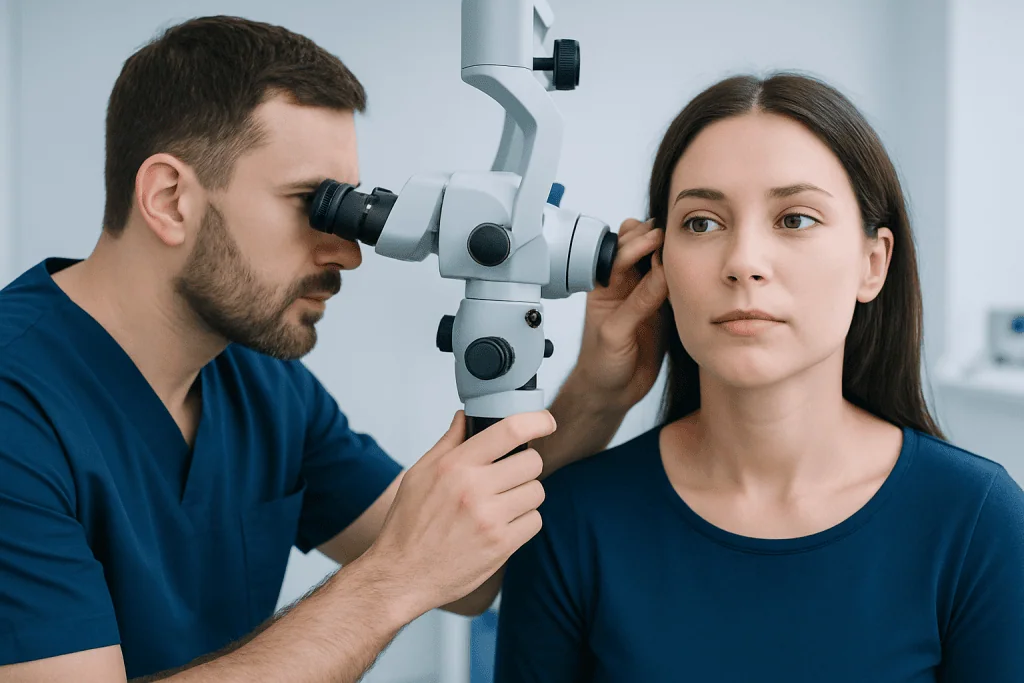
Diagnosis begins with a medical history and examination by an ear, nose and throat specialist or an audiology team. The doctor asks about the pattern of hearing loss, tinnitus, balance symptoms, family history, ear infections, previous ear surgery and noise exposure. A physical examination often shows a normal-looking eardrum, which helps distinguish otosclerosis from conditions such as fluid behind the eardrum or chronic infection.
Hearing tests are central to diagnosis. Pure-tone audiometry measures hearing thresholds across different pitches and helps identify whether the loss is conductive, sensorineural or mixed. Speech testing checks how well words are understood. Tympanometry evaluates eardrum movement and middle-ear pressure, and acoustic reflex testing may provide additional clues because stapes fixation can reduce normal reflex responses.
Imaging is not required for every patient, but a high-resolution CT scan of the temporal bone may be recommended in selected cases. It can help evaluate the middle and inner ear anatomy, confirm suspected otosclerotic changes, or rule out other causes of conductive hearing loss. Imaging is especially useful when symptoms are unusual, when surgery is being planned, or when the diagnosis is uncertain.
Treatment Options
Treatment depends on the degree of hearing loss, symptoms, age, general health, ear anatomy and personal goals. If hearing loss is mild and not affecting daily life, observation with regular hearing tests may be appropriate. The goal is to monitor progression and begin treatment when communication, work, learning or quality of life is affected.
Hearing aids are a common and effective non-surgical option. They amplify sound and can be adjusted as hearing changes. Modern hearing aids are smaller and more customizable than older devices, and they may help with speech clarity, background noise management and tinnitus awareness. Hearing aids do not stop otosclerosis from progressing, but they can significantly improve communication for many people.
Surgical treatment is considered for suitable patients with conductive hearing loss caused by stapes fixation. The two main procedures are stapedotomy and stapedectomy. In a stapedotomy, the surgeon creates a tiny opening in the fixed stapes footplate and places a small prosthesis to transmit sound vibrations. In a stapedectomy, part or all of the stapes footplate is removed and replaced with a prosthesis. Stapedotomy is commonly used today, but the choice depends on the surgeon’s assessment and the patient’s anatomy.
Like all surgery, stapes surgery has potential risks, including taste disturbance, dizziness, tinnitus changes, eardrum issues, infection, prosthesis problems and, rarely, worsening hearing. For many appropriately selected patients, surgery can improve conductive hearing by restoring the mechanical pathway for sound. A careful preoperative discussion helps patients understand expected benefits, limitations, recovery and alternatives.
Recovery After Stapes Surgery
Recovery instructions vary by surgeon and individual case, but most patients are advised to avoid actions that sharply increase ear pressure during the early healing period. This may include heavy lifting, straining, forceful nose blowing, flying or diving until the surgeon confirms it is safe. Temporary dizziness, a blocked sensation or mild taste change can occur and often improves with time.
Hearing improvement may not be fully noticeable immediately because packing or fluid in the ear can temporarily block sound. Follow-up visits allow the surgeon to check healing, remove packing if needed and plan a repeat hearing test. Audiometry is usually performed after the ear has healed enough to measure the result reliably.
Patients should follow medication and activity instructions exactly as provided by their care team. They should seek prompt medical advice if they develop increasing pain, fever, drainage, severe or persistent vertigo, facial weakness, sudden hearing decline or other unexpected symptoms. These symptoms do not mean a serious problem is certain, but they should be evaluated quickly.
Prevention and Self-Care
There is no proven way to prevent otosclerosis, especially when genetic susceptibility plays a role. However, good hearing care can reduce additional strain on the ears and help preserve communication. Protecting the ears from loud noise, using hearing protection in noisy environments and avoiding unnecessary exposure to very loud music or machinery are sensible steps for overall ear health.
People with hearing loss can also benefit from practical communication strategies. These include facing the speaker, improving lighting to support lip and facial cues, reducing background noise when possible, and letting others know what helps. In meetings or classrooms, sitting closer to the speaker and using assistive listening technology may improve understanding.
Tinnitus management may include sound enrichment, relaxation techniques, sleep support and hearing correction when appropriate. Because tinnitus can be influenced by stress, fatigue and hearing loss, a comprehensive approach is often more helpful than a single strategy. Patients should avoid putting cotton swabs or objects deep into the ear canal, as this can irritate the ear or push wax inward.
When to See a Doctor
A person should arrange a medical assessment if hearing loss develops gradually, affects one ear more than the other, interferes with conversations, or is accompanied by tinnitus. Early evaluation can identify whether the hearing loss is due to otosclerosis or another treatable condition, such as earwax, fluid, infection or eardrum problems. Hearing tests are painless and provide important information for planning care.
Urgent medical advice is recommended for sudden hearing loss, severe dizziness, new facial weakness, ear drainage, significant ear pain or hearing loss after head injury. These symptoms may have causes other than otosclerosis and should be assessed promptly. People who already have a diagnosis should also return for review if hearing changes quickly or if a hearing aid no longer provides enough benefit.
For international patients seeking evaluation, Acibadem International’s multidisciplinary ENT, audiology and imaging teams in JCI-accredited hospitals can diagnose and treat otosclerosis, including assessment for hearing aids or stapes surgery when appropriate. As with any medical decision, the best approach should be chosen after a detailed examination and discussion with a qualified specialist.
Frequently asked questions
Is otosclerosis the same as earwax or an ear infection?
No. Otosclerosis is a bone remodeling condition that affects the movement of the stapes bone in the middle ear. Earwax and infections can also cause hearing loss, but they have different causes and treatments. An ear examination and hearing tests help distinguish them.
Does otosclerosis always get worse?
Otosclerosis often progresses slowly, but the rate varies from person to person. Some people have mild changes for many years, while others develop more significant hearing loss. Regular hearing tests help monitor progression and guide treatment decisions.
Can hearing aids help otosclerosis?
Yes. Hearing aids can be very helpful for conductive hearing loss caused by otosclerosis because they amplify sound that is not being transmitted efficiently. They do not cure the bone fixation, but they can improve communication and may be a good choice for people who are not ready for surgery or are not suitable surgical candidates.
What is the difference between stapedotomy and stapedectomy?
Both procedures aim to improve sound transmission by bypassing the fixed stapes. In stapedotomy, the surgeon makes a tiny opening in the stapes footplate and inserts a prosthesis. In stapedectomy, more of the stapes footplate is removed and replaced; the best option depends on the ear anatomy and the surgeon’s judgment.
Is stapes surgery painful?
Stapes surgery is usually performed with anesthesia, so patients should not feel pain during the procedure. After surgery, discomfort is often manageable with the care plan recommended by the surgeon. A blocked feeling, mild dizziness or temporary taste changes may occur during recovery.
Can otosclerosis affect both ears?
Yes. Otosclerosis may begin in one ear, but both ears can be affected over time. The degree of hearing loss may be different in each ear. Treatment planning considers each ear separately, including hearing test results and daily communication needs.
Can otosclerosis cause complete deafness?
Most people with otosclerosis develop conductive hearing loss rather than complete deafness. Some may also have inner-ear involvement that adds a sensorineural component. Early assessment and appropriate management, such as hearing aids or surgery for selected patients, can help maintain communication and quality of life.
References
- American Academy of Otolaryngology–Head and Neck Surgery
- National Institute on Deafness and Other Communication Disorders
- Merck Manual Professional Edition
- Mayo Clinic
- British Society of Audiology
This article is for general information only and is not a substitute for professional medical advice. Please consult a qualified doctor about your individual situation.
Explore treatments in Turkey — costs, top hospitals & a free quote
JCI-accredited · board-certified surgeons · reply within 24h
Add us as a Preferred Source to see more of our trusted health content across Google Search, AI Overviews and Discover.

Related Treatments
Related Conditions
More from the Health Library



Related Specialists
Prof. Dr. Nazim Korkut
Otorhinolaryngology
Prof. Dr. Hasan M. Tanyeri
Ear Nose & Throat
Prof. Dr. Güler Berkiten
Otorhinolaryngology
Assoc. Prof. Dr. A. Erdem Kilavuz
Ear Nose & Throat