Patellar Tendinitis: Symptoms, Causes, and Treatment Options
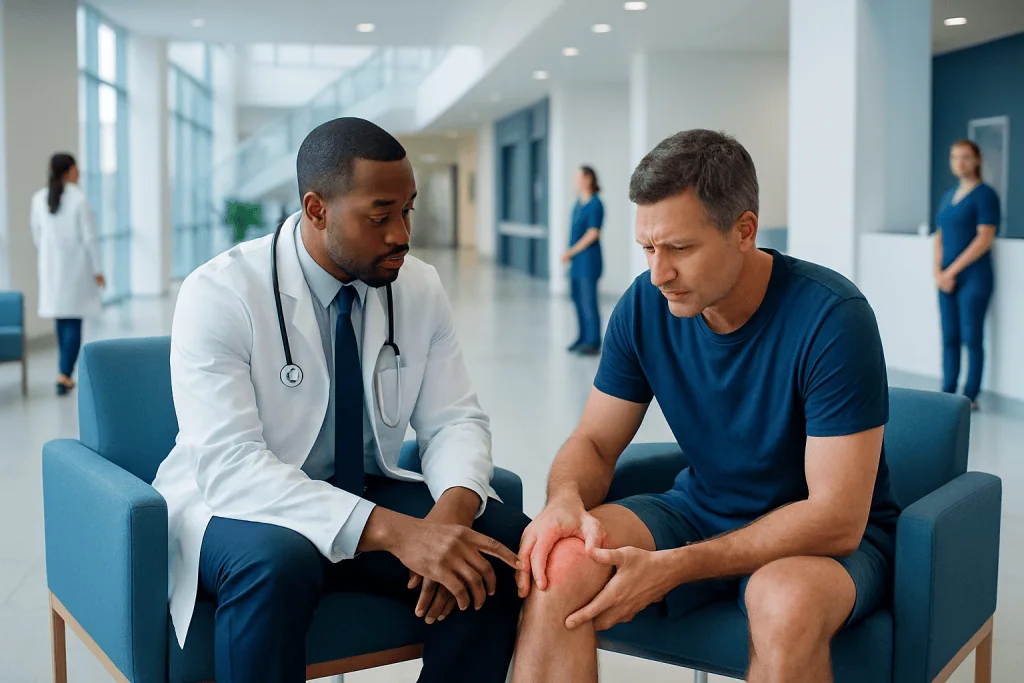
Patellar tendinitis most often develops from repeated strain on the patellar tendon rather than a single major injury. Pain is usually felt just below the kneecap and may worsen with sports, stairs, squatting, or prolonged activity.
Key Takeaways
- Patellar tendinitis most often develops from repeated strain on the patellar tendon rather than a single major injury.
- Pain is usually felt just below the kneecap and may worsen with sports, stairs, squatting, or prolonged activity.
- Early treatment focuses on reducing tendon load and starting a structured rehabilitation program.
- Imaging is not always needed, but a clinician may use ultrasound or MRI if symptoms persist or the diagnosis is unclear.
- Most people improve with non-surgical care, though recovery can take weeks to months depending on severity and activity demands.
Patellar tendinitis is an overuse injury affecting the tendon that connects the kneecap to the shinbone. It usually causes pain at the front of the knee during jumping, running, squatting, or climbing stairs, and it often improves with activity changes, exercise-based rehabilitation, and medical guidance.
What patellar tendinitis is
Patellar tendinitis is a painful condition involving the patellar tendon, the strong band of tissue that connects the kneecap (patella) to the shinbone (tibia). This tendon helps straighten the knee and plays a central role in walking, climbing stairs, running, and especially jumping. When it is exposed to repeated stress, tiny areas of tendon damage can develop and lead to pain and reduced function.
Although the name suggests inflammation, long-lasting cases often involve tendon degeneration from overuse rather than active inflammation alone. For this reason, some clinicians also use the term patellar tendinopathy. In everyday use, however, patellar tendinitis and “jumper’s knee” are still common terms, especially in sports medicine.
This problem is seen most often in people who do activities with frequent jumping, landing, sprinting, or rapid direction changes. Basketball, volleyball, football, tennis, and track events are common examples, but it can also affect recreational exercisers and people whose work places repeated strain on the knees.
How it feels: common symptoms and patterns
The main symptom of patellar tendinitis is pain at the front of the knee, usually focused just below the kneecap where the tendon attaches. At first, discomfort may appear only after exercise or the next day. Over time, it may begin during activity, interfere with performance, or continue even with everyday movements.
Many people notice that symptoms are worse with jumping, running, squatting, kneeling, rising from a chair, or walking up and down stairs. The tendon may feel tender to touch, and the knee can feel stiff after rest. Some people also describe a sense of weakness or reduced power when trying to push off, sprint, or land from a jump.
Symptoms do not always increase in a straight line. Tendon pain often fluctuates with training load, meaning it can calm down with rest and return when activity increases again. If the pain is severe, swelling is sudden, or a person hears a pop and cannot straighten the leg, a different injury such as a tendon tear should be considered and urgent medical assessment is important.
- Pain just below the kneecap
- Tenderness over the patellar tendon
- Pain with jumping, squatting, or stairs
- Stiffness after sitting or resting
- Reduced sports performance or leg power
Why it happens: causes and risk factors

Patellar tendinitis usually develops when the tendon is loaded more than it can recover from. This can happen after a sudden increase in training intensity, volume, or frequency. Repeated jumping and landing place high forces across the tendon, and if recovery time is too short, the tendon may become painful.
Several factors can raise the risk. Tight or weak thigh and hip muscles, poor landing mechanics, limited ankle mobility, and reduced flexibility in the lower limb may all change how force travels through the knee. Hard training surfaces, worn footwear, and inadequate rest can also contribute. In some cases, extra body weight increases stress across the knee during movement.
It can also be helpful to distinguish patellar tendinitis from other sources of front knee pain. Conditions such as knee pain from cartilage irritation, patellofemoral pain, bursitis, or tendon tears can produce overlapping symptoms. Because treatment differs depending on the exact cause, a proper assessment is valuable, especially if pain persists or limits activity.
How doctors diagnose patellar tendinitis
Diagnosis usually begins with a medical history and physical examination. A clinician will ask when the pain started, what activities trigger it, whether training load has changed, and how symptoms affect daily life or sports. During the exam, they may press along the tendon, check knee movement, assess muscle strength, and observe squatting, jumping, or walking patterns.
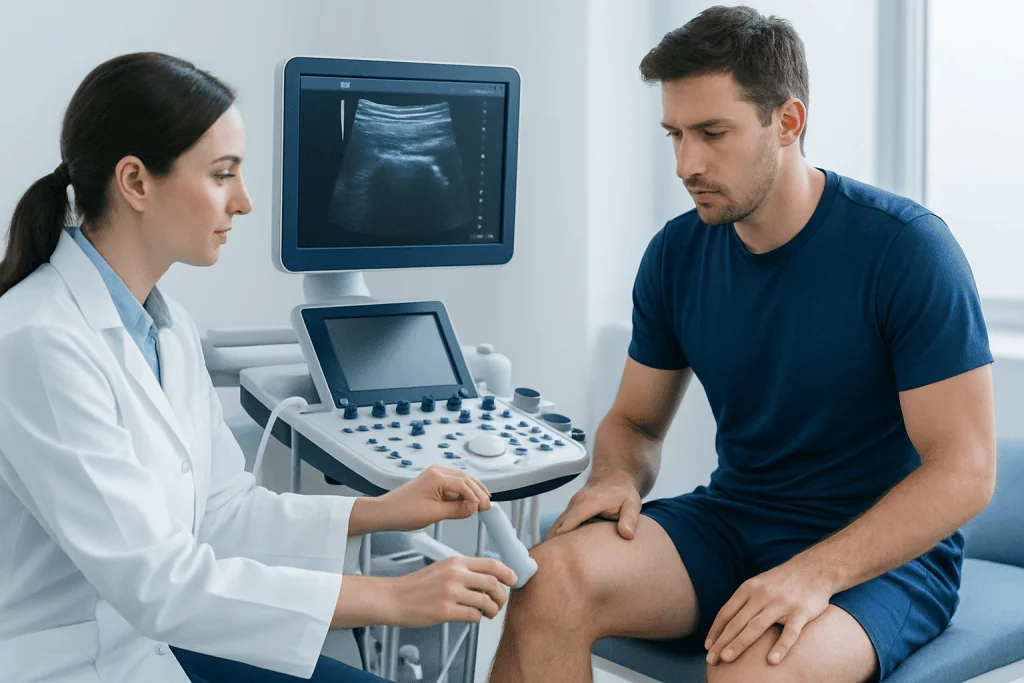
In many cases, the diagnosis can be made clinically without imaging. However, imaging may be useful if symptoms do not improve, if there is uncertainty about the diagnosis, or if a tear or another knee condition is suspected. Ultrasound can show tendon thickening or structural changes, while MRI can provide a more detailed view of the tendon and surrounding tissues.
Some patients may benefit from a broader evaluation of the knee joint and lower limb mechanics. If there is concern about related structural problems, a specialist may recommend further testing or consultation in orthopedics, sports medicine, or rehabilitation. When needed, knee MRI can help clarify whether symptoms are coming from the patellar tendon alone or from another condition inside the joint.
Treatment options and recovery
The main goals of treatment are to reduce pain, restore tendon strength, and allow a safe return to normal activity. In most cases, treatment starts with temporarily modifying the activities that provoke pain rather than complete immobilization. This may mean reducing jumping, sprinting, deep squats, or high-impact exercise for a period while maintaining fitness in other ways.
Exercise-based rehabilitation is the cornerstone of care. A structured program, often guided by a physiotherapist, usually includes progressive strengthening of the quadriceps, hips, and calf muscles, along with tendon-loading exercises tailored to the stage of recovery. Stretching and movement retraining may also be included when appropriate. Pain relief methods such as ice after activity or short-term use of doctor-recommended medication may help some people, but they do not replace rehabilitation.
For persistent cases, additional options may be considered after clinical evaluation. These may include bracing or a patellar tendon strap, shockwave therapy in selected patients, or image-guided procedures in specific circumstances. Surgery is generally reserved for uncommon cases that do not improve after prolonged, well-supervised conservative treatment. If symptoms are accompanied by mechanical knee problems or other structural findings, a specialist may assess whether knee arthroscopy has a role, although this is not a routine treatment for straightforward patellar tendinitis.
Recovery time varies. Mild cases may improve within weeks, while more established tendon pain can take several months to settle. Returning to full sports too quickly can aggravate the tendon again, so progress is usually based on symptoms, strength, and function rather than the calendar alone.
Self-care, training adjustments, and prevention
Self-care works best when it supports a broader rehabilitation plan. Reducing activities that sharply increase pain, applying ice after exercise if it provides relief, and using supportive footwear may help with comfort. Many people benefit from replacing high-impact workouts with lower-impact options such as cycling, swimming, or pool exercise while the tendon settles.
Long-term prevention focuses on tendon load management. Gradual increases in training volume, planned rest days, and attention to technique during jumping and landing are all important. Strengthening the thigh, hip, and calf muscles can improve how forces are absorbed through the leg. Warm-up routines and mobility work may also help prepare the knee for activity.
Because not all front knee pain is the same, prevention also includes early assessment when symptoms do not follow the expected pattern. A clinician may look for other issues such as alignment problems, muscular imbalance, or associated sports injuries that need separate treatment. For patients who need specialist evaluation, Acibadem International’s multidisciplinary teams in JCI-accredited hospitals provide diagnosis and treatment for international patients, including rehabilitation and, when appropriate, physical therapy and rehabilitation.
When to seek medical care
Medical care is recommended if knee pain lasts more than a few weeks, keeps returning, or begins to interfere with work, exercise, or daily activities. A doctor should also assess pain that is getting worse despite rest and self-care, or pain that makes it difficult to climb stairs, squat, or walk normally.
Urgent evaluation is important if there is sudden severe pain, a popping sensation, rapid swelling, major weakness, or inability to bear weight or straighten the knee. These features can suggest a more serious injury such as a tendon tear or another significant knee problem rather than routine overuse pain.
Early evaluation can shorten recovery by identifying the exact cause of symptoms and guiding the right loading plan from the start. This is especially useful for athletes, active adults, and anyone hoping to return safely to regular exercise without repeated flare-ups.
Frequently asked questions
Is patellar tendinitis the same as jumper's knee?
Yes, patellar tendinitis is commonly called jumper's knee. The term is often used when repeated jumping or landing stresses the patellar tendon and causes pain below the kneecap.
Can patellar tendinitis heal on its own?
Mild cases may improve with reduced tendon stress and better recovery habits. However, symptoms often return if activity is resumed too quickly, so a structured rehabilitation plan is usually the best way to support healing.
Should a person stop exercising completely?
Not usually. Many people do better with modified activity rather than complete rest, because total inactivity can reduce strength and function. A clinician or physiotherapist can help choose exercises that keep fitness up while protecting the tendon.
How long does recovery take?
Recovery depends on how long symptoms have been present, how irritated the tendon is, and how consistently rehabilitation is followed. Some people improve in a few weeks, while others need several months before returning comfortably to high-impact sports.
Do knee braces or straps help patellar tendinitis?
A patellar tendon strap or supportive brace may reduce symptoms for some people during activity. These devices can be helpful as part of a broader treatment plan, but they do not correct the underlying tendon problem on their own.
When is surgery needed for patellar tendinitis?
Surgery is uncommon and is generally considered only when symptoms continue after a long period of well-supervised non-surgical treatment. The decision depends on the severity of symptoms, imaging findings, and how much the problem limits daily life or sports.
References
- American Academy of Orthopaedic Surgeons
- National Institute of Arthritis and Musculoskeletal and Skin Diseases
- American Orthopaedic Society for Sports Medicine
- American Physical Therapy Association
- National Health Service
This article is for general information only and is not a substitute for professional medical advice. Please consult a qualified doctor about your individual situation.
Joint and spine care in Turkey — expert assessment & treatment
JCI-accredited · board-certified surgeons · reply within 24h
Add us as a Preferred Source to see more of our trusted health content across Google Search, AI Overviews and Discover.

More from the Health Library



Related Specialists

Prof. Dr. Cengiz Canpolat
Pediatrics & Pediatric Oncology
Assoc. Prof. Dr. Firat Tülek
Gynecology & Obstetrics
Assoc. Prof. Dr. Ayça Erşen Danyeli
Pathology
Prof. Dr. Alp Dinçer
Radiology