Pectus Excavatum: When Chest Wall Indentation Needs Treatment
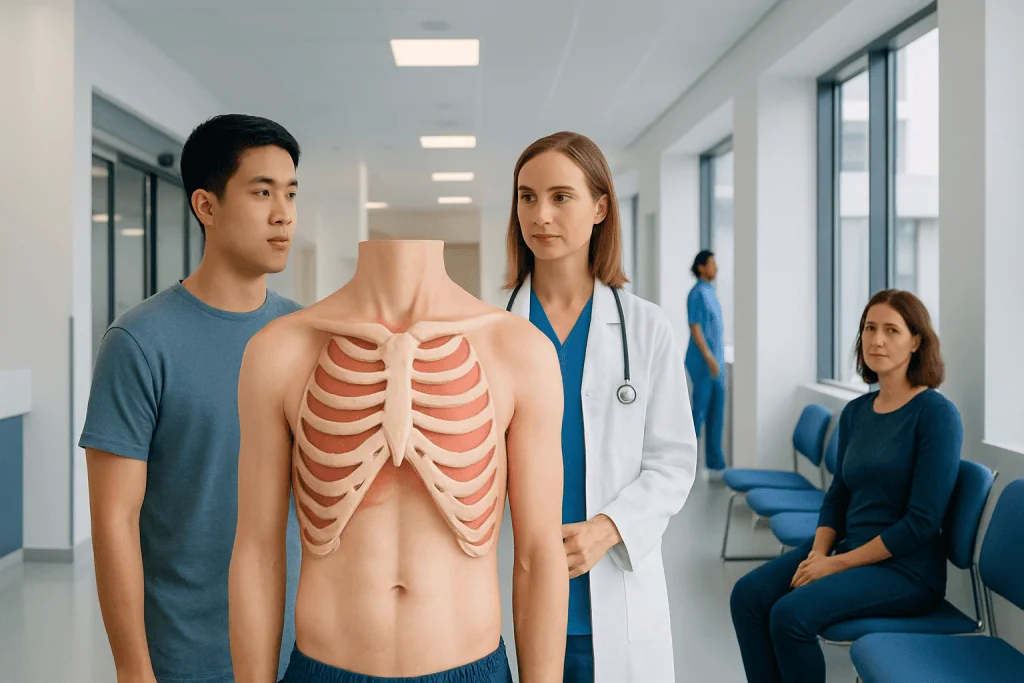
Pectus excavatum is a common chest wall deformity that ranges from mild cosmetic change to a condition that can affect exercise tolerance and breathing. Symptoms may include shortness of breath, chest discomfort, fatigue with activity, or concerns about body image and confidence.
Key Takeaways
- Pectus excavatum is a common chest wall deformity that ranges from mild cosmetic change to a condition that can affect exercise tolerance and breathing.
- Symptoms may include shortness of breath, chest discomfort, fatigue with activity, or concerns about body image and confidence.
- Diagnosis usually combines a physical examination with imaging and, when needed, heart and lung function tests.
- Treatment depends on age, severity, symptoms, and personal goals, and may include monitoring, exercises, vacuum bell therapy, or surgery.
- A specialist review is important if symptoms are worsening, exercise becomes difficult, or the chest indentation appears significant.
Pectus excavatum is a chest wall shape difference in which the breastbone sits inward, creating a sunken appearance. Many people have mild cases, but some may develop symptoms or benefit from specialist evaluation and treatment.
Overview of pectus excavatum
Pectus excavatum is a structural difference of the chest wall in which the breastbone, also called the sternum, is pushed inward. This creates a hollowed or sunken appearance in the center of the chest. It is sometimes called funnel chest. The condition can be noticed at birth, but it often becomes more obvious during growth spurts in later childhood or adolescence.
In many people, pectus excavatum is mild and mainly affects appearance. In others, the inward shape can reduce the space available in the chest and place pressure on the heart or lungs. This may contribute to shortness of breath during exercise, reduced stamina, chest pain, or a fast heartbeat with exertion. The degree of symptoms does not always exactly match how deep the indentation looks from the outside.
Pectus excavatum is not caused by anything a person or parent did wrong. It is considered a developmental chest wall condition, and it can run in families. Some people also have other musculoskeletal features such as a tall, slender body type, scoliosis, or hyperflexible joints, which is why a full clinical evaluation can be helpful.
Symptoms and possible effects
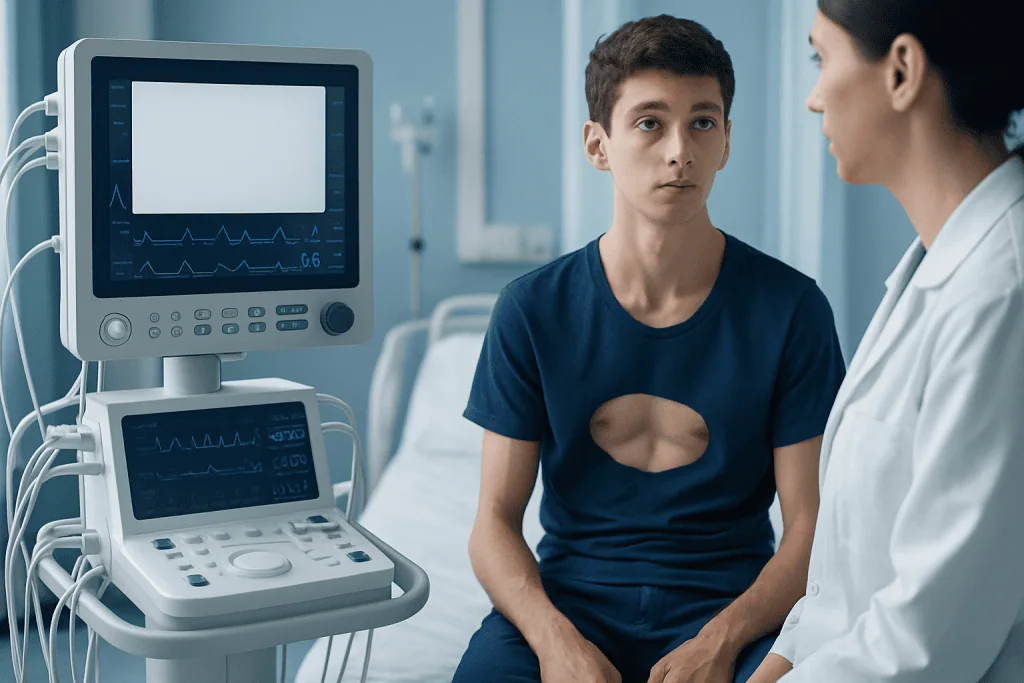
The most visible sign of pectus excavatum is an indentation in the middle or lower chest. The depth and shape vary widely. Some children and adults have no physical symptoms at all and are otherwise healthy, while others notice that exercise feels harder than expected for their fitness level.
Possible symptoms can include shortness of breath during activity, early fatigue, reduced endurance, chest discomfort, palpitations, or a feeling of pressure in the chest. In more pronounced cases, the chest wall shape may affect posture, and some people develop rounded shoulders or back discomfort from trying to hide the appearance of the chest.
Emotional and social effects can also be important. Teenagers and adults may feel self-conscious when wearing fitted clothing or participating in sports, swimming, or changing in shared spaces. For some, concerns about appearance and confidence are a major reason for seeking medical advice, even when physical symptoms are mild.
- Sunken appearance of the chest
- Breathlessness with exercise
- Tiring more quickly than peers
- Chest pain or chest tightness
- Palpitations or awareness of heartbeat
- Body image concerns or reduced self-confidence
Causes and risk factors

The exact cause of pectus excavatum is not fully understood. Doctors believe it relates to abnormal growth of the cartilage that connects the ribs to the breastbone. As this cartilage develops, it can pull the sternum inward instead of allowing the front of the chest to project normally.
Pectus excavatum often appears in more than one family member, which suggests a genetic component. It is also seen more often in males. The indentation commonly becomes more noticeable during puberty, when the body grows quickly and the chest wall changes shape over a relatively short period of time.
Sometimes pectus excavatum occurs together with connective tissue or skeletal conditions. Examples include scoliosis and certain inherited syndromes such as Marfan syndrome. Most people with pectus excavatum do not have a syndrome, but when body proportions, joint flexibility, or heart findings raise concern, doctors may recommend broader assessment to look for associated conditions.
How doctors diagnose pectus excavatum
Diagnosis usually begins with a physical examination and a discussion of symptoms, exercise tolerance, and family history. The doctor looks at the shape of the chest, posture, spinal alignment, and whether the indentation appears symmetric or deeper on one side. They also consider whether symptoms are likely related to the chest wall shape or to another condition.
Imaging helps assess severity and plan treatment. A chest CT scan or MRI can show how deeply the sternum is positioned and how much room remains for the heart and lungs. One common measurement is the Haller index, which compares the width of the chest with the distance between the sternum and spine. Not everyone needs the same tests, and imaging choices may depend on age and clinical needs.
If symptoms are present, heart and lung testing may also be recommended. These tests may include lung function studies, echocardiography to examine heart structure and motion, and exercise testing. The goal is to understand whether the chest wall indentation is affecting breathing capacity, heart performance, or physical endurance.
Because pectus excavatum can resemble or coexist with other chest wall conditions, specialists may also distinguish it from pectus carinatum, where the chest wall protrudes outward rather than inward. A careful diagnosis helps ensure the most appropriate follow-up and treatment plan.
Treatment options and when treatment is needed
Treatment is individualized. Mild pectus excavatum without symptoms may only need observation, especially in children who are still growing. Regular follow-up allows doctors to watch for progression during adolescence and to reassess if exercise tolerance, posture, or self-confidence becomes a concern.
Non-surgical approaches may be considered in selected patients. Posture work, stretching, and chest-opening exercises cannot reverse the bone and cartilage structure, but they may improve mobility, shoulder position, and comfort. In some younger patients with flexible chest walls, vacuum bell therapy may be discussed. This device creates gentle suction over the chest and can gradually lift the breastbone in appropriate cases under specialist supervision.
Surgery is usually considered when the chest indentation is moderate to severe, symptoms are significant, tests show compression of the heart or lungs, or quality of life is strongly affected. The two main surgical approaches are minimally invasive repair and open repair. Minimally invasive repair is often referred to as the Nuss procedure, in which a curved metal bar is placed behind the sternum to elevate it. Open repair, often called the Ravitch procedure, reshapes the cartilage and breastbone more directly.
Choice of treatment depends on age, chest wall flexibility, anatomy, symptom severity, and patient preference. In centers that offer advanced thoracic surgery, the surgical team may include pediatric or adult thoracic surgeons, anesthesiologists, cardiologists, pulmonologists, and rehabilitation specialists. If appearance-related concerns overlap with reconstruction planning, input from teams experienced in chest wall surgery can also be helpful.
Recovery, follow-up, and long-term outlook
The outlook for pectus excavatum is generally good. People with mild forms often live normal, active lives without intervention. For those who need treatment, the goals are to improve chest shape, reduce symptoms, support exercise tolerance, and help the person feel more comfortable in daily life.
After surgery, recovery takes time and usually includes pain management, gradual return to activity, breathing exercises, and attention to posture. The exact recovery process depends on the type of operation and the person’s age and overall health. Heavy lifting and contact sports may be limited for a period while the chest heals. Follow-up visits are important to monitor healing and, in some procedures, to plan later removal of support bars.
Most patients who are carefully selected for treatment do well, but all procedures carry risks. These can include pain, infection, bleeding, bar movement, recurrence, or the need for additional procedures. A detailed preoperative discussion helps patients and families understand the benefits, limits, and expected recovery before making a decision.
For international patients seeking specialist assessment, Acibadem International’s multidisciplinary teams in JCI-accredited hospitals evaluate and treat chest wall conditions such as pectus excavatum with coordinated pediatric and adult care when needed.
Self-care and when to see a doctor
Self-care does not replace medical treatment, but it can support comfort and confidence. Good posture, regular physical activity within comfort limits, and exercises that strengthen the back and open the chest may help some people feel better. It is also reasonable to seek emotional support if body image concerns are affecting social life, mood, or participation in activities.
A medical review is recommended if the chest indentation seems to be deepening, if a child is entering a rapid growth phase, or if symptoms such as breathlessness, chest pain, palpitations, or reduced exercise tolerance appear. Evaluation is also worthwhile when there is concern about associated conditions such as scoliosis, unusually flexible joints, or a family history of chest wall differences.
Urgent medical attention is important for severe chest pain, fainting, significant breathing difficulty, or new symptoms that cannot be explained by a known diagnosis. While these problems are not typical for most people with pectus excavatum, they should not be ignored. A qualified doctor can determine whether the symptoms relate to the chest wall or another heart or lung condition.
When specialist input is needed, further assessment may include advanced imaging, cardiology evaluation, or pulmonary function testing to guide safe, personalized treatment decisions.
Frequently asked questions
Is pectus excavatum dangerous?
In many people, pectus excavatum is mild and not dangerous. However, deeper indentations can sometimes affect breathing, exercise tolerance, or heart and lung function, which is why a medical assessment is useful when symptoms are present.
Can pectus excavatum get worse with age?
It can become more noticeable during periods of rapid growth, especially in adolescence. In adults, the shape is usually stable, but symptoms may become more apparent with exercise or changes in posture and fitness.
Can exercise fix a sunken chest?
Exercise cannot fully correct the structural inward position of the breastbone. Still, posture training, stretching, and strengthening can improve chest mobility, back support, and overall comfort, and may help the chest appear less pronounced.
When is surgery recommended for pectus excavatum?
Surgery is usually considered when the indentation is moderate to severe, symptoms are significant, or tests show effects on the heart or lungs. Quality of life, including emotional well-being and body image, may also be part of the decision.
What is the best age for treatment?
There is no single best age for everyone. Timing depends on symptom severity, growth stage, chest wall flexibility, and the treatment being considered, so a specialist can advise on the most appropriate plan.
Is pectus excavatum hereditary?
It can run in families, and a genetic contribution is likely in many cases. Even so, not everyone with a family history will develop it, and some people are the only affected member of their family.
References
- National Institutes of Health
- American Academy of Pediatrics
- American Thoracic Society
- Society of Thoracic Surgeons
This article is for general information only and is not a substitute for professional medical advice. Please consult a qualified doctor about your individual situation.
Explore treatments in Turkey — costs, top hospitals & a free quote
JCI-accredited · board-certified surgeons · reply within 24h
Add us as a Preferred Source to see more of our trusted health content across Google Search, AI Overviews and Discover.

More from the Health Library



Related Specialists

Asst. Prof. Dr. Tarkan İkizoğlu
Pediatrics
Dr. Abdullah Etöz
Aesthetic Plastic & Reconstructive Surgery
Assoc. Prof. Dr. Özden Sıla Ulus Buturak
Breast Clinic Clinical Service
Dilem Kadıoğlu
Physical Medicine & Rehabilitation