Pediatric Seizures: When a Child Needs a Neuropediatric Assessment

A child who has a first seizure should be evaluated by a doctor, even if the episode stops quickly. Seizures in children do not always look like shaking; staring, sudden limpness, stiffening, or unusual repetitive movements can also be signs.
Key Takeaways
- A child who has a first seizure should be evaluated by a doctor, even if the episode stops quickly.
- Seizures in children do not always look like shaking; staring, sudden limpness, stiffening, or unusual repetitive movements can also be signs.
- A neuropediatric assessment may include a detailed history, neurological examination, EEG, blood tests, and sometimes brain imaging.
- Many childhood seizures are treatable, and some are linked to fever, sleep problems, infections, or underlying neurological conditions.
- Emergency care is important if a seizure lasts several minutes, causes breathing trouble, happens in water, or if the child does not recover normally afterward.
Pediatric seizures can range from brief, harmless-looking episodes to more obvious convulsions, and they should always be taken seriously. A neuropediatric assessment helps identify the cause, distinguish seizures from other events, and guide the safest treatment and follow-up plan for the child.
Overview
Pediatric seizures are episodes caused by sudden, abnormal electrical activity in a child’s brain. They can happen at any age, including infancy, and they may look very different from one child to another. Some seizures involve jerking movements and loss of consciousness, while others may appear as brief staring, unusual eye movements, lip smacking, stiffening, or a sudden pause in activity.
Not every event that looks unusual is a seizure, and not every seizure means a child has epilepsy. Fainting, breath-holding spells, reflux in infants, sleep disorders, migraines, movement disorders, and certain behavioral events can sometimes resemble seizures. This is one reason why a careful neuropediatric assessment is important after a first episode or repeated concerning events.
A neuropediatric specialist focuses on disorders of the brain, spinal cord, nerves, and muscles in children. Their assessment helps determine whether the event was truly a seizure, what may have triggered it, and whether further testing or treatment is needed. This evaluation can also help families understand what to do if another episode occurs.
Symptoms and How Seizures Can Appear in Children
Seizures in children can be dramatic, but they can also be subtle. A child may suddenly stare and become unresponsive for a few seconds, stop mid-sentence, blink rapidly, make chewing motions, stiffen one arm, or fall suddenly. Some children become confused, sleepy, or irritable after the episode, while others return to normal quickly.
Common seizure features can include:
- Rhythmic jerking of the arms, legs, or face
- Sudden stiffening of the body
- Brief loss of awareness or staring spells
- Repetitive movements such as lip smacking or hand rubbing
- Sudden limpness or collapse
- Unusual sensations, fear, or confusion in older children
- Sleepiness, headache, or disorientation after the event
In babies and young children, seizures can be harder to recognize because they may be brief and less obvious. Parents might notice repeated eye deviation, unusual bicycling movements of the legs, repeated head drops, or clusters of sudden body jerks. Recording a video of the event, if it is safe to do so, can be very helpful for the doctor.
A child needs urgent medical attention if the seizure lasts several minutes, breathing becomes difficult, the child turns blue, gets injured, has repeated seizures without recovering, or if the event occurs in water. Even when the episode has ended, a first seizure should be discussed with a doctor promptly.
Causes and Risk Factors

Pediatric seizures can happen for many reasons. In some children, the seizure is triggered by a high fever, especially between about 6 months and 5 years of age. These are called febrile seizures and are often frightening to witness, but many are brief and do not lead to long-term problems. Still, they should be medically assessed to rule out serious infection or other causes.
Other possible causes include head injury, low blood sugar, electrolyte imbalance, central nervous system infections, developmental brain differences, lack of oxygen around birth, genetic conditions, and structural changes in the brain. In some children, no clear cause is found after initial testing. Recurrent unprovoked seizures may lead to a diagnosis of epilepsy.
Risk factors that may increase the chance of seizures or recurrent seizures include a family history of epilepsy, previous neonatal seizures, developmental delay, known neurological disease, prior brain infection, and abnormal findings on examination, EEG, or imaging. Sleep deprivation and missed seizure medicines can also lower the seizure threshold in children who are already vulnerable.
Because symptoms can overlap with other neurological problems, doctors may also consider related conditions during the assessment, such as brain tumors or other structural causes when warning signs are present. Most children with a seizure do not have a tumor, but identifying the rare serious causes is an important part of careful evaluation.
When a Child Needs a Neuropediatric Assessment
A neuropediatric assessment is recommended after a child’s first suspected seizure, after repeated unusual episodes, or when the diagnosis is uncertain. It is especially important if seizures happen without fever, occur during sleep, involve one side of the body, last longer than expected, or are followed by prolonged weakness, confusion, or developmental concerns.
Children with fever-related seizures may also need specialist review in certain situations, such as seizures lasting longer than a few minutes, repeated seizures within the same illness, seizures with unusual movements or one-sided involvement, or if the child is younger than expected for typical febrile seizures. An infant or child who is not returning to normal behavior after a seizure also needs prompt assessment.
Specialist input is also useful when a child has conditions that may affect the nervous system, such as developmental delay, cerebral palsy, previous meningitis, metabolic disease, or a history of neonatal intensive care. In these cases, the doctor looks beyond the seizure itself and considers the child’s overall neurological development and long-term needs.
Families often worry that every seizure means a lifelong disorder, but this is not always the case. The goal of assessment is not just to label the problem, but to understand the cause, estimate the risk of recurrence, and create a practical plan for monitoring, safety, and treatment if needed.
How Doctors Diagnose Pediatric Seizures
Diagnosis begins with a detailed history. The doctor will ask what happened before, during, and after the event, how long it lasted, whether there was fever, illness, injury, or sleep loss, and whether similar episodes have happened before. Family history, pregnancy and birth history, development, medications, and any video recordings of the episode can all provide important clues.
The physical and neurological examination helps identify signs that point to infection, injury, developmental differences, or an underlying neurological condition. Depending on the child’s age and symptoms, blood tests may be ordered to look for glucose problems, electrolyte imbalance, infection, or metabolic issues.
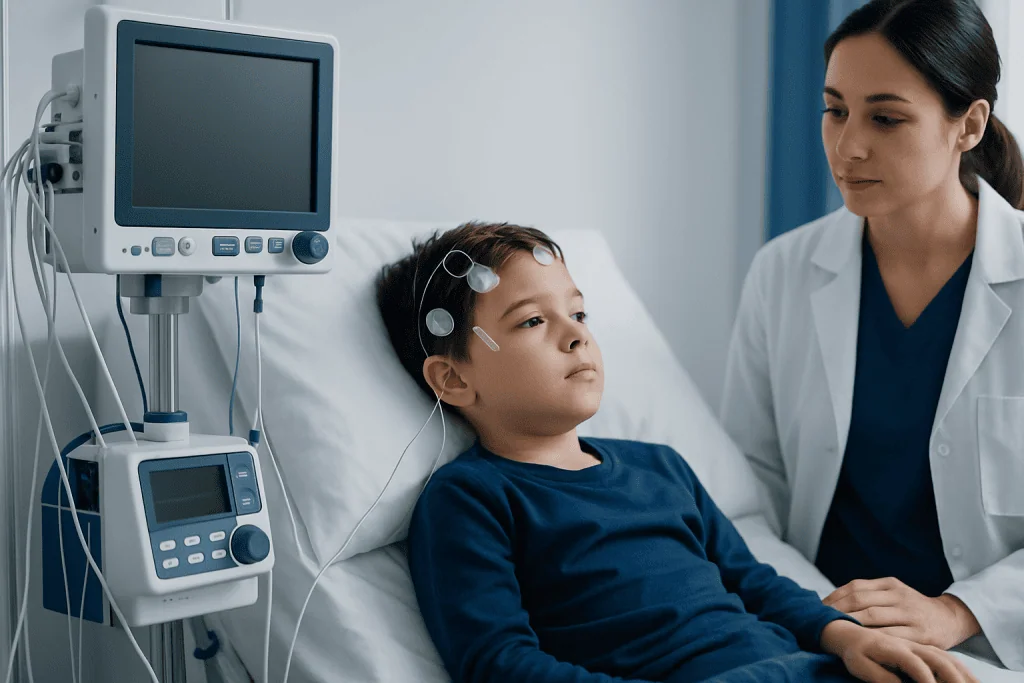
An electroencephalogram, or EEG test, records the brain’s electrical activity and can help support the diagnosis of seizure disorders. It may be done while the child is awake, drowsy, asleep, or after sleep deprivation, depending on the clinical situation. A normal EEG does not completely rule out seizures, but it can still offer useful information.
Some children also need brain imaging, especially if there are focal symptoms, abnormal examination findings, developmental concerns, trauma, or a complicated seizure pattern. In these cases, the doctor may recommend brain MRI to look for structural causes. If symptoms suggest a broader neurological problem, the child may also be assessed through a pediatric neurology evaluation to guide diagnosis and follow-up.
Treatment Options and Long-Term Management
Treatment depends on the cause, the type of seizure, the child’s age, and the likelihood of further seizures. Not every child needs daily medication after a first seizure. In some cases, the safest plan is observation, education for the family, and follow-up testing. In others, especially when seizures recur or epilepsy is diagnosed, anti-seizure medicines may be recommended.
If a specific trigger is identified, treatment focuses on that cause. For example, a child with low blood sugar, infection, or electrolyte imbalance needs management of the underlying problem. For prolonged seizures, doctors may prescribe an emergency rescue medicine for home or school use and teach caregivers when and how to use it safely.
Long-term care also includes reviewing sleep habits, medicine adherence, school support, and safety during bathing, swimming, climbing, and sports. Most children can continue many normal activities with sensible precautions. The aim is to reduce seizure burden while supporting development, learning, and quality of life.
When seizures are difficult to control or there is concern for an underlying brain condition, children may need multidisciplinary care. Near the end of the care pathway, families seeking cross-border care may wish to know that Acibadem International’s multidisciplinary specialists in JCI-accredited hospitals evaluate and treat pediatric neurological conditions for international patients.
Prevention, Safety, and Self-Care for Families
It is not always possible to prevent seizures, because many causes are outside a family’s control. Still, some practical steps may help reduce risk in children who are prone to seizures. These include regular sleep, taking prescribed medicines exactly as directed, avoiding missed doses, and managing fever or illness with advice from the child’s doctor.
Caregivers should know basic seizure first aid. During a seizure, the child should be placed on their side if possible, tight clothing around the neck loosened, and nearby hard or sharp objects moved away. Nothing should be put in the child’s mouth, and restraints should not be used. Timing the episode is helpful because duration affects medical decisions.
Safety planning is an important part of daily life. Children who have ongoing seizures should be supervised closely around water, including baths and swimming pools. Older children may need tailored advice about cycling, climbing heights, and later, driving regulations when they reach the appropriate age.
It can also help to keep a seizure diary noting the date, duration, symptoms, fever, sleep, illness, and recovery time. This information helps the neuropediatric team assess patterns, treatment response, and whether additional testing is needed.
When to See a Doctor Urgently
A child should be seen by a doctor after any first suspected seizure, even if the event was brief and the child seems well afterward. Prompt evaluation is also needed for repeated episodes, unusual staring spells, unexplained falls, or events that happen during sleep or with fever. Trusting caregiver concern is important, especially when a child’s behavior is clearly not typical.
Emergency care is needed if a seizure lasts longer than several minutes, if one seizure follows another without full recovery, if the child has trouble breathing, turns blue, is seriously injured, or is difficult to wake afterward. Babies under 6 months with seizure-like episodes, and children with signs of meningitis or severe infection, need urgent assessment.
Medical review is also important if a child develops weakness on one side, severe headache, persistent vomiting, developmental regression, or changes in walking, speech, or behavior. These signs do not always mean a serious condition, but they deserve careful evaluation.
Early assessment can provide reassurance, improve safety, and help children receive the right treatment as soon as possible. Families do not need to wait for a second event if they are worried; a qualified pediatrician or neuropediatric specialist can advise on the next best steps.
Frequently asked questions
Do all pediatric seizures mean a child has epilepsy?
No. A single seizure can happen because of fever, infection, low blood sugar, head injury, or other temporary causes. Epilepsy is usually diagnosed when a child has recurrent unprovoked seizures or a high risk of more seizures based on the overall evaluation.
What should a parent do during a seizure?
The child should be laid on their side if possible, and nearby dangerous objects should be moved away. The seizure should be timed, nothing should be placed in the mouth, and emergency help should be sought if breathing is affected, injury occurs, or the seizure lasts longer than expected.
Are febrile seizures dangerous?
Many febrile seizures are brief and do not cause long-term harm, but they should still be medically assessed. The doctor will look at the child’s age, fever source, seizure pattern, and recovery to decide whether further testing is needed.
Why might a child need an EEG after a seizure?
An EEG records electrical activity in the brain and can help doctors understand whether a seizure disorder is likely. It can also provide clues about seizure type, which helps guide treatment and follow-up.
When is brain imaging needed for a child with seizures?
Brain imaging is not needed for every child, but it may be recommended when seizures are focal, recurrent, unusual, or linked to abnormal examination findings. It is also considered when there are developmental concerns, head trauma, or suspicion of a structural brain cause.
Can children with seizures go to school and play sports?
Many children with seizures can attend school and take part in activities with appropriate support and safety planning. The exact advice depends on the seizure type, how well seizures are controlled, and the specific activity, especially around water or heights.
References
- World Health Organization
- International League Against Epilepsy
- American Academy of Pediatrics
- National Institute of Neurological Disorders and Stroke
- National Health Service
This article is for general information only and is not a substitute for professional medical advice. Please consult a qualified doctor about your individual situation.
Explore treatments in Turkey — costs, top hospitals & a free quote
JCI-accredited · board-certified surgeons · reply within 24h
Add us as a Preferred Source to see more of our trusted health content across Google Search, AI Overviews and Discover.