Peripheral Nerve Entrapment: Symptoms, Diagnosis, and When Surgery Is Considered

Peripheral nerve entrapment is caused by pressure on a nerve, often at common narrow passageways such as the wrist, elbow, or ankle. Symptoms may include tingling, numbness, burning pain, weakness, or clumsiness in the affected area.
Key Takeaways
- Peripheral nerve entrapment is caused by pressure on a nerve, often at common narrow passageways such as the wrist, elbow, or ankle.
- Symptoms may include tingling, numbness, burning pain, weakness, or clumsiness in the affected area.
- Diagnosis usually combines a physical examination with nerve studies and imaging when needed.
- Many cases improve with activity changes, splints, medication, therapy, or treatment of the underlying cause.
- Surgery may be considered when symptoms are severe, progressive, or do not improve with non-surgical care.
Peripheral nerve entrapment occurs when a nerve is compressed or irritated as it passes through a tight space in the body. It can cause pain, tingling, numbness, or weakness, and treatment ranges from rest and splinting to surgery in selected cases.
Overview
Peripheral nerve entrapment describes a group of conditions in which a nerve outside the brain and spinal cord becomes compressed, stretched, or irritated along its usual path. Peripheral nerves carry signals for sensation and movement, so pressure on one of these nerves can affect feeling, muscle control, or both. The symptoms depend on which nerve is involved and how long the pressure has been present.
Common examples include carpal tunnel syndrome at the wrist, ulnar nerve entrapment near the elbow, and tarsal tunnel syndrome at the ankle. Some people also develop nerve compression in the neck, shoulder, hip, or lower leg. Although the symptoms can be uncomfortable, many cases can be managed effectively, especially when recognized early.
Entrapment can happen gradually from repeated strain or certain postures, or it may follow swelling, injury, arthritis, or structural narrowing around a nerve. In some situations, metabolic or inflammatory conditions make nerves more vulnerable to pressure. Understanding the source of compression helps guide treatment and can improve recovery.
Symptoms of Peripheral Nerve Entrapment
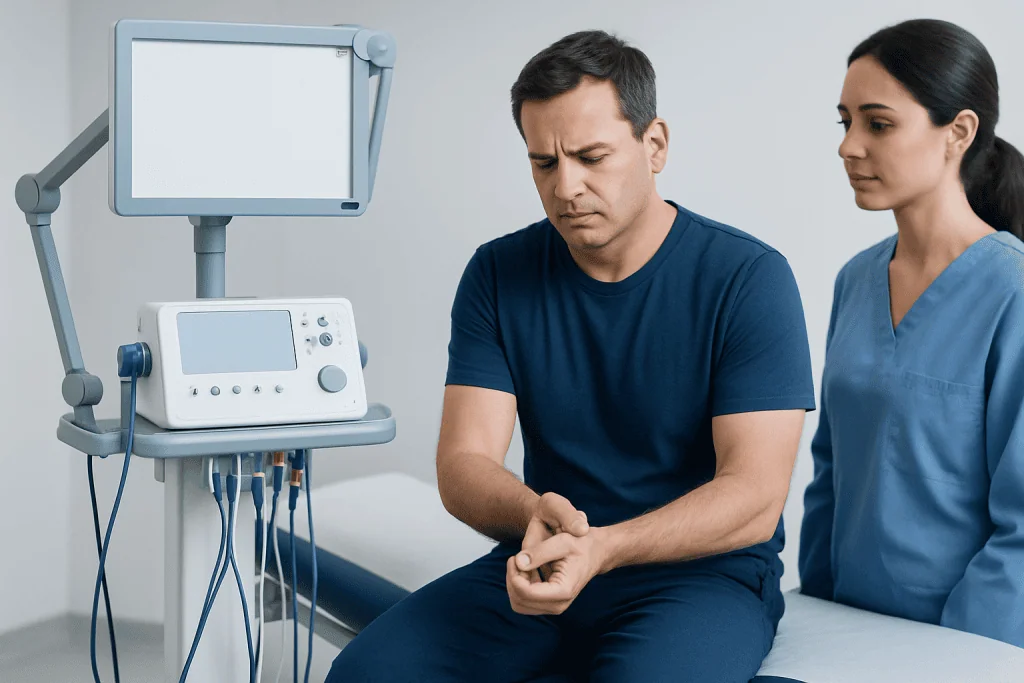
The symptoms of peripheral nerve entrapment vary by location, but they often follow a recognizable pattern. Many people notice tingling, pins-and-needles, numbness, burning discomfort, or shooting pain in the area supplied by the nerve. Symptoms may come and go at first and then become more frequent over time.
Weakness is another important sign. A compressed nerve may make the hand feel clumsy, reduce grip strength, or make it harder to lift the foot, rise from a chair, or perform fine tasks such as buttoning clothes. Some people also report symptoms that worsen at night, during repetitive activities, or when holding a joint in one position for a long time.
Examples of symptom patterns include:
- Wrist: numbness or tingling in the thumb, index, middle, and part of the ring finger, often suggestive of carpal tunnel syndrome.
- Elbow: tingling in the ring and little fingers, hand weakness, or pain along the inner elbow, which may occur with cubital tunnel syndrome.
- Ankle or foot: burning, tingling, or numbness in the sole or toes that may be seen with tarsal tunnel syndrome.
- Leg: pain, tingling, or weakness that changes with movement or pressure at a specific site.
Because nerve symptoms can overlap with tendon, joint, spine, or circulation problems, a careful medical assessment is important. Progressive weakness, loss of coordination, or muscle wasting usually deserves prompt attention.
Causes and Risk Factors

A nerve can become trapped when the tissues around it narrow, swell, or place repeated pressure on it. This may happen in natural tunnels formed by bone and ligaments, such as the carpal tunnel in the wrist or the cubital tunnel at the elbow. Repetitive hand use, prolonged leaning on elbows, frequent kneeling, tight footwear, or jobs involving vibration can increase strain in these areas.
Injury can also lead to entrapment. Fractures, dislocations, scar tissue, and swelling after trauma may reduce the space around a nerve. Degenerative changes such as arthritis or bone spurs may contribute as well. Sometimes a cyst, benign mass, or thickened tendon sheath presses on the nerve.
Several medical conditions can make nerve compression more likely or worsen symptoms. These include diabetes, thyroid disease, obesity, pregnancy-related swelling, inflammatory joint disease, and fluid retention. In other cases, more than one problem is present at the same time, such as a person with mild generalized peripheral neuropathy who also develops a focal entrapment at the wrist or elbow.
Risk factors do not mean that surgery will be necessary. They simply help explain why symptoms occur and why treatment often includes both local care for the compressed nerve and management of any broader health condition.
How Doctors Diagnose It
Diagnosis begins with a detailed medical history and physical examination. The doctor asks where the symptoms are felt, when they started, what activities make them better or worse, and whether weakness or nighttime symptoms are present. During the examination, the doctor may assess sensation, reflexes, muscle strength, coordination, and specific positions or tapping maneuvers that reproduce symptoms.
Nerve conduction studies and electromyography are commonly used when the diagnosis is uncertain, when symptoms are persistent, or when weakness is present. These tests help show how well the nerve carries signals and whether the problem is focal compression, a broader nerve disorder, or another condition affecting the muscles.
Imaging may be helpful in selected cases. Ultrasound can show nerve swelling, structural narrowing, or a cyst pressing on the nerve. MRI may be used when doctors need a closer look at surrounding tissues, especially if the cause is unclear or symptoms suggest a deeper lesion. X-rays may be used when arthritis, fracture, or bony changes are suspected.
The main goal of diagnosis is not only to name the condition, but also to locate the exact site of compression, estimate its severity, and rule out other causes such as cervical or lumbar spine disease, vascular problems, or systemic neuropathies. This information helps determine whether non-surgical treatment is likely to work or whether referral for a procedure is more appropriate.
Treatment Options
Treatment depends on the nerve involved, how severe the symptoms are, and whether there is muscle weakness or tissue damage. For many people, the first step is conservative care. This may include reducing or modifying repetitive activities, improving posture or ergonomics, using splints to keep a joint in a neutral position, and taking medicines recommended by a doctor to help with pain or inflammation when appropriate.
Physical or occupational therapy can also be useful. Therapy may focus on nerve-gliding exercises, stretching, strengthening, reducing mechanical pressure, and adapting daily tasks. If an underlying condition such as diabetes, thyroid disease, or inflammatory arthritis is contributing, treatment of that condition is an important part of recovery.
In some cases, injections may be considered to reduce local inflammation or confirm the source of pain. If symptoms remain troublesome despite conservative care, a specialist may evaluate whether a targeted procedure would help. Depending on the location and cause, the plan may involve hand surgery for wrist or elbow compression, peripheral nerve surgery for selected focal entrapments, or physical therapy and rehabilitation as part of a broader recovery program.
The goals of treatment are to relieve pressure on the nerve, protect function, and prevent long-term damage. Improvement may take time because nerves heal slowly. Even when symptoms begin to ease early, follow-up care and lifestyle adjustments are often needed to support lasting recovery.
When Surgery Is Considered
Surgery is not the first step for most people, but it can be an effective option in the right situation. Doctors may consider surgery when symptoms are severe, when numbness or pain is persistent despite appropriate non-surgical treatment, or when there is clear evidence of ongoing nerve injury. Progressive weakness, loss of dexterity, muscle wasting, or significant abnormalities on nerve tests can make surgical evaluation more urgent.
The type of operation depends on the site of compression. In general, surgery aims to release the tight structure pressing on the nerve, remove a compressing mass if present, or create more space around the nerve. Some procedures are relatively limited and can be done through small incisions, while others are more complex if scar tissue, trauma, or multiple compression sites are involved.
Recovery after surgery varies. Some people notice relief of tingling or pain fairly soon, while weakness and numbness may improve more gradually over weeks or months. If the nerve has been compressed for a long time, recovery may be incomplete. This is one reason why early assessment matters when symptoms are progressing.
For international patients seeking specialist evaluation, Acibadem International’s multidisciplinary teams in JCI-accredited hospitals assess nerve entrapment with coordinated neurology, imaging, rehabilitation, and surgical expertise when needed.
Self-care, Prevention, and When to See a Doctor
Self-care focuses on reducing pressure on the irritated nerve. This may include taking breaks during repetitive tasks, adjusting keyboard or workstation position, avoiding prolonged elbow flexion or pressure on the wrists, wearing supportive footwear, and following a home exercise plan from a clinician or therapist. For some conditions, night splints can help keep the joint in a safer position while sleeping.
Healthy habits may also lower risk over time. Managing blood sugar, treating thyroid or inflammatory disorders, maintaining a comfortable body weight, and staying physically active can support nerve health. It is also wise to pay attention to body mechanics during work, sports, and daily routines, especially if symptoms repeatedly flare in the same area.
A medical review is recommended if numbness, tingling, or pain lasts more than a short time, interferes with sleep or daily activities, or keeps returning. A doctor should also assess symptoms when there is weakness, dropping objects, foot drop, visible muscle thinning, severe pain, or symptoms after injury. Prompt evaluation can help protect nerve function and identify cases that need faster treatment.
Because similar symptoms can come from the spine, blood vessels, joints, or generalized nerve disorders, it is safest not to rely on self-diagnosis alone. A qualified doctor can explain the likely cause and suggest the most appropriate plan.
Frequently asked questions
What is peripheral nerve entrapment?
Peripheral nerve entrapment is a condition in which a nerve is compressed or irritated as it travels through a tight space in the body. This pressure can disrupt normal nerve signaling and cause numbness, tingling, pain, or weakness.
Is peripheral nerve entrapment the same as neuropathy?
Not exactly. Entrapment is a focal problem affecting a specific nerve at a specific site, while neuropathy is a broader term for nerve damage from many possible causes. However, a person can have both a generalized neuropathy and a localized nerve entrapment at the same time.
Can nerve entrapment go away without surgery?
Yes, many cases improve with non-surgical treatment such as rest, splints, activity changes, therapy, and treatment of contributing medical conditions. The chance of improvement is often better when symptoms are recognized and addressed early.
How is peripheral nerve entrapment diagnosed?
Doctors usually diagnose it through a combination of symptom history, physical examination, and sometimes nerve conduction studies or electromyography. Ultrasound or MRI may also be used when the diagnosis is uncertain or a structural cause is suspected.
When should surgery be considered for nerve entrapment?
Surgery may be considered when symptoms are severe, long-lasting, or not improving with appropriate conservative care. It is also more strongly considered when there is weakness, muscle wasting, or test results suggesting ongoing nerve damage.
How long does recovery take after treatment?
Recovery depends on which nerve is affected, how severe the compression is, and how long it has been present. Mild cases may improve within weeks, while more significant nerve irritation or post-surgical recovery may take several months because nerves heal gradually.
This article is for general information only and is not a substitute for professional medical advice. Please consult a qualified doctor about your individual situation.
Peripheral Nerve in Turkey — costs, top hospitals & a free quote
JCI-accredited · board-certified surgeons · reply within 24h
Add us as a Preferred Source to see more of our trusted health content across Google Search, AI Overviews and Discover.

More from the Health Library

Muscular Dystrophy and the Muscles It Affects

Muscle Wasting and Foot Drop: Causes That Need a Neuromuscular Workup

The Most Common Neuromuscular Diseases: Examples, Symptoms, and Progression

Swallowing Problems in Motor Neuron Disease: When to Seek Early Support

Muscle Cramps and Fasciculations: When They May Point to Neuromuscular Disease