Pnd Medical Abbreviation: A Complete Medical Overview

PND most often means paroxysmal nocturnal dyspnea in cardiology and general medical use. Paroxysmal nocturnal dyspnea causes a person to wake suddenly at night feeling short of breath.
Key Takeaways
- PND most often means paroxysmal nocturnal dyspnea in cardiology and general medical use.
- Paroxysmal nocturnal dyspnea causes a person to wake suddenly at night feeling short of breath.
- It is commonly associated with heart failure, but other heart and lung conditions can also contribute.
- PND is different from ordinary snoring or mild nighttime congestion and should be medically assessed.
- In some contexts, PND may also stand for postnasal drip, so the meaning should always be clarified.
PND medical abbreviation most commonly refers to paroxysmal nocturnal dyspnea, a pattern of sudden shortness of breath that wakes a person from sleep. In some medical settings, PND can also mean postnasal drip, so the correct meaning depends on the clinical context.
What does PND mean in medicine?
The term pnd medical abbreviation most commonly refers to paroxysmal nocturnal dyspnea. This describes sudden episodes of breathlessness that occur during sleep, often causing a person to wake up gasping for air or feeling the need to sit upright to breathe more comfortably. It is a symptom rather than a diagnosis, and it often points to an underlying heart or lung problem that needs evaluation.
PND is sometimes confused with simple shortness of breath, poor sleep, or snoring. However, paroxysmal nocturnal dyspnea has a specific pattern: it happens after a person has been lying down for a period of time, usually during the night, and it improves when they sit up or stand. That pattern gives clinicians clues about fluid shifts in the body and how well the heart and lungs are working.
It is also important to know that PND can have another meaning in medicine: postnasal drip. In ear, nose, and throat settings, a clinician might use PND to describe mucus draining down the back of the throat. Because one abbreviation can have more than one meaning, doctors interpret it based on symptoms, the specialty involved, and the rest of the medical record.
How paroxysmal nocturnal dyspnea feels
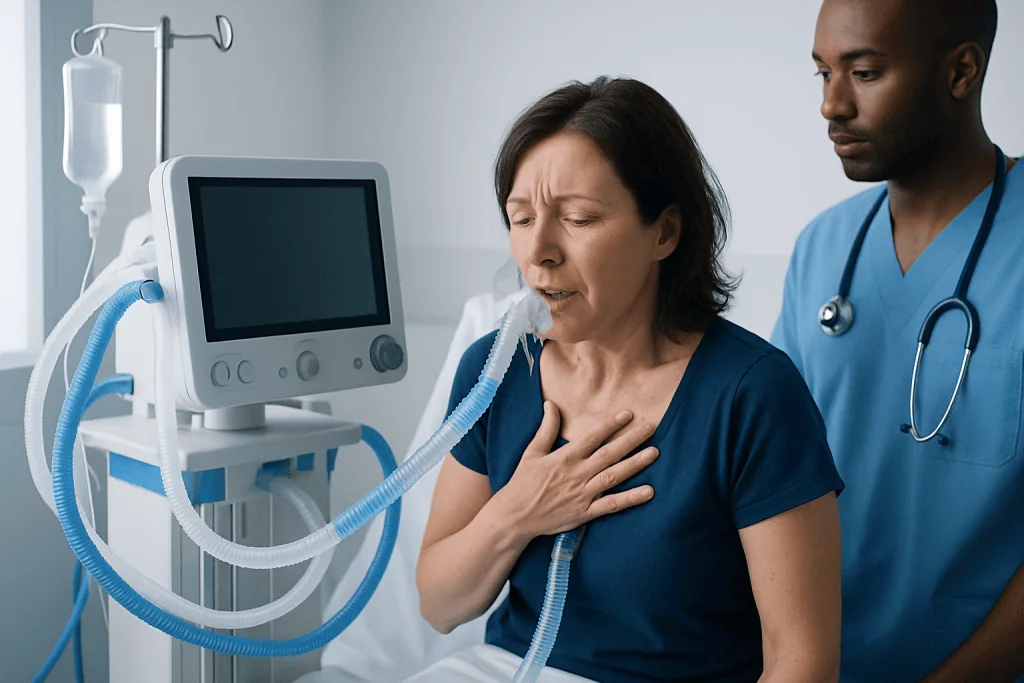
People with paroxysmal nocturnal dyspnea often describe waking up suddenly one or two hours after falling asleep with a feeling of air hunger, chest tightness, or an inability to take a deep breath. Some may sit at the edge of the bed, open a window, or stand up because these actions make breathing easier. The episode can last minutes or longer and may be frightening, even if it improves after changing position.
PND is not the same as becoming slightly winded while exercising, and it is different from mild nighttime stuffiness caused by a cold or allergies. It may occur along with other symptoms such as needing extra pillows to sleep, swelling in the ankles, cough, fatigue, or reduced exercise tolerance. These additional clues can help clinicians identify whether the symptom is more likely related to heart failure, lung disease, or another cause.
Some people also report a cough with PND, sometimes with frothy sputum, especially when fluid is building up in the lungs. Others may notice fast heartbeat, anxiety during the episode, or repeated nighttime awakenings. Because symptoms overlap with conditions such as asthma, sleep apnea, and heart failure, a careful medical assessment is often needed.
Why PND happens
Paroxysmal nocturnal dyspnea often happens because lying flat changes how fluid is distributed in the body. During the day, gravity causes some fluid to collect in the legs and lower body. At night, when a person lies down, that fluid can move back into the bloodstream and increase the amount of blood returning to the heart. If the heart cannot pump efficiently, fluid may back up into the lungs, making breathing difficult.
This is why PND is classically associated with left-sided heart failure, where the left side of the heart struggles to move blood forward effectively. Similar symptoms can also be seen with valve disease, poorly controlled high blood pressure, cardiomyopathy, or coronary artery disease. In these situations, the lungs may become congested, especially at night, leading to sudden breathlessness.
Not every case is caused by a heart condition. Lung disorders such as asthma, chronic obstructive pulmonary disease, and severe sleep-related breathing problems can also trigger nighttime shortness of breath. Less commonly, obesity, anxiety-related breathing symptoms, or advanced kidney disease with fluid overload may contribute. The pattern of symptoms, medical history, physical examination, and testing help determine the true cause.
Common causes and related risk factors
The most important causes of PND are cardiovascular and respiratory conditions. Heart-related causes include heart failure, heart muscle disease, valve disorders, and rhythm problems that affect how well the heart fills or pumps. Lung-related causes may include asthma, chronic lung disease, pulmonary edema, or sleep disorders that interrupt breathing during the night.
Several factors increase the chance that a person may develop PND. These include older age, high blood pressure, diabetes, coronary artery disease, prior heart attack, obesity, chronic kidney disease, smoking, and untreated sleep apnea. A history of daytime shortness of breath or leg swelling may further increase suspicion for fluid-related causes.
Doctors also consider whether symptoms are connected to other conditions that can mimic or worsen PND. For example, severe nasal congestion, reflux, panic attacks, and certain infections can cause nighttime discomfort or a sensation of breathlessness. In some situations, further evaluation for COPD or structural heart disease is needed to clarify whether PND is the right explanation.
- Heart failure or weakened heart muscle
- Heart valve disease
- Coronary artery disease
- High blood pressure
- Asthma or chronic lung disease
- Sleep apnea
- Kidney disease with fluid retention
How doctors diagnose the cause
Diagnosis starts with a careful history. A doctor will usually ask when the episodes happen, how long they last, whether they improve after sitting up, and whether there are associated symptoms such as chest discomfort, palpitations, cough, wheezing, ankle swelling, or daytime fatigue. The number of pillows a person uses and whether they feel worse lying flat can be especially helpful details.
A physical examination may include listening to the heart and lungs, checking oxygen levels, looking for leg swelling, and assessing blood pressure and heart rhythm. Depending on the suspected cause, testing may include blood tests, a chest X-ray, an electrocardiogram, echocardiography, lung function tests, or a sleep study. These tests help determine whether the symptom reflects fluid overload, airway disease, a rhythm problem, or another condition.
When clinicians suspect significant heart involvement, imaging and functional tests are often important. An echocardiogram can show how well the heart pumps and whether the valves are working properly, while other evaluations may look for coronary artery disease or related complications. If procedures are needed, they may be planned alongside advanced cardiac imaging or cardiology care based on the person’s overall condition.
Treatment depends on the underlying cause
There is no single treatment for PND because PND itself is a symptom. Care focuses on the condition causing the nighttime breathlessness. If heart failure is responsible, treatment may include lifestyle changes, medications to reduce fluid overload and support heart function, and monitoring of blood pressure, kidney function, and symptoms. If asthma, COPD, or sleep apnea is involved, treatment is directed toward improving airway function and oxygenation.
For people with fluid-related symptoms, reducing excess salt intake, taking prescribed medicines regularly, tracking weight, and following a clinician’s advice about fluids may help reduce episodes. Some people also benefit from sleeping with the upper body slightly elevated. If a valve problem, blocked artery, or advanced heart dysfunction is found, more specialized treatment may be recommended.
Depending on the diagnosis, care may involve heart valve surgery, treatment for rhythm problems, or support from a pulmonary specialist. In selected patients, further evaluation with echocardiography or advanced management through heart failure treatment may be appropriate. Near the end of the care pathway, some international patients choose centers such as Acibadem International, where multidisciplinary specialists in JCI-accredited hospitals evaluate and treat heart and lung conditions.
What people can do at home and when to seek medical care
Self-care should never replace medical evaluation for repeated nighttime shortness of breath, but supportive steps may help while a person is arranging care. Keeping a symptom diary, noting triggers, checking whether symptoms worsen after lying flat, and monitoring swelling or daily weight can provide useful information for the doctor. Taking prescribed medications consistently and avoiding abrupt changes without medical advice are also important.
General measures that support heart and lung health include not smoking, staying physically active within safe limits, maintaining a balanced diet, managing blood pressure and diabetes, and following up regularly for known heart or lung disease. If sleep apnea is suspected, especially in someone who snores loudly or feels very sleepy during the day, specialist evaluation is worthwhile.
When to seek medical care: A person should arrange prompt medical assessment if PND is new, recurring, or getting worse. Urgent care is needed right away if nighttime shortness of breath is accompanied by chest pain, fainting, blue lips, severe wheezing, confusion, coughing up pink frothy sputum, or major difficulty breathing that does not improve quickly after sitting up. These symptoms can signal a serious heart or lung problem.
Frequently asked questions
What is the full form of PND in medical terms?
PND most commonly stands for paroxysmal nocturnal dyspnea. This means sudden shortness of breath that occurs at night, typically waking a person from sleep. In some settings, especially ENT care, PND can also mean postnasal drip.
Is PND always a sign of heart failure?
No, but it is an important symptom that can be associated with heart failure. It may also occur with asthma, chronic lung disease, sleep apnea, or other causes of nighttime breathing difficulty. A doctor considers the full clinical picture before making a diagnosis.
How is PND different from orthopnea?
Orthopnea is shortness of breath that happens soon after lying flat and often improves with pillows or sitting up. PND usually occurs after a person has been asleep for some time and wakes them suddenly during the night. Both can be linked to heart-related fluid buildup, but they are not exactly the same symptom.
Can anxiety cause symptoms similar to PND?
Yes, anxiety or panic attacks can sometimes cause nighttime breathlessness or a sensation of not getting enough air. However, similar symptoms can also come from serious heart or lung problems. Because of that overlap, recurring episodes should be assessed by a qualified doctor.
What tests might be done for someone with PND?
Testing may include a physical exam, blood tests, chest X-ray, electrocardiogram, and echocardiogram. Depending on symptoms, lung function tests or a sleep study may also be recommended. The goal is to identify the underlying reason for nighttime shortness of breath.
When should someone go to the emergency room for PND?
Emergency care is important if shortness of breath is severe, lasts longer than a few minutes, or is accompanied by chest pain, fainting, bluish lips, confusion, or pink frothy sputum. These signs may indicate a serious heart or lung emergency. It is safest not to wait if breathing feels significantly impaired.
References
- American Heart Association
- National Heart, Lung, and Blood Institute
- Centers for Disease Control and Prevention
- Mayo Clinic
- National Health Service
This article is for general information only and is not a substitute for professional medical advice. Please consult a qualified doctor about your individual situation.
Explore treatments in Turkey — costs, top hospitals & a free quote
JCI-accredited · board-certified surgeons · reply within 24h
Add us as a Preferred Source to see more of our trusted health content across Google Search, AI Overviews and Discover.
Check your numbers in seconds
BMI, calories, due date, blood pressure and 30+ more clinical calculators — free, instant, doctor-reviewed ranges.