PRK vs LASEK: Key Differences in Recovery and Results

PRK and LASEK are both laser vision correction procedures that reshape the cornea without creating a LASIK flap. PRK removes the corneal epithelium, while LASEK preserves and repositions it after using an alcohol solution.
Key Takeaways
- PRK and LASEK are both laser vision correction procedures that reshape the cornea without creating a LASIK flap.
- PRK removes the corneal epithelium, while LASEK preserves and repositions it after using an alcohol solution.
- Long-term visual outcomes are often similar, but early recovery and comfort can differ between the two procedures.
- The best choice depends on corneal thickness, eye surface health, lifestyle, prescription, and surgeon assessment.
- Most people need several days to weeks for functional recovery and a few months for vision to fully stabilize.
- A detailed eye examination is essential to decide whether either procedure is suitable and safe.
PRK and LASEK are two surface-based laser eye surgeries used to correct refractive errors such as myopia, hyperopia, and astigmatism. Both can provide excellent long-term vision results, but they differ in how the outer corneal layer is handled, which affects comfort, healing, and short-term recovery.
Overview of PRK and LASEK
PRK, or photorefractive keratectomy, and LASEK, or laser-assisted subepithelial keratectomy, are both forms of refractive surgery designed to reduce dependence on glasses or contact lenses. They are commonly used to treat nearsightedness, farsightedness, and astigmatism. Unlike LASIK, both are surface procedures, meaning they do not involve creating a deeper corneal flap.
In both techniques, an excimer laser reshapes the cornea so that light focuses more accurately on the retina. This can improve visual clarity for everyday tasks such as driving, reading signs, or participating in sports. Because the laser reshaping step is similar, the long-term quality of vision can be comparable in many suitable candidates.
The main difference lies in how the surgeon handles the epithelium, the thin outer layer of the cornea. In PRK, this layer is removed and then grows back naturally over several days. In LASEK, the epithelium is loosened with a diluted alcohol solution, moved aside during treatment, and then repositioned over the cornea afterward.
These differences matter because they can influence early healing, discomfort, and how quickly vision becomes functional. For some people, surface procedures are preferred because they preserve more corneal tissue and may be a better option when flap-based surgery is not ideal.
How the procedures differ
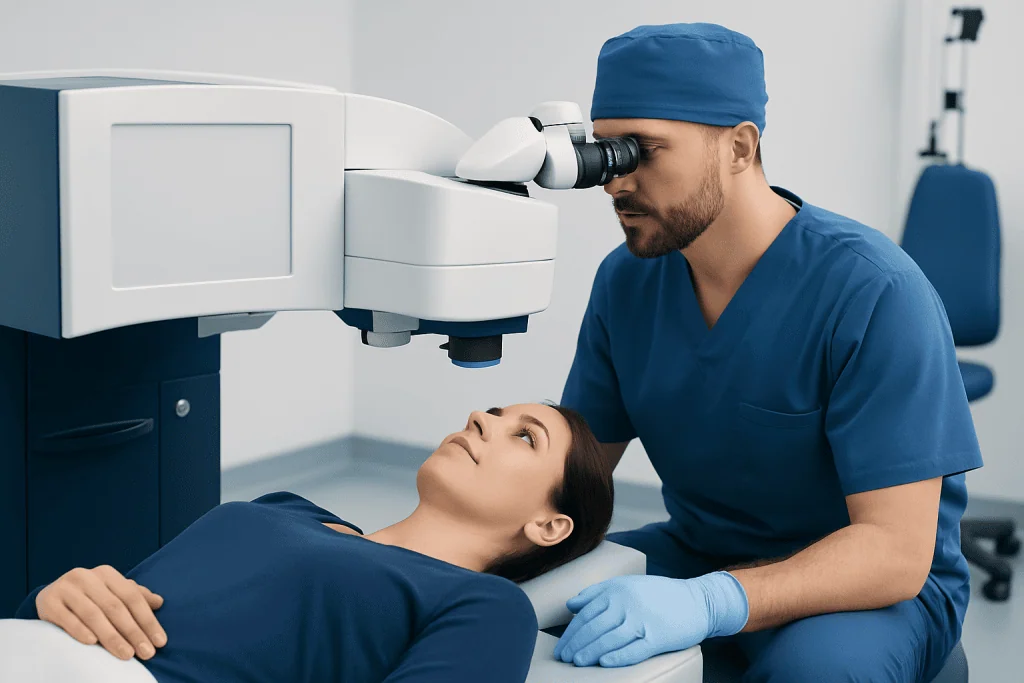
PRK is generally considered the simpler of the two techniques. After the eye is numbed with drops, the surgeon removes the epithelial layer, applies the laser to reshape the cornea, and places a protective bandage contact lens on the eye. The surface layer then regenerates naturally during the first few days after surgery.
In LASEK, the surgeon uses a special solution to loosen the epithelial layer, creating a very thin sheet. This sheet is gently lifted aside, the laser is applied, and the epithelium is repositioned before a bandage contact lens is placed. The goal is to preserve the surface cells rather than removing them completely.
Although this distinction sounds significant, in practice both surgeries are close relatives. The laser treatment itself is brief, and both are usually performed as outpatient procedures. Most people are awake during surgery and feel pressure or mild awareness rather than pain because numbing drops are used.
Some clinics also discuss these options together under surface laser vision correction. The choice between them depends less on which one is universally better and more on which one better fits the shape of the cornea, the refractive error being treated, and the surgeon’s experience.
Recovery: comfort, healing, and return to daily life

Recovery is often the area people care about most when comparing PRK vs LASEK. In general, both involve more noticeable early healing than LASIK because the corneal surface needs time to recover. During the first few days, the eye may feel gritty, watery, light-sensitive, or uncomfortable, and vision is usually blurry.
PRK may involve slightly more early discomfort because the surface layer is fully removed. LASEK may feel somewhat gentler in the immediate period for some patients, though experiences vary. In either case, the bandage contact lens is usually kept in place for several days while the epithelium heals.
Functional vision often begins to improve within the first week, but it is common for sight to fluctuate for several weeks. Reading, computer work, or night driving may be challenging early on. Many people can return to desk-based activities after a few days, but jobs involving dust, eye strain, or physical exposure may require a longer recovery period.
Full visual stabilization can take weeks to months, especially after PRK. This does not mean something is wrong; it reflects the normal pace of corneal healing. Following the surgeon’s aftercare plan closely, using prescribed drops, and attending follow-up visits are important parts of a smooth recovery. Patients comparing PRK and LASEK should discuss expected timelines based on their own eyes and lifestyle.
Vision results and long-term outcomes
For appropriately selected patients, both PRK and LASEK can provide very good long-term visual outcomes. The laser used in each procedure reshapes the cornea with the same basic aim: to reduce refractive error and improve uncorrected vision. Many people are able to reduce their dependence on glasses or contact lenses after healing is complete.
Because the same corneal reshaping principles are used, the final visual result is often more influenced by the person’s prescription, corneal measurements, healing response, and adherence to aftercare than by the label of PRK or LASEK alone. In other words, the technique matters, but patient selection matters just as much.
That said, results are not identical for everyone. Some people may notice temporary glare, halos, dry eye symptoms, or fluctuating sharpness while the eye heals. These effects often improve with time, but they should be discussed before surgery so expectations remain realistic.
It is also important to understand that laser vision correction does not stop the natural aging of the eye. Even after successful surgery, a person may later need reading glasses due to age-related presbyopia or may develop unrelated eye conditions such as cataracts. A thorough preoperative discussion helps place the benefits and limits of surgery in proper context.
Who may be a good candidate
PRK and LASEK may be considered for adults with a stable vision prescription who want to reduce dependence on corrective lenses. They are often discussed for people who may not be ideal LASIK candidates, particularly those with thinner corneas, certain corneal surface considerations, or a lifestyle where avoiding a corneal flap is desirable.
Surface procedures can also be useful in people with mild to moderate refractive errors, though suitability depends on detailed measurements rather than a simple prescription number. A surgeon will usually assess corneal thickness, corneal shape, pupil size, tear film quality, and the overall health of the eye before making a recommendation.
Not everyone is a suitable candidate. Active eye infection, significant dry eye, unstable vision, uncontrolled autoimmune disease, pregnancy-related vision changes, or certain corneal disorders may affect whether surgery should be delayed or avoided. In some cases, a specialist may also evaluate the cornea for conditions such as keratoconus before surface laser treatment is considered.
People who wear contact lenses usually need to stop using them for a period before the preoperative assessment, because lenses can temporarily alter corneal shape. Honest discussion about symptoms, medications, work demands, and sports activities helps the care team select the safest and most effective option.
Risks, side effects, and possible limitations
Like any surgery, PRK and LASEK carry risks as well as benefits. Common short-term effects include pain or irritation, blurred vision, tearing, light sensitivity, and fluctuating sight during healing. These are expected to some degree and are usually managed with eye drops, protective measures, and close follow-up.
Less common but important risks include infection, delayed epithelial healing, corneal haze, dry eye symptoms, undercorrection, overcorrection, or the need for an enhancement procedure later. Night-vision symptoms such as halos or glare can also occur, especially early in recovery. The exact likelihood varies from person to person and should be reviewed individually with an eye surgeon.
One practical limitation is the slower visual recovery compared with flap-based procedures. People who need very rapid return to sharp vision may find this important when considering their options. On the other hand, some patients value the absence of a corneal flap, especially if they have occupations or hobbies with a risk of eye impact.
Careful screening reduces risk but cannot eliminate it completely. This is why informed consent and realistic expectations are central parts of preparation. A balanced conversation should cover expected benefits, alternatives, recovery demands, and what symptoms should prompt urgent contact after surgery.
Preparation, aftercare, and when to seek medical advice
Preparation begins with a detailed eye examination and a conversation about goals. The surgeon may perform corneal mapping, refraction testing, tear film assessment, and general eye health checks. People should mention any history of eye disease, dry eye, autoimmune conditions, previous surgeries, or medications that may affect healing.
After surgery, it is important to use prescribed eye drops exactly as directed, avoid rubbing the eyes, and protect them from dust, smoke, and excessive sunlight. Resting the eyes, limiting screen exposure when uncomfortable, and attending all follow-up appointments can support healing. Swimming, eye makeup, and strenuous activities may need to be avoided for a short period, depending on medical advice.
A doctor should be contacted promptly if there is worsening pain, sudden drop in vision, increasing redness, discharge, or symptoms that feel out of proportion to the expected recovery. These signs do not always mean a serious problem, but they deserve timely assessment. Early review can help detect infection, delayed healing, or inflammation before complications progress.
For people exploring laser eye surgery internationally, expert assessment is especially important because not every technique suits every eye. Acibadem International’s multidisciplinary specialists in JCI-accredited hospitals evaluate and treat refractive eye conditions for international patients, helping determine whether a surface procedure or another option such as ReLEx SMILE is the better fit.
Frequently asked questions
Which is better, PRK or LASEK?
Neither procedure is universally better for everyone. Both can provide excellent long-term vision correction, and the best choice depends on the cornea, prescription, eye surface health, and the surgeon's judgment. A detailed eye examination is the safest way to decide.
Does PRK hurt more than LASEK?
PRK may cause slightly more discomfort in the first few days because the corneal surface layer is removed completely. LASEK may feel somewhat gentler for some people, but individual experiences vary. Pain control and aftercare are important with both procedures.
How long does it take to recover from PRK or LASEK?
Initial healing usually takes several days, and many people can resume light daily activities within about a week. However, vision can continue to fluctuate and improve over several weeks to months. Full stabilization is often gradual rather than immediate.
Are PRK and LASEK results permanent?
The corneal reshaping itself is intended to be long-lasting. However, the eyes can still change over time because of aging or unrelated eye conditions. For example, reading vision may decline later due to presbyopia, even after successful distance vision correction.
Who should not have PRK or LASEK?
These procedures may not be suitable for people with certain corneal diseases, significant dry eye, unstable prescriptions, active eye infections, or some systemic conditions that affect healing. Temporary factors, such as pregnancy-related vision changes, may also lead to postponement. A specialist can explain whether a person is a good candidate.
Is LASEK the same as LASIK?
No. LASEK is a surface procedure, while LASIK involves creating a deeper corneal flap before laser reshaping. Because of this difference, healing and early recovery usually take longer with LASEK than with LASIK.
References
- American Academy of Ophthalmology
- National Eye Institute
- Royal College of Ophthalmologists
- American Society of Cataract and Refractive Surgery
This article is for general information only and is not a substitute for professional medical advice. Please consult a qualified doctor about your individual situation.
LASEK in Turkey — costs, top hospitals & a free quote
JCI-accredited · board-certified surgeons · reply within 24h
Add us as a Preferred Source to see more of our trusted health content across Google Search, AI Overviews and Discover.