Prostate Enlargement: Symptoms, Tests, and Treatment Choices

Prostate enlargement is not prostate cancer, but both conditions can cause urinary symptoms and should be assessed by a doctor. Common symptoms include a weak urine stream, frequent urination, urgency, night-time urination, and a feeling that the bladder is not empty.
Key Takeaways
- Prostate enlargement is not prostate cancer, but both conditions can cause urinary symptoms and should be assessed by a doctor.
- Common symptoms include a weak urine stream, frequent urination, urgency, night-time urination, and a feeling that the bladder is not empty.
- Diagnosis may include a symptom score, urine tests, blood tests such as PSA when appropriate, a prostate exam, and urinary flow or imaging tests.
- Treatment depends on symptom severity, prostate size, overall health, and personal preferences.
- Men should seek prompt medical care for inability to urinate, blood in the urine, fever with urinary symptoms, or worsening pain.
Prostate enlargement, also called benign prostatic hyperplasia or BPH, is a common non-cancerous condition that can affect urination as men age. Many treatment choices are available, from lifestyle changes and medicines to minimally invasive procedures and surgery.
Overview
Prostate enlargement is a common condition in men, especially with increasing age. The medical term is benign prostatic hyperplasia, often shortened to BPH. “Benign” means it is not cancer. “Hyperplasia” means an increase in the number of prostate cells, which causes the gland to grow larger over time.
The prostate is a small gland located below the bladder and around the urethra, the tube that carries urine out of the body. When the prostate enlarges, it can press on the urethra or affect how the bladder empties. This may lead to lower urinary tract symptoms such as a slow stream, frequent urination, or getting up at night to urinate.
BPH is not the same as prostate cancer, and having BPH does not mean a man has cancer. However, urinary symptoms can overlap with other conditions, including urinary tract infection, bladder problems, kidney stones, or prostate cancer. For this reason, a proper medical evaluation is important before choosing treatment.
Symptoms of Prostate Enlargement
Symptoms of prostate enlargement vary widely. Some men have a large prostate with few symptoms, while others have a moderately enlarged prostate that causes significant bother. Symptoms often develop gradually, so men may adapt to them without realizing how much they affect daily life and sleep.
Common BPH symptoms include difficulty starting urination, a weak or interrupted urine stream, dribbling at the end of urination, and a feeling that the bladder has not emptied completely. Men may also urinate more often, feel a sudden urge to urinate, or need to urinate several times during the night, known as nocturia.
Doctors often describe these as “voiding” and “storage” symptoms. Voiding symptoms relate to the act of passing urine, while storage symptoms relate to how often and how urgently the bladder signals the need to urinate.
- Voiding symptoms: hesitancy, weak stream, straining, stop-start flow, incomplete emptying.
- Storage symptoms: frequency, urgency, night-time urination, occasional leakage before reaching the toilet.
- Possible complications: urinary retention, recurrent urinary infections, bladder stones, or kidney strain in more advanced cases.
Causes and Risk Factors
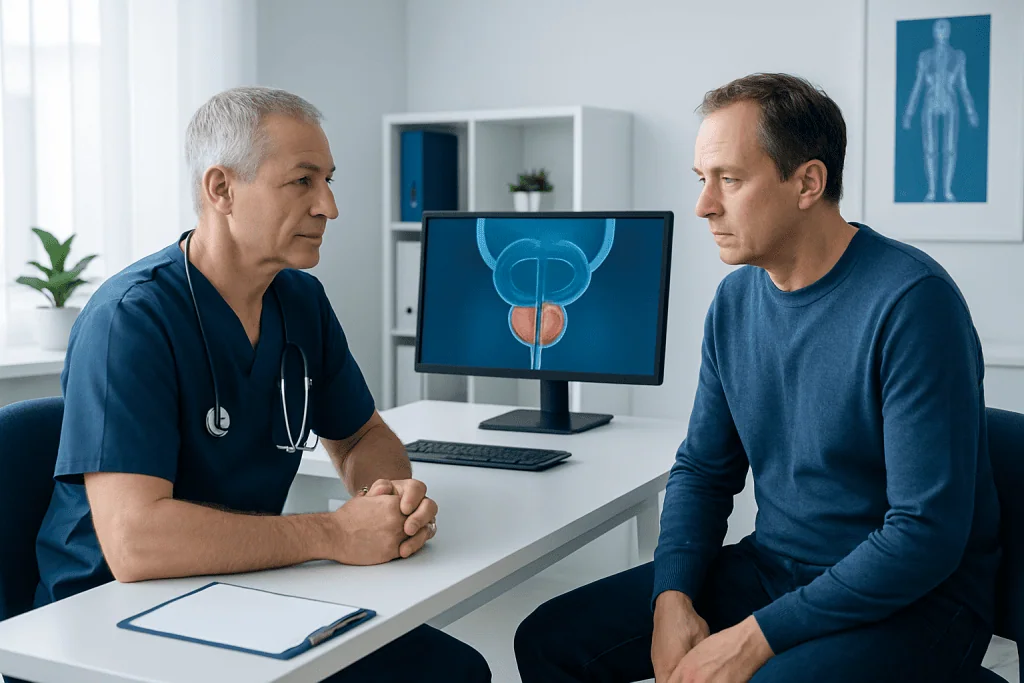
The exact cause of prostate enlargement is not fully understood, but it is strongly linked to aging and hormonal changes. The prostate naturally changes throughout adult life. In many men, growth becomes more noticeable after middle age and may continue slowly over the years.
Male hormones, particularly testosterone and its active form dihydrotestosterone, play a role in prostate growth. Genetics may also contribute, as BPH can be more common in men with a family history of prostate problems. Lifestyle and metabolic factors may influence symptoms, although they are not the only cause.
Risk factors for prostate enlargement include older age, family history of BPH, obesity, reduced physical activity, type 2 diabetes, heart and blood vessel conditions, and certain patterns of diet and lifestyle. Some medicines can also worsen urinary symptoms, including selected decongestants, antihistamines, and medications that increase urine production. Men should not stop prescribed medication without medical advice, but they should tell their doctor about all medicines and supplements they use.
Diagnosis and Tests
Diagnosis begins with a discussion of symptoms, medical history, medicines, previous urinary infections, and how symptoms affect quality of life. A doctor may use a symptom questionnaire, such as the International Prostate Symptom Score, to measure severity and track changes over time. The evaluation also aims to rule out other causes of urinary problems.
A physical examination may include a digital rectal examination, in which the doctor gently feels the prostate through the rectum to assess size, shape, and tenderness. A urine test can check for infection, blood, glucose, or other abnormalities. Blood tests may assess kidney function, and a prostate-specific antigen test, known as PSA, may be recommended depending on age, risk factors, examination findings, and shared decision-making.
Additional tests may be used when symptoms are moderate to severe, when treatment is being planned, or when the diagnosis is uncertain. These may include measurement of urinary flow rate, post-void residual urine using ultrasound, bladder diary, kidney and bladder ultrasound, cystoscopy, or urodynamic testing. Not every man needs every test; the choice depends on symptoms, examination results, and clinical judgment.
Treatment Options
Treatment for prostate enlargement is personalized. Mild symptoms may be managed with watchful waiting and self-care, especially if they are not very bothersome and there are no complications. Regular follow-up helps ensure symptoms are not worsening and the bladder and kidneys remain healthy.
Medicines are commonly used when symptoms affect daily life. Alpha blockers can relax muscles in the prostate and bladder neck to improve urine flow. 5-alpha reductase inhibitors may help shrink the prostate over time in men with larger glands. Other medicines may be considered for urgency, frequent urination, erectile dysfunction with urinary symptoms, or combined symptom patterns. The best option depends on prostate size, blood pressure, sexual health considerations, side effects, and other medical conditions.
Procedures may be recommended when medication is not effective, side effects are troublesome, symptoms are severe, or complications occur. Minimally invasive treatments can reduce obstruction with shorter recovery in selected patients. Surgical options, such as transurethral resection of the prostate and laser procedures, remove or vaporize obstructing prostate tissue to improve urine flow. Very large prostates may require different surgical approaches. A urologist can explain the expected benefits, possible risks, anesthesia needs, and recovery for each option.
Prevention and Self-care
There is no guaranteed way to prevent prostate enlargement, but healthy habits may reduce symptom burden and support urinary health. Men with mild or moderate symptoms often benefit from practical changes that reduce bladder irritation and improve bladder emptying. These measures are also useful alongside medical treatment.
Helpful self-care steps include limiting fluids in the evening, reducing caffeine and alcohol if they worsen symptoms, urinating before long trips or bedtime, and taking time to empty the bladder fully. Some men benefit from “double voiding,” which means urinating, waiting briefly, and trying again. Regular physical activity, weight management, constipation prevention, and good diabetes control may also help urinary symptoms.
Men should review over-the-counter medicines with a doctor or pharmacist, especially cold and allergy medicines that may worsen urinary difficulty. It is also important not to ignore symptoms such as pain, blood in the urine, repeated infections, or sudden inability to urinate. Self-care can be helpful, but it should not replace medical evaluation when symptoms are new, worsening, or concerning.
When to See a Doctor
A man should see a doctor if urinary symptoms are persistent, worsening, affecting sleep, limiting activities, or causing worry. Early assessment can identify prostate enlargement and also rule out infections, bladder conditions, kidney problems, and prostate cancer. Even when symptoms are mild, a baseline evaluation can guide safe monitoring.
Urgent medical care is needed if a man cannot urinate, has severe lower abdominal pain, develops fever or chills with urinary symptoms, sees visible blood in the urine, or has new back or flank pain. These symptoms do not always mean a serious condition, but they should be evaluated promptly to prevent complications and relieve discomfort.
Men who are unsure about treatment choices can ask for a urology consultation to discuss the advantages and disadvantages of monitoring, medicines, minimally invasive procedures, and surgery. At Acibadem International, multidisciplinary specialists in JCI-accredited hospitals evaluate and treat prostate enlargement for international patients, including those who need diagnostic testing, urology care, or procedure planning.
Frequently asked questions
Is prostate enlargement the same as prostate cancer?
No. Prostate enlargement, or BPH, is a benign non-cancerous growth of the prostate. However, BPH and prostate cancer can both cause urinary symptoms, so a medical evaluation is important if symptoms develop or change.
What are the first signs of prostate enlargement?
Early signs often include a slower urine stream, difficulty starting urination, more frequent urination, or waking at night to urinate. Some men also notice urgency or a feeling that the bladder is not completely empty after urinating.
Does every man with BPH need treatment?
Not always. If symptoms are mild and there are no complications, a doctor may recommend watchful waiting with lifestyle adjustments and periodic follow-up. Treatment is usually considered when symptoms are bothersome, worsening, or affecting bladder health.
Can medicines shrink an enlarged prostate?
Some medicines can relax the prostate and bladder neck to improve urine flow, while others may gradually shrink the prostate in selected men with larger glands. The right medicine depends on symptoms, prostate size, other health conditions, and possible side effects.
When is surgery needed for prostate enlargement?
Surgery or a minimally invasive procedure may be recommended when medicines do not help, symptoms are severe, or complications occur. Examples include recurrent urinary retention, repeated infections, bladder stones, kidney problems, or significant bleeding related to prostate enlargement.
Can lifestyle changes improve BPH symptoms?
Yes, lifestyle changes can reduce symptoms for many men, especially when symptoms are mild. Limiting evening fluids, reducing caffeine and alcohol, managing constipation, staying active, and reviewing medicines that may worsen urination can all be helpful.
References
- European Association of Urology
- American Urological Association
- National Institute of Diabetes and Digestive and Kidney Diseases
- Mayo Clinic
- NHS
This article is for general information only and is not a substitute for professional medical advice. Please consult a qualified doctor about your individual situation.
Oncology care in Turkey — second opinion and treatment plan
JCI-accredited · board-certified surgeons · reply within 24h
Add us as a Preferred Source to see more of our trusted health content across Google Search, AI Overviews and Discover.