Prostate Removal Operation: Procedure, Recovery and Results

A radical prostatectomy removes the prostate and usually the seminal vesicles, most often for prostate cancer that has not spread widely. Surgical approach, cancer characteristics, overall health and personal preferences all influence whether surgery is appropriate.
Key Takeaways
- A radical prostatectomy removes the prostate and usually the seminal vesicles, most often for prostate cancer that has not spread widely.
- Surgical approach, cancer characteristics, overall health and personal preferences all influence whether surgery is appropriate.
- Most people stay mobile soon after surgery, but strenuous activity and heavy lifting need to wait until the surgical team advises it.
- Urinary leakage and erectile dysfunction are common early concerns, yet many people improve over months with appropriate rehabilitation and treatment.
- Prostate removal does not usually shorten life expectancy; outcomes depend mainly on the underlying condition and its stage.
- Urgent medical review is needed after surgery for fever, worsening pain, heavy bleeding, breathing difficulty or inability to pass urine after catheter removal.
A prostate removal operation, also called prostatectomy, is surgery to remove part or all of the prostate gland. It is most commonly used to treat localized prostate cancer, and recovery typically involves temporary catheter use, gradual return to activity, and support for urinary and sexual health.
Overview: what is a prostate removal operation?
A prostate removal operation is a surgical procedure in which a surgeon removes part or all of the prostate gland. The prostate sits below the bladder and surrounds part of the urethra, the tube that carries urine out of the body. In most cases, the phrase refers to a radical prostatectomy, which removes the entire prostate and seminal vesicles to treat prostate cancer.
For selected people with cancer confined to the prostate or nearby tissues, surgery can be a curative treatment option. A simple prostatectomy removes the inner portion of a very enlarged prostate to relieve urinary obstruction caused by benign prostatic hyperplasia (BPH); it is different from radical prostatectomy and does not treat prostate cancer. The operation type, expected benefits and possible effects on continence and erections should be discussed carefully with a urologist.
Modern prostate surgery may be performed through an open incision, laparoscopically, or with robotic assistance. The goal is always safe removal of the relevant tissue while preserving urinary and sexual function where medically appropriate. Prostate cancer evaluation helps determine whether surgery is the best approach or whether active surveillance, radiotherapy, medicines or another treatment may be more suitable.
Who may be a candidate for prostate surgery?
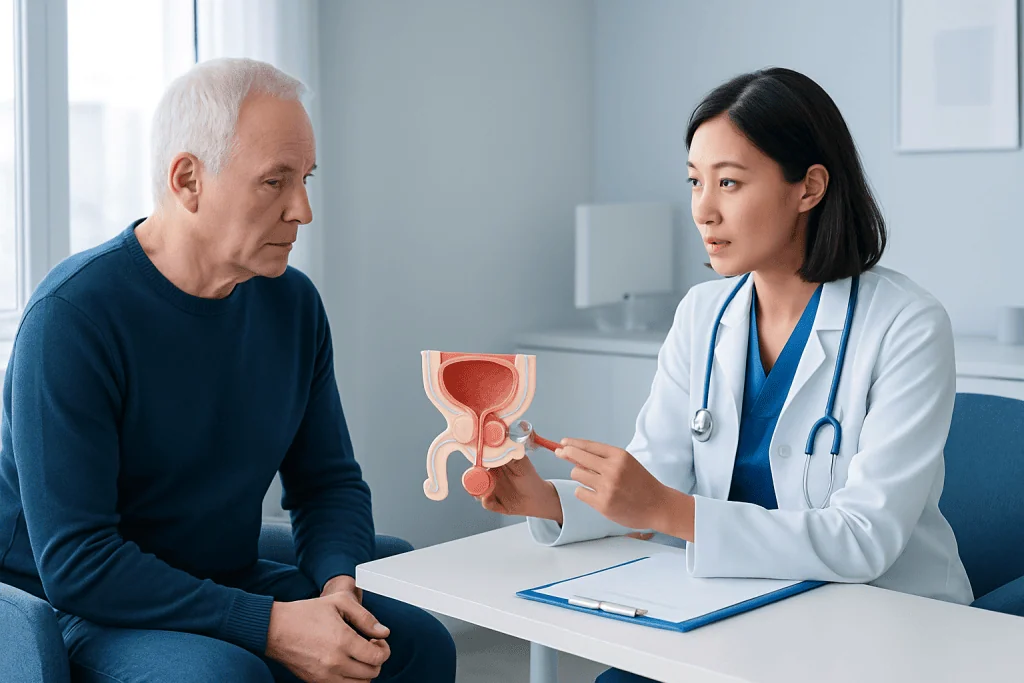
Radical prostatectomy is commonly considered for people with localized prostate cancer and a health status that makes major surgery reasonable. It may also be offered in some cases of locally advanced cancer, often as part of a broader treatment plan that can include radiotherapy or hormone therapy. The decision is individualized rather than based on one test result alone.
Before recommending surgery, the care team reviews prostate-specific antigen (PSA) results, biopsy findings, MRI or other imaging, cancer grade and stage, urinary symptoms, prior operations, medications and general health. Age is considered, but physical fitness, other medical conditions and estimated life expectancy are usually more meaningful than chronological age alone.
Simple prostatectomy may be considered for a very enlarged prostate causing significant blockage, recurrent urinary retention, bladder stones, repeated infections or kidney effects when less invasive BPH treatments are unsuitable or have not worked. It differs from other options for benign prostatic hyperplasia, so patients should ask exactly which tissue will be removed and what the operation is intended to achieve.
Shared decision-making is important. A person may wish to weigh cancer control, recovery time, the chance of urinary leakage, effects on erections and ejaculation, and alternatives such as radiation treatment or monitoring. A second opinion may be helpful when choices are closely balanced.
How the procedure works: preparation and step-by-step care
Preparation usually includes blood tests, urine testing, anesthesia assessment and a review of medicines that can affect bleeding or blood sugar. The surgical team gives individual instructions about eating, drinking, bowel preparation when needed, smoking cessation and which regular medicines to take or pause. Patients should not stop prescribed medication without guidance from their clinician.
The operation is performed under general anesthesia. In a radical prostatectomy, the surgeon separates and removes the prostate and seminal vesicles, and may remove nearby lymph nodes when there is a meaningful risk of cancer spread. The bladder is then reconnected to the urethra. Nerve-sparing techniques may be possible when they can be used without compromising cancer treatment, with the aim of supporting erectile function recovery.
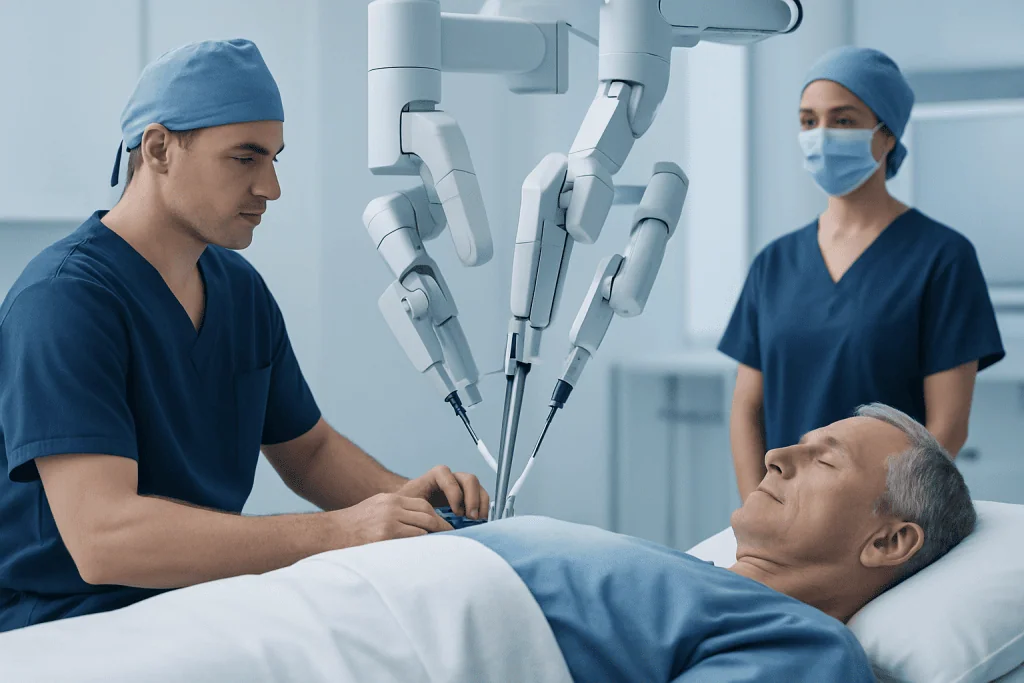
In robot-assisted laparoscopic surgery, the surgeon controls specialized instruments through several small abdominal incisions. Open surgery uses a larger incision. Neither approach is automatically best for every person; the surgeon’s experience, anatomy, previous treatment and cancer features are all relevant. Robotic prostatectomy may be discussed when a minimally invasive approach is appropriate.
A urinary catheter is placed during surgery to allow the bladder-urethra connection to heal. Tissue removed during the operation is examined by a pathologist. The final pathology report provides important information about the cancer and helps guide follow-up care.
Recovery timeline, walking and pain control
Hospital stay varies with the surgical approach, recovery progress and individual health. Many patients are encouraged to sit up and walk with assistance on the day of surgery or the following day. Early movement supports circulation, lung function and bowel recovery, but activity should increase gradually rather than through strenuous exercise.
How much should I walk after a prostatectomy? Short, frequent walks are usually preferred in the first days after discharge. A person may begin with several gentle walks around the home each day and slowly add distance as comfort and energy allow. The surgeon’s instructions take priority, especially after complications or additional procedures; heavy lifting, cycling, running and abdominal exercise are commonly postponed until healing is confirmed.
How painful is recovery from prostate removal? Pain is usually most noticeable around the incision sites and lower abdomen during the first several days, and it generally improves steadily. The care team may use a combination of pain-relief strategies, including prescribed medication and non-drug measures such as walking, rest and comfortable positioning. Severe, worsening or unexpected pain should be reported rather than managed alone.
The catheter often remains in place for about one to two weeks, although timing varies. Patients receive practical guidance on catheter care, hydration, bowel regularity and warning signs before going home. Tiredness is common for several weeks, while return to desk work, driving and more demanding activity should be individualized with the surgical team.
Benefits, risks and results to expect
For appropriate candidates with localized prostate cancer, the principal potential benefit of radical prostatectomy is removal of the cancerous prostate tissue with the aim of long-term cancer control. PSA is monitored after surgery because it should fall to a very low or undetectable level when all prostate tissue has been removed. Further treatment is not always needed, but may be recommended if pathology or later PSA results suggest persistent or recurrent cancer.
As with all major surgery, possible complications include bleeding, infection, blood clots, reactions to anesthesia, injury to nearby structures and narrowing at the bladder-urethra connection. Less common complications can occur, and the team explains risks based on the person’s circumstances. Prompt mobilization, preventive measures and follow-up reduce risk but cannot eliminate it completely.
Urinary leakage is common after catheter removal because the body needs time to adapt to the new urinary connection. Pelvic floor exercises, often taught before surgery or soon afterwards, can support recovery. Erectile dysfunction can also occur because nerves and blood vessels close to the prostate may be affected. Recovery differs considerably and may take months or longer; treatments may include oral medicines, vacuum devices, injections or specialist sexual rehabilitation.
Radical prostatectomy causes infertility because semen is no longer ejaculated, and it produces a dry orgasm. Fertility preservation should be discussed before treatment for anyone who may wish to have biological children in the future. Emotional adjustment is also important, and counseling or peer support can be valuable alongside physical recovery.
What is life like after you have your prostate removed?
Life after prostate removal can return to a full and active routine, but the adjustment is different for each person. In the early weeks, attention is usually focused on healing, catheter care, walking, bowel habits and regaining bladder control. Most people gradually resume normal daily activities as energy returns and their surgeon clears them to do so.
Longer-term changes may include a need for pads during continence recovery, altered sexual function and dry orgasm. Some people regain urinary control quickly, while others need several months and occasionally longer. Pelvic floor physiotherapy can be useful, particularly when exercises are performed correctly and consistently under professional guidance.
Sexual recovery depends on preoperative erectile function, age, nerve-sparing feasibility, other health conditions and the time since surgery. Intimacy can remain meaningful even while erections recover or if treatment is needed. Open discussion with a partner and clinician can make it easier to access practical options for sexual health and rehabilitation.
Follow-up appointments generally include PSA testing and review of urinary, bowel and sexual symptoms. At Acibadem International, multidisciplinary specialists in JCI-accredited hospitals can evaluate prostate conditions and coordinate surgical, oncology, rehabilitation and supportive care for international patients.
What is the average life expectancy after prostate removal?
There is no single average life expectancy after prostate removal because the answer depends primarily on why surgery was performed, the cancer stage and grade when relevant, pathology results, overall health and age. Removing the prostate itself does not usually reduce life expectancy. For many people treated for localized prostate cancer, surgery is intended to provide long-term cancer control.
After radical prostatectomy, the pathology report and PSA follow-up offer more useful individualized information than a general survival estimate. If cancer is found beyond the prostate or PSA later rises, additional treatment may be considered. This does not mean that every rise signals the same outcome; clinicians interpret trends alongside the full clinical picture.
People undergoing simple prostatectomy for BPH typically have surgery to improve urinary obstruction rather than to treat a life-threatening disease. Their life expectancy is driven by their broader health, not by removal of prostate tissue. A urologist or oncology team can explain prognosis in a way that reflects the individual diagnosis and treatment plan.
When to seek medical care
Before surgery, medical assessment is important for new urinary symptoms such as blood in the urine, inability to urinate, repeated urinary infections, persistent pelvic pain, unexplained weight loss or bone pain. These symptoms often have non-cancer causes, but should be evaluated rather than self-treated. Urgent care is appropriate for complete urinary retention, severe bleeding, chest pain or sudden shortness of breath.
After prostate surgery, contact the surgical team promptly for fever, chills, worsening redness or discharge from an incision, increasing abdominal or pelvic pain, heavy bleeding, persistent vomiting, calf swelling or breathing difficulty. These symptoms may require timely assessment. Follow the discharge instructions for catheter concerns, including blockage, leakage, dislodgement or inability to drain.
It is also appropriate to seek help for ongoing urinary leakage, erection concerns, low mood, anxiety or relationship strain. These are recognized aspects of recovery, and support is available. Regular follow-up should not be skipped, particularly after cancer surgery, because PSA monitoring is central to detecting changes early.
Frequently asked questions
Is a prostate removal operation the same as prostatectomy?
Yes. Prostatectomy is the medical term for a prostate removal operation. Radical prostatectomy removes the entire prostate, usually for cancer, while simple prostatectomy removes only part of the gland to relieve severe urinary blockage from benign enlargement.
How long does it take to recover from radical prostatectomy?
Initial physical recovery often takes several weeks, while energy, urinary control and sexual function may continue improving for months. The pace depends on the surgical approach, overall health, complications and the type of work or activity a person plans to resume. The surgeon provides individualized guidance for driving, lifting, exercise and return to work.
Will a man still be able to have sex after prostate removal?
Sexual activity remains possible for many people after prostate removal, but erectile function can be temporarily or persistently affected. Nerve-sparing surgery, preoperative erectile function and time since surgery influence recovery. A urologist can discuss rehabilitation and treatment options if erections are difficult.
Can you ejaculate after prostate removal?
After radical prostatectomy, semen is no longer ejaculated because the prostate and seminal vesicles have been removed. Orgasm may still be possible, but it is typically dry. This surgery causes infertility, so sperm preservation should be discussed before treatment when future biological children are desired.
How long will urinary leakage last after prostate removal?
Leakage is common after catheter removal and often improves over weeks to months as the pelvic floor and urinary sphincter recover. Some people recover control sooner, while others need more time or additional treatment. Pelvic floor exercises and follow-up with the care team can help address persistent symptoms.
Can prostate cancer return after prostate removal?
Cancer can recur after surgery in some cases, which is why regular PSA testing is important. A detectable or rising PSA does not have one fixed meaning and is assessed together with pathology findings and timing. If further treatment is needed, options may include radiotherapy, hormone treatment or other therapies depending on the situation.
References
- American Urological Association
- National Cancer Institute
- European Association of Urology
- National Health Service
- American Cancer Society
This article is for general information only and is not a substitute for professional medical advice. Please consult a qualified doctor about your individual situation.
Oncology care in Turkey — second opinion and treatment plan
JCI-accredited · board-certified surgeons · reply within 24h
Add us as a Preferred Source to see more of our trusted health content across Google Search, AI Overviews and Discover.