Prosthetic Hand: An Evidence-Based Guide for Patients

A prosthetic hand may be passive, body-powered, electrically powered, or designed for partial-hand limb difference. Comfortable socket fit, healthy skin and structured training are as important as the device itself.
Key Takeaways
- A prosthetic hand may be passive, body-powered, electrically powered, or designed for partial-hand limb difference.
- Comfortable socket fit, healthy skin and structured training are as important as the device itself.
- Modern myoelectric hands can use electrical signals from residual muscles to open, close or select grips.
- A prosthetic hand does not restore natural sensation or normal hand function, but it can improve independence for selected tasks.
- Regular follow-up allows the prosthesis to be adjusted as the body, activity needs and goals change.
A prosthetic hand is a device designed to replace some or all lost hand function after an amputation or congenital limb difference. The most suitable option depends on the level of limb difference, a person’s goals, skin and muscle condition, lifestyle, and willingness to take part in rehabilitation training.
Prosthetic hand overview
A prosthetic hand is an artificial device worn by a person who has lost part or all of a hand, whether through injury, illness, surgery or a congenital limb difference. Its purpose may be practical, cosmetic, protective or a combination of these. Some people use a prosthetic hand for specific activities such as eating, carrying objects, cycling or work tasks, while others prefer to use it throughout much of the day.
There is no single “best” prosthetic hand. The right choice is highly individual and begins with understanding what the person wants to do, how much limb remains, whether the skin can tolerate a socket, and what movement and muscle signals are available. Age, work, hobbies, dominant-hand involvement, home environment and access to training also matter.
It is helpful to set realistic expectations. A prosthetic hand may improve reach, grip, appearance or task stability, but it does not fully replace the natural hand’s sensation, speed, fine touch or automatic coordination. Many people achieve meaningful gains when the device is selected carefully and used alongside occupational therapy and rehabilitation.
Types of prosthetic hands and how they work
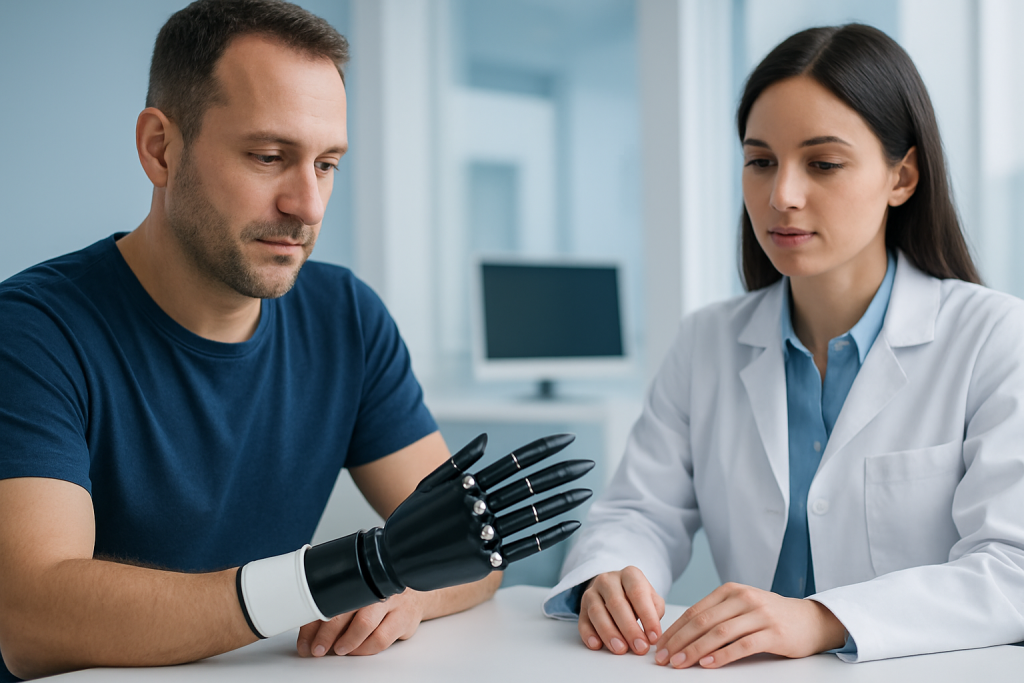
Passive prosthetic hands do not actively open and close. They may provide a natural appearance, balance, protection for the residual limb, or a stable support for simple activities. Some passive hands can be positioned manually, which can be useful for holding light items or assisting with two-handed tasks.
Body-powered prostheses use a harness and cable system. Movement of the shoulder, upper body or opposite side pulls the cable to operate a terminal device, such as a hook or mechanical hand. These systems are often durable, relatively straightforward and provide direct physical feedback through cable tension. However, the harness may feel restrictive for some users.
Myoelectric prosthetic hands use small sensors placed over muscles in the residual limb. When those muscles contract, the sensors detect electrical activity and send signals to motors in the hand. Depending on the model and training, the user may control opening and closing, wrist position, grip force or different grip patterns. These devices can look more hand-like and may offer useful functions, but they require charging, maintenance, reliable electrode contact and practice.
Partial-hand prostheses are designed for people who retain a wrist and some fingers or part of the palm. They may replace one or more fingers, support grasp, protect sensitive areas or improve hand symmetry. A prosthetist can explain whether a custom device, an activity-specific design or a powered option is appropriate for the level of limb difference.
Who may benefit and what affects suitability
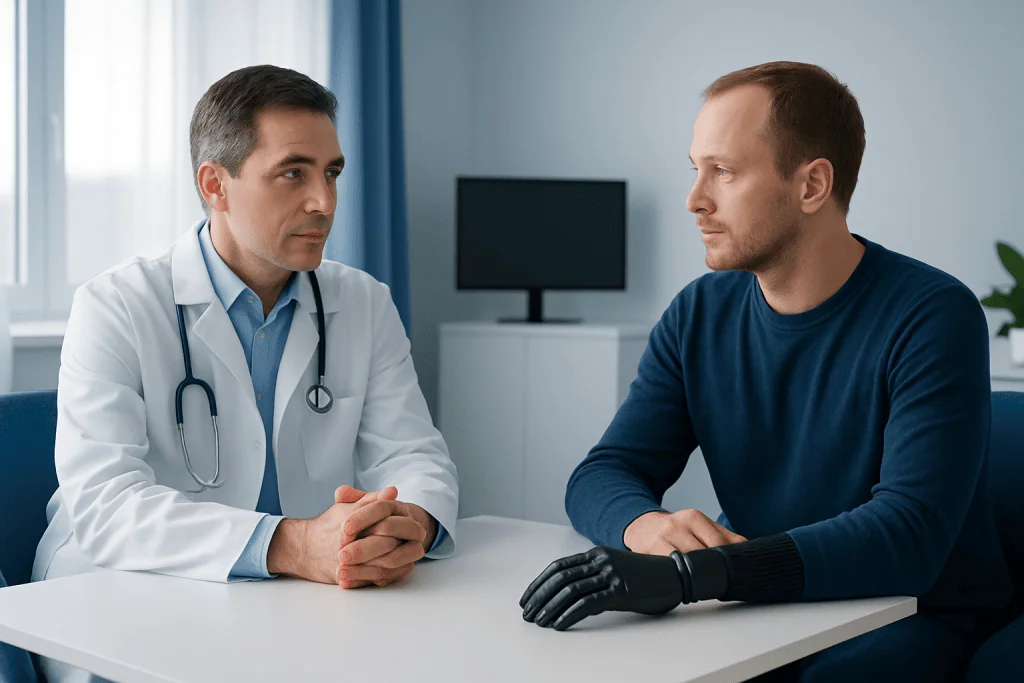
People may consider a prosthetic hand after traumatic amputation, amputation related to infection or circulation problems, cancer surgery, or a congenital upper-limb difference. Timing varies. Some people are fitted after the surgical site has healed and swelling has settled, while others need more time for wound care, scar management, pain treatment or strengthening.
The amount and location of the remaining limb strongly influence available options. For example, a person with an intact wrist may benefit from a partial-hand device, whereas someone with an amputation below or above the elbow may need a more complete upper-limb prosthesis. A clinician also assesses limb length, joint movement, scar tissue, muscle control, skin health and sensitivity.
Personal goals should guide decision-making. Someone who needs a dependable tool for physically demanding work may prioritize durability and grip strength. Another person may value a lighter device, appearance, ease of use for household activities, or help with a particular sport or musical activity. It is entirely reasonable to decide that a prosthesis is useful only for certain tasks, or not to use one at all.
Emotional adjustment is also an important part of care. Changes in body image, independence, work roles and social confidence can take time. Peer support, counseling and rehabilitation professionals can help people and families adapt while respecting individual preferences.
Assessment, fitting and rehabilitation
Prosthetic care is usually provided by a multidisciplinary team that may include a rehabilitation physician, surgeon, prosthetist, occupational therapist, physiotherapist, nurse and psychologist. The assessment includes a discussion of health history, goals, daily routines and previous device experience. The team examines the residual limb and evaluates strength, range of motion, balance, sensation and ability to perform activities safely.
A key part of the prosthesis is the socket: the custom-made section that connects the device to the residual limb. A well-fitted socket should be secure without causing pressure injury, excessive rubbing, numbness or persistent pain. The prosthetist may take measurements or create a digital scan or cast, then make adjustments during several fitting visits.
Training is essential, particularly with a myoelectric prosthetic hand. Occupational therapy can teach how to put the device on and remove it, position the arm, control opening and closing, handle objects, use both hands together and complete personal care tasks. Practice normally progresses from simple tasks to more complex real-world activities.
Rehabilitation also addresses the rest of the body. Exercises may help maintain shoulder, elbow and wrist mobility, strengthen muscles and reduce overuse of the unaffected arm. The care plan may include scar care, desensitization, management of residual-limb swelling and strategies for returning to work, school or leisure activities.
Living with a prosthetic hand: comfort, care and expectations
Daily use becomes easier when the device is integrated gradually into routines. At first, the prosthetic hand may be worn for short periods while the skin adapts. The rehabilitation team can recommend a safe wearing schedule and identify tasks that are most useful to practice. Pushing through discomfort is not advisable, because repeated pressure can damage the skin.
Skin care is especially important. The residual limb should be checked daily for redness, blisters, broken skin, swelling, rash or changes in temperature. The socket and liners should be cleaned according to the manufacturer’s and prosthetist’s instructions. Moisture, sweat, changes in body weight and changes in limb volume can all affect fit.
Powered devices generally need routine charging and may require periodic servicing. Users should ask how to protect the device from water, dust, heat and impact, as recommendations differ by model. Having a plan for times when the device is being charged or repaired can help maintain independence.
It is common for needs to change over time. A person may need socket adjustments after weight changes, growth, surgery, increased activity or changes in the residual limb. Some people use more than one device, such as an everyday hand and an activity-specific attachment, when this better supports their daily life.
Pain, phantom sensations and other challenges
After limb loss, many people experience phantom sensations, meaning they feel that the missing hand or fingers are still present. These sensations can be painless. Phantom limb pain is different: it is pain perceived in the absent part of the limb. Residual-limb pain is felt in the remaining limb and may be related to scar tissue, nerve irritation, pressure, infection, poor socket fit or another cause.
Pain should not be assumed to be an unavoidable part of prosthesis use. A medical assessment can help identify whether the socket needs adjustment or whether treatment is needed for a skin, nerve, bone or musculoskeletal problem. Depending on the cause, care may include therapy, graded movement, desensitization, mirror therapy, medication or referral to a pain specialist.
Some users develop discomfort in the neck, shoulder, back or unaffected hand because they compensate for the missing limb or use the prosthesis in an awkward position. Early attention to posture, task setup and strengthening can reduce strain. Ergonomic modifications at work or home may also be beneficial.
Learning to control a new device can be frustrating at times. Technical support, additional therapy sessions and realistic task-by-task goals often make a meaningful difference. The aim is not perfection; it is safe, comfortable and useful participation in the activities that matter to the individual.
When to seek medical care
Medical advice should be sought promptly if there is increasing redness, warmth, swelling, drainage, a bad odor, fever, open skin or a wound on the residual limb. These symptoms can indicate infection or pressure injury and should be assessed before continuing prolonged prosthesis wear. Sudden changes in limb color, temperature or swelling also need timely review.
A person should contact their prosthetist or rehabilitation team if the socket becomes loose or painful, causes persistent marks, slips during use, or no longer allows reliable control of the device. New weakness, numbness, tingling, worsening phantom pain, severe residual-limb pain or pain that interferes with sleep also deserves medical evaluation.
Follow-up appointments are important even when a prosthetic hand is working well. They allow the team to inspect fit, review skin health, update training and discuss new goals. Acibadem International’s multidisciplinary specialists and JCI-accredited hospitals provide assessment, rehabilitation and prosthetic care for international patients with upper-limb limb difference.
Frequently asked questions
What is the difference between a prosthetic hand and a bionic hand?
A prosthetic hand is the broad term for any artificial hand replacement. A “bionic” hand commonly refers to a powered, often myoelectric device that uses muscle signals to control movement. Not all prosthetic hands are powered, and a powered hand is not automatically the best choice for every person.
Can a prosthetic hand feel touch or pain?
Most standard prosthetic hands do not restore natural touch, temperature or pain sensation. Some advanced systems can provide limited sensory feedback through vibration, pressure or other signals, but this is not the same as normal hand sensation. Availability and suitability vary by device and clinical setting.
How long does it take to learn to use a prosthetic hand?
Learning time varies with the type of prosthesis, level of limb difference, previous experience and the tasks a person wishes to do. Basic use may begin during initial training, while confident use for everyday or complex activities can take weeks to months of regular practice. Occupational therapy is an important part of this process.
Is a myoelectric prosthetic hand better than a body-powered hand?
Neither is universally better. Myoelectric hands may offer powered movement and multiple grip options, while body-powered devices can be durable, lighter and provide direct feedback through cable tension. A prosthetist can help compare the benefits and limitations based on the person’s goals, environment and physical needs.
Can a person sleep or shower while wearing a prosthetic hand?
Most people remove a prosthetic hand for sleep unless their clinical team gives different advice. Whether it can be worn while bathing or showering depends on the device’s water-resistance rating and the safety of the socket system. Users should follow the manufacturer’s instructions and advice from their prosthetist.
What should a person do if the prosthetic hand causes skin irritation?
The device should be removed and the skin checked. Mild redness that fades quickly may occur, but persistent redness, blisters, broken skin, swelling or pain should be reviewed by a prosthetist or healthcare professional. Continuing to wear a poorly fitting socket can worsen skin problems.
References
- World Health Organization
- American Academy of Orthotists and Prosthetists
- American Occupational Therapy Association
- Amputee Coalition
- Mayo Clinic
This article is for general information only and is not a substitute for professional medical advice. Please consult a qualified doctor about your individual situation.
Explore treatments in Turkey — costs, top hospitals & a free quote
JCI-accredited · board-certified surgeons · reply within 24h
Add us as a Preferred Source to see more of our trusted health content across Google Search, AI Overviews and Discover.