Ptosis Surgery: Who May Benefit and What Recovery Is Like

Ptosis surgery may help when a drooping eyelid blocks vision, causes fatigue, or affects eye comfort. The best surgical method depends on eyelid muscle function, severity of the droop, and the underlying cause.
Key Takeaways
- Ptosis surgery may help when a drooping eyelid blocks vision, causes fatigue, or affects eye comfort.
- The best surgical method depends on eyelid muscle function, severity of the droop, and the underlying cause.
- Recovery is usually gradual, with swelling and bruising improving over days to weeks.
- A full eye assessment is important because ptosis can sometimes be related to nerve, muscle, or age-related changes.
- Children and adults can both develop ptosis, but timing of treatment differs by age and impact on vision.
Ptosis surgery is a procedure that lifts a drooping upper eyelid when it interferes with vision, causes eye strain, or creates a noticeable asymmetry. The right treatment depends on the cause of the droop, the strength of the eyelid muscle, and the overall health of the eye.
Overview: What Is Ptosis Surgery?
Ptosis surgery is an operation used to raise a drooping upper eyelid. The medical term for this condition is blepharoptosis, often shortened to ptosis. In some people, the eyelid droop is mild and mainly affects appearance. In others, it partially covers the pupil and interferes with vision, reading, driving, or other daily activities.
The main goal of surgery is to improve eyelid position while protecting the surface of the eye and preserving natural blinking. A well-planned procedure aims to create better symmetry between the two eyelids, but perfect symmetry is not always possible because eyelids naturally vary and healing can differ from person to person.
Ptosis surgery is not the same as cosmetic eyelid surgery, although the two may sometimes be discussed together. Ptosis specifically involves correction of the muscle or supporting tissues that lift the eyelid. Evaluation by an eye specialist, often with a detailed eye examination, helps confirm whether surgery is needed and which technique is most suitable.
Who May Benefit From Ptosis Surgery?
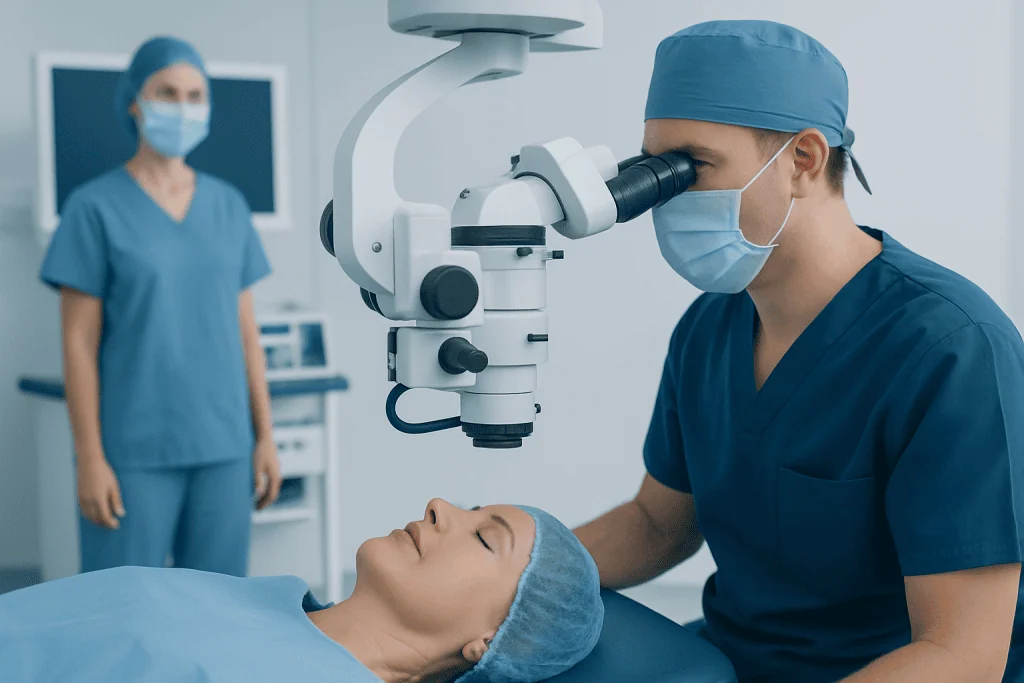
People may benefit from ptosis surgery when a drooping eyelid begins to affect vision, comfort, head posture, or confidence. Some people lift their brows constantly or tilt their head back to see more clearly. Over time, this can lead to forehead strain, headaches, or a tired feeling around the eyes.
Surgery may be considered in adults with age-related ptosis, in people whose eyelid droop developed after eye surgery or long-term contact lens use, and in those with congenital ptosis present from birth. In children, treatment decisions are especially important because severe ptosis can interfere with normal visual development. If the eyelid blocks the visual axis, early treatment may be recommended to lower the risk of amblyopia or abnormal head posture.
Not every drooping eyelid needs immediate surgery. Mild cases that do not affect vision may simply be monitored. Surgery is usually most helpful when the droop is stable, the cause has been evaluated, and the expected benefits outweigh the risks. A specialist in oculoplastic surgery can explain whether surgical correction is likely to improve function, appearance, or both.
Causes and Risk Factors

Ptosis has several possible causes. The most common in adults is age-related stretching or weakening of the levator tendon, the structure that helps lift the upper eyelid. This is sometimes called aponeurotic ptosis. It may develop gradually and become more noticeable over time, especially when the person is tired.
Other causes include congenital differences in eyelid muscle development, nerve problems, muscle disorders, eyelid trauma, previous eye surgery, or masses that weigh the eyelid down. In some cases, ptosis can be linked to neurological or neuromuscular conditions. Because of this, a drooping eyelid should not be assumed to be purely cosmetic without proper evaluation.
Risk factors vary by cause but can include older age, eye rubbing, prolonged contact lens wear, prior ophthalmic surgery, and injury. Sometimes ptosis appears together with other eye conditions that need separate attention. If there are signs such as double vision, unequal pupils, sudden onset, or severe muscle weakness elsewhere in the body, doctors may investigate for underlying nerve or muscle disease, sometimes with support from neuro-ophthalmology specialists.
Symptoms and When Ptosis Affects Daily Life
The most obvious symptom of ptosis is a drooping upper eyelid. One or both eyelids may be affected. Some people notice that one eye appears smaller, the eyelid crease looks different, or the brow is constantly raised to compensate. Vision may be reduced if the eyelid blocks part of the pupil, especially the upper field of view.
Other symptoms can include eye fatigue, forehead tension, difficulty reading for long periods, and trouble seeing when driving or using stairs. Children may adopt a chin-up head posture to look under the eyelid. Adults may describe needing to use their fingers to lift the lid or feeling that the eyelid becomes heavier later in the day.
Symptoms that deserve prompt medical assessment include ptosis that begins suddenly, changes rapidly, appears with double vision, follows trauma, or is accompanied by pain, new headaches, or weakness. These features may suggest that the eyelid droop is part of a broader eye, nerve, or muscle problem rather than a simple age-related change.
Diagnosis and Preoperative Assessment
Diagnosis starts with a detailed history and eye examination. The doctor assesses when the drooping began, whether it changes during the day, and whether there are symptoms such as blurred vision, dry eye, double vision, or headaches. Photographs and measurements may be taken to document eyelid position and symmetry.
The examination often includes checking visual acuity, the surface of the eye, blinking, brow position, eyelid crease height, and the strength of the levator muscle. Doctors may measure how much the eyelid covers the pupil and how well the eyelid moves. They also look for signs of excess eyelid skin, masses, scarring, or conditions such as cataracts that can affect vision separately from the eyelid problem.
Further tests are sometimes needed if the cause is unclear. These may include visual field testing, imaging, blood tests, or neurological assessment. Before surgery, the doctor also discusses healing expectations, dryness risk, previous eye operations, medications, and any medical conditions that could affect recovery. Careful assessment helps choose the safest and most effective surgical plan.
Treatment Options and How Surgery Is Performed
Treatment depends on the cause and severity of ptosis. If the droop is mild and not affecting vision, monitoring may be enough. In selected cases, doctors may first address associated conditions such as ocular surface irritation, inflammation, or brow problems. When ptosis is functionally significant or cosmetically troubling, surgery is the main treatment.
Several surgical techniques are used. A levator advancement or repair tightens or reattaches the lifting structure of the eyelid and is commonly used for age-related ptosis. A levator resection may shorten the lifting muscle to give more elevation. In people with poor levator function, especially some children with congenital ptosis, a frontalis sling may be used so the forehead muscle helps lift the lid.
These operations are usually performed by an ophthalmic or oculoplastic surgeon. Some procedures are done with local anesthesia and sedation, while others may use general anesthesia, especially in children. During planning, the surgeon aims to improve the eyelid height without making the lid so high that the eye cannot close well. In some cases, ptosis correction may be performed as part of broader eye surgery planning when more than one eyelid or eye issue is present.
As with any operation, there are risks. These can include undercorrection, overcorrection, temporary asymmetry, dry eye symptoms, bleeding, infection, scarring, or the need for revision. Most side effects are mild and manageable, but the surgeon will explain what is expected and what is less common.
What Recovery Is Like After Ptosis Surgery
Recovery after ptosis surgery is usually straightforward, but healing takes time. Most people can expect swelling, bruising, mild tightness, and some tenderness around the eyelid in the first several days. The eyelid may look slightly higher or more uneven early on because tissues are still settling.
Doctors often advise cold compresses in the first day or two, careful eyelid hygiene, prescribed ointment or drops if needed, and avoiding rubbing the eye. Strenuous exercise, heavy lifting, swimming, and eye makeup are usually limited for a period recommended by the surgeon. Sleeping with the head elevated may help reduce swelling.
Vision is often blurry for a short time because of ointment, tearing, or swelling, but this generally improves. Stitches, if not dissolvable, may be removed at a follow-up visit. Many people feel ready to resume light daily activities within a few days, though bruising can take longer to fade and final eyelid position may not be clear for several weeks.
It is important to attend follow-up appointments so the surgeon can monitor healing and eyelid height. Patients should contact their doctor sooner if they develop significant pain, increasing redness, worsening swelling after initial improvement, bleeding, fever, or difficulty closing the eye. Near the end of the care pathway, some international patients may choose centers such as Acibadem International, where multidisciplinary specialists in JCI-accredited hospitals evaluate and treat ptosis and related eye conditions.
Prevention, Self-care, and When to See a Doctor
Not all ptosis can be prevented, especially congenital forms or age-related tissue changes. Still, good eye care may reduce avoidable strain on the eyelids. This includes managing chronic eye irritation, avoiding excessive eye rubbing, using contact lenses correctly, and having routine eye checkups when vision changes occur.
Self-care is supportive rather than curative. People with a mild droop may benefit from lubricating eye drops if the surface of the eye feels dry or irritated, but these do not correct the eyelid position. Sunglasses, rest from visually demanding tasks, and treatment of associated eyelid or eye surface problems may improve comfort while assessment is underway.
A doctor should assess ptosis if the eyelid blocks vision, causes a child to tilt the head back, or develops after injury or surgery. Prompt medical review is especially important when ptosis appears suddenly or occurs with double vision, new pupil changes, headache, or muscle weakness. Early evaluation helps identify whether the droop is a straightforward eyelid problem or a sign of a condition that needs urgent treatment.
Frequently asked questions
Is ptosis surgery medically necessary or cosmetic?
It can be either, depending on how much the eyelid droop affects vision and daily function. If the lid blocks the pupil, causes eye strain, or contributes to abnormal head posture, surgery may be considered functional rather than purely cosmetic.
How long does it take to recover from ptosis surgery?
Initial recovery often takes days to a couple of weeks, with swelling and bruising gradually settling. Final eyelid position may take several weeks to become clear, so patience during healing is important.
Will ptosis surgery leave a visible scar?
Incisions are usually placed in the natural eyelid crease or in less noticeable positions. As healing progresses, scars often become faint, although scar appearance varies from person to person.
Can ptosis come back after surgery?
In some cases, yes. Recurrence can happen because of healing differences, aging changes, or the underlying cause of the ptosis. If the eyelid position changes significantly after recovery, the surgeon may discuss whether further treatment is needed.
Is ptosis surgery painful?
Most people report mild discomfort rather than severe pain. Tightness, tenderness, and temporary irritation are common early on, and the care team usually provides guidance on how to stay comfortable during recovery.
Can children have ptosis surgery?
Yes. Children with congenital ptosis may need surgery, especially if the drooping lid blocks vision or increases the risk of visual development problems. The timing depends on severity, eyelid function, and the child's overall eye health.
References
- American Academy of Ophthalmology
- National Eye Institute
- Royal College of Ophthalmologists
- American Association for Pediatric Ophthalmology and Strabismus
This article is for general information only and is not a substitute for professional medical advice. Please consult a qualified doctor about your individual situation.
Explore treatments in Turkey — costs, top hospitals & a free quote
JCI-accredited · board-certified surgeons · reply within 24h
Add us as a Preferred Source to see more of our trusted health content across Google Search, AI Overviews and Discover.