Refractive Lens Exchange — Explained by Medical Evidence, Not Myths

Refractive lens exchange uses cataract-style lens surgery to correct refractive errors before a cataract develops. It is commonly considered for presbyopia and high hyperopia, especially in middle-aged or older adults.
Key Takeaways
- Refractive lens exchange uses cataract-style lens surgery to correct refractive errors before a cataract develops.
- It is commonly considered for presbyopia and high hyperopia, especially in middle-aged or older adults.
- The procedure can reduce glasses dependence, but it does not guarantee perfect vision in every situation.
- Careful eye measurements and screening are essential to choose the safest and most suitable lens.
- Like any intraocular surgery, it has benefits and risks that should be discussed with an ophthalmologist.
Refractive lens exchange is a vision-correction procedure that replaces the eye’s natural lens with an artificial intraocular lens to reduce dependence on glasses or contact lenses. It is most often considered for adults with presbyopia, high farsightedness, or other refractive errors when corneal laser surgery may not be the best option.
What refractive lens exchange is
Refractive lens exchange is an operation in which the eye’s clear natural lens is removed and replaced with an artificial intraocular lens. The goal is not to treat an existing cataract, but to improve focusing and reduce reliance on glasses or contact lenses. In practical terms, it is very similar to cataract surgery, except it is performed before the natural lens becomes cloudy.
This procedure is often discussed for people who want a more permanent approach to vision correction, particularly when age-related near-vision changes have already started. It can address more than one focusing problem at the same time, depending on the lens selected. For many people, that means clearer distance vision, improved near vision, or both.
Refractive lens exchange is not simply a cosmetic choice, nor is it the right answer for everyone. A careful eye examination is needed to confirm that the health of the cornea, retina, optic nerve, and tear film supports surgery. The most useful way to think about it is as one option within a broader family of vision correction methods, rather than a universal replacement for glasses.
Who may benefit and who may not
Refractive lens exchange is most often considered in adults who have presbyopia, the age-related loss of near focusing that usually becomes noticeable in the 40s and 50s. It may also be an option for people with significant farsightedness or mixed refractive problems, especially if laser procedures on the cornea are less suitable because of age, prescription range, or eye anatomy.
People sometimes ask whether refractive lens exchange is “better” than laser vision correction. The better question is whether it matches the person’s eyes and visual goals. A person with a healthy cornea and a lower prescription may still be a stronger candidate for corneal laser treatment, while someone with a high prescription, early lens changes, or a wish to address presbyopia may benefit more from lens-based correction.
It may be less suitable in people with certain retinal diseases, uncontrolled glaucoma, significant dry eye, corneal disease, active eye inflammation, or other conditions that could affect healing or visual quality. An ophthalmologist may also discuss alternatives such as LASIK, contact lenses, or continued use of glasses, depending on the examination findings and expectations.
How it differs from cataract surgery and LASIK

A common myth is that refractive lens exchange and cataract surgery are completely different operations. In fact, the surgical technique is very similar: the natural lens is removed through a small incision and replaced with an artificial lens. The main difference is timing. Cataract surgery is done because the lens has become cloudy and affects vision, while refractive lens exchange is done mainly to correct focusing errors before a cataract has formed.
Another common misunderstanding is that lens exchange is just a more advanced form of laser vision correction. It is not. Procedures such as laser eye surgery reshape the cornea, the clear front surface of the eye. Refractive lens exchange changes the lens inside the eye, which means it can correct refractive problems in a different way and also prevents future cataract formation in that eye because the natural lens has already been replaced.
That said, the trade-offs are different. Corneal laser procedures do not enter the inside of the eye, while refractive lens exchange does. Lens surgery may offer advantages for some prescriptions and for presbyopia, but because it is intraocular surgery, the discussion about risks must be especially careful and individualized.
What evaluation and diagnosis involve
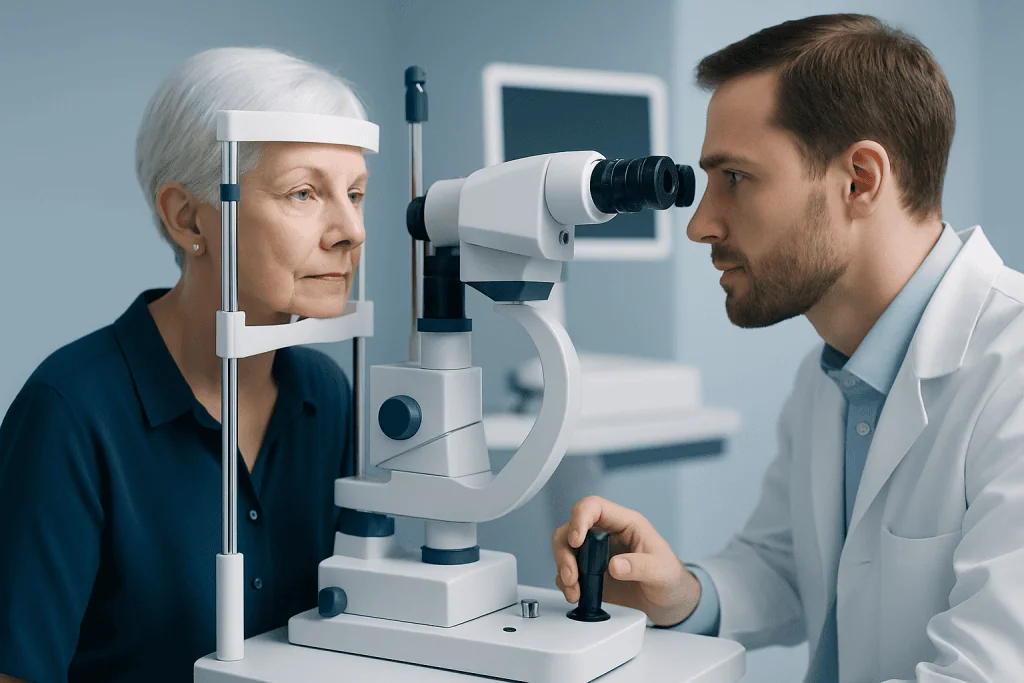
Before surgery, the ophthalmologist performs a detailed assessment to understand both the health of the eye and the person’s visual priorities. This usually includes checking the glasses prescription, measuring the length and shape of the eye, examining the cornea and retina, testing the tear film, and looking for conditions that could limit the final result. The goal is not only to decide whether surgery is possible, but whether it is likely to be helpful and safe.
Special measurements are used to calculate the power of the intraocular lens. Even very small differences in these measurements can affect the final outcome, so accuracy matters. The surgeon also discusses how much night driving, screen work, reading, and close-up tasks the person does, because these factors can influence lens choice.
If other eye diseases are present, they may need treatment first or may change the recommendation altogether. For example, retinal or corneal conditions can affect visual quality after surgery. In some cases, people being evaluated for lens exchange are also assessed for conditions such as cataract or glaucoma if symptoms or exam findings suggest them.
What happens during the procedure and lens options
Refractive lens exchange is usually performed one eye at a time, often as a day procedure. The eye is numbed with drops, and the surgeon makes a small incision to remove the natural lens and insert the artificial lens. The operation itself is typically brief, though the full appointment takes longer because of preparation and recovery observation.
Several intraocular lens types are available, and the choice is one of the most important parts of planning. Monofocal lenses usually provide one main focal distance, often distance vision, while reading glasses may still be needed for close work. Multifocal or extended-depth-of-focus lenses may reduce dependence on glasses across more distances, but they can also cause halos, glare, or reduced contrast sensitivity in some people.
Toric lenses can help correct astigmatism if present. No lens is perfect for every eye or every lifestyle, so the decision is based on eye measurements, visual goals, tolerance for optical side effects, and overall eye health. A neutral, evidence-based consultation helps match the lens design to the person, rather than assuming the newest lens is automatically the best one.
Benefits, risks, and recovery
The main potential benefit of refractive lens exchange is reduced dependence on glasses or contact lenses. It can be particularly helpful for people with presbyopia or high farsightedness, and it removes the natural lens so cataracts cannot later develop in that eye. For many patients, that long-term aspect is part of the appeal.
However, the procedure has limits and risks. Vision may improve significantly, but some people still need glasses for certain tasks. Possible complications include infection, inflammation, retinal detachment, swelling of the retina, lens position problems, raised eye pressure, glare or halos, and residual refractive error. Risk varies from person to person, which is why individualized counseling is essential.
Recovery is usually gradual over days to weeks, with follow-up visits to monitor healing. Eye drops are commonly used during recovery, and patients are usually advised to avoid rubbing the eye, heavy lifting, and activities that increase infection risk until the surgeon says it is safe. If vision becomes worse instead of better, or if severe pain, marked redness, or flashes and floaters occur, prompt medical review is important.
For patients who need specialist assessment or treatment, Acibadem International’s multidisciplinary eye specialists in JCI-accredited hospitals evaluate and treat refractive lens problems and related conditions for international patients, using options that may include cataract surgery techniques when lens-based correction is appropriate.
Self-care, expectations, and when to seek medical care
The most important self-care step before refractive lens exchange is setting realistic expectations. The aim is usually greater visual freedom, not guaranteed perfection in every lighting condition or at every distance. A person who understands this before surgery is more likely to feel satisfied afterward. Bringing a list of daily visual tasks to the consultation can help guide the decision.
After surgery, following the ophthalmologist’s instructions closely supports recovery. This typically includes using prescribed eye drops as directed, attending follow-up appointments, protecting the eye from trauma, and reporting unusual symptoms early. Good control of conditions such as diabetes and careful management of dry eye may also improve comfort and outcomes.
Medical care should be sought promptly if there is severe eye pain, sudden vision loss, rapidly increasing redness, discharge, new flashes of light, a shower of floaters, or a curtain-like shadow in the vision. Even if symptoms seem mild, a person should contact their eye doctor if recovery does not seem to follow the expected course. Early review can help identify complications and provide reassurance when healing is normal.
Frequently asked questions
Is refractive lens exchange the same as cataract surgery?
The surgical technique is very similar, because both procedures remove the natural lens and replace it with an intraocular lens. The main difference is that refractive lens exchange is done to correct refractive errors before a cataract becomes the reason for surgery.
Who is a good candidate for refractive lens exchange?
It is often considered for adults with presbyopia, significant farsightedness, or refractive errors that may not be ideal for corneal laser surgery. A full eye exam is needed to confirm that the retina, cornea, eye pressure, and overall eye health make the procedure appropriate.
Will refractive lens exchange eliminate the need for glasses?
It can reduce dependence on glasses, but it does not guarantee complete freedom from them. Some people still need glasses for reading, fine print, night driving, or certain detailed tasks, depending on the lens type and their eyes.
What are the main risks of refractive lens exchange?
As with any surgery inside the eye, there are possible complications such as infection, inflammation, retinal detachment, raised eye pressure, glare, halos, or residual refractive error. Although serious problems are uncommon, the risks and benefits should be discussed carefully with an ophthalmologist.
How long does recovery take after refractive lens exchange?
Many people notice improvement within days, but vision may continue to stabilize over several weeks. Follow-up visits are important because healing speed, comfort, and final visual quality can vary between individuals.
Can younger adults have refractive lens exchange?
It is less commonly recommended for younger adults because removing the natural lens also removes the eye’s natural focusing ability. In many younger patients, other options such as glasses, contact lenses, or laser vision correction may be more appropriate.
References
- American Academy of Ophthalmology
- National Eye Institute
- Royal College of Ophthalmologists
- American Society of Cataract and Refractive Surgery
This article is for general information only and is not a substitute for professional medical advice. Please consult a qualified doctor about your individual situation.
Explore treatments in Turkey — costs, top hospitals & a free quote
JCI-accredited · board-certified surgeons · reply within 24h
Add us as a Preferred Source to see more of our trusted health content across Google Search, AI Overviews and Discover.