Ruptured Globe Repair: Procedure, Recovery and Results

A suspected globe rupture is an eye emergency and should be assessed immediately in an emergency department. Repair surgery closes the wound and restores the eye’s structural integrity; additional procedures may be needed later.
Key Takeaways
- A suspected globe rupture is an eye emergency and should be assessed immediately in an emergency department.
- Repair surgery closes the wound and restores the eye’s structural integrity; additional procedures may be needed later.
- Visual recovery depends on the original injury, including damage to the retina, optic nerve, lens, and central cornea.
- The first healing phase usually takes weeks, while vision and rehabilitation may continue to evolve for months.
- Avoid pressure on the injured eye, do not remove embedded objects, and do not eat or drink if urgent surgery may be needed.
Ruptured globe repair is urgent surgery used to close and protect an eye after a full-thickness injury to the cornea or sclera, the eye’s outer wall. Prompt specialist care is essential because the injury can threaten vision and raise the risk of serious infection, but the visual outcome varies widely with the extent and location of damage.
Ruptured globe repair: what it is and why it is urgent
Ruptured globe repair is emergency surgery for an open-globe injury: a full-thickness wound in the wall of the eye. The wound may involve the clear front surface of the eye (the cornea), the white outer layer (the sclera), or both. It can result from blunt trauma, a sharp object, broken glass, a fall, sports injury, workplace accident, or a high-speed projectile.
The immediate purpose of ruptured globe repair surgery is to close the opening, protect the eye’s contents, reduce contamination, and lower the risk of infection. It is not always possible to determine final vision at the time of injury. The ophthalmic surgeon first focuses on safely restoring the shape and closure of the eye; further treatment may be required for injuries involving the lens, retina, or other internal structures.
Any suspected open-eye injury needs urgent assessment by an ophthalmologist. A rigid protective shield is usually placed over the eye, but nothing should press on it. The person should avoid rubbing the eye, trying to wash out a deep wound, or removing any object that may be embedded in or protruding from the eye.
Who may need ruptured globe repair surgery?

Ruptured globe repair may be recommended when examination or imaging suggests that the outer wall of the eye has been penetrated or split. Typical warning signs include sudden vision loss or blurred vision after injury, severe eye pain, bleeding from the eye, an irregular or peaked pupil, fluid leaking from the eye, a visible cut, or tissue appearing at the wound. Not every sign is present in every injury, and an apparently small wound can still be serious.
Doctors consider the mechanism of injury, the time since injury, the location and size of the wound, the condition of the eyelids and surrounding facial bones, and whether there may be an intraocular foreign body. A person may also need assessment for head or facial trauma, especially after a major accident.
Children, people using power tools or working with metal, and people participating in contact or projectile sports can be at increased risk of eye trauma. Previous eye surgery or certain eye conditions may also make the eye more vulnerable to rupture after blunt injury. The decision to operate is made urgently by an eye trauma specialist based on the individual findings.
How ruptured globe repair surgery works
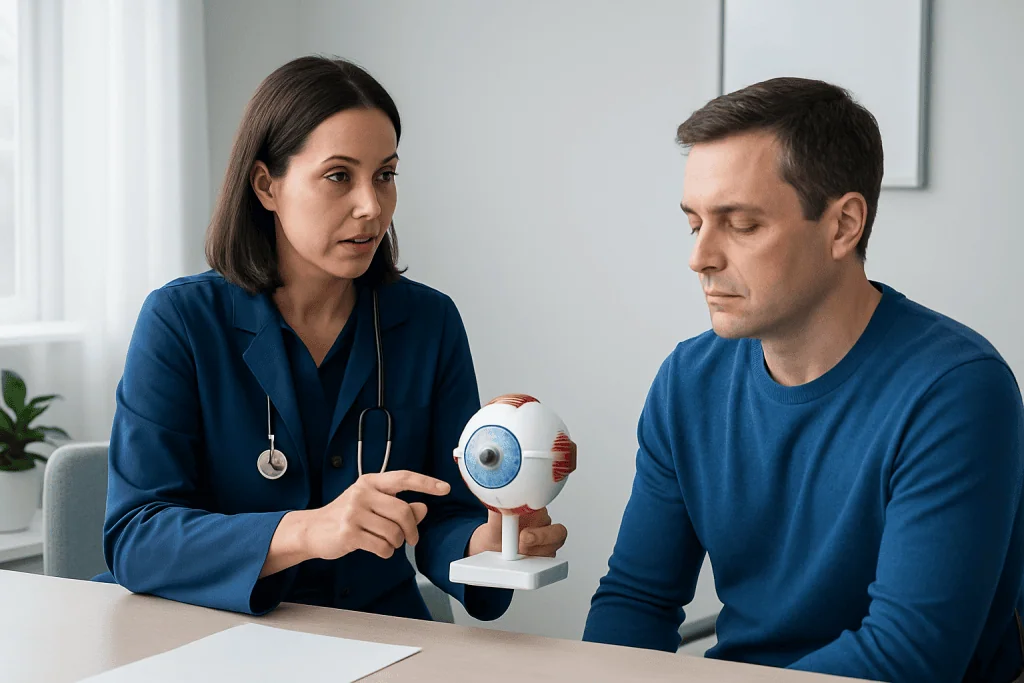
The operation is generally performed as soon as the patient is medically stable and an operating team is available. In many cases, surgery is undertaken within the first day after injury. The exact ruptured globe surgery time depends on the wound and associated damage. A straightforward closure may take roughly one to two hours, while complex injuries can require longer surgery or staged procedures.
Before the operation, clinicians protect the eye with a shield, control nausea and pain, and use medication to help reduce the risk of infection when appropriate. Imaging, often a CT scan of the orbit, may be used to look for fractures or a foreign body. Clinicians avoid putting pressure on a suspected ruptured globe, and some routine eye tests are not performed until the injury has been safely evaluated.
During surgery, the patient is usually under general anesthesia. The surgeon carefully inspects the wound, removes surface contamination when possible, and uses very fine sutures to close the cornea, sclera, or both. Prolapsed tissue is handled as conservatively as possible. The surgeon may repair associated damage when it is safe to do so, although retinal surgery, cataract treatment, or removal of an intraocular foreign body may sometimes be planned as a separate procedure.
Patients who require specialized emergency eye trauma care may discuss eye surgery options with an ophthalmology team. The surgical plan is individualized because preserving the structure of the eye and protecting remaining visual potential are the immediate priorities.
Recovery timeline after ruptured globe repair
After surgery, the eye is commonly covered with a protective shield. The care team may prescribe antibiotic, anti-inflammatory, and pain-relieving medicines, as well as eye drops once it is safe to use them. Follow-up begins promptly, often the next day or within a few days, because clinicians need to monitor wound closure, eye pressure, infection risk, and the condition of internal eye structures.
Ruptured globe recovery time differs greatly between patients. Initial wound healing generally takes several weeks, and sutures may remain in place for weeks to months depending on their location and the surgeon’s assessment. Vision may be blurred during early recovery due to swelling, blood in the eye, corneal irregularity, a cataract, retinal injury, or the effects of surgery.
For many people, the longer period of visual recovery extends over several months. If the injury caused retinal detachment, vitreous hemorrhage, lens damage, scarring, or elevated eye pressure, additional procedures and more frequent monitoring may be necessary. Glasses, contact lenses, treatment for a traumatic cataract, or vision rehabilitation can be considered after the eye has stabilized.
During recovery, patients are usually advised to wear the shield as instructed, avoid eye rubbing, heavy lifting, straining, swimming, and contact sports until cleared. They should attend every follow-up appointment and use medicines exactly as prescribed. New pain, worsening redness, discharge, sudden reduction in vision, flashes, floaters, nausea, or vomiting should be reported urgently.
Benefits, limitations and possible risks
The principal benefit of ruptured globe repair is that it closes an open eye injury and gives the eye the best opportunity to heal. Closing the wound helps protect against further loss of eye contents and reduces the chance of severe infection inside the eye, called endophthalmitis. It can also provide a safer foundation for later treatment when other structures have been injured.
However, surgery cannot always reverse damage that occurred at the moment of trauma. Injuries to the optic nerve, retina, macula, or central cornea can significantly affect final sight. Even with timely repair, some eyes develop complications such as infection, retinal detachment, bleeding, cataract, glaucoma, corneal scarring, persistent inflammation, or the need for additional surgery.
Doctors discuss the expected benefits and risks with the patient or family as soon as circumstances allow. The prognosis is influenced by factors such as the initial level of vision, wound location, the presence of a foreign body, retinal involvement, and the time to treatment. Follow-up is important because some complications can arise days, weeks, or months after the original repair.
How long does it take for a ruptured globe to heal?
The outer wound often begins to seal during the first days after repair, but meaningful structural healing generally takes several weeks. The eye remains vulnerable during this period, which is why protective measures, prescribed drops, and close follow-up are important. Sutures may be adjusted or removed later if the surgeon considers this appropriate.
Complete recovery is not defined only by wound closure. Vision may continue to change for months as swelling settles and the eye is assessed for corneal scarring, lens injury, retinal problems, and changes in eye pressure. If further procedures are needed, the overall recovery period can be longer.
There is no single ruptured globe recovery time that applies to everyone. The treating ophthalmologist can provide the most useful estimate after reviewing the injury, surgical findings, and progress at follow-up visits.
Can you regain vision after a globe rupture?
Some people regain useful vision after a globe rupture, while others have permanent visual impairment. The result depends mainly on which parts of the eye were damaged before repair. A wound limited to a peripheral area of the cornea or sclera may have a more favorable outlook than an injury involving the retina, macula, optic nerve, or central cornea.
Vision immediately after surgery does not necessarily predict the final result. Early blurring can be related to inflammation, corneal swelling, blood, stitches, or a damaged lens, some of which may improve or be treatable. At the same time, serious internal injury may limit recovery despite technically successful wound closure.
Regular assessment helps the eye team identify treatable causes of reduced vision. Rehabilitation support, protective eyewear, and care for the uninjured eye can also be important parts of long-term planning.
Is a globe rupture painful?
A globe rupture can be painful, but the amount of pain varies. Some people experience severe pain, tearing, light sensitivity, headache, or nausea. Others may have surprisingly little pain, particularly if there is reduced sensation, a distracting accompanying injury, or profound damage to the eye.
Because pain level does not reliably show how serious an injury is, any change in vision or visible eye injury after trauma should be treated as urgent. Pain medicines and anti-nausea medicines may be provided by the medical team, since vomiting and straining can increase pressure around the injured eye.
A person should not use pressure patches, attempt to check the eye by opening the lids forcefully, or apply drops unless a clinician has advised this. A clean, rigid shield placed without pressure is preferred while emergency care is arranged.
What is the prognosis for globe rupture?
The prognosis for globe rupture ranges from good visual recovery to permanent sight loss, depending on the severity and location of injury. Prompt repair is important, but it is only one factor. Better outcomes are generally more likely when the wound is smaller, the central retina and optic nerve are not damaged, infection is avoided, and the eye can be repaired without major tissue loss.
Some people need more than one operation, and the final visual result may not be clear for months. A specialist may monitor for delayed complications including retinal detachment, glaucoma, cataract, corneal scarring, and chronic inflammation. The care plan may change as the eye heals and its visual potential becomes clearer.
Emotional support can be valuable after a traumatic eye injury, particularly when vision is significantly affected. Ophthalmologists, retinal specialists, rehabilitation professionals, and mental health clinicians can work together when needed. Acibadem International’s multidisciplinary specialists and JCI-accredited hospitals provide assessment and treatment planning for international patients with complex eye trauma.
When to seek medical care
Seek emergency medical care immediately after any injury that may have penetrated the eye or caused a sudden change in vision. This includes trauma from a sharp object, glass, metal, tools, fireworks, high-speed sports equipment, or a powerful blow to the eye. Do not wait to see whether symptoms improve.
Urgent warning signs include loss or marked reduction of vision, an eye that looks cut or misshapen, blood in or around the eye, a pupil with an unusual shape, severe light sensitivity, persistent vomiting after eye trauma, or an object stuck in the eye. If an object is embedded, leave it in place and protect it with a rigid shield or a clean paper cup secured around it without touching the object.
Do not eat or drink until a clinician advises otherwise, as anesthesia may be needed. For prevention after recovery, wear appropriate protective eyewear for work, home repairs, shooting sports, racquet sports, and other activities with a risk of eye injury. Protective eyewear should fit properly and meet relevant safety standards.
Frequently asked questions
Is ruptured globe repair an emergency?
Yes. A suspected ruptured globe is an emergency because an open injury can lead to irreversible damage and serious infection inside the eye. The person should be taken for immediate emergency assessment, with the eye protected from pressure.
What happens if a globe rupture is not treated?
Without urgent treatment, an open-eye injury can lead to infection, further loss of eye contents, retinal complications, chronic pain, and permanent vision loss. Early specialist assessment and repair offer the best opportunity to protect the eye.
What is the ruptured globe repair surgery CPT code?
The CPT code for ruptured globe repair surgery depends on the specific wound, structures repaired, surgical approach, and applicable coding rules. Coding should be determined by the treating clinician, hospital coding team, or insurer rather than relying on a general online code.
Will I need more surgery after ruptured globe repair?
Some patients need additional surgery, especially when the injury affects the lens, vitreous, retina, or eye pressure. Further treatment may be planned after the initial wound has healed enough for the surgeon to assess the eye safely.
Can a ruptured globe heal without surgery?
A suspected full-thickness opening in the eye usually requires urgent surgical evaluation and often repair. It should never be managed at home because the eye may be open even when the wound appears small.
When can someone return to normal activities after surgery?
The return to work, exercise, driving, and other activities depends on healing, vision, and the type of activity. The ophthalmologist will give individualized restrictions, but heavy exertion, swimming, eye rubbing, and contact-risk activities are usually avoided until the eye is stable.
References
- American Academy of Ophthalmology
- American Society of Retina Specialists
- Merck Manual Professional Edition
- National Eye Institute
- World Health Organization
This article is for general information only and is not a substitute for professional medical advice. Please consult a qualified doctor about your individual situation.
Explore treatments in Turkey — costs, top hospitals & a free quote
JCI-accredited · board-certified surgeons · reply within 24h
Add us as a Preferred Source to see more of our trusted health content across Google Search, AI Overviews and Discover.

More from the Health Library



Related Specialists

Dr. Feyza Arslan
Physical Medicine & Rehabilitation
Dr. Enes Kanay
Orthopedic Surgery & Traumatology
Dr. Emre Kısa
Anesthesiology
Dr. Zafer Bahri Demirel
Otorhinolaryngology