Seborrheic Dermatitis Scalp: Symptoms, Causes, and Treatment Options

Seborrheic dermatitis of the scalp often causes greasy or dry flakes, itching, and redness. It is related to inflammation, skin oil production, and a natural scalp yeast rather than poor hygiene.
Key Takeaways
- Seborrheic dermatitis of the scalp often causes greasy or dry flakes, itching, and redness.
- It is related to inflammation, skin oil production, and a natural scalp yeast rather than poor hygiene.
- Treatment commonly includes medicated shampoos, topical anti-inflammatory medicines, and regular scalp care.
- Symptoms can come and go over time, so maintenance treatment is often important.
- A doctor should assess severe, widespread, infected, or treatment-resistant scalp symptoms.
Seborrheic dermatitis scalp is a common inflammatory skin condition that causes flaky scales, redness, and itching on the scalp. It is not usually dangerous, and most people improve with the right combination of medicated shampoos, scalp care, and medical guidance when symptoms persist.
Overview
Seborrheic dermatitis scalp is a long-term inflammatory condition that affects areas rich in oil-producing glands, especially the scalp. It often looks like persistent dandruff, but it usually involves more inflammation, with visible redness, irritation, and scales that may be greasy, yellowish, or dry and powdery. The condition is common and can affect infants, children, and adults.
Although it can be frustrating, seborrheic dermatitis is not a sign of poor hygiene. It appears to result from a combination of skin sensitivity, oil production, and an inflammatory reaction to Malassezia, a yeast that normally lives on the skin. In many people, symptoms improve with the right treatment plan, but flare-ups may return from time to time.
Scalp seborrheic dermatitis may also extend beyond the hairline. Some people notice similar scaling around the eyebrows, sides of the nose, ears, beard area, or chest. Because other scalp conditions can look similar, a medical evaluation may be helpful when the diagnosis is uncertain or treatment does not work as expected.
How scalp seborrheic dermatitis feels and looks
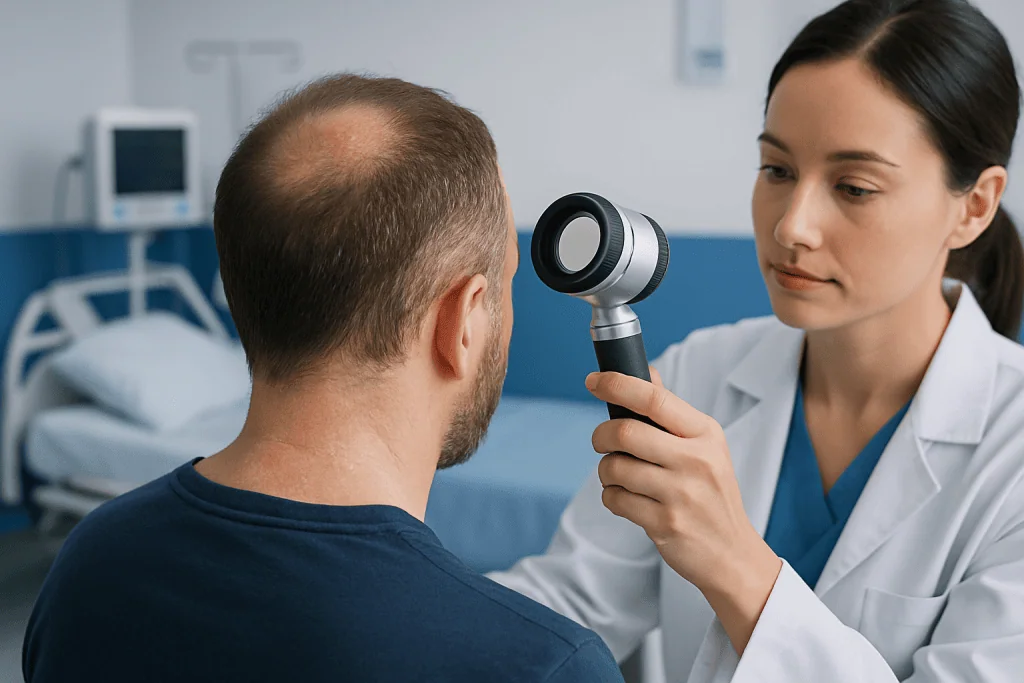
The most typical sign is flaking of the scalp. These flakes may resemble dandruff, but the scalp skin is often more inflamed than in simple dry scalp. Some people see thick patches of scale, while others mainly notice fine shedding on the shoulders and clothing.
Common symptoms include itching, soreness, or a burning sensation. The scalp may appear pink or red beneath the flakes, and scratching can make irritation worse. In some cases, symptoms increase around the hairline or behind the ears, where the skin can become more sensitive.
Features of seborrheic dermatitis scalp can include:
- White, yellow, or greasy scales on the scalp
- Red or darker irritated patches, depending on skin tone
- Itching that ranges from mild to intense
- Scalp tenderness or a stinging feeling
- Flaking in the eyebrows, beard, ears, or around the nose
Temporary increased hair shedding can happen during active inflammation or heavy scratching, but seborrheic dermatitis itself does not usually cause permanent hair loss. If there is patchy hair loss, pus, broken hairs, or significant pain, another scalp disorder may be present and should be checked by a doctor.
Causes and risk factors

The exact cause is not fully understood, but several factors are believed to work together. One important factor is an inflammatory response to Malassezia yeast, which is a normal part of the skin microbiome. In people who are prone to seborrheic dermatitis, the scalp appears to react more strongly to this yeast and to the oils on the skin.
Genetics, climate, and overall health can also influence flare-ups. Symptoms often worsen during times of stress, colder weather, or fatigue. Oily skin may contribute, but seborrheic dermatitis can also occur in people whose scalp does not feel especially oily.
Risk factors and triggers may include:
- A personal or family tendency toward inflammatory skin conditions
- Oily skin or a naturally more active scalp oil production
- Stress or lack of sleep
- Cold, dry, or seasonal weather changes
- Neurological or immune-related health conditions
- Use of irritating hair products or infrequent shampooing in some people
It is also important to distinguish seborrheic dermatitis from similar conditions. Psoriasis can cause thicker, more sharply defined plaques, while fungal infections may cause broken hairs or patchy hair loss. Contact dermatitis from hair dye or styling products may lead to burning, swelling, or rash after exposure. In some cases, a dermatologist may compare seborrheic dermatitis with scalp psoriasis when symptoms overlap.
How doctors diagnose it
Diagnosis is usually clinical, meaning a doctor examines the scalp and asks about symptoms, triggers, and prior treatments. The pattern of scaling, the degree of inflammation, and whether other oily-skin areas are involved can help point to seborrheic dermatitis. A history of recurrent flares is also common.
Most people do not need extensive testing. However, if the scalp findings are unusual, severe, or not improving, the doctor may look for other explanations. These can include psoriasis, eczema, fungal infection, lupus, or allergic contact dermatitis from hair products.
Additional tests are sometimes considered when the diagnosis is uncertain. A clinician may examine skin scrapings, perform a fungal test, or rarely recommend a skin biopsy. This more detailed assessment is especially useful when there is crusting, oozing, pain, signs of infection, or hair loss that suggests a different condition.
When symptoms are persistent or difficult to control, a dermatologist may recommend a structured plan similar to broader dermatology treatment for chronic inflammatory skin conditions, with regular follow-up to adjust care over time.
Treatment options
Treatment focuses on reducing scalp yeast overgrowth, calming inflammation, loosening scales, and relieving itching. For many adults, medicated shampoos are the first step. Common active ingredients include ketoconazole, selenium sulfide, zinc pyrithione, salicylic acid, or coal tar. A doctor may suggest rotating shampoos or using one more frequently during flares and less often for maintenance.
When inflammation is more pronounced, prescription scalp treatments may be added. These can include topical corticosteroid solutions, foams, or lotions used for short periods, or non-steroid anti-inflammatory medicines in selected cases. Thick scale may also respond to products that soften and lift buildup before washing.
Typical treatment approaches may include:
- Medicated shampoos used as directed, allowing contact time on the scalp
- Prescription anti-inflammatory scalp medicines for flare control
- Scale-softening products when plaques are thick or adherent
- Gentle cleansing of affected areas around the hairline, ears, or beard
- Maintenance therapy to prevent frequent recurrence
Treatment usually improves symptoms, but relapses are common because seborrheic dermatitis often behaves as a chronic, recurring condition. If the scalp is very inflamed, spread to the face, or is difficult to distinguish from another skin disease, a specialist in dermatology may help refine the diagnosis and treatment plan.
Daily care, prevention, and practical self-management
Good scalp care can support medical treatment and help reduce flare frequency. Regular washing is often beneficial, especially for people with oilier scalps, because it helps remove scales and excess oil. The right schedule differs from person to person, so it is usually best to follow a clinician’s recommendation and adjust based on symptom control.
Choosing gentle hair products may also make a difference. Fragrance-heavy products, harsh cleansers, or styling products that build up on the scalp can worsen irritation in some people. Scratching should be minimized because it increases inflammation and may break the skin, leading to discomfort or infection.
Helpful self-care habits include:
- Using medicated shampoo consistently, not only during severe flares
- Rinsing hair products thoroughly from the scalp
- Avoiding overly hot water if it seems to worsen irritation
- Managing stress, sleep, and general wellness where possible
- Seeking advice before trying multiple new over-the-counter products at once
People sometimes confuse seborrheic dermatitis with ordinary dandruff. Dandruff is often milder and mainly causes flaking, while seborrheic dermatitis more often includes visible inflammation. If symptoms remain bothersome despite routine dandruff shampoo, medical review may help confirm whether the problem is seborrheic dermatitis rather than another scalp disorder.
When to seek medical care
Many cases can be managed with over-the-counter products, but medical care is appropriate when symptoms are severe, painful, widespread, or not improving. A doctor can confirm the diagnosis, rule out similar conditions, and recommend stronger treatments if needed. This is especially useful when the scalp is interfering with sleep, daily comfort, or confidence.
Prompt assessment is also important if there are signs of infection or another skin disease. Warning features include oozing, crusting, swelling, bleeding from scratching, foul odor, marked tenderness, or sudden hair loss in patches. Infants, older adults, and people with weakened immune systems may benefit from earlier evaluation.
Patients should also seek care if symptoms involve the face, eyelids, ears, or chest, or if repeated flares continue despite consistent treatment. Near the end of the care pathway, if specialist input is needed, Acibadem International’s multidisciplinary specialists and JCI-accredited hospitals diagnose and treat skin conditions for international patients.
Frequently asked questions
Is seborrheic dermatitis scalp the same as dandruff?
They are related, but they are not exactly the same. Dandruff is usually a milder form of scalp flaking, while seborrheic dermatitis often includes more redness, inflammation, and itching. A doctor can help tell the difference if symptoms are persistent or severe.
Can seborrheic dermatitis of the scalp go away completely?
It often improves significantly with treatment, but it may come back from time to time. Many people manage it successfully with maintenance care, especially during stressful periods or seasonal changes. Long-term control is usually more realistic than a permanent cure.
Does seborrheic dermatitis scalp cause hair loss?
It does not usually cause permanent hair loss. However, active inflammation, thick scaling, or repeated scratching can lead to temporary shedding. If there is patchy hair loss or broken hairs, another scalp condition should be considered.
What shampoo is used for seborrheic dermatitis scalp?
Doctors often recommend medicated shampoos containing ingredients such as ketoconazole, selenium sulfide, zinc pyrithione, salicylic acid, or coal tar. The best option depends on the person's scalp, skin sensitivity, and symptom severity. It is important to use these products as directed rather than washing them off too quickly.
Can stress make scalp seborrheic dermatitis worse?
Yes, stress is a common trigger for flare-ups in many people. Sleep disruption, fatigue, and changes in routine may also make symptoms harder to control. Stress management is not a replacement for treatment, but it can support overall symptom control.
When should someone see a doctor for an itchy flaky scalp?
A doctor should be consulted if symptoms are severe, painful, widespread, or not improving with over-the-counter dandruff shampoos. Medical review is also important if there is crusting, oozing, swelling, or hair loss. These features can suggest infection or a different scalp problem.
References
- American Academy of Dermatology
- National Institute of Arthritis and Musculoskeletal and Skin Diseases
- Mayo Clinic
- Merck Manual Professional Edition
This article is for general information only and is not a substitute for professional medical advice. Please consult a qualified doctor about your individual situation.
Seborrheic Dermatitis in Turkey — costs, top hospitals & a free quote
JCI-accredited · board-certified surgeons · reply within 24h
Add us as a Preferred Source to see more of our trusted health content across Google Search, AI Overviews and Discover.

More from the Health Library



Related Specialists

Dr. Civan Kalafat
Gynecology & Obstetrics
Assoc. Prof. Dr. Caner Baran
Urology
Prof. Dr. Mustafa Karaçelik
Cardiovascular Surgery
Assoc. Prof. Dr. Onur Dülgeroğlu
General Surgery