Seborrheic Keratosis: Symptoms, Causes, and Treatment Options

Seborrheic keratosis is a benign skin growth and is not contagious. These growths become more common with age and may appear on the chest, back, face, or scalp.
Key Takeaways
- Seborrheic keratosis is a benign skin growth and is not contagious.
- These growths become more common with age and may appear on the chest, back, face, or scalp.
- Most do not need treatment unless they itch, catch on clothing, or the diagnosis is uncertain.
- A dermatologist can usually diagnose seborrheic keratosis with a skin examination and may biopsy suspicious lesions.
- Any lesion that changes quickly, bleeds, becomes painful, or looks unlike the person’s other spots should be checked.
Seborrheic keratosis is a very common, noncancerous skin growth that often looks waxy, rough, or “stuck on” the skin. It usually does not need treatment, but a doctor should assess any spot that is new, changing, bleeding, or difficult to distinguish from skin cancer.
Overview
Seborrheic keratosis is a common benign skin growth that often appears in adulthood, especially later in life. It may look tan, brown, black, or skin-colored and often has a waxy, rough, or slightly raised surface that seems as though it is sitting on top of the skin.
These growths can occur one at a time or in clusters. They are not infections, they do not spread by touch, and they are not a sign of poor hygiene. Many people notice them on the trunk, back, chest, face, shoulders, or scalp.
Although seborrheic keratosis is harmless, it can sometimes resemble other skin conditions, including moles, warts, or certain skin cancers. For that reason, the most important question is not only whether a growth is bothersome, but also whether it clearly fits the appearance of a benign lesion.
In daily practice, the main goals are to confirm the diagnosis, relieve symptoms such as itching or irritation, and remove lesions when needed for comfort or cosmetic reasons. If a spot is uncertain in appearance, evaluation for skin cancer may be necessary before treatment decisions are made.
What Seborrheic Keratosis Looks and Feels Like
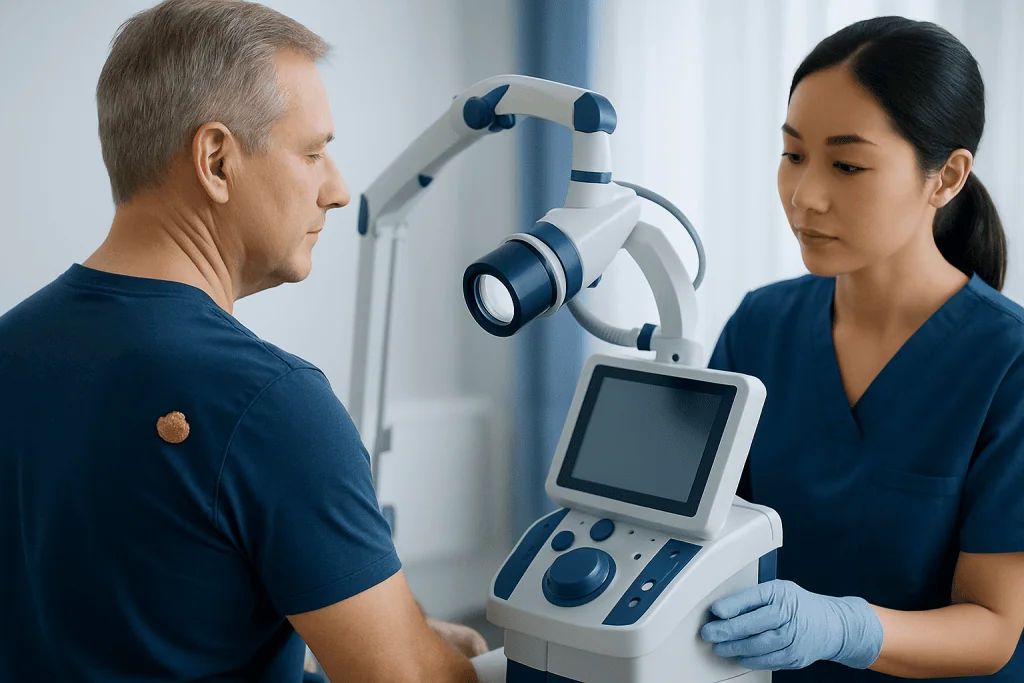
Seborrheic keratosis can vary quite a bit in size, color, and texture. Some lesions are flat and subtle at first, while others become thicker and more raised over time. A classic description is a growth with a “stuck-on” look, as if it could be lifted from the skin surface.
The texture may be smooth, velvety, waxy, or crumbly. Color ranges from light beige to dark brown or black, which can make some lesions more difficult to tell apart from other pigmented spots. They may be round, oval, or irregular in outline, and can measure from a few millimeters to several centimeters.
Most lesions do not cause symptoms. However, some may itch, feel irritated, or become tender if rubbed by clothing, jewelry, shaving, or brushing. In these cases, the growth itself is still usually harmless, but friction can make it inflamed.
- Common locations include the chest, back, face, scalp, neck, and shoulders
- They usually do not appear on the palms or soles
- They may occur as a single lesion or in large numbers
- They often become more numerous with age
Causes and Risk Factors

The exact cause of seborrheic keratosis is not fully understood. It is known to be related to the way skin cells grow and mature, but it is not caused by an infection and it is not considered a cancerous process.
Age is one of the strongest risk factors. These growths are much more common in middle-aged and older adults, though younger adults can develop them as well. Family history also seems to matter, and some people inherit a tendency to form many lesions over time.
Sun exposure may play a role for some growths, particularly those that develop on sun-exposed areas, but seborrheic keratoses also commonly appear on covered parts of the body. This suggests that several factors are involved rather than one single cause.
Less commonly, a sudden eruption of many seborrheic keratoses should prompt medical review, especially if accompanied by other symptoms. Often there is a benign explanation, but doctors may consider whether another skin or internal condition needs attention.
How Doctors Diagnose It
Seborrheic keratosis is often diagnosed during a routine skin examination. An experienced doctor or dermatologist can usually identify it by its typical appearance, texture, and location. The person’s age, skin history, and whether the lesion has changed are also helpful clues.
In many cases, a dermatoscope may be used. This handheld tool allows a closer look at surface patterns and pigmentation, helping the doctor distinguish seborrheic keratosis from moles, melanoma, warts, or other lesions. If the growth does not have classic features, the doctor may recommend a biopsy.
A biopsy involves removing all or part of the lesion and examining it under a microscope. This is especially important if the lesion is very dark, rapidly changing, bleeding without obvious trauma, unusually inflamed, or simply does not look typical. Histologic confirmation helps guide safe care.
Because several conditions can look similar, self-diagnosis is not always reliable. A formal skin check may also identify unrelated concerns, including melanoma or other lesions that deserve different treatment.
Treatment Options and When Removal Is Considered
Most seborrheic keratoses do not require treatment. If a lesion is clearly benign and not causing symptoms, leaving it alone is often the simplest and safest option. Treatment is generally considered when the growth is irritated, repeatedly traumatized, itchy, cosmetically bothersome, or uncertain in diagnosis.
Several office-based methods may be used. Common approaches include freezing with liquid nitrogen, light scraping of the surface after numbing, or careful removal with electrosurgery. The choice depends on the size, thickness, location, skin type, and whether tissue needs to be sent for laboratory examination.
When there is any doubt about the diagnosis, doctors may remove the lesion in a way that preserves tissue for pathology rather than simply destroying it. This is one reason medical assessment matters before home remedies or over-the-counter treatments are tried.
People bothered by multiple lesions may benefit from a dermatology review to discuss personalized options, including minor procedures that overlap with dermatology care or selected techniques sometimes used in skin rejuvenation settings. Treatment aims to improve comfort and appearance, but some methods can leave temporary discoloration, scabbing, or, less commonly, a scar.
Self-care, Skin Monitoring, and Prevention
There is no proven way to completely prevent seborrheic keratosis, especially when age and genetic tendency are major factors. Still, good skin habits can make monitoring easier and may reduce irritation from existing lesions.
Regular self-checks are useful. Looking at the skin every so often helps a person notice whether a known lesion has changed or whether a new spot appears different from the rest. Taking photographs for comparison may help when many growths are present.
General skin care measures include gentle cleansing, avoiding picking or scratching, and reducing friction from tight clothing or jewelry. If a lesion catches on razors, combs, or bra straps, simple adjustments in grooming or clothing may prevent repeated inflammation.
- Use sun protection as part of overall skin health, including shade, clothing, and sunscreen on exposed areas
- Avoid trying to scrape, cut, or burn lesions at home
- Do not use wart removers unless advised by a doctor, as they may damage surrounding skin
- Arrange a professional check if a spot looks different from your usual growths
When to Seek Medical Care
Medical review is appropriate whenever a skin lesion is new and unclear, or when a previously stable growth begins to change. This does not mean the lesion is dangerous, but a prompt check can help distinguish a benign growth from a condition that needs treatment.
A person should arrange an appointment if a lesion bleeds easily, becomes painful, develops crusting or persistent inflammation, grows quickly, or has irregular color or borders. A spot that stands out as looking unlike a person’s other lesions also deserves attention.
It is also sensible to seek care if lesions are numerous and bothersome, interfere with shaving or clothing, or cause ongoing worry. A dermatologist can explain whether observation is enough or whether removal is reasonable.
For patients who need assessment or treatment planning, Acibadem International’s multidisciplinary specialists in JCI-accredited hospitals evaluate skin lesions for international patients and can coordinate care that may include specialist dermatology assessment and, when appropriate, support from oncology teams if a suspicious lesion requires further investigation.
Frequently asked questions
Is seborrheic keratosis a type of skin cancer?
No. Seborrheic keratosis is a benign, noncancerous skin growth. However, some skin cancers can look similar, so a doctor should assess any lesion that is changing, bleeding, or atypical in appearance.
Can seborrheic keratosis go away on its own?
It usually does not disappear completely on its own. Many lesions remain stable for years, while others slowly thicken or become more noticeable with time. If a lesion causes no symptoms and has been confirmed as benign, treatment may not be necessary.
Why do these growths appear more often with age?
Seborrheic keratoses are linked to age-related changes in skin cell growth and often become more common in middle and later adulthood. Genetics also seems to influence who develops them and how many appear.
Should seborrheic keratosis be removed?
Removal is not always needed. Doctors usually recommend it only if the growth is irritated, repeatedly traumatized, cosmetically bothersome, or uncertain in diagnosis. The decision depends on the lesion’s appearance, location, and symptoms.
Is it safe to remove seborrheic keratosis at home?
Home removal is not recommended. It can injure the skin, cause infection or scarring, and delay diagnosis if the lesion is actually something else. A clinician should confirm what the spot is before treatment.
Can seborrheic keratosis be itchy or bleed?
Yes. Some lesions itch or become irritated, especially when rubbed by clothing, jewelry, or shaving. Bleeding can happen if a lesion is scratched or traumatized, but spontaneous bleeding should be evaluated by a doctor.
References
- American Academy of Dermatology
- National Cancer Institute
- Mayo Clinic
- DermNet
- National Health Service
This article is for general information only and is not a substitute for professional medical advice. Please consult a qualified doctor about your individual situation.
Joint and spine care in Turkey — expert assessment & treatment
JCI-accredited · board-certified surgeons · reply within 24h
Add us as a Preferred Source to see more of our trusted health content across Google Search, AI Overviews and Discover.