Second Opinion for Brain Aneurysm: When Treatment Plans Need Review

A second opinion can confirm whether a brain aneurysm is present and how urgent treatment may be. Many aneurysms do not need immediate intervention, while others require timely treatment to reduce rupture risk.
Key Takeaways
- A second opinion can confirm whether a brain aneurysm is present and how urgent treatment may be.
- Many aneurysms do not need immediate intervention, while others require timely treatment to reduce rupture risk.
- Treatment decisions often depend on aneurysm size, shape, location, symptoms, and the person's overall health.
- Common options include monitoring, endovascular procedures such as coiling or flow diversion, and microsurgery.
- A second opinion is especially helpful when recommendations differ or the person wants more clarity before proceeding.
A second opinion for brain aneurysm can help a person better understand the diagnosis, the level of risk, and the safest treatment approach. It is often useful when the aneurysm is unruptured, treatment choices are complex, or the recommended plan has major long-term implications.
Overview
A brain aneurysm is a weak area in a blood vessel wall in the brain that bulges outward. Some aneurysms remain stable for years and never cause symptoms, while others can grow, leak, or rupture. Because the possible outcomes vary widely, treatment planning is often individualized rather than automatic.
A second opinion for brain aneurysm means asking another qualified specialist or multidisciplinary team to review the diagnosis, imaging, and proposed plan. This is not a sign of distrust. Instead, it is a common and reasonable step when the decision involves observation, an endovascular procedure, or open surgery.
Second opinions are particularly helpful for unruptured aneurysms, incidental findings, borderline cases, or situations in which one doctor recommends treatment and another suggests monitoring. The goal is to better understand the balance between the natural risk of the aneurysm and the risks of treatment itself.
Why a Second Opinion May Be Helpful
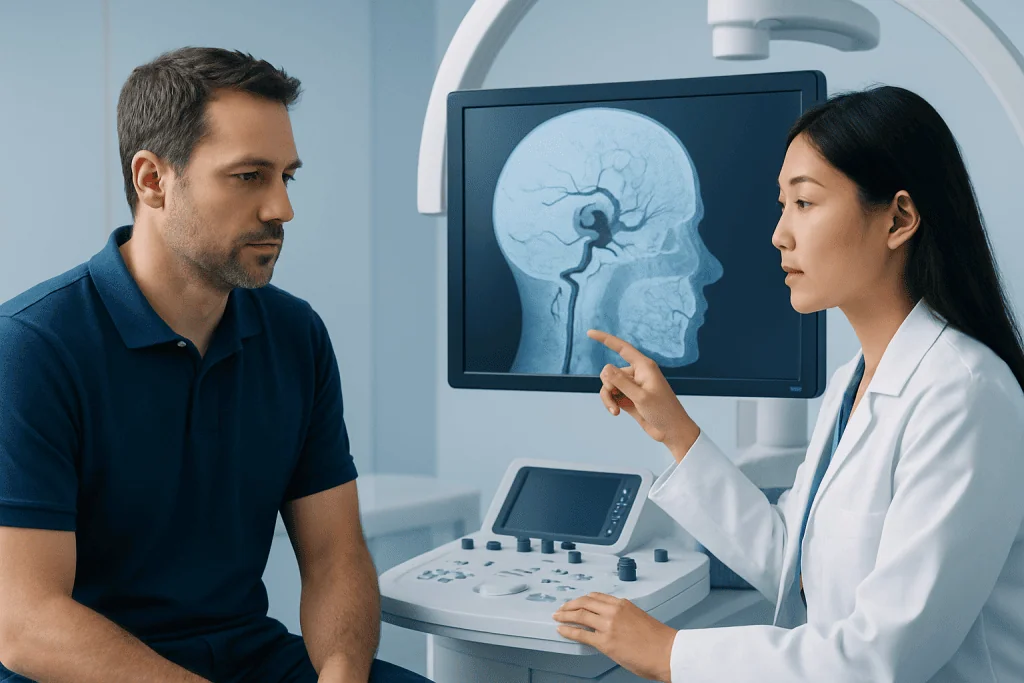
Brain aneurysm care often involves more than one acceptable approach. A small, unruptured aneurysm in one person may be monitored with imaging, while a similar aneurysm in another person may be treated because of its location, shape, family history, or other risk factors. A second review can clarify why one option may be favored over another.
It may also help verify that the imaging has been interpreted correctly. Sometimes an outpouching seen on a scan is a true aneurysm, and sometimes it may be a normal variant or a different blood vessel abnormality. Confirming the diagnosis can prevent unnecessary worry or treatment.
In many cases, a second opinion is useful when:
- the aneurysm was found unexpectedly during imaging for another reason
- the recommended treatment feels major or urgent, but symptoms are mild or absent
- different specialists offer different recommendations
- the aneurysm is in a complex location
- the person has a family history of aneurysm or subarachnoid hemorrhage
- the person wants to understand all available options before deciding
A thoughtful second opinion can also help the patient feel more confident and prepared. Even when the recommendation stays the same, hearing the reasoning from another experienced team often makes decision-making easier.
What Specialists Review in a Brain Aneurysm Case

When specialists review a brain aneurysm, they look at more than the scan report alone. They examine the aneurysm’s size, neck width, shape, exact location, and whether it has features that may increase concern, such as irregular contours or daughter sacs. They also consider whether the aneurysm has caused symptoms such as headache, cranial nerve changes, or pressure on nearby structures.
The person’s age, blood pressure, smoking history, family history, and overall medical condition matter as well. The same aneurysm may be managed differently in a younger person with a long life expectancy than in an older person with significant medical conditions that increase procedural risk.
Review usually includes close examination of tests such as CT angiography, MR angiography, or catheter angiography. In some cases, repeat or more detailed imaging is recommended if the original images do not provide enough information for a confident treatment plan.
Specialists commonly involved include interventional neuroradiologists, neurosurgeons, neurologists, and stroke experts. A multidisciplinary review can be especially valuable because it compares minimally invasive approaches with surgical options in a balanced way.
Diagnosis and Imaging for a Reliable Second Opinion
Accurate diagnosis is the foundation of any second opinion for brain aneurysm. Imaging tests help show whether an aneurysm is present, whether it has changed over time, and what treatment techniques may be possible. If prior scans were done at different centers, the second-opinion team may request the original image files rather than relying only on written reports.
Noninvasive tests such as CT angiography and MR angiography are often very useful. However, some patients may be advised to have a catheter angiogram for the most detailed view of the vessel anatomy. This can be especially important when treatment decisions depend on vessel branching, aneurysm neck configuration, or planning for an endovascular device.
The team may also review whether the aneurysm is truly unruptured or whether symptoms suggest a recent leak or bleeding event. Sudden severe headache, new neurological symptoms, or signs of subarachnoid hemorrhage require urgent evaluation rather than routine scheduling. Patients who are learning about related conditions may also encounter information on brain hemorrhage or stroke, which can overlap with emergency symptoms but are not the same as every aneurysm diagnosis.
If the aneurysm appears stable and unruptured, the second opinion often focuses on long-term risk assessment. That includes whether follow-up imaging is enough or whether preventive treatment is likely to offer a better overall safety profile.
Treatment Options That May Be Discussed
Treatment is not one-size-fits-all. For some unruptured aneurysms, careful observation with repeat imaging and management of risk factors is appropriate. Monitoring may be reasonable when the aneurysm is small, in a lower-risk location, and not showing signs of growth or instability.
When treatment is recommended, minimally invasive endovascular options are often considered first. These may include aneurysm embolization, coiling, stent-assisted techniques, or flow diverter treatment for selected aneurysms. These approaches are performed through blood vessels and can be especially useful for aneurysms that are difficult to reach with open surgery.
Some aneurysms are better treated with microsurgical clipping, particularly depending on their location, anatomy, and relationship to nearby vessels. A second opinion can help explain why surgery, endovascular treatment, or surveillance may be the best fit for that specific case rather than in general.
For complex vascular cases, a team may also discuss whether expertise in endovascular treatment offers an advantage in planning. The most helpful second opinions clearly compare the expected benefits, possible complications, recovery considerations, and follow-up needs of each option.
Questions to Ask During a Second Opinion
A second opinion is most useful when the patient comes prepared with specific questions. This can turn a stressful appointment into a more structured conversation. Writing questions down in advance and bringing a family member or trusted companion may help with remembering the answers.
Important questions often include:
- Is this definitely a brain aneurysm, and has it changed over time?
- Is it ruptured, unruptured, or at risk of leaking?
- What is the estimated risk of rupture based on its features?
- What are the pros and cons of monitoring versus treatment?
- Which treatment would you recommend, and why?
- What experience does the team have with this aneurysm type and location?
- What follow-up imaging or long-term surveillance will be needed?
It is also reasonable to ask how urgently a decision must be made. Some aneurysm cases require rapid treatment, while others allow time to compare opinions calmly and consider preferences, lifestyle, and practical issues such as travel or recovery support.
Patients should feel comfortable asking for explanations in plain language. Good specialists understand that informed decision-making is an important part of safe care, especially when more than one acceptable treatment path exists.
When to Seek Urgent Care and How to Prepare
Most second opinions for unruptured brain aneurysm can be arranged in a non-emergency setting. However, immediate medical attention is needed for symptoms that may suggest rupture or bleeding. These include a sudden, very severe headache, loss of consciousness, seizure, new weakness, trouble speaking, confusion, or vision changes.
For a routine second opinion, preparation can make the process smoother. Patients should gather prior brain scans, radiology reports, discharge summaries, medication lists, and information about blood pressure, smoking, and family history. A timeline of symptoms and previous advice can also be helpful.
It is wise to ask whether the reviewing center needs the original digital imaging files before the appointment. This allows the team to compare studies directly and may reduce the need for repeat tests. In some situations, consultation with centers experienced in brain aneurysm care can help organize complex decisions more clearly.
Near the end of the process, patients may choose a center that offers both surgical and endovascular expertise so options can be reviewed impartially. Acibadem International’s multidisciplinary specialists and JCI-accredited hospitals diagnose and treat brain aneurysms for international patients, including advanced interventional neuroradiology and neurosurgical care.
Frequently asked questions
Is it normal to ask for a second opinion for a brain aneurysm?
Yes. A second opinion is common and appropriate, especially when the aneurysm is unruptured or when the treatment decision is not straightforward. It can help confirm the diagnosis, review the imaging, and explain the reasoning behind different management options.
Will a second opinion delay treatment too much?
Not usually, if the aneurysm is stable and unruptured. In urgent cases with suspected rupture or bleeding, emergency treatment comes first. The treating team can help clarify whether there is time to seek another opinion safely.
What records should a patient bring to a second-opinion appointment?
It is helpful to bring the original scan files, written radiology reports, clinic notes, hospital discharge papers, and a list of medicines and medical conditions. Family history, blood pressure history, and smoking history may also affect the recommendation.
Can two specialists honestly recommend different treatments?
Yes. Some aneurysms can reasonably be managed in more than one way, such as observation, endovascular treatment, or surgery. Differences in recommendation do not always mean one doctor is wrong; they may reflect different weighing of risks and benefits.
Does every brain aneurysm need treatment?
No. Some small, unruptured aneurysms may be monitored with follow-up imaging rather than treated immediately. The decision depends on several factors, including size, shape, location, growth, symptoms, and the person's overall health.
Who usually gives a second opinion for brain aneurysm?
Second opinions are often provided by an interventional neuroradiologist, neurosurgeon, or a multidisciplinary cerebrovascular team. A center that offers both endovascular and surgical care may be especially helpful when comparing all available options.
References
- World Health Organization
- American Heart Association
- National Institute of Neurological Disorders and Stroke
- Brain Aneurysm Foundation
- Radiological Society of North America
This article is for general information only and is not a substitute for professional medical advice. Please consult a qualified doctor about your individual situation.
Explore treatments in Turkey — costs, top hospitals & a free quote
JCI-accredited · board-certified surgeons · reply within 24h
Add us as a Preferred Source to see more of our trusted health content across Google Search, AI Overviews and Discover.
Check your numbers in seconds
BMI, calories, due date, blood pressure and 30+ more clinical calculators — free, instant, doctor-reviewed ranges.

Neurosurgery
Surgical treatment of the brain, spine and nervous system, including minimally invasive and functional procedures.
72 specialists in this unit