Severe Glenohumeral Osteoarthritis Treatment: How It Works, Results and What to Expect

Glenohumeral osteoarthritis affects the ball-and-socket joint of the shoulder and can cause deep joint pain, stiffness and reduced movement. X-rays usually show joint-space loss, bone spurs and changes in bone shape; further imaging may assess the rotator cuff and guide surgical planning.
Key Takeaways
- Glenohumeral osteoarthritis affects the ball-and-socket joint of the shoulder and can cause deep joint pain, stiffness and reduced movement.
- X-rays usually show joint-space loss, bone spurs and changes in bone shape; further imaging may assess the rotator cuff and guide surgical planning.
- Non-surgical care can reduce symptoms, but it cannot restore cartilage that has been lost.
- For advanced disease that does not respond adequately to conservative care, anatomic or reverse shoulder replacement may provide durable pain relief and improved function.
- Recovery after shoulder replacement takes months and depends on rehabilitation, healing, the procedure performed and individual health factors.
- Urgent assessment is appropriate for a painful shoulder after injury, a red hot swollen joint, fever, new weakness or sudden loss of movement.
Severe glenohumeral osteoarthritis treatment is individualized and may include activity changes, targeted exercise, medicines or injections, followed by shoulder replacement when pain and loss of function remain substantial. A specialist assessment helps confirm the diagnosis, evaluate the rotator cuff and joint damage, and select the approach most likely to meet a person’s daily-life goals.
Overview: how severe glenohumeral osteoarthritis is treated
Severe glenohumeral osteoarthritis treatment aims to relieve pain, preserve or restore useful movement, and help a person return to valued daily activities. The glenohumeral joint is the main ball-and-socket joint of the shoulder, where the upper arm bone meets the shoulder blade. In osteoarthritis, the smooth cartilage that cushions the joint becomes worn, while the bone and surrounding tissues may change over time.
Treatment usually progresses from non-surgical measures to surgery when symptoms remain limiting despite appropriate care. The right option depends not only on an X-ray report, but also on pain severity, sleep disruption, range of motion, work and activity needs, the condition of the rotator cuff tendons, and overall health. Some people have marked imaging changes with manageable symptoms, while others experience substantial pain earlier in the disease process.
When arthritis is advanced and conservative measures no longer provide acceptable relief, shoulder replacement surgery may be considered. This procedure removes damaged joint surfaces and replaces them with carefully selected components designed to reduce bone-on-bone contact and support shoulder movement.
What are the symptoms of osteoarthritis of the left glenohumeral joint?
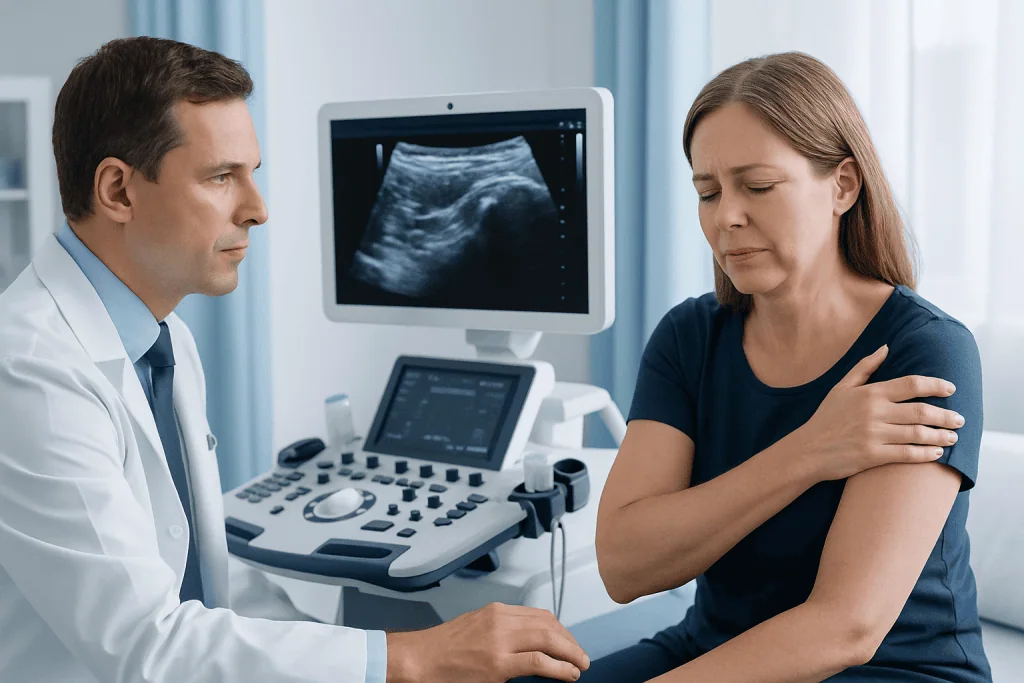
Osteoarthritis of the left glenohumeral joint causes the same type of symptoms as arthritis on the right side, but they may be especially disruptive when the left arm is the dominant arm. Pain is often felt deep in the shoulder rather than on the surface. It may worsen with reaching, lifting, putting on clothing, fastening a seat belt, grooming, or moving the arm behind the body.
Stiffness is common, particularly after rest or in the morning. A person may notice reduced ability to rotate the arm, reach overhead, or place the hand behind the back. Grinding, clicking or catching sensations can occur as joint surfaces become uneven, although these sensations alone do not confirm arthritis.
With more advanced disease, pain may occur at rest or interfere with sleep, especially when lying on the affected side. Weakness can result from pain-related guarding, reduced use of the arm, or a coexisting rotator cuff problem. Because shoulder pain can also arise from the neck, tendons, bursa or other structures, a clinical assessment is important for an accurate diagnosis.
What are the characteristics of severe degenerative changes in the glenohumeral joint?
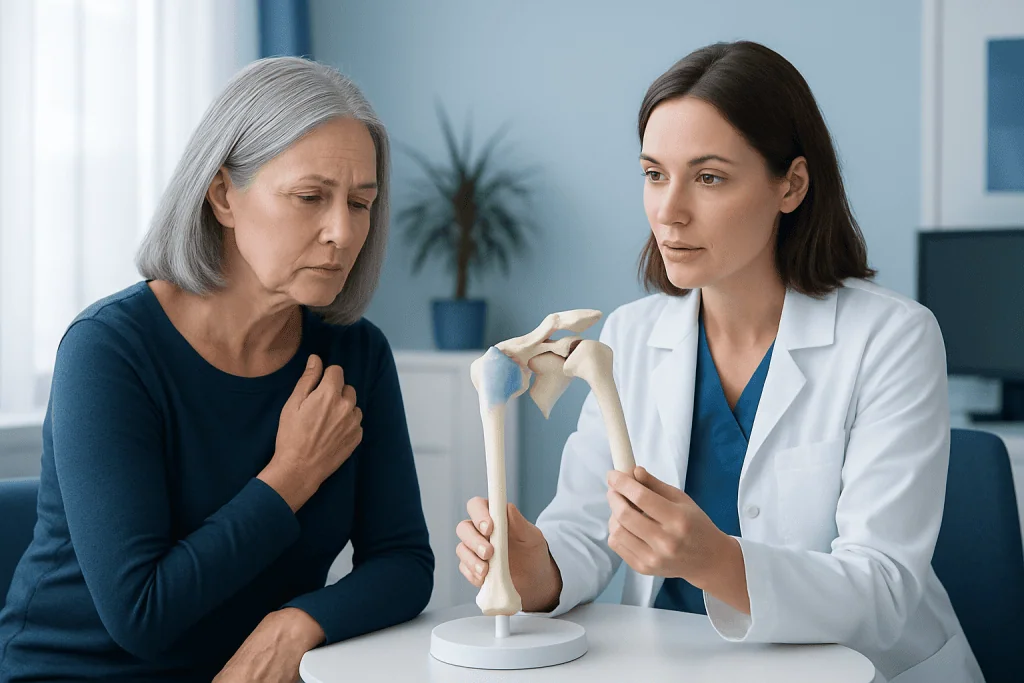
Severe degenerative changes generally describe advanced structural osteoarthritis visible on imaging, together with symptoms that may significantly affect function. X-rays may show marked or complete loss of the normal joint space, which reflects loss of cartilage thickness. Other possible features include larger bone spurs, hardening of bone beneath the cartilage, small bone cysts, flattening or deformity of the humeral head, and changes to the socket of the shoulder blade.
Clinicians also assess whether the humeral head remains centered in the socket. If the rotator cuff is severely damaged, the humeral head may move upward, changing the mechanics of the joint. This distinction is important because it can influence whether an anatomic total shoulder replacement or a reverse shoulder replacement is more suitable.
Imaging findings are interpreted alongside examination results. A clinician may measure active and passive movement, test strength, evaluate neck function, and look for signs of tendon injury or inflammation. CT scanning can assist with surgical planning when bone loss or deformity is present, while MRI or ultrasound may be used when the condition of the rotator cuff needs clarification.
What are the causes and treatment options for moderate glenohumeral joint space narrowing?
Moderate glenohumeral joint space narrowing usually indicates a partial reduction in cartilage thickness rather than end-stage loss. It can be caused by primary osteoarthritis related to age and cumulative joint loading, but previous fractures, shoulder instability, prior surgery, inflammatory arthritis, infection, avascular necrosis and longstanding rotator cuff problems may also contribute. A previous injury does not always cause arthritis, but it can increase the likelihood of joint changes over time.
For moderate narrowing, treatment commonly begins with education, adjustment of aggravating activities, and an exercise plan that protects mobility and strengthens the muscles that support the shoulder blade and shoulder. A physiotherapist can tailor movements so that exercise builds function without repeatedly provoking severe pain. Heat or cold may offer short-term comfort for some people.
A doctor may discuss pain-relieving medicines or anti-inflammatory medicines when appropriate for the individual’s medical history. Injection treatment may be considered for selected people, usually to provide temporary symptom relief and support participation in rehabilitation. It does not reverse cartilage loss. If symptoms progress despite these measures, a shoulder specialist can review whether surgical options are appropriate.
How severe glenohumeral osteoarthritis treatment works
Non-surgical treatment works by reducing pain triggers, maintaining movement and improving how the shoulder muscles share load around the joint. It is most useful when a person can still manage symptoms at an acceptable level. A structured plan may include physiotherapy, home exercises, practical changes to work or sport, weight management where relevant to overall health, and careful use of medication recommended by a clinician.
Surgery is considered when persistent pain, night pain, stiffness or loss of independence continues to affect quality of life despite well-planned conservative care. Arthroscopic procedures have a limited role in advanced arthritis because they do not replace lost cartilage. Joint replacement is generally the more definitive surgical approach for end-stage glenohumeral arthritis.
In anatomic total shoulder replacement, the arthritic ball of the upper arm is resurfaced with a metal component and the socket is replaced with a smooth implant. This option usually requires a functioning rotator cuff. In reverse shoulder replacement, the ball and socket positions are switched, allowing the deltoid muscle to compensate when the rotator cuff is irreparably damaged or bone and soft-tissue conditions make reverse design more appropriate.
Related shoulder conditions can influence planning. For example, a specialist may assess for rotator cuff tears or tendon dysfunction because these can affect symptoms, implant selection and rehabilitation goals.
Candidacy and the shoulder replacement procedure step by step
A person may be a candidate for shoulder replacement when imaging confirms advanced arthritis and symptoms remain significant after non-surgical treatment. Decisions are individualized. The specialist considers the pattern of bone loss, stability of the joint, rotator cuff function, previous operations, infection risk, medical conditions, medications, smoking status and the person’s expectations for pain relief and activity.
Before surgery, assessment may include X-rays and CT planning, blood tests and review by an anesthesia team. The care team may also recommend improving general fitness, optimizing diabetes or blood pressure management, reviewing medicines that affect bleeding, and arranging support at home for the early recovery period. These steps help prepare for safer surgery and rehabilitation.
During the operation, performed under anesthesia, the surgeon reaches the joint through an incision at the front of the shoulder. Damaged bone surfaces are prepared, trial components help confirm fit and stability, and the selected implants are secured. The tissues are repaired carefully, and the arm is typically supported in a sling afterward. The exact approach and duration vary with the type of replacement and the complexity of the joint.
Acibadem International’s multidisciplinary specialists and JCI-accredited hospitals assess and treat shoulder arthritis for international patients, including coordinated imaging, orthopedic care and rehabilitation planning.
Recovery timeline, expected benefits and possible risks
After shoulder replacement, pain control, early protected movement and wound care are the initial priorities. Many people use a sling for several weeks, although the precise duration and permitted movements differ between anatomic and reverse replacement. A physiotherapist provides a staged program, beginning with protected mobility and progressing toward active movement, strength and everyday tasks as tissues heal.
Recovery is gradual. Basic daily activities often become easier over the first several weeks, but meaningful improvement continues for months. Strength, endurance and final movement may take six months to a year to develop. It is important to follow lifting restrictions and exercise guidance closely, since doing too much too soon can compromise healing, while avoiding rehabilitation can contribute to stiffness.
Potential benefits include substantial reduction in arthritis pain, improved sleep, increased ability to use the arm for personal care and household tasks, and better shoulder movement. Results vary, and no procedure can restore every type of movement or guarantee complete absence of pain. High-impact activities, repetitive heavy lifting and certain sports may require long-term modification.
Possible complications include infection, bleeding, blood clots, nerve or blood-vessel injury, stiffness, instability or dislocation, fracture, implant loosening or wear, and the need for later revision surgery. Anesthesia-related risks and medical complications are also considered. The surgical team explains the risks relevant to the individual and the warning signs that require prompt contact after surgery.
When to seek medical care
A medical appointment is appropriate for shoulder pain lasting more than a few weeks, pain that repeatedly interrupts sleep, steadily worsening stiffness, difficulty using the arm for daily tasks, or symptoms that do not improve with sensible rest and activity changes. Early assessment can identify whether osteoarthritis, tendon disease, neck-related pain or another condition is responsible.
Prompt or urgent care is important after a fall or other injury if the shoulder looks deformed, cannot be moved, becomes suddenly very weak, or causes numbness, tingling or a cold hand. A hot, red, markedly swollen shoulder, fever, feeling unwell, or severe unrelenting pain also needs urgent assessment because infection and other serious causes must be excluded.
For diagnosed arthritis, follow-up is useful when current treatment no longer supports normal activities or when there is a notable change in pain, strength or movement. A shoulder specialist can revisit the diagnosis, review imaging and discuss options ranging from rehabilitation to surgical reconstruction.
Frequently asked questions
What is the prognosis for glenohumeral osteoarthritis?
Glenohumeral osteoarthritis is usually a long-term condition that may progress gradually, although the rate of progression differs widely. Symptoms can often be managed for years with tailored non-surgical care. When advanced arthritis causes persistent disability, shoulder replacement can provide meaningful pain relief and improved function for appropriately selected patients.
Can severe glenohumeral osteoarthritis heal without surgery?
Lost cartilage does not grow back through exercise, medication or injection treatment. However, non-surgical measures can reduce pain, maintain mobility and help many people function well without immediate surgery. Surgery is usually considered when symptoms remain unacceptable despite conservative management.
How is severe shoulder osteoarthritis diagnosed?
Diagnosis is based on a medical history, physical examination and shoulder X-rays. X-rays can show joint-space narrowing, bone spurs and changes in joint shape. CT, MRI or ultrasound may be used when more detail about bone alignment, joint deformity or the rotator cuff is needed.
What is the difference between anatomic and reverse shoulder replacement?
Anatomic total shoulder replacement recreates the normal ball-and-socket arrangement and generally relies on an intact, functioning rotator cuff. Reverse shoulder replacement switches the position of the ball and socket, allowing the deltoid muscle to play a larger role in moving the arm. The choice depends on rotator cuff health, bone structure, joint stability and other individual factors.
How long does recovery from shoulder replacement take?
Early recovery takes several weeks, with the arm commonly protected in a sling and exercises introduced in stages. Many people continue to gain movement, comfort and strength for six months or longer. The timetable differs according to the type of operation, tissue healing, rehabilitation participation and general health.
Are injections effective for severe glenohumeral osteoarthritis?
Injections may provide temporary pain relief for some people and can sometimes make it easier to take part in rehabilitation. Their effects vary, and they do not repair worn cartilage or prevent arthritis from progressing. A clinician can advise whether an injection is appropriate based on the diagnosis, symptoms and planned treatment.
References
- American Academy of Orthopaedic Surgeons
- American Shoulder and Elbow Surgeons
- National Institute for Health and Care Excellence
- Arthritis Foundation
This article is for general information only and is not a substitute for professional medical advice. Please consult a qualified doctor about your individual situation.
Osteoarthritis in Turkey — costs, top hospitals & a free quote
JCI-accredited · board-certified surgeons · reply within 24h
Add us as a Preferred Source to see more of our trusted health content across Google Search, AI Overviews and Discover.

Physical Medicine & Rehabilitation
Restoring movement and function after injury, surgery or neurological conditions.
103 specialists in this unit