Shingles in the Eye: An Evidence-Based Guide for Patients

Shingles in the eye is also called herpes zoster ophthalmicus and results from reactivation of the varicella-zoster virus. A painful rash on the forehead or eyelid, eye redness, light sensitivity, or blurred vision should be assessed promptly.
Key Takeaways
- Shingles in the eye is also called herpes zoster ophthalmicus and results from reactivation of the varicella-zoster virus.
- A painful rash on the forehead or eyelid, eye redness, light sensitivity, or blurred vision should be assessed promptly.
- Early antiviral treatment is important and may help reduce eye damage and longer-lasting nerve pain.
- Diagnosis is usually based on symptoms and an eye examination, sometimes with input from both ophthalmology and infectious disease specialists.
- Vaccination in eligible adults lowers the risk of shingles and its complications.
Shingles in the eye is a form of shingles that affects the nerves around the eye and can involve the eyelids, cornea, and deeper eye tissues. Fast medical assessment and antiviral treatment can lower the risk of pain, inflammation, and vision-related complications.
Overview: what shingles in the eye means
Shingles in the eye refers to shingles that affects the ophthalmic branch of the trigeminal nerve, the nerve that supplies the forehead, upper eyelid, and parts of the eye. The medical term is herpes zoster ophthalmicus. It happens when the varicella-zoster virus, which causes chickenpox earlier in life, becomes active again years later.
This condition may involve the skin around the eye, the surface of the eye, and sometimes deeper structures inside the eye. Because the virus can inflame delicate tissues, shingles in the eye is treated as a condition that needs prompt professional attention rather than home care alone.
Many people first notice pain, burning, tingling, or sensitivity on one side of the forehead or scalp before a rash appears. Others develop eye redness, tearing, light sensitivity, or blurred vision. Not everyone with shingles near the eye will have the same symptoms, which is one reason an examination is important.
Although the condition can sound worrying, many people do well when diagnosis and treatment happen early. A clear plan, careful follow-up, and protecting the eye from complications are central parts of care.
Symptoms and warning signs
The symptoms of shingles in the eye often begin on one side of the face. Pain, itching, burning, or tingling may start before the rash. Over the next few days, a cluster of fluid-filled blisters can appear on the forehead, scalp, eyelid, or the bridge or tip of the nose.
Eye-related symptoms can range from mild irritation to more significant inflammation. Common complaints include redness, tearing, swelling of the eyelid, sensitivity to light, a gritty feeling, and blurred vision. Some people also feel generally unwell, with fatigue, headache, or low fever.
Symptoms that deserve urgent evaluation include:
- A rash on the forehead, eyelid, or nose on one side of the face
- Eye pain or deep aching around the eye
- New blurred vision or reduced vision
- Marked light sensitivity
- Severe redness, swelling, or trouble opening the eye
Even if the eye itself seems normal at first, inflammation may develop after the skin rash begins. For this reason, anyone with suspected shingles near the eye usually benefits from an eye examination rather than assuming the problem is limited to the skin.
Why it happens and who is at higher risk

After a person recovers from chickenpox, the varicella-zoster virus remains inactive in nerve tissue. Later in life, it can reactivate and travel along a nerve to the skin, causing shingles. When the affected nerve supplies the eye area, shingles in the eye develops.
The exact trigger is not always clear. Reactivation becomes more common as immune defenses change with age. It is also more likely in people with weakened immune systems, including those receiving certain cancer treatments, transplant-related medicines, or long-term immune-suppressing therapy, as well as people living with conditions that affect immunity.
Other factors may include significant physical stress or illness, though shingles can occur without any obvious trigger. Shingles itself is not inherited in a simple way, but age and immune status strongly influence risk.
It is helpful to separate shingles in the eye from other eye problems that may cause redness or pain, such as conjunctivitis or dry eye. While those conditions can also irritate the eye, shingles usually causes symptoms on one side and may include a distinctive painful rash following the path of a nerve.
How doctors diagnose shingles in the eye
Diagnosis usually begins with a medical history and physical examination. Doctors look for the typical one-sided rash pattern, ask when pain or tingling began, and assess vision changes. Because the eye can be involved even when the main concern seems to be the skin, an ophthalmic assessment is often recommended.
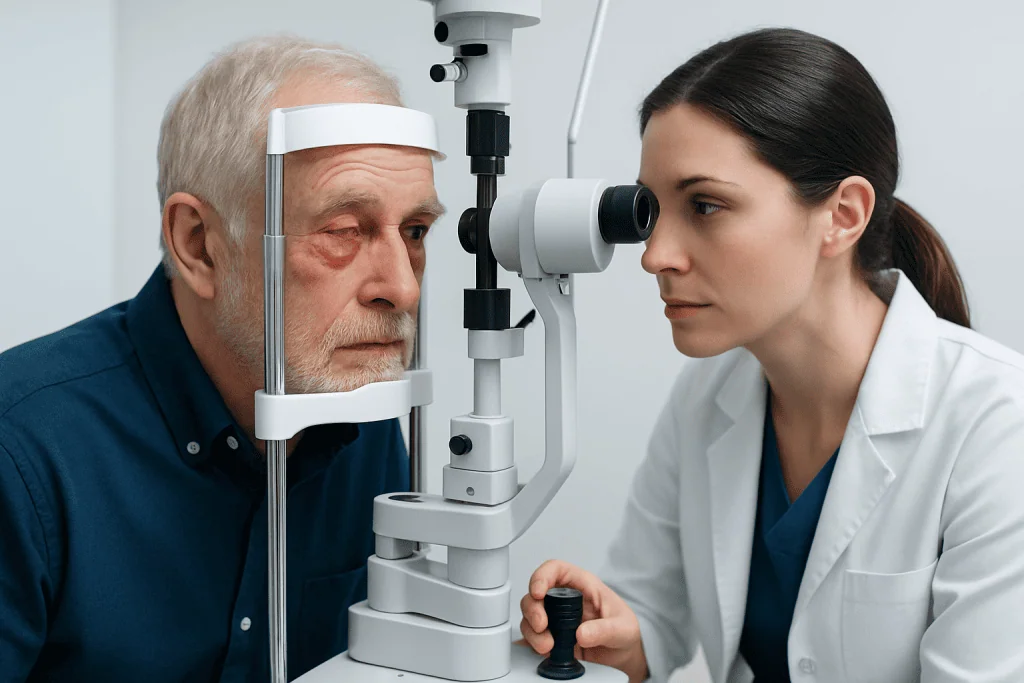
An eye doctor may use a slit-lamp examination to look closely at the eyelids, cornea, and the front of the eye. Special drops or dye may be used to detect surface damage. If needed, the clinician may also check eye pressure and look for inflammation inside the eye.
Laboratory testing is not always necessary when the rash and symptoms are classic. In less typical cases, or when there is no rash but shingles is still suspected, additional tests may be considered. The goal is to confirm the diagnosis and rule out other causes of eye inflammation or facial pain.
Depending on symptoms, the evaluation may involve more than one specialist. This can be especially useful when pain is severe, immunity is reduced, or the doctor wants to distinguish shingles from another condition affecting the eye or nerves.
Treatment options and follow-up care
The main treatment for shingles in the eye is antiviral medication started as early as possible, ideally soon after symptoms begin. Antivirals help limit viral activity and may reduce the risk of complications. Treatment plans vary from person to person, especially if the eye is involved more deeply or if the immune system is weakened.
Doctors may also recommend pain relief, lubricating drops, and other supportive care. In some cases, prescription eye drops are used to treat inflammation, but these should only be used under direct medical supervision because some medications can worsen certain eye infections if used incorrectly. If eyelid swelling or skin involvement is significant, careful skin care and protection of the eye surface are also important.
Some patients need ongoing monitoring because problems can appear after the skin lesions begin to heal. These may include corneal inflammation, uveitis, increased eye pressure, or persistent nerve pain known as postherpetic neuralgia. Follow-up visits help the doctor adjust treatment and watch for delayed effects.
When symptoms are complex, people may benefit from coordinated care that includes ophthalmology evaluation and, when appropriate, infectious diseases care. In selected cases where detailed assessment of the eye or surrounding structures is needed, comprehensive eye examination may be part of the plan.
Self-care, prevention, and reducing complications
Self-care supports recovery but does not replace medical treatment. People with shingles in the eye should avoid rubbing the eye, sharing towels, or wearing contact lenses unless a doctor says it is safe. Gentle skin hygiene, rest, and taking medicines exactly as prescribed can help the healing process.
Cool compresses over closed eyelids may ease discomfort for some people, provided the skin is kept clean and the compress is not irritating. Over-the-counter pain relief may be discussed with a clinician, especially if there are other medical conditions or regular medications to consider. It is also important to protect the eye if the eyelids do not close fully.
Prevention focuses mainly on vaccination against shingles in eligible adults. Shingles vaccines do not treat an active outbreak, but they can reduce the chance of future shingles and lower the risk of complications. A doctor can explain who should receive vaccination and when it is appropriate after a previous episode.
People with active shingles lesions should also be mindful that varicella-zoster virus can spread to individuals who have never had chickenpox or vaccination, causing chickenpox rather than shingles. Until lesions crust over, it is sensible to avoid close contact with newborns, pregnant people without immunity, and anyone who is immunocompromised.
When to seek medical care
Medical care should be sought promptly if a person develops a painful rash or tingling around one eye, especially with forehead or eyelid blisters. The combination of rash plus eye redness, light sensitivity, pain, or blurred vision should not be ignored. Early treatment is one of the most important steps in protecting the eye.
Urgent assessment is especially important if vision becomes suddenly worse, the eye is very red, swelling is severe, or pain is intense. People with weakened immune systems, older adults, and anyone with a history of eye disease should be assessed without delay because their risk of complications may be higher.
After diagnosis, follow-up matters even if the skin seems to be improving. Some eye complications and nerve pain can appear later. If symptoms return, new floaters develop, or light sensitivity increases, a qualified doctor should review the situation.
Near the end of treatment or during recovery, some patients may benefit from multidisciplinary follow-up. Acibadem International’s multidisciplinary specialists and JCI-accredited hospitals diagnose and treat conditions affecting the eye for international patients, including cases that may overlap with glaucoma risk or other eye disorders identified during follow-up.
Frequently asked questions
Is shingles in the eye an emergency?
It is not always an emergency in the strictest sense, but it does need prompt medical assessment. Early treatment can lower the risk of inflammation, corneal injury, and vision problems.
Can shingles in the eye cause blindness?
It can lead to serious eye complications if it is not treated, and in some cases vision can be permanently affected. However, many people recover well when diagnosis and treatment happen early and follow-up is maintained.
What does shingles in the eye look like?
It often causes a one-sided rash with small blisters on the forehead, scalp, eyelid, or nose. The eye may also look red or watery, and the eyelid can become swollen.
Is shingles in the eye contagious?
A person with active shingles can spread varicella-zoster virus from open lesions to someone who has never had chickenpox or vaccination. That exposed person would develop chickenpox, not shingles, so covering lesions and avoiding close contact with vulnerable people is important.
How long does shingles in the eye last?
The skin rash often evolves over a couple of weeks, but pain and eye irritation may last longer. Some people develop lingering nerve pain or delayed inflammation, which is why follow-up appointments can be important.
Can shingles in the eye come back?
Most people have a single episode, but recurrence is possible. Risk is influenced by age, immune status, and overall health, and vaccination may help reduce future episodes in eligible adults.
This article is for general information only and is not a substitute for professional medical advice. Please consult a qualified doctor about your individual situation.
Shingles in Turkey — costs, top hospitals & a free quote
JCI-accredited · board-certified surgeons · reply within 24h
Add us as a Preferred Source to see more of our trusted health content across Google Search, AI Overviews and Discover.

More from the Health Library

Leg Cramps — Explained by Medical Evidence, Not Myths

Mandelic Acid: A Complete Medical Overview

Inner Child — Explained by Medical Evidence, Not Myths

Nephrotoxicity: A Complete Medical Overview

Heart Ejection Fraction: A Complete Medical Overview