Side Effects of LASIK Eye Surgery You Should Know

Most LASIK eye surgery side effects are temporary and improve over days to months. Dry eyes, glare, halos, light sensitivity, and fluctuating vision are among the most common early effects.
Key Takeaways
- Most LASIK eye surgery side effects are temporary and improve over days to months.
- Dry eyes, glare, halos, light sensitivity, and fluctuating vision are among the most common early effects.
- Careful screening before surgery helps reduce the risk of complications and identifies people who may need a different procedure.
- Persistent pain, worsening vision, severe redness, or signs of infection need prompt medical attention.
- Following aftercare instructions closely supports healing and improves comfort after LASIK.
LASIK is a widely used vision correction procedure, and most side effects are mild and improve during healing. Knowing what is common, what is less common, and when to seek medical advice can help people prepare for treatment and recovery.
Overview: What LASIK Side Effects Mean
LASIK is a laser vision correction procedure used to reduce dependence on glasses or contact lenses. It reshapes the cornea so that light focuses more accurately on the retina. Like any medical procedure, it can cause side effects and has potential risks, but for many people these are short-term and manageable during normal healing.
When people talk about LASIK eye surgery side effects, they may mean expected temporary symptoms, such as dryness or blurry vision in the first days after treatment, or they may mean less common complications that need further care. It is helpful to separate these two groups. Expected side effects are part of recovery for many patients, while complications are less common and may affect visual quality or require treatment.
The chances of a smooth recovery are strongly influenced by good candidate selection. Factors such as corneal thickness, prescription stability, tear film health, age, and underlying eye disease all matter. In some cases, another procedure such as PRK or ReLEx SMILE may be more suitable than LASIK.
Common Side Effects After LASIK
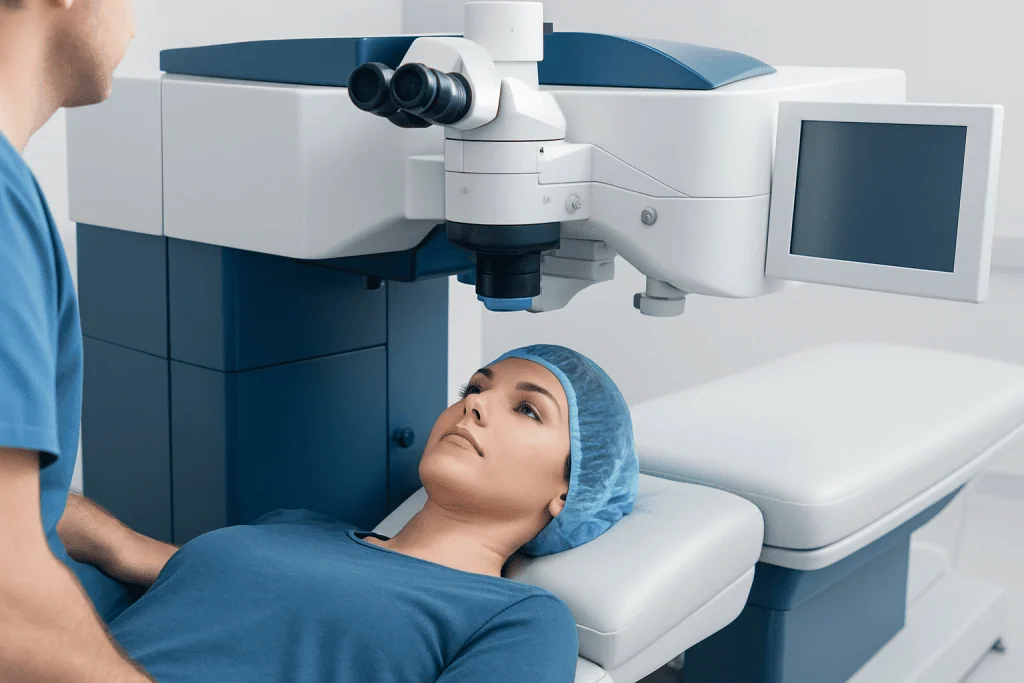
The most common side effect after LASIK is dry eye. This happens because the procedure can temporarily affect corneal nerves involved in tear production and blinking reflexes. People may notice burning, stinging, a gritty feeling, watering, or discomfort that is worse in air conditioning, wind, or during screen use.
Visual symptoms are also common during early recovery. These can include blurred or fluctuating vision, glare, halos around lights, starbursts at night, reduced contrast sensitivity, and sensitivity to bright light. Night driving may feel more difficult for a period of time, especially in the first weeks.
Mild redness, irritation, and a feeling that something is in the eye may occur as the surface heals. Vision often improves quickly, but it may still fluctuate from day to day before stabilizing. For most patients, these changes gradually settle as the cornea heals and the tear film becomes more stable.
- Dryness or gritty sensation
- Glare, halos, or starbursts
- Light sensitivity
- Blurry or fluctuating vision
- Mild discomfort or irritation
- Temporary difficulty with night vision
Less Common Risks and Complications

Although uncommon, LASIK can sometimes lead to complications that go beyond normal recovery. These include infection, inflammation, problems with the corneal flap, undercorrection or overcorrection, and irregular healing. In some cases, vision may not be as sharp as expected without glasses, and an enhancement procedure may be considered later if the eye is suitable.
Some people develop persistent dry eye symptoms that last longer than expected. Others may continue to notice glare, halos, or reduced clarity in low-light conditions. Rarely, the cornea can become structurally weaker over time, leading to a bulging change called ectasia. This risk is higher in people with undiagnosed corneal weakness, such as early keratoconus treatment needs, or in those with unsuitable corneal measurements before surgery.
Very rarely, flap-related issues such as displacement, wrinkles, or incomplete healing may affect recovery. These problems usually require prompt ophthalmic assessment. It is also important to remember that LASIK does not prevent age-related eye changes, so future conditions such as cataracts or presbyopia can still develop even if the original refractive error was corrected.
Why Side Effects Happen: Causes and Risk Factors
LASIK side effects happen for several reasons. The corneal surface and tear film need time to recover after laser reshaping. Temporary nerve changes in the cornea can reduce tear signaling, leading to dryness and variable visual quality. Swelling and microscopic surface healing can also contribute to glare, blur, and light sensitivity in the early phase.
Not everyone has the same risk profile. People with pre-existing dry eye, thin or irregular corneas, large pupils, high refractive errors, autoimmune disease, poorly controlled diabetes, or unstable vision may be more likely to experience side effects or may not be ideal candidates. Contact lens wear can also temporarily affect corneal shape, which is why patients are often asked to stop wearing lenses before assessment.
Careful preoperative testing helps identify whether LASIK is appropriate or whether another option may be safer. This may include detailed corneal mapping, tear film assessment, refraction testing, and examination for conditions such as astigmatism, corneal disease, or retinal problems. A personalized evaluation helps the surgeon match the procedure to the patient’s eye health and visual goals.
How Doctors Assess and Monitor LASIK Side Effects
Diagnosis begins with a detailed discussion of symptoms, when they started, and whether they are improving, stable, or worsening. After LASIK, regular follow-up visits allow the eye surgeon to check visual acuity, corneal healing, flap position, tear film quality, and signs of inflammation or infection. These visits are an important part of safe recovery.
An eye examination may include slit-lamp evaluation, refraction testing, and measurement of the corneal surface. If a person reports persistent blur or unusual visual disturbances, the doctor may look for dry eye, residual refractive error, epithelial ingrowth, or irregular corneal shape. In selected cases, corneal topography or tomography may be used to assess the cornea in greater detail.
Persistent symptoms do not always mean there is a serious problem, but they should not be ignored. Ongoing dryness, reduced visual quality, or discomfort may have more than one cause, and treatment depends on identifying the reason. Early evaluation can help relieve symptoms and reduce the chance of a more significant issue developing.
Treatment Options for LASIK Side Effects
Treatment depends on the side effect and its severity. Artificial tears are commonly used to ease dryness and support healing. Doctors may also recommend lubricating gels, temporary punctal plugs, or anti-inflammatory eye drops when appropriate. Avoiding eye rubbing and using medications exactly as prescribed are important during recovery.
Visual symptoms such as blur or night glare often improve with time as the surface stabilizes. If residual refractive error remains after healing is complete, some patients may be candidates for an enhancement procedure. In other cases, glasses for specific tasks, such as night driving, may be helpful. If flap-related or inflammatory problems occur, prompt medical treatment is needed.
For people who are not good candidates for LASIK or who have special corneal considerations, alternative approaches may be discussed, including LASEK or cornea surgery and external disease care. Treatment planning should always be individualized, and patients should speak with a qualified ophthalmologist about the safest option for their eyes.
Prevention and Self-care Before and After Surgery
The best way to reduce LASIK side effects is to have a thorough preoperative evaluation and to be honest about symptoms, medications, and medical history. People should mention dry eye symptoms, autoimmune conditions, pregnancy, changing vision, or any previous eye disease. Following instructions about stopping contact lenses before measurements is also important for accurate planning.
After surgery, self-care plays a major role in comfort and healing. Patients are usually advised to use prescribed drops as directed, avoid rubbing the eyes, protect the eyes while sleeping if instructed, and stay away from swimming pools, hot tubs, smoke, dust, and eye makeup for the recommended period. Sunglasses can help with outdoor light sensitivity.
Simple daily habits may also ease symptoms. Regular use of preservative-free lubricating drops, taking screen breaks, blinking more often during computer work, and keeping indoor air from becoming too dry can all help. Healing is different for each person, so expectations should be realistic: clearer vision often comes quickly, but full stability may take longer.
When to See a Doctor
It is normal to have some temporary discomfort, tearing, and fluctuating vision after LASIK, especially in the first days. However, some symptoms should be reviewed promptly. These include worsening pain, sudden drop in vision, increasing redness, thick discharge, marked light sensitivity, or any symptom that seems to be getting worse rather than better.
Patients should also contact their doctor if dryness becomes severe, if night vision symptoms remain troublesome after the expected healing period, or if one eye seems very different from the other. Early assessment can identify whether symptoms are part of normal recovery or whether treatment is needed.
People considering LASIK should choose an experienced eye team and ask clear questions about benefits, alternatives, and possible side effects. Near the end of the care journey, some international patients may also seek evaluation at centers such as Acibadem International, where multidisciplinary specialists in JCI-accredited hospitals diagnose and treat eye conditions and guide patients through suitable vision correction options.
Frequently asked questions
How long do LASIK side effects usually last?
Many side effects are temporary and improve over days to weeks. Dry eye symptoms and night vision changes can last longer in some people, sometimes for several months. Recovery time varies depending on the individual eye and the healing response.
Is dry eye after LASIK permanent?
For most people, dry eye after LASIK is temporary and improves with healing and lubricating treatment. In a smaller number of patients, symptoms can last longer and need ongoing management. A careful pre-surgery dry eye assessment helps reduce this risk.
Are halos and glare normal after LASIK?
Yes, halos, glare, and starbursts can be normal early after LASIK, especially at night. These symptoms often lessen as the cornea heals and the tear film stabilizes. If they are severe or do not improve, an eye doctor should review them.
Can LASIK make vision worse?
Serious long-term vision problems are uncommon, but they can happen. Most people improve or maintain good corrected vision, yet some may have residual refractive error, visual quality issues, or rare complications. This is why proper screening and follow-up are so important.
Who may not be a good candidate for LASIK?
People with thin or irregular corneas, unstable prescriptions, significant dry eye, certain autoimmune diseases, or some eye conditions may not be ideal candidates. Pregnancy and breastfeeding may also affect timing because vision and tear film can change. An ophthalmologist can recommend whether LASIK or another procedure is more suitable.
What should someone do if symptoms get worse after LASIK?
They should contact their eye surgeon or ophthalmologist promptly, especially if there is increasing pain, redness, discharge, or a sudden change in vision. It is better to have symptoms checked early than to wait. Prompt treatment can improve comfort and protect vision.
This article is for general information only and is not a substitute for professional medical advice. Please consult a qualified doctor about your individual situation.
Eye Surgery in Turkey — costs, top hospitals & a free quote
JCI-accredited · board-certified surgeons · reply within 24h
Add us as a Preferred Source to see more of our trusted health content across Google Search, AI Overviews and Discover.

Ophthalmology
Comprehensive eye care from laser vision correction to retina, cornea and cataract surgery.
75 specialists in this unitRelated Treatments
More from the Health Library

Cataract Surgery Recovery: Vision Changes, Eye Drops, and Healing Milestones
Neuro-Ophthalmology: When Vision Problems May Be Linked to the Brain or Nerves
Contact Lens Eye Exams: Why Proper Fitting Matters for Comfort and Safety

How Long Does LASIK Last? What to Expect Over Time

Femto LASIK Cost in Turkey: What Is Included and What Changes the Price?