Skin Infection and Antibiotics: Uses, Dosage, and Side Effects — A Clinical Overview

Antibiotics treat bacterial skin infections, not all rashes or inflamed skin conditions. The best antibiotic depends on the type of infection, how deep it is, and local resistance patterns.
Key Takeaways
- Antibiotics treat bacterial skin infections, not all rashes or inflamed skin conditions.
- The best antibiotic depends on the type of infection, how deep it is, and local resistance patterns.
- Common side effects include stomach upset, rash, and diarrhea; serious reactions need urgent medical care.
- People should not self-start, share, or stop antibiotics early without medical advice.
- Medical review is important if redness spreads quickly, fever develops, or the skin infection involves the face, hands, or genitals.
Skin infection and antibiotics are closely linked, but antibiotics are helpful only for bacterial skin infections and must be chosen according to the likely germ, infection depth, and the person's medical history. Understanding when antibiotics are needed, how they are selected, and what side effects to watch for can help patients use them more safely and effectively.
Overview: when antibiotics help in skin infections
Skin infection and antibiotics are often discussed together because many bacterial skin infections improve with antibiotic treatment. However, not every red, itchy, painful, or swollen area of skin is caused by bacteria. Some skin problems are due to fungi, viruses, allergic reactions, eczema, insect bites, or inflammatory conditions, and these do not always need antibiotics.
Doctors usually prescribe antibiotics for bacterial conditions such as cellulitis, impetigo, infected wounds, and some abscesses. In mild cases, a topical antibiotic may be enough. In deeper, larger, or more widespread infections, an oral or sometimes intravenous antibiotic may be needed. Some abscesses need drainage as the main treatment, with antibiotics used only in selected situations.
The goal is not simply to “cover” every skin problem with medication, but to use the right medicine only when it is likely to help. This supports better recovery and also helps reduce unnecessary antibiotic use, which can contribute to side effects and antibiotic resistance.
Common skin infections and typical symptoms
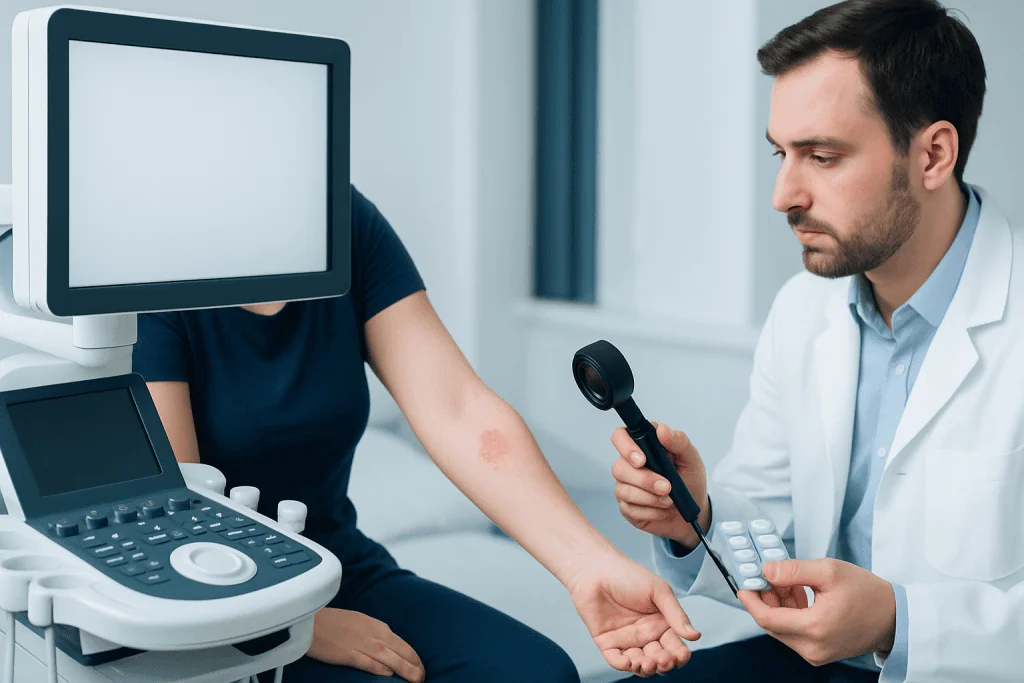
Bacterial skin infections can look different depending on the layer of skin involved. Superficial infections, such as impetigo, may cause honey-colored crusts, small blisters, or sores, especially around the nose and mouth. Deeper infections, such as cellulitis, often cause redness, warmth, swelling, tenderness, and skin that feels tight or painful.
An abscess is a pocket of pus under the skin. It may appear as a painful lump that becomes soft, swollen, and warm. Some infections begin after a cut, scratch, insect bite, shaving injury, or skin condition that breaks the natural skin barrier. Infections around hair follicles may cause small pustules or more inflamed, boil-like lesions.
Symptoms that suggest a bacterial infection may include:
- Increasing redness or warmth
- Swelling and pain
- Pus, crusting, or drainage
- Red streaks spreading from the area
- Fever or feeling unwell
These signs are important, but they are not specific on their own. For example, eczema can become inflamed and look infected, and fungal rashes may also be red and uncomfortable. That is why medical assessment is often needed before starting antibiotics.
How doctors decide whether antibiotics are needed

The decision to use antibiotics is based on the likely cause of the skin problem, its severity, and the patient’s overall health. A small drained abscess, mild irritation, or a clearly non-bacterial rash may not need an antibiotic at all. On the other hand, spreading redness, signs of deeper infection, recurrent boils, or infection in a person with diabetes or reduced immunity may need prompt treatment.
Doctors also consider where the infection is located. Areas such as the face, around the eyes, hands, feet, and genitals may need closer attention because of the risk of complications or the need to preserve function. Recurrent or unusually severe infections may lead clinicians to look for underlying skin disease or systemic conditions. Patients with ongoing inflammation may also have related skin disorders that need specialist evaluation, such as psoriasis.
The likely bacteria matter as well. Many skin infections are caused by Staphylococcus aureus or Streptococcus species, but local resistance patterns differ. If there is pus, a wound, or recurrent infection, a clinician may take a sample for culture. This can help confirm the organism and guide a more targeted antibiotic choice.
Antibiotic options: uses, label-level safety, and dosage principles
Antibiotics for skin infections may be topical, oral, or intravenous. Topical antibiotics are used for limited, superficial bacterial infections in selected cases. Oral antibiotics are commonly used for uncomplicated but more extensive infections, while intravenous antibiotics may be needed for severe infection, rapidly spreading cellulitis, or when a person is too unwell to take oral medicine. In some situations, procedures such as abscess drainage are central to treatment, because antibiotics alone may not clear a collection of pus.
The exact medicine depends on the infection type, suspected bacteria, allergy history, age, kidney or liver function, pregnancy status, and other medicines being taken. Commonly used antibiotic classes for skin infections include penicillins, cephalosporins, macrolides, tetracyclines, sulfonamide-containing combinations, and others selected according to clinical need. Label information differs by product, so dosage, schedule, and duration should come from a qualified clinician or the official product instructions, not from general online advice.
Common antibiotic side effects include nausea, vomiting, abdominal discomfort, diarrhea, and mild rash. Some products can increase sun sensitivity, while others may interact with blood thinners, seizure medicines, acne therapies, or supplements that affect absorption. Antibiotics can also alter normal bacteria in the body, sometimes leading to yeast infections or antibiotic-associated diarrhea. Because specific interactions and contraindications vary, patients should tell their clinician about all prescription drugs, over-the-counter medicines, vitamins, and herbal products they use.
Contraindications and precautions are medicine-specific. These may include a previous serious allergic reaction to that antibiotic or a related class, certain kidney or liver conditions, and use during pregnancy or breastfeeding when a product is not appropriate. People should seek urgent help for possible severe reactions such as trouble breathing, facial swelling, widespread blistering rash, or severe persistent diarrhea.
Diagnosis and what to expect during evaluation
Diagnosis usually begins with a history and skin examination. The clinician asks when the problem started, whether it began after trauma or shaving, whether there is fever, and whether the person has had similar infections before. They will also ask about allergies, recent antibiotic use, chronic skin conditions, diabetes, circulation problems, and any condition or medication that affects the immune system.
Most straightforward skin infections are diagnosed clinically, meaning the appearance and symptoms are enough to guide treatment. Tests are more likely when the infection is severe, recurrent, unusual in appearance, not improving, or associated with a wound. A swab or sample of pus may be sent for culture, and blood tests may be used when a person seems systemically unwell.
Imaging is not usually needed for simple infections, but ultrasound or other studies can be useful if there is concern about a deeper abscess, retained foreign material, or spread to deeper tissue. If there is uncertainty about whether the condition is truly infectious, a dermatologist may help distinguish bacterial disease from other causes of inflamed skin. In selected cases, broader dermatology care may be part of the evaluation plan.
Safe use, self-care, and prevention
Once an antibiotic is prescribed, it should be taken exactly as directed on the label and by the treating clinician. People should not skip doses, double doses, share antibiotics, or stop early just because the skin looks better unless their doctor advises it. Misuse can lead to incomplete treatment, relapse, or reduced effectiveness in future infections.
Basic wound and skin care supports recovery. The affected area should be kept clean, and dressings should be changed as instructed. Squeezing boils or abscesses at home can worsen infection or spread bacteria. Good hand hygiene is especially important when there is drainage, crusting, or broken skin. Personal items such as towels, razors, and clothing should not be shared until the infection has cleared.
Preventive steps depend on the cause. Moisturizing dry or cracked skin, treating athlete’s foot, caring for cuts promptly, and managing conditions such as eczema can reduce the risk of bacterial entry through the skin barrier. For recurrent infections, the clinician may look for contributing conditions including fungal disease, circulation problems, or inflammatory skin conditions such as eczema. In some patients, wound care support is helpful for healing and prevention.
When to seek medical care
Medical review is important if redness is spreading, the skin is very painful, pus is present, or the person develops fever or chills. Care should also be sought if the infection is on the face, near the eyes, on the hands, around the genitals, or over a surgical site. These situations may need closer monitoring or different treatment.
People with diabetes, poor circulation, chronic swelling, immune suppression, or very young or older age should have a lower threshold for assessment. The same is true for anyone whose symptoms are not improving, are worsening after starting treatment, or keep coming back. Recurrent skin infection can sometimes signal an underlying issue that also needs attention.
Urgent care is needed for rapidly expanding redness, severe swelling, blisters, skin discoloration, confusion, faintness, or trouble breathing after taking an antibiotic. These could point to a severe infection or a serious drug reaction. Near the end of the care pathway, patients may benefit from coordinated support: Acibadem International’s multidisciplinary specialists in JCI-accredited hospitals evaluate and treat skin and soft tissue infections for international patients when specialist assessment is needed.
Frequently asked questions
Do all skin infections need antibiotics?
No. Antibiotics are useful for bacterial skin infections, but many skin problems are caused by viruses, fungi, irritation, or inflammatory conditions instead. A clinician can help determine whether antibiotics are likely to help or whether another treatment is more appropriate.
Can topical antibiotics treat a skin infection?
Sometimes, yes. Topical antibiotics may be used for selected superficial bacterial infections, but they are not suitable for every infection. Deeper, larger, or spreading infections often require oral treatment or another intervention such as drainage.
How quickly should antibiotics start working for a skin infection?
Many people begin to notice improvement within a few days, but the timeline depends on the type and severity of infection. Pain, redness, and swelling may take time to settle even after the right treatment has started. If symptoms are worsening or not improving, medical review is important.
What are the most common side effects of antibiotics for skin infections?
Common side effects include nausea, stomach upset, diarrhea, and mild rash. Some antibiotics can also cause sun sensitivity or interact with other medicines. Serious allergic reactions are uncommon but need urgent medical attention.
Should a person stop antibiotics when the skin looks better?
They should follow the prescribing clinician's instructions and the official label guidance. Stopping too early without medical advice can increase the risk that the infection will return or not be fully treated. If side effects occur, the patient should contact their clinician rather than changing the plan alone.
Can a skin abscess be treated with antibiotics alone?
Not always. Many abscesses need drainage because antibiotics may not penetrate a pocket of pus well enough on their own. A clinician decides whether drainage, antibiotics, or both are needed based on the size, location, and severity.
This article is for general information only and is not a substitute for professional medical advice. Please consult a qualified doctor about your individual situation.
Explore treatments in Turkey — costs, top hospitals & a free quote
JCI-accredited · board-certified surgeons · reply within 24h
Add us as a Preferred Source to see more of our trusted health content across Google Search, AI Overviews and Discover.

More from the Health Library

Antibiotics Upper Respiratory Tract Infection: A Doctor-Reviewed Guide to Uses and Safety

Mounjaro Side Effects: A Doctor-Reviewed Guide to Uses and Safety

Prozac Side Effects: What It Treats, How It Works, and What to Watch For

Linzess Side Effects: Uses, Dosage, and Side Effects — A Clinical Overview

Albuterol inhaler: Uses, Types, and Side Effects — A Clinical Overview