Somatic Nervous System — Explained by Medical Evidence, Not Myths

The somatic nervous system manages conscious sensation and voluntary movement. It includes sensory nerves, motor nerves, and pathways linked to the brain and spinal cord.
Key Takeaways
- The somatic nervous system manages conscious sensation and voluntary movement.
- It includes sensory nerves, motor nerves, and pathways linked to the brain and spinal cord.
- Symptoms such as numbness, weakness, poor coordination, or abnormal reflexes may suggest a problem in somatic nerve pathways.
- Causes can range from injury and nerve compression to autoimmune, metabolic, or neurological diseases.
- Diagnosis often combines neurological examination with imaging, nerve testing, and laboratory studies.
- Early medical evaluation can help identify treatable causes and support recovery or long-term symptom control.
The somatic nervous system is the part of the nervous system that allows a person to feel touch, pain, temperature, and body position, and to move skeletal muscles on purpose. It works by carrying sensory information to the brain and spinal cord, then sending motor signals back to muscles so the body can respond in a controlled way.
Overview: what the somatic nervous system does
The somatic nervous system is the part of the peripheral nervous system that handles voluntary movement and conscious sensation. In practical terms, it helps a person decide to lift an arm, take a step, write with a pen, or turn the head toward a sound. It also carries messages about touch, pressure, pain, temperature, and limb position from the body to the central nervous system.
This system works in partnership with the brain and spinal cord. Sensory receptors in the skin, muscles, and joints detect information from the outside world and from inside the body. That information travels through sensory nerves to the spinal cord and brain, where it is processed. The brain then sends signals through motor nerves to skeletal muscles, allowing deliberate movement.
The somatic nervous system is different from the autonomic nervous system. The autonomic system controls functions that are mostly automatic, such as heart rate, digestion, and sweating. By contrast, the somatic system is mainly involved in actions under conscious control, although some responses, such as reflexes, can happen rapidly through the spinal cord before a person is fully aware of them.
How it works: sensory input, motor output, and reflexes
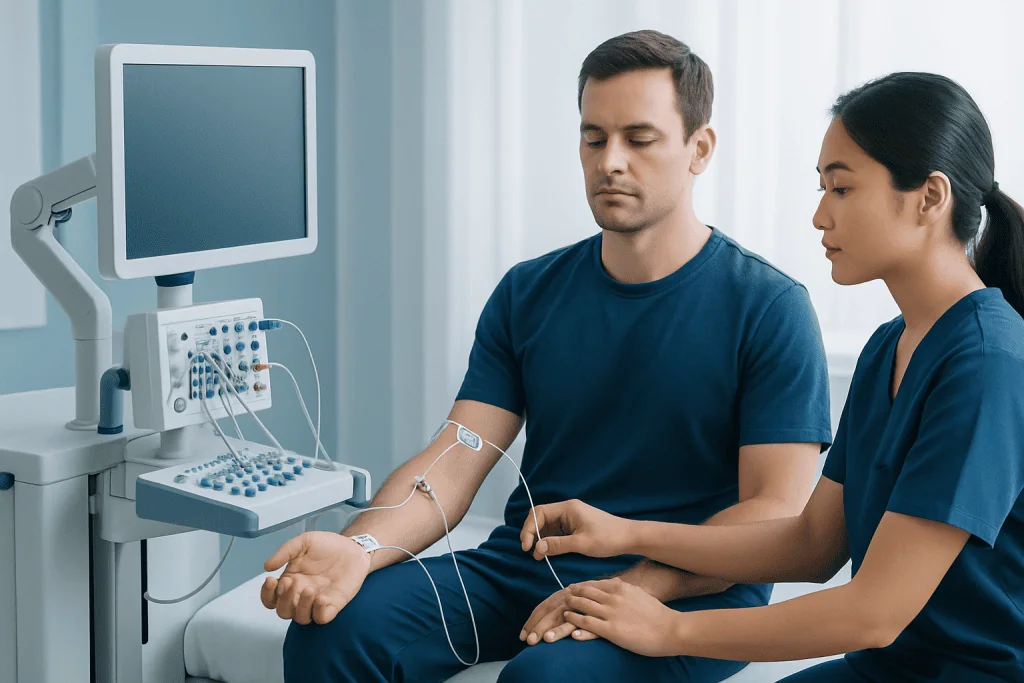
The somatic nervous system can be understood as a communication loop. First, sensory nerves collect input. Receptors in the skin detect touch, vibration, pain, and temperature. Receptors in muscles, tendons, and joints sense stretch and body position, a function called proprioception. This information helps a person know where the body is in space, even with the eyes closed.
Next, the central nervous system interprets that input and plans a response. The brain decides how to move, while the spinal cord helps relay information and coordinate certain patterns. Motor neurons then carry instructions from the brain and spinal cord to skeletal muscles. When those muscles contract in the correct sequence and strength, movement becomes smooth and purposeful.
Reflexes are another important feature. Some reflexes are protective and fast, such as pulling a hand away from a hot surface. In these cases, sensory signals can trigger a response through the spinal cord without waiting for detailed brain processing. Even though reflexes are rapid, they still belong to the body’s wider somatic pathways and can provide valuable clues during a neurological examination.
- Sensory pathways: carry information from skin, muscles, and joints.
- Motor pathways: send commands to skeletal muscles.
- Reflex arcs: allow quick protective responses.
- Proprioceptive pathways: help with balance, posture, and coordination.
Common symptoms when the somatic nervous system is affected

Problems involving the somatic nervous system can cause symptoms related to sensation, movement, or both. Common sensory symptoms include numbness, tingling, burning, reduced ability to feel touch, or trouble detecting heat and cold. Some people notice altered body awareness, such as clumsiness or difficulty knowing where a foot is when walking.
Motor symptoms can include muscle weakness, cramping, twitching, loss of dexterity, slowed movement, or difficulty with balance and coordination. A person may find it harder to grip objects, climb stairs, button clothing, or rise from a chair. Changes in reflexes may also occur, although these are usually detected during a medical exam rather than by the person alone.
Symptoms do not always mean there is a serious neurological disease. Compression of a nerve in the neck, back, wrist, or elbow can produce pain, tingling, or weakness in a very specific area. In other situations, symptoms may relate to conditions such as multiple sclerosis, peripheral neuropathy, radiculopathy, or an injury affecting muscles, nerves, or the spinal cord. The pattern, duration, and progression of symptoms help guide the diagnosis.
Causes and risk factors
The somatic nervous system can be affected at many levels: the sensory receptors, peripheral nerves, nerve roots, spinal cord, brain pathways, neuromuscular junction, or skeletal muscles. Because the system is broad, causes are also broad. Mechanical compression is one common cause, as seen in pinched nerves, disc-related radiculopathy, or entrapment neuropathies. Trauma, including sports injuries or accidents, can also disrupt normal nerve signaling.
Metabolic and medical conditions may injure nerves over time. Diabetes is a well-known cause of nerve damage, but vitamin deficiencies, thyroid disease, kidney disease, alcohol misuse, and some infections can also contribute. Autoimmune and inflammatory disorders may affect the brain, spinal cord, or peripheral nerves. Examples include demyelinating conditions and immune-mediated neuropathies.
Structural problems in the spine or brain may interfere with sensory or motor pathways. Depending on the clinical picture, doctors may evaluate for spinal cord compression, nerve root disorders, or central nervous system diseases such as Parkinson's disease or epilepsy when movement or neurological symptoms suggest these conditions. Risk factors depend on the underlying cause, but age, repetitive strain, chronic illness, smoking, toxin exposure, and family history can all play a role.
How doctors evaluate somatic nervous system problems
Diagnosis begins with a careful history and neurological examination. A doctor will ask when symptoms started, whether they are constant or intermittent, and what makes them better or worse. The distribution of numbness or weakness, any recent injury, and associated symptoms such as back pain, headaches, falls, or changes in walking are especially important. A detailed exam may assess strength, sensation, reflexes, coordination, gait, and balance.
Further testing depends on the suspected cause. Nerve conduction studies and electromyography can help evaluate how well nerves and muscles are functioning. Imaging studies may be useful when there is concern for spine, brain, or nerve compression problems, including MRI when soft tissues, the spinal cord, or the brain need detailed assessment. Blood tests may be ordered to check for diabetes, vitamin deficiencies, inflammation, thyroid problems, or other systemic causes.
In some cases, evaluation may involve specialists in neurology, neurosurgery, orthopedics, rehabilitation, or pain medicine. The goal is not simply to label symptoms, but to identify where the problem is occurring within the somatic pathways and whether the cause is temporary, progressive, or treatable. This step is important because similar symptoms can arise from very different conditions.
Treatment options and rehabilitation
Treatment for somatic nervous system problems depends on the underlying diagnosis. Some issues improve with rest, activity modification, splinting, physical therapy, or treatment of inflammation. If nerve compression is contributing to symptoms, doctors may recommend posture changes, rehabilitation exercises, or targeted procedures. When symptoms relate to metabolic causes, such as diabetes or vitamin deficiency, addressing the medical condition is an essential part of care.
Rehabilitation is often central to recovery. Physical therapy and rehabilitation can help improve strength, flexibility, coordination, gait, and confidence with movement. Occupational therapy may support hand function and everyday activities. Pain management strategies can also be useful when nerve irritation causes discomfort that interferes with sleep, mobility, or quality of life.
Some patients need more advanced evaluation or intervention. If structural problems affect the brain or spinal cord, specialists may discuss options such as neurosurgery in carefully selected cases. When symptoms are persistent or complex, a coordinated approach may include neurologists, rehabilitation physicians, radiologists, and surgeons. Acibadem International’s multidisciplinary specialists and JCI-accredited hospitals diagnose and treat neurological and musculoskeletal conditions for international patients.
Supporting nerve and muscle health in daily life
Not all somatic nervous system problems can be prevented, but daily habits can support nerve and muscle health. Regular physical activity helps maintain strength, balance, circulation, and joint mobility. Good posture and ergonomic adjustments at work may reduce strain on the neck, back, wrists, and shoulders. Protective equipment during sports and safe lifting techniques can lower the risk of injury.
Managing long-term health conditions is also important. Keeping diabetes, blood pressure, and thyroid disease under control may reduce the likelihood of nerve-related complications. A balanced diet that provides enough vitamins and minerals supports the nervous system, while limiting alcohol and avoiding tobacco may help protect nerves and blood vessels. Adequate sleep also matters because it supports recovery, coordination, and general neurological function.
People with early symptoms should avoid ignoring persistent numbness or weakness. Self-care is most helpful when paired with medical guidance, especially if symptoms interfere with walking, hand use, work, or exercise. In some situations, doctors may recommend a neurological check-up or follow-up testing to monitor symptoms over time and guide treatment choices.
When to seek medical care
Medical care is appropriate if numbness, tingling, weakness, or coordination problems persist, return repeatedly, or gradually worsen. It is also sensible to seek evaluation if symptoms follow an injury, affect one side of the body, disturb walking, or limit daily activities such as writing, dressing, or climbing stairs. Early assessment can help identify reversible causes and reduce the chance of long-term problems.
Urgent medical attention is needed for sudden severe weakness, facial drooping, new confusion, difficulty speaking, loss of bladder or bowel control, rapidly progressing numbness, or symptoms after major trauma. These signs can point to a serious neurological emergency. A qualified doctor can determine whether symptoms involve the somatic nervous system, another part of the nervous system, or a non-neurological condition that needs treatment.
Frequently asked questions
What is the somatic nervous system in simple terms?
The somatic nervous system is the part of the nervous system that helps a person sense the world and move the body on purpose. It carries signals from the skin, muscles, and joints to the brain and spinal cord, and sends movement commands back to skeletal muscles.
How is the somatic nervous system different from the autonomic nervous system?
The somatic nervous system mainly controls voluntary actions and conscious sensation, such as walking or feeling a surface. The autonomic nervous system mainly regulates automatic functions such as heart rate, breathing patterns, digestion, and sweating.
Can somatic nervous system problems cause pain and numbness?
Yes. If sensory nerves or related pathways are irritated, compressed, inflamed, or injured, a person may feel pain, numbness, tingling, burning, or altered sensitivity. These symptoms can come from conditions affecting peripheral nerves, nerve roots, the spinal cord, or the brain.
What tests are used to check the somatic nervous system?
Doctors often start with a neurological examination that looks at strength, sensation, reflexes, coordination, and gait. Depending on the suspected cause, they may also use blood tests, imaging such as MRI, and nerve studies such as electromyography and nerve conduction testing.
Can the somatic nervous system heal?
Recovery depends on the cause, location, and severity of the problem. Mild compression or temporary irritation may improve well, while other conditions need longer-term treatment, rehabilitation, or ongoing monitoring.
What lifestyle steps support a healthy somatic nervous system?
Regular exercise, balanced nutrition, good sleep, posture awareness, and injury prevention all support nerve and muscle function. Managing chronic conditions such as diabetes and avoiding smoking or excessive alcohol can also help protect nerves over time.
References
- National Institute of Neurological Disorders and Stroke
- Merck Manual Consumer Version
- MedlinePlus
- Cleveland Clinic
- Mayo Clinic
This article is for general information only and is not a substitute for professional medical advice. Please consult a qualified doctor about your individual situation.
Joint and spine care in Turkey — expert assessment & treatment
JCI-accredited · board-certified surgeons · reply within 24h
Add us as a Preferred Source to see more of our trusted health content across Google Search, AI Overviews and Discover.
Check your numbers in seconds
BMI, calories, due date, blood pressure and 30+ more clinical calculators — free, instant, doctor-reviewed ranges.

More from the Health Library

Black Butts: What Patients Need to Know

Busted Lip: What Patients Need to Know

Week 7 ultrasound twins: Symptoms, Causes, and Treatment — Complete Patient Guide

Sports Drinks for Electrolytes: A Complete Medical Overview

Rectal Fissure Cure: An Evidence-Based Guide for Patients