Somatic Yoga — Explained by Medical Evidence, Not Myths
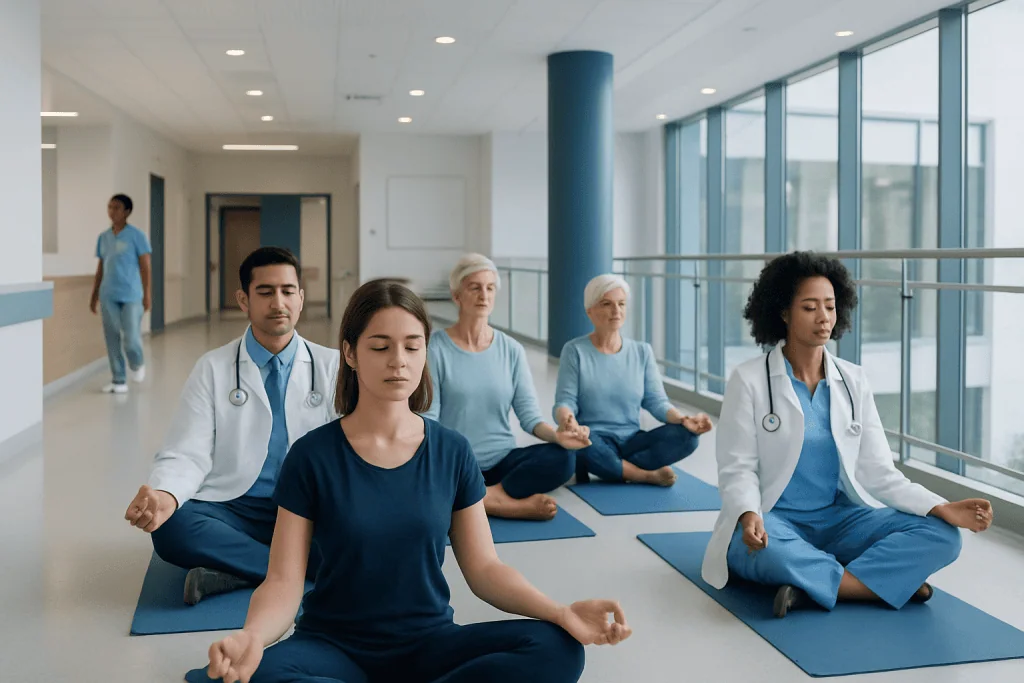
Somatic yoga focuses on slow, mindful movement and sensing how the body feels from the inside. Research suggests it may help with stress, flexibility, body awareness, and some types of ongoing pain.
Key Takeaways
- Somatic yoga focuses on slow, mindful movement and sensing how the body feels from the inside.
- Research suggests it may help with stress, flexibility, body awareness, and some types of ongoing pain.
- It is different from vigorous yoga styles because comfort, control, and nervous system calming are central goals.
- Somatic yoga is generally low impact, but technique and individual limitations still matter.
- People with significant pain, recent injury, neurological symptoms, or balance problems should seek medical advice before starting.
Somatic yoga is a gentle style of movement that emphasizes internal body awareness, slow transitions, and nervous system regulation rather than pushing into difficult poses. Medical evidence suggests it may help some people with stress, muscle tension, mobility, and persistent pain symptoms, but it should be viewed as a supportive practice rather than a cure.
What somatic yoga means in medical terms
Somatic yoga is a form of mindful movement that combines gentle yoga-based positions with close attention to internal sensations such as muscle tension, breathing, balance, and effort. The word somatic refers to the lived experience of the body from the inside. In practice, this means the goal is not to achieve the deepest stretch or the most advanced pose, but to move in a way that improves awareness, comfort, and control.
From a medical perspective, somatic yoga is best understood as a low-impact mind-body practice. It overlaps with other approaches such as therapeutic yoga, breath-focused relaxation, and movement re-education. Some teachers also draw on somatic education methods that use slow, repetitive motions to reduce unnecessary muscle guarding and help people notice habitual movement patterns.
This matters because pain, stress, fatigue, and previous injury can alter how a person moves. When people feel threatened by pain or strain, muscles may tighten reflexively and movement can become restricted. Somatic yoga aims to interrupt that cycle by encouraging slower movement, easier breathing, and a greater sense of safety in the body. While this approach is widely used in wellness settings, the scientific evidence is still evolving, so it should be presented realistically rather than as a proven cure.
How somatic yoga differs from standard yoga
Many yoga styles improve strength, flexibility, and concentration, but somatic yoga places less emphasis on performance and more emphasis on sensory feedback. A person may move through very small ranges, pause often, or repeat a simple motion several times to notice whether the neck, shoulders, back, hips, or breathing pattern change. Comfort is usually prioritized over intensity.
Traditional exercise often focuses on external goals such as repetitions, posture shape, or calorie use. Somatic yoga shifts the focus inward. Practitioners are encouraged to notice whether they are clenching the jaw, holding the breath, overusing certain muscles, or avoiding movement because of fear or stiffness. This inward attention may help people feel more in control of how they move.
That does not mean somatic yoga is entirely separate from conventional care. In rehabilitation and pain management, gentle body-awareness work may sit alongside stretching, strengthening, physical therapy, and medical treatment. For some people, symptoms thought to be related only to tightness may instead reflect conditions such as a herniated disc or scoliosis, which need proper assessment before any exercise plan is chosen.
What the evidence says about benefits and limits

Medical evidence on somatic yoga specifically is still limited, partly because the term is used in different ways by different instructors. However, broader research on gentle yoga, mindfulness-based movement, and body-awareness practices suggests possible benefits for stress reduction, flexibility, balance, mood, sleep quality, and quality of life. Some studies also suggest these methods can help people manage persistent musculoskeletal pain, especially when combined with education and regular practice.
One reason these methods may help is that they can reduce overactivity in muscles associated with guarding and improve confidence with movement. Slow breathing and attention training may also support the body’s relaxation response, which can be useful for people whose pain or tension worsens during stress. In this sense, somatic yoga may help symptoms even when structural findings on scans do not fully explain how a person feels.
Still, there are important limits. Evidence is not strong enough to claim that somatic yoga treats underlying diseases, reverses joint damage, or replaces medical therapy for significant pain disorders. Results also vary widely because outcomes depend on the person’s diagnosis, symptom duration, daily habits, and the quality of instruction. The most balanced message is that somatic yoga can be a helpful supportive practice for some individuals, especially when expectations are realistic and the method is adapted to the person’s needs.
Who may benefit most
Somatic yoga may be especially appealing to people who feel intimidated by fast-paced exercise or who notice that stress makes their body feel tight, shallow-breathing, or fatigued. It can also suit those returning to movement after a period of inactivity, provided there are no red-flag symptoms and any important medical conditions have been evaluated first.
Some people explore somatic yoga to support recovery from nonspecific back pain, neck and shoulder tension, reduced flexibility, or stress-related physical discomfort. Others use it as part of a broader plan that includes sleep improvement, walking, strength work, weight management, and medical care where needed. For certain musculoskeletal concerns, clinicians may also recommend structured rehabilitation or physical therapy and rehabilitation to rebuild movement more systematically.
Older adults, people with chronic stress, and those with mild balance or mobility concerns may benefit from the slow pace, especially when poses are modified with a chair, wall, or floor support. However, people with recent surgery, uncontrolled pain, severe osteoporosis, advanced neurological disease, dizziness, or major balance problems should not assume that “gentle” automatically means safe for them without professional advice.
How to practice somatic yoga safely
Safe somatic yoga usually begins with simple movements done slowly and within a comfortable range. A person may focus on breathing into the rib cage, softening the jaw and shoulders, rolling the pelvis gently, or noticing how weight shifts through the feet. The aim is often to reduce effort, not increase it. Mild stretching sensations can be acceptable, but sharp, radiating, or worsening pain is a signal to stop.
People should be cautious about online claims that encourage “pushing through” chronic tightness or promise rapid release of trauma, pain, or spinal problems. Symptoms in the neck, back, hips, or legs can have many causes, including disc disease, arthritis, nerve compression, or inflammatory conditions. If there is persistent limitation, a medical evaluation may be more useful than trying increasingly intense movement routines. In some cases, a doctor may suggest tests or a specialist review through services such as neurology or orthopedics and traumatology.
Practical safety tips include:
- Choose an instructor who has experience adapting movement for pain, injury, or older adults.
- Start with short sessions and increase gradually.
- Use props such as cushions, blocks, or a chair when needed.
- Avoid breath-holding and forced end-range stretching.
- Stop and seek advice if symptoms spread, intensify, or cause numbness, weakness, or dizziness.
What a session often includes
A somatic yoga session often starts with settling the breath and noticing areas of unnecessary tension. Rather than moving quickly from pose to pose, the person may spend more time sensing contact with the floor, lengthening the exhale, and exploring small motions in the pelvis, spine, shoulders, or hips. This slower approach can help reveal habits such as bracing the abdomen, gripping the toes, or lifting the shoulders during breathing.
Movements are usually simple and repetitive. For example, a person might gently tilt the pelvis, turn the head a small amount, or move one arm while observing what happens elsewhere in the body. Rest pauses are common. These breaks are not a sign of weakness; they are part of the method because the nervous system may learn movement patterns more effectively when effort is low and attention remains calm.
Later in the session, the practice may include basic yoga shapes such as supported twists, cat-cow variations, easy hip openers, or seated forward folds done without strain. The closing phase often emphasizes body scanning, relaxed breathing, and noticing whether standing or walking feels different. These observations can be useful because improvement may show up first as easier breathing, better balance, or less guarding rather than dramatic changes in flexibility.
When to seek medical care
Somatic yoga is not a substitute for diagnosis when symptoms could reflect an underlying medical problem. A person should seek medical care if pain is severe, follows a fall or accident, wakes them regularly at night, or continues to worsen despite rest and activity changes. Prompt assessment is also important for fever, unexplained weight loss, swelling, bowel or bladder changes, or pain linked to a known cancer or infection risk.
Urgent evaluation is needed for red-flag neurological symptoms such as new weakness, loss of coordination, numbness in the groin area, difficulty walking, or loss of bladder or bowel control. These symptoms can indicate significant nerve or spinal cord involvement and should not be managed with home exercise alone.
Even without emergency signs, a clinician can help if movement feels unsafe, dizziness occurs during position changes, or symptoms repeatedly return. Near the end of the care pathway, patients may benefit from coordinated assessment by rehabilitation, neurology, spine, or orthopedic teams. Acibadem International’s multidisciplinary specialists in JCI-accredited hospitals diagnose and treat musculoskeletal and neurological conditions for international patients when further evaluation is needed.
Frequently asked questions
Is somatic yoga a real medical treatment?
Somatic yoga is better described as a supportive mind-body practice than a stand-alone medical treatment. It may help some people manage stress, tension, mobility limits, or persistent pain symptoms, but it does not replace diagnosis or treatment for an underlying disease.
Can somatic yoga help with back pain?
It may help some people with mild or persistent back discomfort by improving body awareness, reducing guarding, and encouraging gentle movement. However, back pain has many possible causes, so persistent, severe, or radiating pain should be medically assessed before relying on exercise alone.
Is somatic yoga the same as stretching?
No. Stretching mainly aims to lengthen tissues or improve flexibility, while somatic yoga emphasizes sensing, breath control, coordination, and reducing unnecessary effort. The movements are often smaller and slower than traditional stretching routines.
Who should be careful with somatic yoga?
People with recent injuries, major balance problems, severe osteoporosis, significant joint disease, dizziness, or new neurological symptoms should be cautious. They may need medical guidance or supervised rehabilitation before starting even a gentle movement program.
How often should someone practice somatic yoga?
Many people start with short, regular sessions rather than long, intense classes. Consistency is usually more helpful than duration, but the right schedule depends on fitness, symptoms, and any medical conditions.
Can somatic yoga cure anxiety or chronic pain?
It should not be presented as a cure. Some people find it useful as part of a broader plan that may include medical care, psychological support, sleep improvement, and physical rehabilitation, but results vary from person to person.
References
- World Health Organization
- National Center for Complementary and Integrative Health
- American College of Sports Medicine
- National Institute of Neurological Disorders and Stroke
This article is for general information only and is not a substitute for professional medical advice. Please consult a qualified doctor about your individual situation.
Explore treatments in Turkey — costs, top hospitals & a free quote
JCI-accredited · board-certified surgeons · reply within 24h
Add us as a Preferred Source to see more of our trusted health content across Google Search, AI Overviews and Discover.
Check your numbers in seconds
BMI, calories, due date, blood pressure and 30+ more clinical calculators — free, instant, doctor-reviewed ranges.