Sore Chest Breathing: A Complete Medical Overview

Sore chest breathing can come from the chest wall, lungs, airways, digestive tract, or heart. Pain that is sharp with deep breathing often suggests inflammation or irritation in the chest wall or lining of the lungs.
Key Takeaways
- Sore chest breathing can come from the chest wall, lungs, airways, digestive tract, or heart.
- Pain that is sharp with deep breathing often suggests inflammation or irritation in the chest wall or lining of the lungs.
- Urgent evaluation is needed if chest pain is severe, comes with shortness of breath, fainting, blue lips, or pressure spreading to the arm, jaw, or back.
- Doctors diagnose the cause using symptoms, an examination, and sometimes tests such as ECG, chest X-ray, blood tests, or CT scans.
- Treatment depends on the cause and may include rest, pain relief, infection treatment, inhalers, or emergency care for heart or lung conditions.
Sore chest breathing usually means chest discomfort that becomes noticeable or worse with a deep breath, cough, movement, or exertion. It is often linked to strained chest muscles, airway infections, or inflammation around the lungs, but some causes involve the heart or lungs and should be assessed promptly.
Overview: What Sore Chest Breathing Means
Sore chest breathing refers to chest discomfort that appears during breathing or gets worse with a deep breath. Some people describe it as a sharp pain, while others feel tightness, aching, burning, or soreness in the front, side, or back of the chest. This symptom is common and often has a non-serious explanation, such as muscle strain from coughing, exercise, or an upper respiratory infection.
At the same time, chest pain linked to breathing should not be ignored. The chest contains the lungs, heart, major blood vessels, ribs, muscles, and the esophagus, so pain in this area can come from many different structures. The pattern of the pain, related symptoms, and a person’s age and health history all help doctors judge whether the cause is likely mild, urgent, or an emergency.
One useful way to think about sore chest breathing is to divide causes into chest wall problems, lung and airway conditions, heart and blood vessel conditions, and less commonly digestive causes. This practical approach helps patients understand why symptoms that feel similar can still require very different treatments.
How It Can Feel: Common Symptoms and Patterns
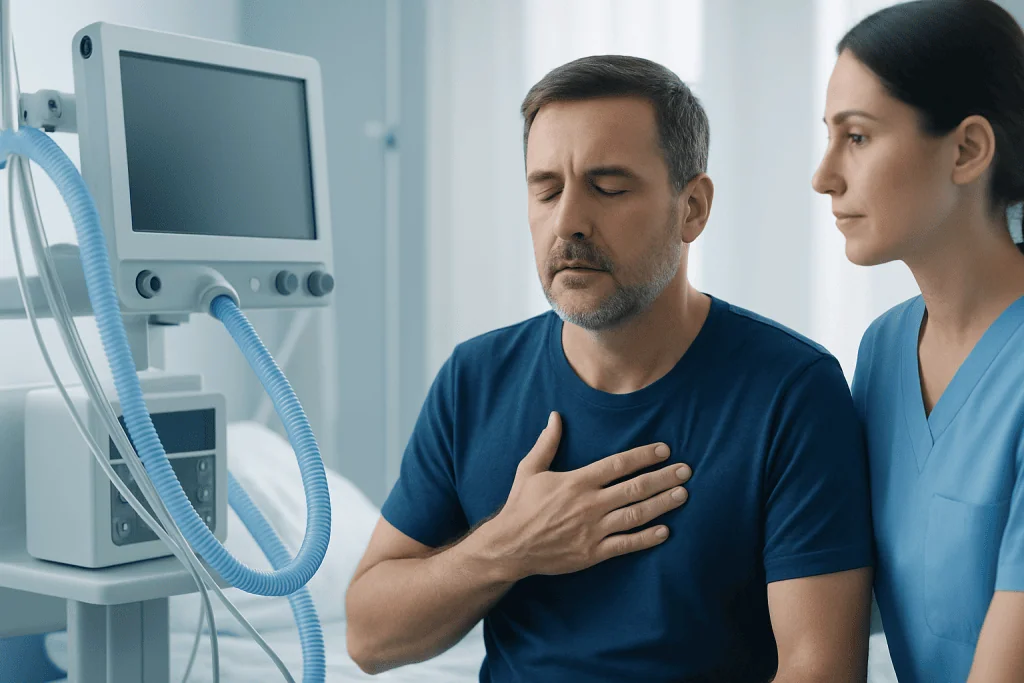
The discomfort of sore chest breathing can vary widely. Some people feel a pinpoint stabbing pain when taking a deep breath, coughing, sneezing, or twisting the torso. Others notice a broad area of soreness after repeated coughing, lifting, sports activity, or poor posture. Pain may stay in one spot or spread to the shoulder, upper abdomen, side of the rib cage, neck, or back.
Associated symptoms often provide important clues. A viral infection or pneumonia may cause fever, fatigue, cough, mucus, or body aches. Asthma or airway irritation may bring wheezing, chest tightness, or shortness of breath. If the pain is related to the lining around the lungs, often called pleuritic chest pain, it may be sharp and clearly worse with breathing.
Symptoms that deserve special attention include:
- Pressure, heaviness, or squeezing in the chest
- Shortness of breath at rest or with minimal activity
- Rapid heartbeat, dizziness, or fainting
- Coughing up blood
- Blue or gray lips or fingertips
- New swelling in one leg
- Pain after a significant injury or fall
These symptoms do not always mean a life-threatening condition, but they can point to serious heart, lung, or blood vessel problems. Prompt medical assessment is especially important when symptoms begin suddenly or worsen quickly.
Common Causes and Risk Factors

Many cases of sore chest breathing come from the chest wall rather than the internal organs. Inflamed rib cartilage, called costochondritis, can cause tenderness near the breastbone. Overuse or strain of the intercostal muscles between the ribs may develop after heavy lifting, intense exercise, or repeated coughing. Minor injuries and poor posture can also make normal breathing feel painful because the chest wall moves with every breath.
Lung and airway causes are also common. Viral bronchitis, influenza, and pneumonia can irritate the airways and surrounding tissues, making each breath feel uncomfortable. Inflammation of the membrane lining the lungs, known as pleurisy, classically causes sharp pain that worsens with inhalation. People with asthma may describe chest tightness or soreness during flare-ups. In some cases, sore chest breathing may occur with lung cancer, especially if there is persistent cough, unexplained weight loss, or symptoms that continue to worsen, although cancer is not a common cause of routine chest soreness.
Less common but more urgent causes include a blood clot in the lung, called pulmonary embolism, and a collapsed lung, called pneumothorax. These problems may cause sudden chest pain with difficulty breathing. Heart-related causes should also be considered, because some people with heart disease describe discomfort that changes with activity or breathing rather than classic crushing chest pain. Conditions such as coronary artery disease may need evaluation when chest symptoms occur during exertion or are paired with sweating, nausea, or pain radiating to the arm or jaw.
Risk factors depend on the underlying problem. They can include recent respiratory infection, smoking, asthma, recent surgery, prolonged immobility, clotting disorders, heavy physical activity, chest trauma, older age, high blood pressure, diabetes, and a personal or family history of heart or lung disease.
How Doctors Evaluate Sore Chest Breathing
Evaluation begins with a careful history. A doctor will usually ask when the pain started, whether it is sharp or dull, what makes it better or worse, and whether it changes with exercise, movement, coughing, or meals. Associated symptoms such as fever, shortness of breath, wheezing, palpitations, fainting, swelling in the legs, or recent travel can help narrow the possibilities.
The physical examination may include listening to the heart and lungs, checking oxygen levels, measuring blood pressure and pulse, and gently pressing on parts of the chest to see whether the pain is reproducible. Reproducible pain often points toward a muscle, rib, or cartilage source, though this alone cannot fully rule out other causes.
Tests are chosen based on the level of concern. They may include an electrocardiogram to assess heart rhythm and signs of reduced blood flow, blood tests, a chest X-ray, or respiratory testing. If a blood clot, lung collapse, or more complex heart or lung condition is suspected, doctors may order advanced imaging such as CT scanning or an ultrasound of the heart. In selected cases, bronchoscopy may be used to investigate persistent airway symptoms, bleeding, or abnormalities seen on imaging.
The aim of testing is not simply to confirm pain, but to identify the organ system involved and to exclude emergencies efficiently. Because the same symptom can have very different causes, self-diagnosis is often unreliable when chest discomfort persists or feels intense.
Treatment Options and What Relief Depends On
Treatment for sore chest breathing depends entirely on the cause. If the problem is a chest wall strain or inflamed cartilage, doctors often recommend rest, avoiding activities that trigger pain, and short-term pain relief measures. Gentle movement, coughing support with a pillow, and recovery from the underlying cold or cough can also help reduce discomfort over time.
When infection is responsible, treatment may include fluids, rest, fever management, and in some situations medications for bacterial pneumonia or other confirmed conditions. If asthma, wheezing, or airway inflammation is contributing, inhaled treatments may be prescribed to open the airways and reduce irritation. In more significant chest conditions, hospital-based care may be needed to monitor breathing and oxygen levels.
Urgent causes require specific treatment. Pulmonary embolism is treated with blood-thinning medicine and close medical supervision. A collapsed lung may need observation or a procedure to remove trapped air. If the cause is heart-related, doctors may recommend tests and treatments tailored to coronary blood flow, rhythm problems, or structural disease; some patients may need coronary angiography as part of that assessment.
Persistent, unexplained, or severe chest symptoms should always be evaluated rather than treated repeatedly at home. Near the end of the care pathway, if a more complex diagnosis is confirmed, multidisciplinary services can be helpful. Acibadem International’s multidisciplinary specialists and JCI-accredited hospitals diagnose and treat chest, heart, and lung conditions for international patients when advanced evaluation is needed.
Self-Care, Prevention, and What May Help at Home
For mild chest soreness clearly linked to coughing, muscle strain, or a recent viral illness, home care may be reasonable after serious causes have been excluded or when a clinician has advised that the problem is not urgent. Resting the chest wall, staying hydrated, and avoiding smoking or secondhand smoke may reduce irritation. Good posture and slow return to exercise can also help when pain began after physical effort.
Some people find symptom tracking useful. Noting when pain occurs, whether it is triggered by exercise or deep breaths, and whether there is fever, wheezing, or cough can help both the patient and the doctor. This information becomes especially important if the pattern changes or the problem returns repeatedly.
Prevention depends on the underlying cause but often includes:
- Managing asthma or chronic lung disease as advised
- Stopping smoking and avoiding vaping
- Using proper form during exercise and lifting
- Seeking early care for persistent cough or fever
- Staying mobile during long travel or after surgery when possible
- Controlling cardiovascular risk factors such as high blood pressure, diabetes, and high cholesterol
Home remedies should not replace proper medical care when symptoms are new, severe, or accompanied by breathing difficulty. Chest symptoms can look deceptively simple at first, so caution is appropriate even when the pain feels like a muscle problem.
When to Seek Medical Care
Medical attention is important if sore chest breathing lasts more than a few days, keeps coming back, or interferes with normal activity or sleep. A doctor should also assess chest discomfort that occurs with fever, worsening cough, wheezing, reduced exercise tolerance, or new fatigue, especially in older adults and people with known heart or lung disease.
Urgent or emergency care is needed for chest pain that is sudden, severe, or associated with shortness of breath, fainting, confusion, sweating, blue lips, coughing up blood, or pain spreading to the arm, jaw, shoulder, or back. These symptoms can occur with heart attack, pulmonary embolism, severe infection, or a collapsed lung. Anyone with these warning signs should not delay evaluation.
It is also wise to seek care after chest injury, after recent surgery, or after prolonged immobility or long-distance travel if chest pain and breathlessness develop. In these settings, the chance of a clot or structural injury may be higher. If symptoms feel different from prior episodes of known asthma or muscle strain, re-evaluation is sensible.
Frequently asked questions
Is sore chest breathing always serious?
No. Many cases are caused by muscle strain, inflammation of the chest wall, or a respiratory infection. However, because some causes involve the heart or lungs, new or severe chest pain should be assessed by a qualified clinician.
Why does my chest hurt more when I take a deep breath?
Pain that worsens with deep breathing often happens when the chest wall, rib joints, or the lining around the lungs is irritated. This pattern is sometimes called pleuritic pain, but a doctor may still need to rule out more serious lung or heart causes depending on the full symptom picture.
Can anxiety cause sore chest breathing?
Anxiety can contribute to chest tightness, fast breathing, and chest discomfort. Even so, chest pain should not automatically be blamed on anxiety until other important causes have been considered, especially if symptoms are new or intense.
How can someone tell whether it is muscle pain or something deeper?
Muscle-related pain is often tender to touch and may worsen with twisting, lifting, or coughing. But symptoms can overlap, so chest pain that is severe, persistent, or associated with shortness of breath, dizziness, or exertion should be medically evaluated.
What tests might be needed for chest pain with breathing?
Doctors may use a physical exam, oxygen measurement, ECG, blood tests, and a chest X-ray. Depending on symptoms and risk factors, they may also order CT imaging, heart ultrasound, or other studies to look for a clot, infection, lung problem, or heart condition.
When should someone go to the emergency department?
Emergency care is appropriate for sudden or severe chest pain, marked shortness of breath, fainting, blue lips, coughing up blood, or pain spreading to the arm, jaw, or back. These features can signal potentially dangerous problems that need immediate attention.
References
- American Heart Association
- National Heart, Lung, and Blood Institute
- Centers for Disease Control and Prevention
- MedlinePlus
- Mayo Clinic
This article is for general information only and is not a substitute for professional medical advice. Please consult a qualified doctor about your individual situation.
Explore treatments in Turkey — costs, top hospitals & a free quote
JCI-accredited · board-certified surgeons · reply within 24h
Add us as a Preferred Source to see more of our trusted health content across Google Search, AI Overviews and Discover.

More from the Health Library

Yag Laser: An Evidence-Based Guide for Patients

Hair Splinter: What Patients Need to Know

Chinese Fruits — Explained by Medical Evidence, Not Myths

Jumping Spider Bite: A Complete Medical Overview

Procalcitonin high: A Complete Medical Guide for Patients