Spiriva — Explained by Medical Evidence, Not Myths

Spiriva contains tiotropium, a long-acting bronchodilator that helps relax airway muscles. It is used for maintenance treatment in COPD and for selected people with asthma, depending on a doctor’s advice.
Key Takeaways
- Spiriva contains tiotropium, a long-acting bronchodilator that helps relax airway muscles.
- It is used for maintenance treatment in COPD and for selected people with asthma, depending on a doctor’s advice.
- Spiriva does not work quickly enough to treat a sudden asthma attack or acute shortness of breath.
- Common side effects can include dry mouth, throat irritation, cough, and constipation.
- Correct inhaler technique and regular daily use are important for the medicine to work well.
- A doctor should review symptoms if breathing worsens, rescue inhaler use increases, or side effects become troublesome.
Spiriva is the brand name for tiotropium, a long-acting inhaled medicine that helps keep airways open in people with chronic obstructive pulmonary disease (COPD) and, in some cases, asthma. It is a maintenance treatment used regularly to prevent symptoms over time, not a fast-acting inhaler for sudden breathing trouble.
What Spiriva is and what it is used for
Spiriva is a prescription inhaled medicine whose active ingredient is tiotropium. It belongs to a class of medicines called long-acting muscarinic antagonists, often shortened to LAMAs. In simple terms, it helps relax the muscles around the airways so they stay more open, making breathing easier over time.
Medical evidence supports Spiriva as a maintenance treatment, which means it is taken regularly to help prevent symptoms rather than to relieve sudden breathing distress. It is commonly prescribed for people with chronic obstructive pulmonary disease (COPD) and may also be used in some people with asthma when symptoms are not fully controlled with other long-term inhaled treatments.
A common myth is that all inhalers work in the same way. They do not. Spiriva is not a rescue inhaler and should not replace a quick-relief medicine used for sudden wheezing, chest tightness, or severe shortness of breath. Its role is day-to-day symptom control, reduction of flare-ups in appropriate patients, and support for better lung function.
How Spiriva works in the lungs
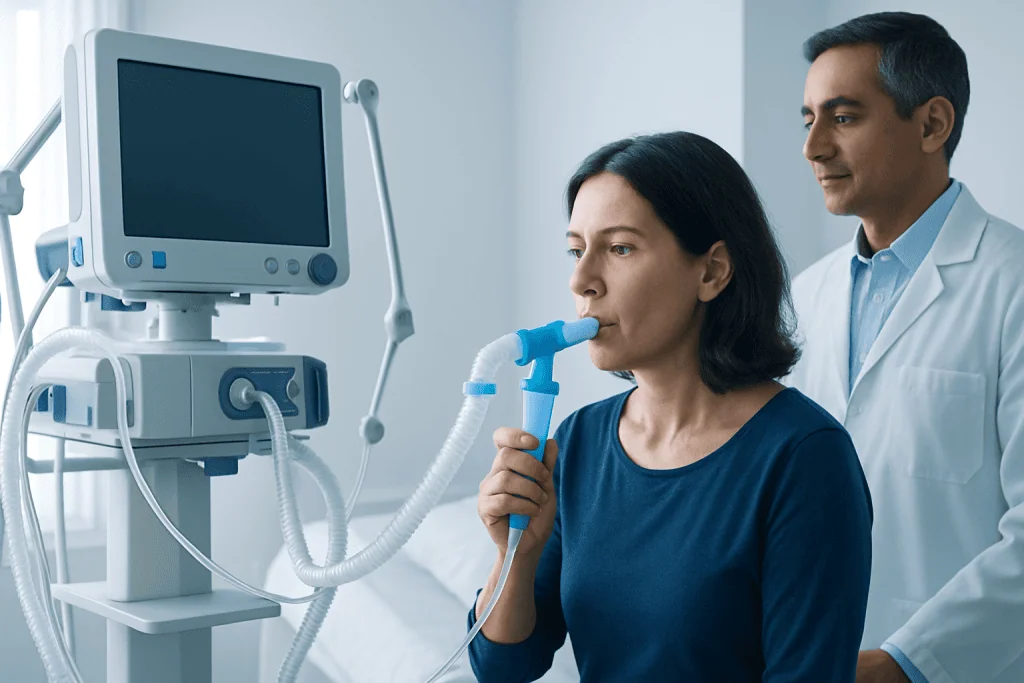
Airways can narrow when the muscles around them tighten, when the lining becomes inflamed, or when mucus builds up. Spiriva works by blocking certain nerve signals that tell airway muscles to contract. As those muscles relax, the breathing tubes remain more open for longer periods.
Because tiotropium is long acting, its effect lasts throughout the day, which is why it is used on a regular schedule rather than only when symptoms appear. This steady action can help reduce day-to-day breathlessness, improve activity tolerance, and lower the chance of symptom worsening in some patients.
Spiriva treats airway narrowing, but it does not cure the underlying disease. People with COPD may also need smoking cessation support, vaccines, pulmonary rehabilitation, and other medicines. People with asthma often need anti-inflammatory treatment, such as inhaled corticosteroids, because airway inflammation remains a key part of the condition.
Who may be prescribed Spiriva

Doctors prescribe Spiriva based on the person’s diagnosis, symptoms, lung function, and history of flare-ups. It is most often used in adults with COPD, including chronic bronchitis or emphysema, to help prevent ongoing symptoms and exacerbations. In asthma, it may be added when maintenance therapy is still not giving enough control.
Spiriva is not appropriate for every breathing problem. Sudden shortness of breath can have many causes, including infection, heart disease, anxiety, allergic reactions, or a severe asthma attack, and each situation needs its own assessment. A clinician considers the full picture before recommending a long-acting inhaler.
Some people need extra caution before using tiotropium. This can include those with certain eye conditions such as narrow-angle glaucoma, urinary retention problems, prostate enlargement, kidney problems, or allergy to ingredients in the device. A medication review is also important because inhaled therapies are often part of a broader treatment plan that may include asthma treatment or COPD treatment.
How to use Spiriva safely and effectively
Spiriva works best when used exactly as prescribed. Different devices may be available, and each one has its own instructions for loading, inhaling, and cleaning. A doctor, nurse, or pharmacist should show the correct technique, because even a well-chosen medicine may not work well if the inhaler is not used properly.
It is important to use Spiriva consistently, even on days when breathing feels better. Maintenance inhalers are designed to build and maintain control over time. Missing doses can reduce the benefit and may allow symptoms to become more noticeable again.
Patients should also know what Spiriva is not meant to do. It should not be used as first aid for sudden breathing difficulty. People who have asthma or COPD usually need a separate rescue inhaler for urgent symptom relief, and they should follow the action plan provided by their clinician.
- Use it at the same time each day if advised.
- Do not change the dose or stop treatment without medical guidance.
- Ask for an inhaler technique review at follow-up visits.
- Keep track of worsening symptoms, nighttime awakenings, or increased rescue inhaler use.
Possible side effects and practical precautions
Like all medicines, Spiriva can cause side effects, although not everyone experiences them. Dry mouth is one of the more common effects. Some people may also notice throat irritation, cough, constipation, hoarseness, blurred vision if the medicine gets into the eyes, or difficulty urinating, especially if they are already prone to urinary problems.
Most side effects are mild, but some deserve prompt medical attention. Worsening breathing immediately after inhalation, eye pain with visual changes, marked palpitations, severe allergic symptoms, or new difficulty passing urine should be assessed without delay. A clinician can decide whether the medicine should be continued, adjusted, or replaced.
Practical steps may help reduce discomfort. Rinsing the mouth after use may be soothing for some people, although Spiriva is not the same as inhaled steroids in this respect. Avoid directing the mist or powder into the eyes, and tell the prescribing doctor about all medications and health conditions so that precautions can be considered in advance.
What medical evidence says about benefits and limits
Spiriva is supported by clinical evidence as a maintenance therapy for appropriate patients with COPD and for selected patients with asthma. In COPD, tiotropium can help improve airflow, reduce symptoms, and lower the risk of exacerbations in many patients. In asthma, it may provide added control for some people when standard maintenance treatment is not enough.
At the same time, evidence does not support using Spiriva as a replacement for emergency treatment. It does not act quickly enough to reverse a sudden severe attack of breathlessness. This distinction matters because misunderstanding the role of an inhaler can delay needed care.
Another common misunderstanding is that a maintenance inhaler alone solves every aspect of chronic lung disease. In reality, good long-term care often combines medicines with trigger avoidance, smoking cessation, vaccinations, exercise guidance, and sometimes pulmonary rehabilitation. When symptoms remain unclear or severe, specialist evaluation and respiratory function testing may help guide treatment decisions.
When to seek medical care
Medical review is important if breathing symptoms are getting worse, if a rescue inhaler is needed more often, or if cough, wheeze, or chest tightness keeps interrupting sleep or daily activities. These changes can mean the condition is not well controlled, the inhaler technique needs correction, or another illness is present.
Urgent care is needed for severe shortness of breath, bluish lips, confusion, chest pain, fainting, or symptoms that do not improve with prescribed rescue treatment. These symptoms should not be managed by taking extra doses of Spiriva unless a doctor has specifically advised otherwise.
People with recurrent flare-ups, uncertain diagnosis, or symptoms that seem out of proportion to known asthma or COPD may benefit from a specialist assessment. Near the end of the care pathway, some international patients choose centers such as Acibadem International, where multidisciplinary specialists in JCI-accredited hospitals diagnose and treat respiratory conditions including asthma and COPD.
Frequently asked questions
Is Spiriva a steroid?
No. Spiriva contains tiotropium, which is a long-acting bronchodilator, not a steroid. It helps open the airways by relaxing airway muscles, while steroid inhalers mainly reduce inflammation.
Can Spiriva be used for sudden shortness of breath?
No, Spiriva is not a rescue inhaler. It is a maintenance medicine designed for regular daily use, so sudden breathing attacks should be managed with the quick-relief treatment prescribed by a doctor.
What conditions is Spiriva commonly used for?
Spiriva is commonly used for COPD and may also be prescribed for some people with asthma as an add-on maintenance treatment. Whether it is suitable depends on the diagnosis, symptom pattern, and overall treatment plan.
What are the most common side effects of Spiriva?
Common side effects can include dry mouth, throat irritation, cough, constipation, and sometimes hoarseness. Many people tolerate the medicine well, but bothersome or unusual symptoms should be discussed with a clinician.
Can someone stop taking Spiriva when symptoms improve?
It is best not to stop Spiriva without medical advice. Symptoms may improve because the medicine is working, and stopping it suddenly may allow breathing problems to return or worsen.
Does Spiriva cure COPD or asthma?
No, Spiriva does not cure COPD or asthma. It helps control symptoms and may reduce flare-ups, but long-term care usually includes regular monitoring and, in some cases, other inhaled medicines or lifestyle measures.
References
- Global Initiative for Chronic Obstructive Lung Disease (GOLD)
- Global Initiative for Asthma (GINA)
- U.S. Food and Drug Administration
- National Heart, Lung, and Blood Institute
- National Health Service
This article is for general information only and is not a substitute for professional medical advice. Please consult a qualified doctor about your individual situation.
Explore treatments in Turkey — costs, top hospitals & a free quote
JCI-accredited · board-certified surgeons · reply within 24h
Add us as a Preferred Source to see more of our trusted health content across Google Search, AI Overviews and Discover.

More from the Health Library



Related Specialists

Pdg. Gizem Sencer
Podiatry & Foot Health
Dr. Nevin Sarıgüzel
Infectious Diseases & Clinical Microbiology
Assoc. Prof. Dr. Hakan Hasdemir
Cardiology
Dr. Tijen Diri
Pediatrics