Stages of a Wart Falling Off Pictures: A Complete Medical Overview

A wart that is healing often looks drier, darker, smaller, and less raised before it loosens and falls away. The appearance can vary depending on whether the wart is untreated or treated with salicylic acid, cryotherapy, or other methods.
Key Takeaways
- A wart that is healing often looks drier, darker, smaller, and less raised before it loosens and falls away.
- The appearance can vary depending on whether the wart is untreated or treated with salicylic acid, cryotherapy, or other methods.
- Black dots or darkening may represent tiny clotted blood vessels and are not always a sign of danger.
- Picking, cutting, or forcing a wart off can delay healing and increase the risk of infection.
- Medical review is important if the growth changes quickly, bleeds easily, becomes very painful, or may not be a wart at all.
Stages of a wart falling off pictures typically show a wart becoming dry, darker, flatter, and then gradually separating from the skin as healthy tissue grows underneath. The exact appearance depends on the type of wart and whether it is being treated, but changes should happen slowly and should not involve severe pain, spreading redness, or heavy bleeding.
Overview: What the stages usually look like
People searching for stages of a wart falling off pictures usually want to know whether a changing wart is healing normally. In general, a wart that is resolving tends to become dry, rough, and flatter, then may darken or develop tiny black dots before it shrinks and gradually separates from the skin. New pink or skin-colored tissue often appears underneath as the area heals.
Warts are caused by certain strains of human papillomavirus, or HPV, which infect the top layer of skin. They can appear on the hands, feet, face, or around the nails, and they do not all heal in the same way. A common wart on a finger may look different from a plantar wart on the sole of the foot, and a treated wart often changes faster than one left alone.
Pictures online can be helpful for general comparison, but they cannot confirm a diagnosis. Other skin problems, including corns, calluses, skin tags, moles, and some skin cancers, can sometimes resemble warts. If a growth looks unusual or behaves differently from a typical wart, a dermatologist should examine it.
Visual stages of a wart falling off

Although there is no single universal timeline, many healing warts pass through a similar sequence. Early on, the wart may simply stop growing and begin to feel drier or rougher. The surface can become more flaky, and the border between the wart and normal skin may look more defined.
Next, the wart often becomes flatter or smaller. Some warts darken to brown, gray, or black in spots. This can happen because tiny blood vessels inside the wart clot and dry out, especially after freezing treatments. The wart may also look crusted or scab-like as the dead tissue lifts away.
Later, the wart loosens and peels or flakes off little by little rather than dropping off all at once. Underneath, the skin may look pink, smooth, and tender for a short time. In plantar warts, normal skin lines slowly start to reappear, which is a useful sign that the wart is resolving.
- Stage 1: wart looks stable but less active, often drier
- Stage 2: wart darkens, crusts, or develops black dots
- Stage 3: wart shrinks, flattens, or breaks apart
- Stage 4: dead tissue separates and healthier skin shows underneath
- Stage 5: skin continues healing, sometimes with mild tenderness or discoloration
How treatment changes the appearance
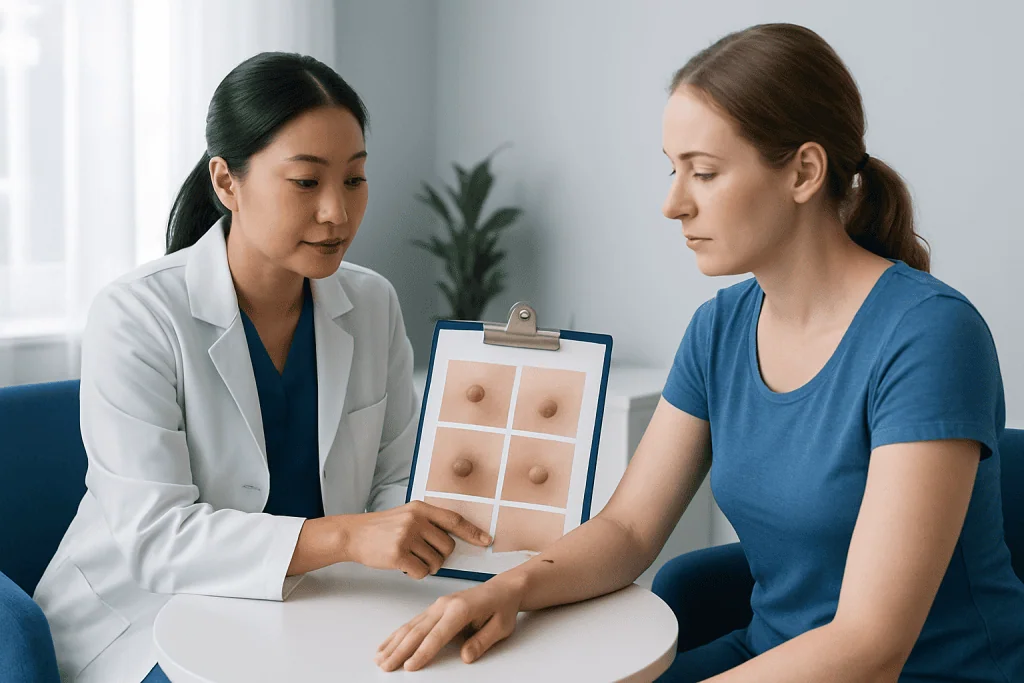
The healing pattern depends a great deal on how the wart is being treated. Salicylic acid gradually softens and removes layers of infected skin, so the wart may turn white after soaking or treatment, then peel over days or weeks. This process is usually slow and requires patience, because healthy skin should be protected while only the wart tissue is removed.
Cryotherapy, which freezes the wart, can cause a different appearance. After treatment, the area may become red, swollen, or blistered for a short time. Then the wart often darkens, dries, and scabs before separating. This is one reason why stages of a wart falling off pictures after cryotherapy can look more dramatic than pictures of untreated warts.
Other options include prescription treatments, immunotherapy, electrocautery, laser treatment, or minor surgical removal, depending on the type and location of the wart. For persistent or painful lesions, a specialist may recommend dermatology evaluation to confirm the diagnosis and discuss the most appropriate approach. Some patients with thick or resistant lesions may also need laser treatment or another office-based procedure.
Normal healing versus signs of irritation or infection
It is common for a healing wart to look dry, dark, scaly, or slightly irritated. Mild tenderness can happen, especially on the feet or after treatment. A small amount of pinpoint bleeding may also occur if superficial dead skin is removed, but the area should gradually settle rather than worsen.
Signs that suggest irritation from treatment include burning, excessive peeling of normal skin, or soreness that feels out of proportion to the wart itself. This can happen when salicylic acid is used too aggressively or when the surrounding skin is not protected. In these cases, treatment usually needs adjustment rather than simply continuing through the discomfort.
Possible infection is different. Increasing warmth, spreading redness, pus, throbbing pain, bad odor, or fever are not typical parts of the wart falling off process. These changes deserve medical assessment, especially in people with diabetes, poor circulation, nerve problems, or weakened immunity.
Common causes, risk factors, and look-alike conditions
Warts form when HPV enters the skin through tiny breaks. They are more common in children, teenagers, people who bite their nails, and anyone whose skin is frequently exposed to moisture or friction. Shared locker rooms, pools, and direct skin contact can increase exposure, although not every exposure leads to a wart.
Some locations are especially easy to recognize. Common warts often appear on fingers and hands, while plantar warts affect the soles of the feet and may grow inward because of pressure. Flat warts are smaller and smoother, and periungual warts occur around the nails. If the lesion is on the sole and painful with pressure, it may be a plantar wart rather than a callus.
Not every rough bump is a wart. Corns and calluses are caused by friction, while seborrheic keratoses, skin tags, molluscum contagiosum, and some pigmented lesions may mimic warts. A lesion that changes color rapidly, has irregular borders, ulcerates, or keeps returning despite treatment may need review to rule out another condition, including skin cancer or another skin disorder.
Diagnosis and what doctors look for
Doctors usually diagnose warts by examining the skin. They look at the lesion’s shape, surface texture, location, and whether normal skin lines are interrupted. In plantar warts, tiny black dots may become visible after the top layer is trimmed, helping distinguish the wart from a callus.
If the diagnosis is uncertain, the clinician may use dermoscopy, a magnified skin examination tool, or occasionally take a small biopsy. This is especially important when a growth is unusual, persistent, pigmented, or found in an older adult. The goal is to make sure the lesion is truly a wart before more treatment is given.
Repeated self-treatment can sometimes change a lesion’s appearance and make diagnosis harder. If a bump has not improved after several weeks of careful home treatment, specialist review is sensible. In some cases, a general skin assessment through a medical check-up can help identify underlying factors such as skin irritation, immune issues, or pressure-related changes.
Self-care, prevention, and when to seek medical care
Safe self-care focuses on patience and protecting the surrounding skin. People should avoid cutting, digging, or tearing a wart off, even if it looks loose. Keeping the area clean and dry, washing hands after touching the wart, and not sharing nail tools, razors, socks, or shoes can reduce spread. Footwear in communal wet areas may also lower the chance of new plantar warts.
During treatment, it helps to follow product instructions carefully and stop if the skin becomes very irritated. Covering the wart may reduce friction and discourage picking, but overly tight dressings can aggravate the skin. If a wart appears to have fallen off, the area should still be observed for a few weeks because small residual wart tissue can remain.
Medical care is recommended if the diagnosis is unclear, the wart is on the face or genitals, the lesion is very painful, or home treatment is not working. A doctor should also assess rapid growth, frequent bleeding, signs of infection, or any lesion in a person with diabetes, poor circulation, or a weakened immune system. Near the end of the care pathway, some patients benefit from consultation with multidisciplinary specialists; Acibadem International’s JCI-accredited hospitals care for international patients who need diagnosis and treatment for skin conditions, including difficult warts.
Frequently asked questions
What does a wart look like when it is dying?
A wart that is resolving often becomes drier, flatter, and darker than before. It may also develop tiny black dots, crust, or peel as the dead tissue separates and healthier skin forms underneath.
Is it normal for a wart to turn black before it falls off?
Yes, darkening can happen during normal healing, especially after freezing treatment. The black color may come from dried tissue or tiny clotted blood vessels, but if the lesion is rapidly changing or does not look like a typical wart, it should be checked by a doctor.
How long does it take for a wart to fall off after treatment?
There is no single timeline. Some treated warts begin changing within days, while others take several weeks or need repeated treatment sessions before they noticeably shrink or separate.
Should a person pull off a wart that looks loose?
No. Pulling or picking at a wart can injure the surrounding skin, cause bleeding, and increase the risk of infection or spread. It is safer to let dead tissue come away gradually or have a clinician remove it if needed.
How can someone tell if a plantar wart is gone?
A plantar wart is more likely to be gone when the thickened core has disappeared, pain improves, and normal skin lines return across the area. If the spot still interrupts the skin pattern or remains tender with direct pressure, wart tissue may still be present.
When should someone worry that it is not a wart?
Medical review is important if the lesion grows quickly, has unusual color variation, bleeds often, ulcerates, or does not improve with standard wart treatment. Any uncertain skin growth, especially in older adults or on sun-exposed skin, deserves professional evaluation.
This article is for general information only and is not a substitute for professional medical advice. Please consult a qualified doctor about your individual situation.
Explore treatments in Turkey — costs, top hospitals & a free quote
JCI-accredited · board-certified surgeons · reply within 24h
Add us as a Preferred Source to see more of our trusted health content across Google Search, AI Overviews and Discover.

More from the Health Library

Magnesium for Anxiety — Explained by Medical Evidence, Not Myths

At Home Blood Type Test: What Patients Need to Know

Bucket Handle Meniscus Tear: An Evidence-Based Guide for Patients

Spider Bite: What Patients Need to Know

Crepitus: An Evidence-Based Guide for Patients