Stemi: A Complete Medical Overview

STEMI stands for ST-elevation myocardial infarction, a medical emergency caused by complete blockage of a heart artery. Common symptoms include chest pressure, shortness of breath, sweating, nausea, and pain spreading to the arm, back, neck, or jaw.
Key Takeaways
- STEMI stands for ST-elevation myocardial infarction, a medical emergency caused by complete blockage of a heart artery.
- Common symptoms include chest pressure, shortness of breath, sweating, nausea, and pain spreading to the arm, back, neck, or jaw.
- An electrocardiogram and blood tests help confirm the diagnosis quickly.
- Treatment focuses on reopening the blocked artery as fast as possible, often with emergency coronary intervention.
- Controlling blood pressure, cholesterol, diabetes, smoking, and lifestyle habits can lower future heart risk.
STEMI is a serious type of heart attack in which a coronary artery becomes suddenly and completely blocked, cutting off blood flow to part of the heart muscle. Fast diagnosis and emergency treatment are essential because restoring blood flow quickly can limit heart damage and improve recovery.
Overview: what STEMI means
STEMI is a type of heart attack. The term stands for ST-elevation myocardial infarction, which describes a pattern seen on an electrocardiogram (ECG) when part of the heart muscle is suddenly deprived of blood and oxygen. In most cases, this happens because a coronary artery becomes completely blocked by a blood clot forming on top of a ruptured cholesterol plaque.
Compared with some other forms of heart attack, STEMI usually reflects a more abrupt and extensive loss of blood flow. That is why it is treated as an emergency. The main goal is to reopen the blocked artery as quickly as possible so the heart muscle can be saved and complications can be reduced.
People often hear the word “heart attack” used broadly, but not all heart attacks are exactly the same. STEMI is different from some non-ST-elevation heart attacks because the artery blockage is often complete, making rapid action especially important. A person with possible STEMI should seek emergency medical care right away rather than waiting to see if symptoms improve.
Symptoms and warning signs
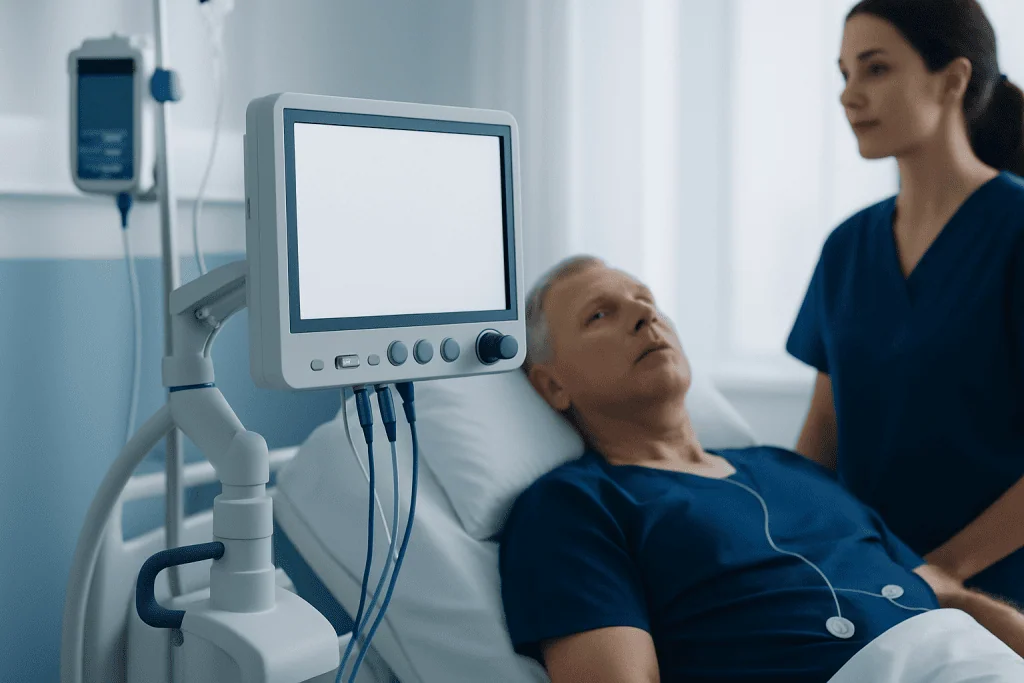
The most common symptom of STEMI is chest discomfort that may feel like pressure, heaviness, squeezing, tightness, or pain. This discomfort often lasts more than a few minutes or comes and goes. It may spread to the left or both arms, the shoulders, the back, the neck, or the jaw.
Other common symptoms include shortness of breath, sweating, nausea, vomiting, lightheadedness, unusual fatigue, or a sense that something is seriously wrong. Some people describe a burning sensation that can be mistaken for indigestion. Symptoms can begin during activity or at rest.
Not everyone experiences the “classic” pattern. Older adults, women, and people with diabetes may have less typical symptoms, such as sudden weakness, breathlessness, fatigue, or discomfort in the upper abdomen, back, or jaw without obvious chest pain. Because symptoms can vary, unexplained sudden chest discomfort or breathing difficulty should always be taken seriously.
- Chest pressure, pain, or tightness
- Pain spreading to the arm, jaw, neck, shoulder, or back
- Shortness of breath
- Cold sweat
- Nausea or vomiting
- Dizziness, faintness, or sudden weakness
What causes STEMI and who is at risk

STEMI most often develops when a fatty plaque inside a coronary artery becomes unstable and ruptures. The body responds by forming a blood clot at that site. If the clot fully blocks the artery, blood can no longer reach part of the heart muscle, and a STEMI occurs.
The underlying process is usually coronary artery disease, which develops over time as cholesterol-rich plaque builds up in the arteries. Many risk factors increase the chance of plaque formation or clotting, including smoking, high blood pressure, high LDL cholesterol, diabetes, obesity, physical inactivity, chronic stress, kidney disease, and a family history of early heart disease.
Age also matters, and risk tends to rise in men earlier in life and in women after menopause. Previous heart disease, prior heart attack, or conditions affecting circulation can increase risk as well. People living with coronary artery disease may already have narrowed arteries, which makes sudden blockage more likely if a plaque becomes unstable.
Less commonly, STEMI can occur from other causes, such as a coronary artery spasm, a tear in the artery wall, or an embolus traveling to a coronary artery. A doctor evaluates the likely cause based on the patient’s symptoms, medical history, tests, and imaging findings.
How STEMI is diagnosed
Doctors diagnose STEMI by combining symptoms, a rapid physical assessment, and urgent tests. The first key test is an ECG, which records the heart’s electrical activity. Certain changes on the ECG, especially ST-segment elevation in specific leads, can strongly suggest an acute complete blockage of a coronary artery.
Blood tests are also used, especially cardiac troponin levels. Troponin is a protein released when heart muscle is injured. It may not be elevated immediately at the very start of symptoms, so doctors often repeat testing if needed. Blood pressure, oxygen level, pulse, and signs of heart failure or shock are checked at the same time.
Additional tests may include echocardiography to assess heart muscle movement and pumping function, chest imaging if another diagnosis is possible, and coronary angiography to identify the blocked artery directly. Coronary angiography is especially important because it can confirm the blockage and guide treatment in the same procedure through coronary angiography.
Because every minute counts, diagnosis usually proceeds quickly and in parallel with treatment planning. Clinicians also consider other conditions that may mimic a heart attack, but a possible STEMI is treated urgently until proven otherwise.
Emergency treatment and hospital care
The central treatment goal in STEMI is to restore blood flow to the heart muscle as fast as possible. In many hospitals, the preferred approach is emergency percutaneous coronary intervention, often called primary PCI. During this procedure, a specialist passes a thin catheter into the heart arteries, opens the blockage, and may place a stent to keep the artery open. This is commonly performed as coronary angioplasty and stent placement.
If immediate PCI is not available within an appropriate time frame, clot-dissolving medicine may be considered in selected patients, followed by transfer for further cardiac care when needed. Along with reopening the artery, treatment usually includes medicines such as antiplatelet agents, anticoagulants, pain relief when appropriate, and medicines to support heart function and reduce strain on the heart.
In the hospital, the care team watches for complications such as heart rhythm problems, reduced pumping ability, low blood pressure, recurrent chest pain, or heart failure. Some people may need additional procedures, especially if there are several blocked arteries or if the anatomy is complex. In selected situations, surgical revascularization such as coronary artery bypass grafting may be recommended.
After the emergency phase, treatment shifts toward recovery and long-term protection. Doctors usually prescribe medicines to lower future risk, such as cholesterol-lowering therapy and drugs that reduce the heart’s workload. Cardiac rehabilitation, gradual return to activity, and careful follow-up are important parts of recovery.
Recovery, prevention, and self-care after STEMI
Recovery after STEMI depends on how quickly treatment was given, how much heart muscle was affected, and whether complications occurred. Many people can return to daily activities over time, but recovery is safest when guided by a cardiology team. Follow-up visits help monitor symptoms, heart function, blood pressure, cholesterol, and medication tolerance.
Prevention after STEMI focuses on reducing the chance of another event. Stopping smoking is one of the most powerful steps. Other important measures include keeping blood pressure, cholesterol, and diabetes under control; reaching and maintaining a healthy weight; exercising as advised by a doctor; and following a heart-healthy eating pattern rich in vegetables, fruits, whole grains, legumes, and healthy fats.
Medicines should be taken exactly as prescribed, especially antiplatelet drugs after stent placement, because stopping them too early can be dangerous. Patients should also ask about safe timing for driving, work, sexual activity, and travel. For many people, supervised rehabilitation and specialist follow-up in cardiology care can improve confidence and support long-term heart health.
Managing stress, getting enough sleep, and limiting alcohol can also support recovery. Self-care should never replace medical review if new chest symptoms develop. Any return of chest pressure, breathlessness, fainting, or sudden weakness needs prompt medical attention.
When to seek medical care
Possible STEMI symptoms should be treated as an emergency. A person should call emergency services right away for chest pressure or pain lasting more than a few minutes, chest discomfort that comes with shortness of breath or sweating, or pain spreading to the jaw, back, or arm. It is safer to seek immediate help than to try to drive alone or wait for symptoms to pass.
Urgent medical care is also needed for sudden fainting, severe breathlessness, confusion, bluish lips, or signs of collapse. People with known heart disease, diabetes, or previous heart attack should be especially careful not to ignore new symptoms, even if they seem mild or unusual.
After treatment, medical advice should be sought promptly if there is recurrent chest discomfort, palpitations, swelling, worsening shortness of breath, or trouble taking prescribed medicines. In complex cases, multidisciplinary specialists at Acibadem International and its JCI-accredited hospitals evaluate and treat international patients with acute and long-term cardiac conditions.
Frequently asked questions
What does STEMI stand for?
STEMI stands for ST-elevation myocardial infarction. It is a serious type of heart attack usually caused by a complete blockage in a coronary artery.
Is STEMI more serious than other heart attacks?
STEMI is generally considered a medical emergency because it often means blood flow has been fully blocked to part of the heart muscle. Quick treatment is especially important to reduce permanent heart damage.
Can STEMI happen without severe chest pain?
Yes. Some people, especially women, older adults, and people with diabetes, may have less typical symptoms such as shortness of breath, nausea, sudden fatigue, back pain, or jaw discomfort.
How is STEMI treated?
Treatment focuses on reopening the blocked artery as quickly as possible. This is often done with emergency angioplasty and stent placement, along with medications that reduce clotting and support the heart.
What is the difference between STEMI and a regular heart attack?
STEMI is one specific type of heart attack identified by characteristic ECG changes and usually a complete coronary artery blockage. The term “heart attack” is broader and can include other forms, such as NSTEMI, that may involve partial blockage.
Can a person recover well after STEMI?
Many people do recover well, especially when treatment is given quickly and follow-up care is consistent. Recovery often includes medications, risk-factor control, lifestyle changes, and cardiac rehabilitation.
References
- American Heart Association
- National Heart, Lung, and Blood Institute
- European Society of Cardiology
- Centers for Disease Control and Prevention
- World Health Organization
This article is for general information only and is not a substitute for professional medical advice. Please consult a qualified doctor about your individual situation.
Heart care in Turkey — expert evaluation and treatment
JCI-accredited · board-certified surgeons · reply within 24h
Add us as a Preferred Source to see more of our trusted health content across Google Search, AI Overviews and Discover.
Check your numbers in seconds
BMI, calories, due date, blood pressure and 30+ more clinical calculators — free, instant, doctor-reviewed ranges.