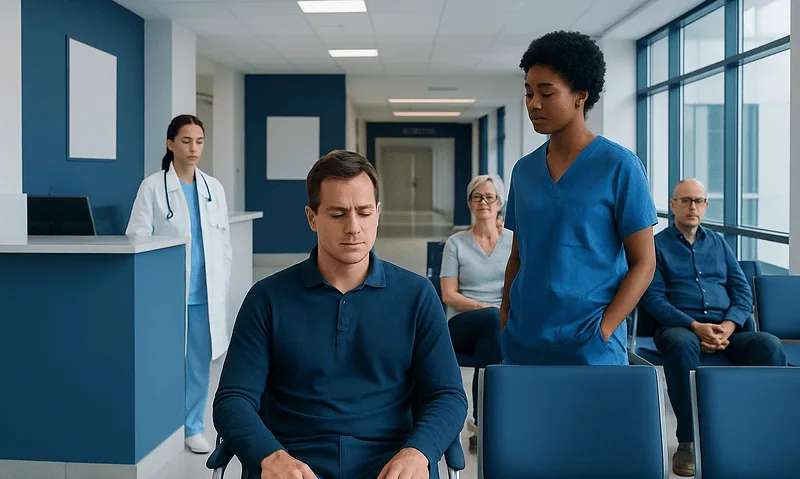
Stress Test: An Evidence-Based Guide for Patients

A stress test evaluates the heart during exertion or medication-induced stress. It may be used to assess chest pain, shortness of breath, palpitations, or exercise tolerance.
Key Takeaways
- A stress test evaluates the heart during exertion or medication-induced stress.
- It may be used to assess chest pain, shortness of breath, palpitations, or exercise tolerance.
- Several types exist, including exercise ECG tests, stress echocardiograms, and nuclear stress tests.
- Preparation often includes guidance about food, caffeine, medicines, and clothing.
- Results are interpreted alongside symptoms, medical history, and other heart tests.
A stress test is a common heart evaluation that shows how the heart responds when it works harder, usually during exercise or with medication that mimics exercise. It can help doctors investigate symptoms, assess heart function, and guide next steps in care.
What a Stress Test Is and Why It Is Done
A stress test is a medical test that checks how the heart performs when it has to work harder. In many cases, this means walking on a treadmill or pedaling a stationary bicycle while heart rate, blood pressure, and heart rhythm are monitored. If a person cannot exercise adequately, medication may be used to make the heart respond in a similar way.
The main goal is to look for signs that the heart muscle may not be getting enough blood flow during exertion, or that exercise triggers abnormal rhythms or symptoms. A stress test does not diagnose every heart problem by itself, but it is a useful tool when interpreted together with a person’s symptoms, physical examination, and other findings.
Doctors may recommend a stress test for chest discomfort, shortness of breath with activity, unexplained fatigue, palpitations, dizziness during exertion, or to assess exercise capacity. It may also be used after certain heart diagnoses or procedures to help guide treatment and follow-up. Depending on the clinical situation, the test may be part of the evaluation of coronary artery disease or other heart conditions.
Types of Stress Tests
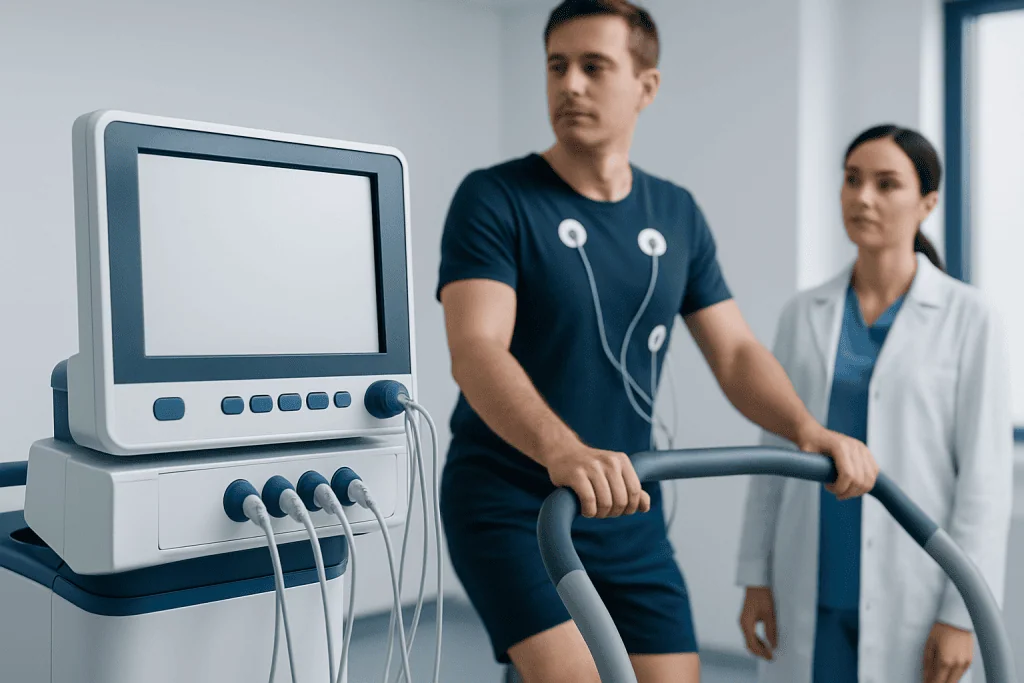
There is more than one kind of stress test, and the best choice depends on the person’s symptoms, exercise ability, medical history, and what the doctor needs to learn. The simplest form is the exercise electrocardiogram, often called an exercise stress test or treadmill test. It records the heart’s electrical activity during exercise and can show rhythm changes or signs that suggest reduced blood flow.
A stress echocardiogram combines exercise or medication stress with ultrasound images of the heart. These images let doctors see how the heart muscle and valves move before and after stress. It can provide more detail than an ECG-only test and may be useful when there are questions about pumping function or whether part of the heart is not contracting normally during exertion.
A nuclear stress test uses a small amount of radioactive tracer to create images of blood flow to the heart muscle at rest and during stress. This can help show whether some areas receive less blood during exertion. In selected cases, doctors may also use advanced imaging or combine stress testing with other cardiac evaluations, such as cardiac MRI or echocardiography, when a broader picture of heart structure and function is needed.
Who May Need a Stress Test

A stress test is not a routine screening test for everyone. It is usually ordered when there is a specific question to answer, such as whether symptoms could be related to the heart or whether known heart disease is affecting exercise tolerance. The test is most helpful when used in the right clinical context.
People who may be considered for stress testing include those with exertional chest pressure, unusual shortness of breath, exercise-related dizziness, unexplained decline in stamina, or a pattern of symptoms that raises concern for heart disease. It may also be useful in some people with diabetes, prior heart problems, or several cardiovascular risk factors when symptoms are present.
Doctors may also request a stress test to help evaluate the effect of treatment, assess recovery after a cardiac event, or estimate safe exercise levels. In some situations, the test is used as part of a broader workup that may later include coronary angiography if there is concern about significant narrowing in the heart’s arteries.
How to Prepare and What Happens During the Test
Preparation instructions vary depending on the type of stress test. A person may be asked not to eat for a few hours beforehand, avoid caffeine for a set period, or temporarily hold certain medicines if a doctor advises it. It is important not to stop any prescribed medication unless the healthcare team has specifically recommended doing so.
Comfortable clothing and walking shoes are usually recommended for an exercise-based test. Before the test begins, staff place small adhesive electrodes on the chest to monitor the heart rhythm. Blood pressure is checked, and the person is asked about symptoms before and during the exam.
During an exercise stress test, the treadmill or bicycle becomes gradually more challenging in stages. The aim is usually to raise the heart rate in a controlled way while the team watches for symptoms, ECG changes, blood pressure response, and exercise tolerance. If medication stress is used instead of exercise, the medicine is given under close supervision, and imaging may be performed at specific times depending on the test type.
The test is stopped if the target has been reached, if enough information has been gathered, or if symptoms or monitoring changes suggest it should end sooner. Most people recover quickly, though some may feel briefly tired, flushed, or short of breath after the exertion or medication.
Understanding Stress Test Results
Stress test results are not simply “normal” or “abnormal.” Instead, they are interpreted in the context of the person’s age, symptoms, risk factors, baseline ECG, medications, and the specific type of test performed. A normal result may suggest that significant exercise-related reduction in blood flow is less likely, but it does not always rule out all heart disease.
An abnormal result can mean different things. It may suggest reduced blood flow to part of the heart muscle, an exercise-triggered rhythm problem, poor exercise capacity, or an unusual blood pressure response. Sometimes the result is inconclusive, especially if the person could not exercise long enough, had a baseline ECG that was difficult to interpret, or if symptoms and test findings did not clearly match.
Because of these limits, doctors may recommend additional evaluation rather than drawing conclusions from one test alone. Depending on the findings, next steps might include risk-factor management, medication adjustment, repeat testing with imaging, or further studies to look more closely at the heart. If there is concern about related conditions such as arrhythmia, the doctor may suggest rhythm-focused monitoring or treatment.
Risks, Limitations, and What the Test Can and Cannot Show
A stress test is generally safe when performed in an appropriate medical setting with trained staff and proper screening beforehand. Serious complications are uncommon, but because the test intentionally increases the heart’s workload, there is a small risk of chest pain, fainting, rhythm disturbances, blood pressure changes, or, very rarely, more serious cardiac events. The healthcare team monitors closely throughout the procedure.
Like any test, a stress test has limits. It may miss some forms of heart disease, especially if blockages are mild, symptoms are caused by a different condition, or the person could not reach an adequate level of stress. False-positive results can also occur, meaning the test suggests a problem that later turns out not to be significant.
The test also does not explain every cause of chest discomfort or breathlessness. Lung conditions, anemia, anxiety, deconditioning, and valve disease are just a few examples of issues that may cause similar symptoms. That is why stress testing is only one part of a careful medical assessment rather than a stand-alone answer for every patient.
After the Test, Self-Care, and When to Seek Medical Care
Most people can return to normal activities soon after a stress test unless their doctor gives different instructions. Hydration, rest if needed, and noting any delayed symptoms can be sensible steps after the appointment. If sedation was used for another associated procedure or if medicines were adjusted, the care team will provide specific advice.
The most helpful self-care after a stress test usually depends on the result. Some people are advised to focus on blood pressure control, cholesterol management, smoking cessation, diabetes care, weight management, and regular physical activity. Others may need more testing or treatment before changing their exercise routine. A clinician can explain what level of activity is safe and appropriate.
Medical attention should be sought promptly if chest pain is new, severe, or persistent, or if there is fainting, marked shortness of breath, severe palpitations, or symptoms that feel significantly worse than usual. Even if a recent stress test was normal, urgent symptoms still deserve assessment because no single test rules out every heart problem.
For people who need further evaluation, centers with multidisciplinary cardiology services can coordinate testing and treatment. Acibadem International’s specialists and JCI-accredited hospitals diagnose and treat heart conditions for international patients, including more advanced assessment when stress test findings need clarification.
Frequently asked questions
How long does a stress test take?
The exact time depends on the test type. A standard exercise ECG often takes less than an hour from preparation through recovery, while imaging-based tests such as nuclear stress tests may take longer because images are taken at different stages.
Can a person eat or drink before a stress test?
Instructions vary by test and by the medicines a person takes. Some people may need to avoid food for a few hours, and many are asked to avoid caffeine before certain stress tests, especially nuclear or medication-based studies.
Is a stress test painful?
The test itself is usually not painful, though exercise may feel tiring and some people notice shortness of breath or temporary chest discomfort if those symptoms are part of what the test is evaluating. Adhesive electrodes and blood pressure cuffs can be mildly uncomfortable but are generally well tolerated.
What is the difference between an exercise stress test and a nuclear stress test?
An exercise stress test mainly looks at heart rhythm, heart rate, blood pressure, and symptoms during exercise using ECG monitoring. A nuclear stress test also creates images that show blood flow to the heart muscle, which can provide more detailed information in some situations.
Can a normal stress test rule out heart disease?
A normal result can be reassuring, but it does not rule out every heart problem. Some conditions may not appear during the test, and mild or early disease can sometimes be missed, so results must be considered along with symptoms and overall risk.
Who should not have a stress test?
Some people may need the test delayed or replaced with a different evaluation, especially if they have certain unstable symptoms or acute medical problems. A doctor decides whether the test is appropriate after reviewing symptoms, medical history, and safety considerations.
References
- American Heart Association
- American College of Cardiology
- National Heart, Lung, and Blood Institute
- Mayo Clinic
- European Society of Cardiology
This article is for general information only and is not a substitute for professional medical advice. Please consult a qualified doctor about your individual situation.
Heart care in Turkey — expert evaluation and treatment
JCI-accredited · board-certified surgeons · reply within 24h
Add us as a Preferred Source to see more of our trusted health content across Google Search, AI Overviews and Discover.
Check your numbers in seconds
BMI, calories, due date, blood pressure and 30+ more clinical calculators — free, instant, doctor-reviewed ranges.