Stye vs Pink Eye: Key Differences and How Doctors Tell Them Apart

A stye is usually a localized, tender lump at the eyelid edge, often caused by a blocked or infected oil gland. Pink eye usually causes diffuse redness of the white part of the eye, irritation, and discharge rather than a single eyelid bump.
Key Takeaways
- A stye is usually a localized, tender lump at the eyelid edge, often caused by a blocked or infected oil gland.
- Pink eye usually causes diffuse redness of the white part of the eye, irritation, and discharge rather than a single eyelid bump.
- Doctors tell them apart through an eye exam that checks the eyelid, conjunctiva, discharge, pain pattern, and vision.
- Warm compresses often help a stye, while pink eye care depends on whether the cause is viral, bacterial, allergic, or irritant-related.
- Urgent medical review is needed for severe pain, light sensitivity, vision changes, marked swelling, or symptoms that do not improve.
Stye vs pink eye can usually be told apart by where the problem starts: a stye forms as a painful bump on the eyelid, while pink eye mainly affects the surface of the eye and causes widespread redness. Doctors look at the pattern of redness, the location of swelling, the type of discharge, and any effect on vision to distinguish them and guide treatment.
Stye vs Pink Eye at a Glance
When comparing stye vs pink eye, the fastest way to tell the difference is to look at where the problem is. A stye usually begins in the eyelid as a painful, tender bump near the lash line or just inside the lid. Pink eye, also called conjunctivitis, mainly affects the clear membrane covering the white of the eye and inner eyelid, causing more general redness and irritation.
Although both can make the eye look red and uncomfortable, they are not the same condition. A stye tends to feel like a sore spot or pimple on the lid, while pink eye more often causes burning, grittiness, watering, or discharge across the eye surface. A clinician can usually tell them apart with a careful history and a simple eye examination.
The side-by-side comparison below highlights the main differences patients notice:
- Main location: Stye = eyelid; Pink eye = eye surface/conjunctiva
- Typical appearance: Stye = small red lump; Pink eye = diffuse red or pink eye
- Pain pattern: Stye = tender to touch; Pink eye = irritation, burning, or itching more than a focal bump
- Discharge: Stye = sometimes minor crusting; Pink eye = watery, mucous, or pus-like discharge may be more noticeable
- Contagious? Stye = usually not spread easily person to person; Pink eye = viral and bacterial forms can spread
- Common first step: Stye = warm compress; Pink eye = hygiene and treatment based on cause
What Is a Stye and What Is Pink Eye?
A stye, also called a hordeolum, is a small inflamed lump that develops from an eyelash follicle or oil gland in the eyelid. It may form along the outer lid margin or deeper inside the lid. The area often becomes swollen, sore, and warm, and some people notice tenderness when blinking or touching the eyelid.
Pink eye, or conjunctivitis, is inflammation of the conjunctiva, the thin tissue covering the white part of the eye and lining the inside of the eyelids. It can be caused by viruses, bacteria, allergies, or irritation from smoke, chemicals, or foreign material. Depending on the cause, it may affect one or both eyes and can spread easily in some settings such as schools, households, or workplaces.
Because these conditions involve different parts of the eye, they behave differently. A stye is more like a localized eyelid gland problem, while pink eye is an eye-surface inflammation. In some cases, another eyelid condition such as a chalazion may resemble a stye, especially if the lump is less painful and lasts longer.
Symptoms That Help Distinguish Them

The hallmark symptom of a stye is a painful eyelid bump. The bump may look like a small pimple near the eyelashes or cause a broader area of lid swelling if it sits deeper in the eyelid. The eye itself may water, but the redness is often most obvious on the lid rather than spread evenly across the white of the eye.
Pink eye usually causes redness across the eye surface rather than one concentrated spot. People may describe gritty discomfort, burning, itching, tearing, crusting on the lashes, or discharge that makes the eyelids stick together, especially after sleep. Viral conjunctivitis often causes watery discharge, bacterial conjunctivitis may cause thicker discharge, and allergic conjunctivitis commonly brings intense itching.
Vision is typically normal in both mild stye and uncomplicated pink eye, though blur can occur briefly from tears or discharge. If there is constant blurred vision, significant light sensitivity, severe pain, or an inability to open the eye, clinicians consider other eye problems that need prompt review, such as corneal inflammation or deeper infection. Some symptoms can also overlap with glaucoma or other urgent eye conditions, which is why worsening pain or visual changes should never be ignored.
How Doctors Tell Them Apart
Doctors usually begin by asking how the problem started and whether it affects one eye or both. They ask about pain, itching, discharge, recent colds, allergies, contact lens use, eye makeup, eyelid hygiene, and whether anyone nearby has similar symptoms. This history often gives strong clues before the eye is even examined.
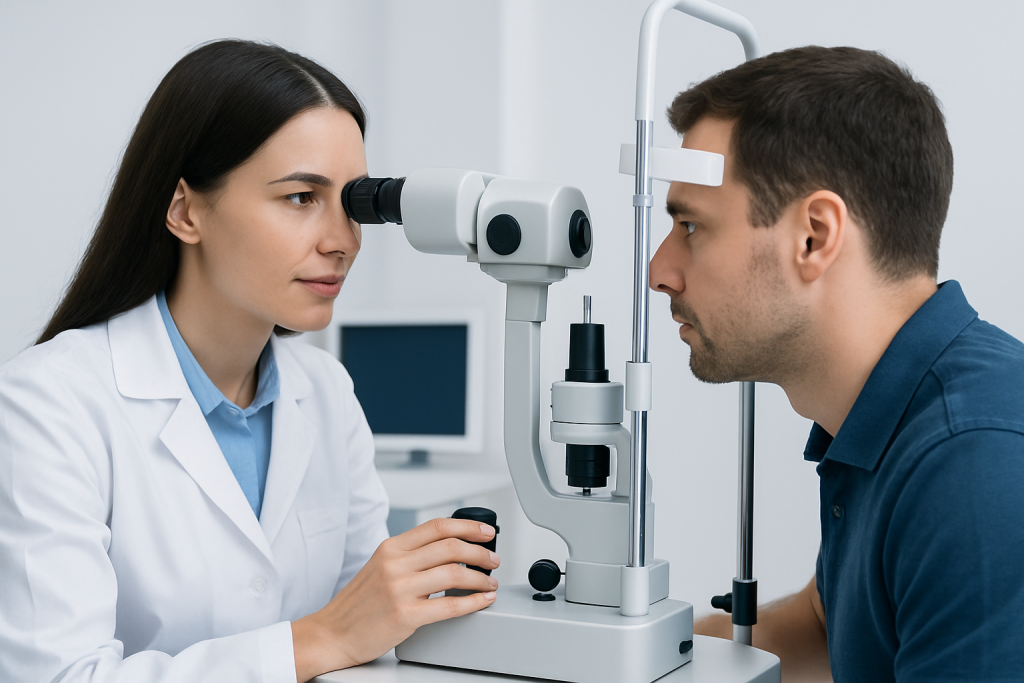
During the exam, the clinician looks closely at the eyelid margin, lashes, and the white part of the eye. A stye typically appears as a focal swelling or pustule-like bump near an oil gland or eyelash root, while pink eye shows more diffuse inflammation of the conjunctiva. The doctor also checks whether there is crusting, the type of discharge present, and whether the eyelid can be gently everted to look for an internal lesion.
Vision testing is an important safety step, even if the problem seems minor. If symptoms are unusual, persistent, or severe, an ophthalmologist may use a slit-lamp examination to assess the cornea and front of the eye in more detail. This can help rule out conditions that need different care, and in selected cases the doctor may recommend further eye examination by a specialist.
Causes and Risk Factors
A stye usually develops when an oil gland or eyelash follicle becomes blocked and inflamed, sometimes with bacterial involvement. Risk factors include blepharitis, touching the eyes with unclean hands, old eye makeup, rubbing the eyelids, and skin conditions that affect the eyelid margin. People who have recurrent lid inflammation may be more prone to repeated styes.
Pink eye has several causes. Viral conjunctivitis is common and often appears with cold-like symptoms. Bacterial conjunctivitis may produce thicker discharge. Allergic conjunctivitis is linked to pollen, dust, pet dander, or other triggers, and irritant conjunctivitis can happen after smoke, chlorine, cosmetics, or chemical exposure.
Contact lens wear raises the importance of proper evaluation because lens-related irritation and infection can mimic conjunctivitis but may be more serious. Poor hand hygiene can increase spread of infectious pink eye, while chronic eyelid gland dysfunction can make a stye more likely. If symptoms keep returning, doctors may also assess for eyelid conditions, dry eye, or inflammation that benefits from ophthalmology care.
What to Do for Each Condition
For a stye, the usual first step is a warm compress placed gently over the closed eyelid for several minutes at a time, several times a day. The warmth can help the blocked material drain naturally and ease tenderness. It is best not to squeeze or pop the bump, because this can worsen irritation and spread infection.
Pink eye care depends on the cause. Viral pink eye often improves with supportive care such as cool compresses, lubricating drops, and careful hand hygiene. Allergic pink eye may improve by avoiding triggers and using clinician-recommended anti-allergy treatments. Bacterial pink eye may require prescription eye medication if a doctor feels it is appropriate.
With either condition, patients should avoid sharing towels, pillowcases, eye drops, or makeup. Contact lenses should not be worn until the eye is fully comfortable and a clinician says it is safe. If a stye becomes large, persists, or repeatedly returns, doctors may recommend additional treatment and, in selected cases, a minor procedure related to chalazion surgery if the lump evolves into a longer-lasting gland blockage.
Self-care should stay gentle. The eyelid can be cleaned carefully if crusting is present, but strong scrubbing, over-the-counter redness relievers used repeatedly, or leftover antibiotic drops should be avoided unless a qualified clinician has advised them.
When to Seek Medical Care
Medical care is important if the diagnosis is unclear, symptoms are moderate to severe, or home care does not help. A prompt assessment is especially important for infants, people with weakened immune systems, those who have had recent eye surgery, and anyone who wears contact lenses and develops a painful red eye.
People should seek urgent care if they have any of the following:
- Significant eye pain rather than mild irritation
- Blurred or reduced vision that does not clear with blinking
- Strong sensitivity to light
- Marked eyelid swelling, fever, or redness spreading into the skin around the eye
- Difficulty moving the eye or pain with eye movement
- Symptoms after chemical exposure or an eye injury
If a presumed stye does not improve, keeps coming back, or turns into a firm painless lump, a doctor can check whether it is actually a chalazion or another eyelid problem. If pink eye lasts longer than expected, keeps recurring, or involves the cornea, specialist review may be advised. Near the end of the care pathway, Acibadem International’s multidisciplinary specialists and JCI-accredited hospitals evaluate and treat eye conditions for international patients when further assessment is needed.
Prevention and Everyday Eye Care
Many cases of stye and pink eye can be reduced with simple habits. Regular handwashing, avoiding touching or rubbing the eyes, and removing makeup before sleep are sensible daily measures. Eye cosmetics should be replaced regularly and not shared with others.
For people prone to styes, gentle eyelid hygiene may help, especially if they have blepharitis or oily lid margins. Clinicians sometimes suggest warm compresses and careful lid cleansing as part of a routine. Contact lenses should always be handled, cleaned, and replaced exactly as directed, and they should never be worn during active eye irritation.
To lower the risk of infectious pink eye spreading, people should avoid sharing towels, pillowcases, and eye products, and should stay mindful of hygiene during colds or respiratory infections. Allergy control, such as reducing exposure to known triggers, may help those with recurrent itchy red eyes. Even when symptoms seem straightforward, a qualified doctor is the best source of advice if there is uncertainty about the cause.
Frequently asked questions
Can a stye cause the whole eye to look red?
Yes, a stye can sometimes cause mild redness or watering because the eyelid is inflamed and irritated. However, the main problem is usually a tender bump on the eyelid. If the white part of the eye is diffusely red, pink eye or another eye condition may be more likely.
Is pink eye always contagious?
No. Viral and bacterial pink eye can spread to others, but allergic and irritant conjunctivitis are not contagious. Because it can be hard to tell the cause without an exam, good hand hygiene and avoiding shared eye items are sensible precautions.
Should a stye be treated with antibiotic eye drops?
Not always. Many styes improve with warm compresses and time, especially if they are small and uncomplicated. A doctor may prescribe medication if there are signs of bacterial infection, surrounding skin involvement, or persistent symptoms.
How long do stye and pink eye usually last?
A stye often starts improving within several days with warm compresses, though a residual lump can last longer. Pink eye varies by cause: viral forms may take days to a couple of weeks, allergic symptoms can come and go with exposure, and bacterial cases may improve sooner with appropriate treatment.
Can contact lenses make it harder to tell stye vs pink eye apart?
Yes. Contact lenses can cause irritation, dryness, or infection that may mimic conjunctivitis and sometimes lead to more serious corneal problems. Anyone with a red eye while wearing contact lenses should stop lens use and seek professional advice, especially if there is pain or vision change.
Is it safe to wear eye makeup with a stye or pink eye?
It is best to avoid eye makeup until the eye has fully recovered. Makeup can worsen irritation, delay healing, and contribute to spread or re-exposure. Products used during the infection or inflammation may need to be replaced if a clinician advises it.
References
- American Academy of Ophthalmology
- National Eye Institute
- Centers for Disease Control and Prevention
- Mayo Clinic
- Merck Manual Consumer Version
This article is for general information only and is not a substitute for professional medical advice. Please consult a qualified doctor about your individual situation.
Explore treatments in Turkey — costs, top hospitals & a free quote
JCI-accredited · board-certified surgeons · reply within 24h
Add us as a Preferred Source to see more of our trusted health content across Google Search, AI Overviews and Discover.