Surgery Cataract Removal: Candidacy, Procedure Steps, and Recovery Timeline
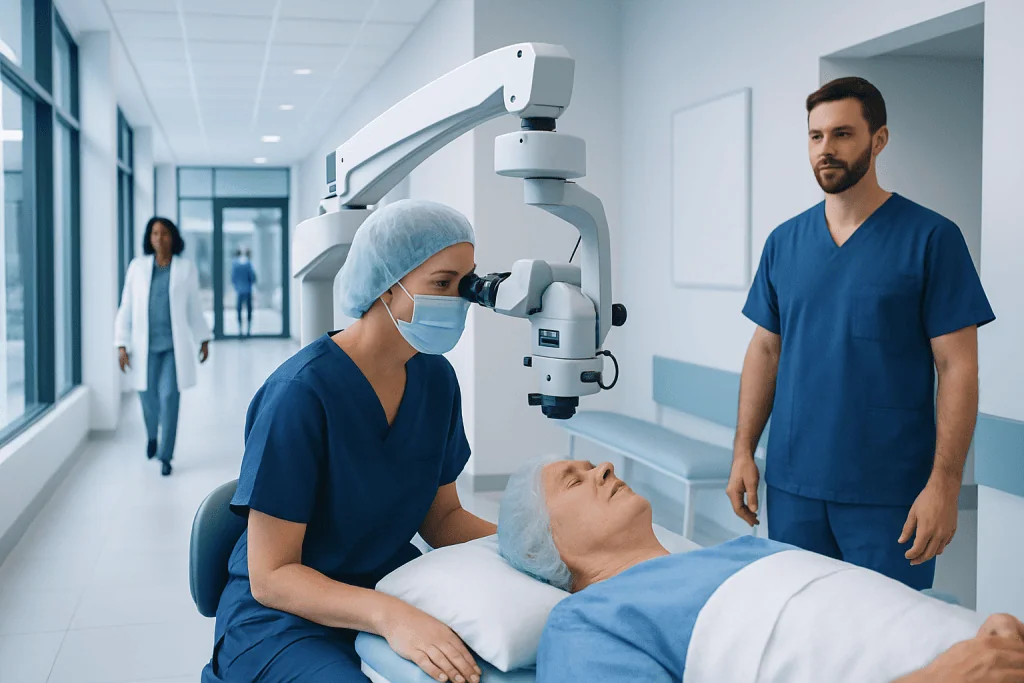
Surgery cataract removal treats vision loss caused by a cloudy natural lens. A person may be a candidate when cataracts affect daily tasks or limit safe vision.
Key Takeaways
- Surgery cataract removal treats vision loss caused by a cloudy natural lens.
- A person may be a candidate when cataracts affect daily tasks or limit safe vision.
- The procedure is usually done one eye at a time with local anesthesia and a short recovery period.
- Most people notice improved vision after surgery, but full healing can take several weeks.
- Regular follow-up and careful use of prescribed eye drops help support healing and reduce complications.
Surgery cataract removal is a common procedure that removes the eye’s cloudy natural lens and replaces it with a clear artificial lens. It is usually recommended when cataracts begin to interfere with reading, driving, work, or other daily activities, and recovery is often gradual over days to weeks.
Overview: What surgery cataract removal involves
Surgery cataract removal is the standard treatment for a cataract, a condition in which the eye’s natural lens becomes cloudy and scatters light instead of focusing it clearly. In this procedure, the cloudy lens is removed and replaced with a clear artificial intraocular lens, often called an IOL. The aim is to improve vision quality, reduce glare, and help a person return to everyday activities more comfortably.
Many people live with early cataracts for some time before surgery is needed. Glasses, brighter lighting, and updated prescriptions may help for a while, but these measures cannot remove the cataract itself. Once the clouding becomes more noticeable and starts affecting reading, driving, work, or independence, surgery may be the most effective option.
Cataract surgery is usually performed as a planned outpatient procedure, meaning the person goes home the same day. It is typically done on one eye at a time so the first eye can heal before the second is treated if needed. For people seeking more background on the condition itself, cataracts are explained on the cataract page.
Who may be a candidate for cataract surgery
The decision about candidacy is based less on the size of the cataract and more on how much it affects daily life. A person may be considered for surgery if vision changes make it difficult to read, drive at night, recognize faces, use digital screens, or manage tasks safely. Some people also seek treatment because glare, halos around lights, or fading of colors has become bothersome.
Doctors also consider whether the cataract is limiting the evaluation or treatment of another eye condition. For example, if the cloudy lens makes it hard for the ophthalmologist to examine the retina or manage another eye disease, surgery may be helpful even if the person feels they can still cope. This is why an eye examination is an important part of treatment planning.
Not everyone needs immediate surgery after a cataract is diagnosed. If symptoms are mild and daily function remains good, monitoring may be appropriate. A detailed eye assessment helps determine whether surgery cataract removal is likely to offer meaningful benefit and whether there are any other eye conditions that may affect the expected result.
Symptoms, causes, and risk factors

Cataracts usually develop slowly. Common symptoms include blurred or cloudy vision, increased sensitivity to light, glare from headlights, trouble seeing at night, double vision in one eye, and colors that seem faded or yellowed. Some people notice they need frequent changes in their glasses prescription or feel that their glasses no longer provide enough clarity.
The most common cause is aging, because the proteins in the natural lens gradually change over time. However, cataracts can also be linked to diabetes, previous eye injury, certain medicines such as long-term steroid use, smoking, significant ultraviolet light exposure, or prior eye surgery. In some cases, cataracts are present from birth or develop earlier due to inherited factors.
Risk factors do not automatically mean surgery will be needed soon, but they can increase the chance of earlier or faster lens clouding. A full eye examination helps confirm whether cataracts are responsible for the symptoms or whether another eye condition is involved. Conditions such as glaucoma or retinal disease can sometimes coexist and also affect vision, so diagnosis should be individualized.
How doctors diagnose cataracts and plan treatment
Diagnosis begins with a medical history and a comprehensive eye examination by an ophthalmologist or other qualified eye specialist. The doctor asks about visual symptoms, daily challenges, general health conditions, and medicines. Vision testing measures how clearly a person sees at different distances, while a slit-lamp examination allows the doctor to look closely at the front structures of the eye and the lens.
The pupils are often dilated so the specialist can examine the lens and the back of the eye more thoroughly. This helps confirm the presence and location of a cataract and can identify additional conditions that may influence treatment, such as macular disease or optic nerve problems. Eye pressure may also be checked as part of a complete assessment.
If surgery is being considered, extra measurements are taken to choose the most suitable artificial lens implant. These calculations help estimate the lens power needed after the cloudy natural lens is removed. The doctor also reviews the likely benefits, the expected visual outcome, and whether standard or more customized lens options are appropriate. People exploring procedural details can also read about cataract surgery.
Step by step: how surgery cataract removal is performed
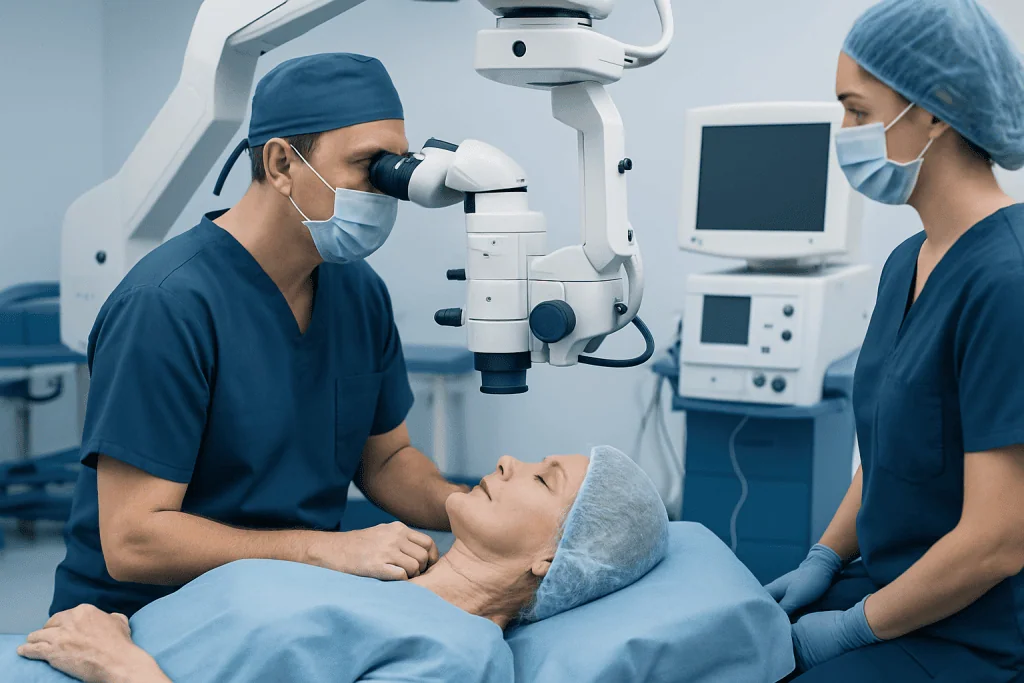
Before the procedure, the eye is prepared with drops to dilate the pupil and numb the surface. In most cases, local anesthesia is used along with mild sedation if needed, so the person remains comfortable but does not usually need general anesthesia. The surgical area is cleaned carefully, and the operation is performed using specialized microscopes and fine instruments.
The surgeon makes a very small incision in the eye and opens the thin outer capsule that surrounds the lens. The cloudy lens is then broken into tiny pieces, most commonly with ultrasound energy in a technique called phacoemulsification, and removed through the small opening. Once the cataract has been taken out, a folded artificial intraocular lens is inserted and positioned inside the remaining capsule.
Because the incision is small, stitches are often not needed. The procedure itself is usually relatively short, but preparation and recovery time at the surgical center add to the overall visit. The person is monitored briefly afterward and typically goes home the same day with a protective shield over the eye and instructions about eye drops, activity limits, and follow-up appointments.
In some situations, cataract surgery may be combined with other eye care planning if there are additional conditions affecting vision. For example, evaluation of the back of the eye may be important when cataracts coexist with retinal detachment history or other retinal concerns, although treatment plans differ from person to person.
Benefits, possible risks, and expected results
The main benefit of surgery cataract removal is clearer vision. Many people report better sharpness, improved contrast, brighter color perception, and less glare, especially in daylight or when driving. For those whose cataracts have significantly limited independence, surgery can improve the ability to read, move around safely, and take part in normal routines.
Like any operation, cataract surgery carries some risks, although serious complications are uncommon when it is performed by experienced eye surgeons. Possible problems include infection, inflammation, bleeding, swelling in the cornea or retina, increased eye pressure, dislocation of the lens implant, or retinal complications. Some people may still need glasses for certain tasks after surgery depending on the type of lens used and the eye’s overall health.
Expected results vary according to more than the cataract alone. Other eye conditions, such as age-related macular changes, glaucoma, or diabetic eye disease, can affect how much vision improves. A doctor discusses these factors before surgery so expectations are realistic and tailored to the individual. If a person also has a refractive issue being assessed, broader vision correction options such as laser eye surgery may be discussed separately when appropriate, but they do not replace cataract removal for a cloudy lens.
Recovery timeline and self-care after surgery
Recovery after cataract surgery is usually gradual rather than instant. Many people notice some improvement within a few days, although vision may be blurry at first while the eye adjusts and heals. Mild irritation, a scratchy feeling, watering, and sensitivity to light can occur early on, but these symptoms often ease as recovery progresses.
Eye drops are commonly prescribed to help prevent infection and control inflammation. It is important to use them exactly as directed and to avoid rubbing the eye. Patients are often advised to wear an eye shield while sleeping for a short period and to be careful with activities that could expose the eye to dust, dirty water, or accidental pressure. Heavy lifting and strenuous activity may need to be limited for a time, based on the surgeon’s instructions.
A typical timeline includes a follow-up visit soon after surgery, then additional checks over the following weeks. Reading, walking, light household tasks, and screen use may often resume fairly quickly if comfort allows, but driving should wait until the doctor confirms that vision is safe. Many eyes are substantially healed within several weeks, although full stabilization of vision can take longer in some cases. If further assessment of the eye’s internal structures is needed, specialized care such as retina treatment may be part of the follow-up plan for selected patients.
- Use all prescribed drops on schedule.
- Keep follow-up appointments even if the eye feels well.
- Avoid rubbing or pressing on the eye.
- Ask the doctor when it is safe to return to driving, exercise, and swimming.
When to seek medical care
A person should arrange an eye examination if vision becomes increasingly cloudy, glare makes driving difficult, or everyday tasks are becoming harder because of poor sight. Early assessment helps confirm whether symptoms are due to cataracts or another eye problem and allows treatment to be planned at the right time.
After surgery, urgent medical review is important if there is severe or worsening eye pain, sudden vision loss, rapidly increasing redness, many new floaters, flashing lights, or significant discharge. These symptoms do not always mean a serious complication, but they should be checked promptly by a qualified doctor.
For international patients who need coordinated eye care, Acibadem International’s multidisciplinary specialists and JCI-accredited hospitals diagnose and treat cataracts and related eye conditions. A consultation can help clarify whether surgery is appropriate, what kind of lens may be suitable, and how recovery will be monitored.
Frequently asked questions
How do people know when it is time for surgery cataract removal?
It is often time to consider surgery when cataracts begin to interfere with daily life rather than simply when they are seen on an eye exam. Trouble reading, driving, working, or seeing safely in low light are common reasons to discuss surgery with an eye specialist.
Is cataract surgery painful?
Cataract surgery is usually not painful because the eye is numbed with anesthetic drops or other local anesthesia. A person may feel pressure or movement during the procedure, but significant pain is not expected. Any discomfort after surgery is usually mild and should improve over the next few days.
How long does cataract surgery take?
The procedure itself is often relatively short, though the full visit takes longer because of preparation and recovery time at the surgical center. Most people go home the same day. The surgeon provides a more specific estimate based on the eye and the treatment plan.
How long is recovery after cataract surgery?
Many people notice visual improvement within a few days, but the eye continues healing over several weeks. Mild blurring, light sensitivity, or irritation can happen early in recovery. Follow-up visits help the doctor confirm that healing is progressing normally.
Will glasses still be needed after surgery cataract removal?
Some people still need glasses after surgery, especially for reading or certain detailed tasks. This depends on the type of artificial lens used, the eye’s natural focusing needs, and whether other vision problems are present. The ophthalmologist explains what outcome is realistic before surgery.
What are the risks of cataract surgery?
Cataract surgery is generally considered safe, but all surgery has potential risks. These can include infection, inflammation, swelling, increased eye pressure, or retinal complications. Prompt follow-up and careful use of prescribed medications help reduce the chance of problems.
References
- American Academy of Ophthalmology
- National Eye Institute
- Centers for Disease Control and Prevention
- National Health Service
- World Health Organization
This article is for general information only and is not a substitute for professional medical advice. Please consult a qualified doctor about your individual situation.
Explore treatments in Turkey — costs, top hospitals & a free quote
JCI-accredited · board-certified surgeons · reply within 24h
Add us as a Preferred Source to see more of our trusted health content across Google Search, AI Overviews and Discover.