

Synovial Fluid: An Evidence-Based Guide for Patients

Synovial fluid reduces friction, cushions joints, and supports cartilage health. Too much joint fluid, blood in the fluid, crystals, or infection can all cause pain and swelling.
Key Takeaways
- Synovial fluid reduces friction, cushions joints, and supports cartilage health.
- Too much joint fluid, blood in the fluid, crystals, or infection can all cause pain and swelling.
- Synovial fluid analysis can help doctors distinguish osteoarthritis, gout, inflammatory arthritis, and joint infection.
- Joint aspiration, also called arthrocentesis, is a common procedure used to remove and test synovial fluid.
- Prompt medical assessment is important for a hot, swollen, very painful joint or fever with joint symptoms.
Synovial fluid is the slippery liquid inside movable joints that helps bones glide smoothly, nourishes cartilage, and absorbs shock. When its amount or composition changes, it can offer important clues about joint injury, inflammation, infection, or arthritis.
Overview: What synovial fluid is and why it matters
Synovial fluid is the clear to pale-yellow liquid found inside synovial joints, such as the knees, hips, shoulders, elbows, wrists, and ankles. It acts as the body’s natural joint lubricant, helping surfaces move against each other with very little friction. In healthy joints, only a small amount is present, but that small amount plays a major role in comfort and mobility.
This fluid is produced by the synovial membrane, the thin lining around many movable joints. It contains water, proteins, lubricating molecules such as hyaluronic acid, and nutrients that help support cartilage. Because cartilage has no direct blood supply, synovial fluid helps deliver nourishment and remove waste from the joint surface.
For patients, synovial fluid becomes most relevant when a joint is painful, swollen, stiff, or warm. Changes in the volume, color, thickness, or contents of the fluid may point to several different problems, including wear-and-tear arthritis, inflammatory conditions, crystal-related disease, bleeding into the joint, or infection. Looking at the fluid directly can therefore help doctors identify the cause of symptoms rather than relying on symptoms alone.
How synovial fluid supports joint health
Synovial fluid has three main jobs: lubrication, shock absorption, and cartilage support. During movement, it forms a thin protective layer that reduces friction between cartilage-covered bone ends. This helps joints move more freely and can limit daily wear on the articular surfaces.
It also helps distribute pressure within the joint. During walking, climbing stairs, lifting, or sports, the fluid helps absorb and spread mechanical forces. This shock-absorbing role is especially important in weight-bearing joints such as the knees and hips.
A third key function is joint nutrition. Cartilage depends on substances moving in and out of synovial fluid during motion. Gentle, regular movement therefore supports joint health, while long periods of immobility can contribute to stiffness. When disease affects the synovial membrane or changes the fluid’s makeup, the joint may become less well lubricated, more inflamed, and more painful.
Although people often think of “too little fluid” as the main problem, both too little effective lubrication and too much abnormal fluid can be harmful. Extra fluid inside a joint often causes visible swelling and pressure, while inflammatory changes can make the fluid thinner, cloudier, or filled with inflammatory cells and crystals.
What can go wrong with synovial fluid

Synovial fluid can change in amount or composition for many reasons. One common change is joint effusion, which means excess fluid in the joint. This can happen after an injury, with overuse, or as part of arthritis. Patients often notice swelling, a sense of pressure, difficulty bending the joint, or pain with movement.
Inflammatory conditions may alter the fluid more dramatically. In diseases such as rheumatoid arthritis or other inflammatory joint disorders, synovial fluid may contain more white blood cells and inflammatory proteins. In crystal-related conditions such as gout or pseudogout, microscopic crystals form in the fluid and trigger sudden attacks of pain, redness, and swelling. These conditions may resemble each other, which is why fluid analysis can be so helpful. Related conditions such as gout may need targeted treatment once the cause is confirmed.
Bleeding into the joint can also change synovial fluid. This may happen after trauma, in some clotting disorders, or less commonly after medical procedures. The fluid may appear blood-tinged or frankly bloody. Infections are another important cause. When bacteria reach the joint, the fluid may become cloudy or pus-like, and the joint may become severely painful, warm, and swollen. A joint infection is a medical concern because it can damage cartilage quickly if not treated promptly.
Degenerative joint disease can affect synovial fluid as well. In osteoarthritis, the joint lining may produce extra fluid in response to cartilage wear and irritation. The fluid may not be as inflammatory as in autoimmune arthritis, but swelling and stiffness can still occur, especially after activity.
Symptoms that may suggest a synovial fluid problem
Patients do not usually feel synovial fluid itself, but they may notice the effects of abnormal fluid in a joint. Common symptoms include swelling, stiffness, aching, reduced range of motion, a feeling of fullness, and discomfort when walking or using the affected limb. Larger joints, especially the knee, often show swelling more clearly than smaller joints.
The pattern of symptoms can offer clues. Sudden swelling and intense pain that develops over hours may suggest crystal arthritis, injury, or infection. More gradual swelling and stiffness over months may be more consistent with degenerative or chronic inflammatory conditions. Morning stiffness, warmth, and multiple painful joints can suggest inflammatory arthritis, while swelling after twisting or direct trauma may point to ligament, cartilage, or meniscus injury.
Some warning signs deserve faster evaluation. These include a hot red joint, fever, inability to bear weight, severe pain at rest, or swelling after significant injury. A painful swollen calf, numbness, or major deformity also needs medical attention because another urgent problem may be present.
- Swelling that limits bending or straightening
- Joint warmth or redness
- Sudden severe pain
- Locking, catching, or instability after injury
- Fever with joint symptoms
- Repeated swelling in the same joint
How doctors evaluate and test synovial fluid
Evaluation usually begins with a medical history and physical examination. A doctor asks about the onset of symptoms, injuries, fever, prior arthritis, medication use, and whether one or several joints are involved. The joint is examined for swelling, warmth, tenderness, range of motion, and signs of instability or surrounding soft-tissue injury.
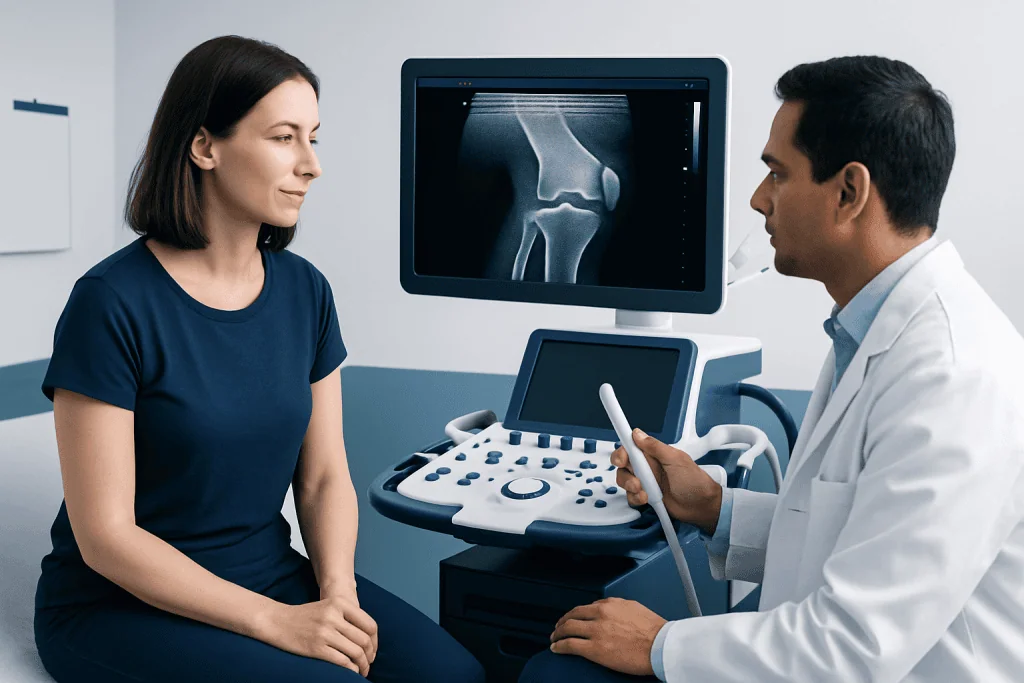
If fluid is suspected, imaging may be used to assess the joint and guide next steps. Ultrasound can help identify fluid collections and can be used to guide needle placement. X-rays may show arthritis, fractures, or calcium deposits, while MRI may be useful if there is concern about cartilage, ligament, or meniscus damage. These tests complement, but do not replace, direct fluid analysis when infection or crystals are possible.
Synovial fluid analysis is performed after joint aspiration, also called arthrocentesis. In this procedure, a clinician cleans the skin and inserts a sterile needle into the joint to remove fluid. The sample may be sent for cell count, crystal examination under polarized microscopy, Gram stain, bacterial culture, and sometimes glucose or protein testing. The appearance of the fluid itself can also be informative: clear, cloudy, bloody, or thick fluid can each suggest different causes.
Arthrocentesis can be both diagnostic and therapeutic. Removing excess fluid may reduce pressure and improve comfort, particularly in a swollen knee. In some cases, the same visit may include arthroscopy planning or other orthopedic assessment if there is concern about structural damage inside the joint, though aspiration alone is often enough to guide initial care.
Treatment options based on the cause
There is no single treatment for an abnormal synovial fluid finding because treatment depends on why the fluid changed. If swelling follows minor injury or overuse, doctors may recommend rest, temporary activity modification, ice, elevation, and appropriate pain relief. Physical therapy may be useful to restore mobility, strengthen supporting muscles, and reduce the chance of recurrent irritation.
When inflammation is the main problem, treatment may include medications that reduce pain and swelling or condition-specific medicines for inflammatory arthritis. If crystals are found, treatment focuses on relieving the acute attack and reducing future episodes when appropriate. If blood is present after trauma, the care plan may include evaluation for ligament, cartilage, or meniscus injury and sometimes procedures such as knee replacement or other orthopedic interventions only when clearly indicated for advanced joint disease rather than for fluid changes alone.
If synovial fluid suggests bacterial infection, prompt treatment is essential. This often includes antibiotics and drainage of the joint, sometimes repeated needle aspiration and sometimes surgical washout depending on the joint and severity. In selected patients with severe damage or advanced arthritis, options such as hip replacement or other reconstructive procedures may be discussed after infection or inflammation has been fully assessed and treated.
The best treatment plan is individualized. Doctors consider age, activity level, the specific joint involved, whether the problem is acute or chronic, and any underlying disease. Near the end of the evaluation pathway, multidisciplinary specialists at Acibadem International and its JCI-accredited hospitals diagnose and treat joint conditions for international patients when advanced assessment or coordinated care is needed.
Self-care, prevention, and protecting joint function
Not all joint problems can be prevented, but many people can lower stress on their joints with practical daily habits. Maintaining a healthy body weight can reduce pressure on weight-bearing joints. Regular low-impact activity, such as walking, cycling, swimming, or guided strengthening exercises, helps preserve range of motion and supports the muscles that stabilize joints.
Warm-up and technique matter during exercise or sports. Gradual increases in activity, appropriate footwear, and protective equipment may reduce injury risk. Repetitive motions at work or in sport should be balanced with rest and proper mechanics. People with known arthritis often benefit from pacing activities rather than pushing through major swelling or pain.
At home, short-term measures for mild swelling may include rest, ice, and avoiding activities that worsen symptoms until the joint is assessed. However, persistent or recurrent swelling should not be self-treated indefinitely. Repeated effusions may indicate a problem that needs diagnosis, such as crystal disease, cartilage injury, or inflammatory arthritis. Following a clinician’s plan for medication, exercise, and follow-up can help protect long-term joint function.
When to seek medical care
Medical care is advisable if a joint becomes swollen without a clear reason, if symptoms keep returning, or if pain and stiffness limit normal daily activities. A doctor should also assess swelling that follows an injury, especially if there is instability, a popping sensation, or inability to move the joint normally.
Urgent evaluation is important for a hot, red, very painful joint; fever with joint swelling; sudden severe pain; inability to bear weight; or rapid swelling after surgery or a recent procedure. These symptoms can be caused by infection, significant bleeding, or serious internal joint injury and should not be ignored.
Even when symptoms are not urgent, early assessment can be helpful. Identifying the reason for abnormal synovial fluid may prevent repeated attacks, reduce joint damage, and support more effective long-term treatment. Patients who are unsure whether they need immediate care should contact a qualified healthcare professional for advice.
Frequently asked questions
What is synovial fluid in simple terms?
Synovial fluid is the natural lubricating liquid inside many movable joints. It helps joints move smoothly, cushions impact, and supports the health of cartilage.
Can synovial fluid build up in a joint?
Yes. Extra synovial fluid can collect in a joint and cause swelling, pressure, stiffness, and pain. This may happen because of injury, arthritis, crystal disease, or infection.
What does synovial fluid analysis show?
A synovial fluid analysis can show whether a joint problem is more likely due to inflammation, infection, bleeding, or crystals such as those seen in gout or pseudogout. It may also help rule out some causes and guide treatment decisions.
Is joint aspiration painful?
Joint aspiration is usually a brief procedure, and many patients tolerate it well. There may be temporary discomfort from the needle, but cleaning the area carefully and using appropriate technique can help reduce this.
Can synovial fluid problems go away on their own?
Some mild, short-lived swelling after overuse or a minor injury may improve with rest and time. However, persistent, severe, or recurrent symptoms should be evaluated because the underlying cause may need treatment.
What color is normal synovial fluid?
Normal synovial fluid is typically clear to pale yellow and somewhat slippery or viscous. If it becomes cloudy, bloody, or unusually thin, that may suggest inflammation, infection, crystals, or bleeding.
This article is for general information only and is not a substitute for professional medical advice. Please consult a qualified doctor about your individual situation.
Joint and spine care in Turkey — expert assessment & treatment
JCI-accredited · board-certified surgeons · reply within 24h
Add us as a Preferred Source to see more of our trusted health content across Google Search, AI Overviews and Discover.

More from the Health Library

Eye Strain: What Patients Need to Know

Panorex: An Evidence-Based Guide for Patients

Eye Bags: What Patients Need to Know

Vastus Lateralis: A Complete Medical Overview

Trypsin Role in Digestion: What Patients Need to Know

Walking After Eating: An Evidence-Based Guide for Patients
Infectious Diseases & Clinical Microbiology Specialists at Acibadem

Dr. Meltem Hüner
Infectious Diseases & Clinical Microbiology
Dr. Nevin Sarıgüzel
Infectious Diseases & Clinical Microbiology
Dr. Rehile Zengin
Infectious Diseases & Clinical Microbiology
Dr. Sedef Başgönül
Infectious Diseases & Clinical Microbiology