Temporal Lobe — Explained by Medical Evidence, Not Myths

The temporal lobe plays a central role in hearing, language understanding, memory, and emotional processing. Symptoms related to the temporal lobe vary widely and can include seizures, memory loss, speech difficulties, mood changes, or unusual smells and sensations.
Key Takeaways
- The temporal lobe plays a central role in hearing, language understanding, memory, and emotional processing.
- Symptoms related to the temporal lobe vary widely and can include seizures, memory loss, speech difficulties, mood changes, or unusual smells and sensations.
- Temporal lobe problems are not a diagnosis by themselves; they are usually a sign of an underlying neurological or medical condition.
- Evaluation may include a neurological exam, MRI or CT imaging, and sometimes EEG testing to look for seizure activity.
- Treatment depends on the cause and may involve medication, rehabilitation, surgery, or urgent care for emergencies such as stroke.
The temporal lobe is a part of the brain that helps process sound, language, memory, and emotion. When it is affected by injury, seizures, stroke, infection, or other conditions, symptoms may include memory problems, speech changes, unusual sensations, or behavioral changes.
What the temporal lobe does
The temporal lobe is one of the major regions of the brain, located roughly behind the temples on each side of the head. It helps the brain interpret sound, understand spoken language, form and retrieve memories, and connect experiences with emotion. In simple terms, it supports how a person hears, remembers, recognizes, and makes sense of the world.
This area works in partnership with other parts of the brain rather than acting alone. For example, understanding speech involves the temporal lobe, but also attention, memory, and broader language networks. This is one reason why symptoms linked to the temporal lobe can look different from one person to another.
The temporal lobe also contains structures that are important for memory and emotional learning, including parts of the limbic system. Because of this, conditions affecting this area may influence mood, behavior, or a sense of familiarity in addition to hearing or language.
How the temporal lobe affects memory, language, hearing, and emotion
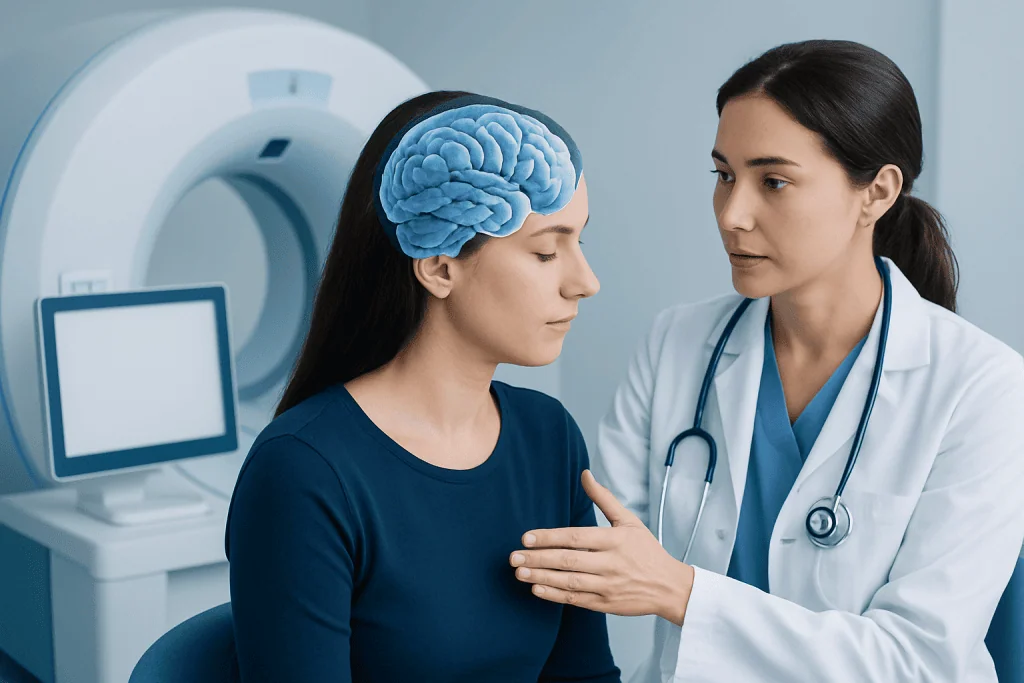
Different parts of the temporal lobe contribute to different functions. Areas near the upper portion help process sound. In the dominant hemisphere, usually the left side for language in many people, the temporal lobe is especially important for understanding words and spoken language.
Deeper temporal structures help create and organize memories. They support the ability to remember events, learn new information, and recognize people, places, and objects. If this system is disrupted, a person may have trouble storing new memories or may feel confused about familiar experiences.
The temporal lobe is also closely involved in emotion and social interpretation. It helps the brain attach meaning to what is heard or seen and may influence fear, calm, familiarity, and emotional reactions. This helps explain why some temporal lobe conditions can cause mood changes, anxiety, déjà vu, or unusual emotional experiences.
- Hearing and sound interpretation
- Understanding spoken language
- Memory formation and recall
- Recognition of faces, objects, and places
- Emotional processing and behavior
Symptoms linked to the temporal lobe

Temporal lobe symptoms depend on the exact area involved and the underlying cause. Some people notice subtle memory lapses or difficulty finding meaning in spoken words. Others may have more obvious symptoms such as seizures, confusion, personality changes, or trouble recognizing familiar voices or faces.
One well-known pattern is temporal lobe seizures. These may begin with a warning sensation, sometimes called an aura, such as a sudden strange smell, a rising feeling in the stomach, intense fear, or a strong sense of déjà vu. A seizure may then cause staring, lip smacking, repetitive movements, impaired awareness, or confusion afterward. Epilepsy is one of the conditions doctors consider when these symptoms occur repeatedly.
Symptoms can also appear after head injury, stroke, infection, brain inflammation, or growths affecting the temporal region. In those cases, people may experience sudden memory problems, language difficulty, hearing-related changes, altered behavior, or persistent headaches. Because these signs overlap with many neurological disorders, proper medical evaluation is important.
- Memory difficulties or forgetfulness
- Trouble understanding speech or finding meaning in words
- Seizures or unusual sensory experiences
- Mood, behavior, or personality changes
- Déjà vu, fear, confusion, or altered awareness
- Difficulty recognizing familiar sounds, voices, or faces
Common causes and related conditions
The term temporal lobe does not describe a disease by itself. Instead, it refers to a brain region that may be affected by many conditions. Common causes include seizures, traumatic brain injury, stroke, brain tumors, infections such as encephalitis, reduced blood flow, and degenerative brain disorders that affect memory over time.
Temporal lobe epilepsy is one of the most common seizure patterns in adults. It often begins in deeper structures of the temporal lobe and may produce recurrent episodes of altered awareness, unusual sensations, or post-seizure fatigue. Other people may develop symptoms because of a structural change visible on brain imaging, such as scarring, inflammation, or a tumor. In selected cases, a doctor may discuss advanced evaluation and epilepsy surgery if seizures do not respond well to medication.
Sudden symptoms can point to a vascular problem such as stroke, especially if language difficulty, confusion, weakness, vision changes, or facial drooping appears quickly. Longer-term memory decline may be related to neurodegenerative disorders. The goal of assessment is to identify the true cause rather than assume all temporal lobe symptoms mean the same thing.
How doctors diagnose temporal lobe problems
Diagnosis starts with a detailed medical history and neurological examination. Doctors ask when symptoms began, whether they come and go, how long they last, and whether there are triggers such as sleep deprivation, infection, head injury, or recent illness. Family members may also provide helpful observations, especially if episodes involve confusion or loss of awareness.
Brain imaging is often a key part of the work-up. MRI can show structural problems in the temporal lobe more clearly than many other tests, while CT may be used in urgent situations such as head trauma or suspected bleeding. If seizures are possible, an electroencephalogram, or EEG, may help detect abnormal electrical activity. EEG (electroencephalography) is commonly used alongside imaging and clinical assessment.
Additional testing depends on the situation. Doctors may request blood tests, cognitive testing, hearing evaluation, infection studies, or specialist assessments. In some cases, advanced brain imaging or MRI helps define whether symptoms are related to inflammation, stroke, tumor, or another structural cause.
Treatment options and recovery
Treatment for a temporal lobe problem depends entirely on the underlying diagnosis. Seizure-related conditions are often treated with anti-seizure medicines. Infections may require urgent antimicrobial treatment, inflammatory disorders may need targeted therapy, and stroke requires emergency evaluation and time-sensitive care. When a structural lesion is present, treatment may involve monitoring, rehabilitation, or surgery.
Rehabilitation can be an important part of recovery. Speech and language therapy may help if understanding or communication has been affected. Occupational therapy, cognitive rehabilitation, and psychological support may also be useful for memory difficulties, emotional adjustment, or daily functioning after neurological illness or injury.
Some people need long-term follow-up, especially if symptoms are recurrent or linked to chronic neurological disease. For selected patients with brain lesions or difficult-to-control seizures, specialists may consider brain tumor surgery or other tailored interventions. Near the end of the care pathway, patients may benefit from multidisciplinary review; Acibadem International’s multidisciplinary specialists and JCI-accredited hospitals diagnose and treat temporal lobe-related conditions for international patients.
Self-care and when to seek medical care
Self-care should focus on supporting brain health while medical evaluation is arranged. Good sleep, regular meals, hydration, and avoiding alcohol or recreational drugs may help reduce symptom triggers in some people, especially if seizures are a concern. It is also wise to keep a record of episodes, including timing, symptoms, duration, and possible triggers, as this can help a doctor make an accurate diagnosis.
Urgent medical care is needed for sudden confusion, new speech difficulty, weakness, facial drooping, a first seizure, prolonged seizure activity, severe head injury, or symptoms that suggest stroke. Emergency assessment is also important if there is fever with confusion, worsening headache, or changes in consciousness, because these may signal infection or another serious neurological problem.
Non-urgent medical review is still important for repeated déjà vu episodes, memory decline, unusual smells without a source, unexplained blackouts, or persistent changes in mood, language, or behavior. Even subtle symptoms can provide important clues to an underlying condition, and early evaluation can help guide treatment and improve safety.
Frequently asked questions
What is the temporal lobe in simple terms?
The temporal lobe is a part of the brain on each side of the head near the temples. It helps with hearing, understanding language, making memories, and processing emotions.
Can temporal lobe problems cause anxiety or strange feelings?
Yes. Because the temporal lobe is involved in emotion and memory, some people experience fear, déjà vu, an odd rising sensation, or unusual smells. These symptoms can happen in seizures and in other neurological conditions, so they should be assessed by a doctor.
Is the temporal lobe related to memory loss?
Yes, especially deeper structures within the temporal region that help form and organize memory. When these areas are affected, a person may have trouble learning new information or recalling recent events.
What are signs of temporal lobe epilepsy?
Possible signs include staring spells, repetitive mouth or hand movements, altered awareness, confusion after episodes, and warning sensations such as déjà vu or a strange smell. Not everyone has the same pattern, so diagnosis usually requires medical history and testing such as EEG and brain imaging.
Can a temporal lobe problem be treated?
Often, yes, but the right treatment depends on the cause. Medicines, rehabilitation, monitoring, emergency stroke care, infection treatment, or surgery may all be appropriate in different situations.
When should someone seek urgent help for temporal lobe symptoms?
Urgent help is needed for sudden speech problems, weakness, facial drooping, a first seizure, prolonged seizure activity, severe confusion, or a sudden severe headache. These can signal stroke, infection, or another emergency that needs immediate care.
References
- National Institute of Neurological Disorders and Stroke
- National Institute on Deafness and Other Communication Disorders
- American Academy of Neurology
- Mayo Clinic
- Merck Manual Consumer Version
This article is for general information only and is not a substitute for professional medical advice. Please consult a qualified doctor about your individual situation.
Explore treatments in Turkey — costs, top hospitals & a free quote
JCI-accredited · board-certified surgeons · reply within 24h
Add us as a Preferred Source to see more of our trusted health content across Google Search, AI Overviews and Discover.