Thalassemia: Diagnosis, Outlook, and Modern Treatment Approaches
Thalassemia is a genetic condition that affects hemoglobin production and may range from mild to severe. Symptoms can include fatigue, pale skin, slow growth, jaundice, and bone changes, but some people have very mild disease.
Key Takeaways
- Thalassemia is a genetic condition that affects hemoglobin production and may range from mild to severe.
- Symptoms can include fatigue, pale skin, slow growth, jaundice, and bone changes, but some people have very mild disease.
- Diagnosis often involves blood tests, hemoglobin analysis, and sometimes genetic testing.
- Treatment depends on the type and severity and may include monitoring, transfusions, iron chelation, and specialist care.
- Early follow-up helps prevent complications affecting the heart, liver, bones, and endocrine system.
Thalassemia is an inherited blood disorder that reduces the body’s ability to make healthy hemoglobin, which can lead to anemia and other complications. Diagnosis usually relies on blood tests and genetic evaluation, and modern treatment approaches can help many people live longer, healthier lives.
Overview: what thalassemia means
Thalassemia is a group of inherited blood disorders in which the body makes less hemoglobin than normal. Hemoglobin is the protein inside red blood cells that carries oxygen. When hemoglobin production is reduced, red blood cells may become smaller, more fragile, and less effective at delivering oxygen throughout the body.
The condition is present from birth because it is caused by changes in genes passed from parents to children. Thalassemia is not contagious, and it is not caused by diet, lifestyle, or infection. Its effects can vary widely: some people have no symptoms or only mild anemia, while others need lifelong specialist care.
Doctors usually classify thalassemia by the affected globin chain: alpha thalassemia or beta thalassemia. Each type includes several forms, from carrier states to more severe disease. Understanding the specific type matters because it helps guide monitoring, treatment, family planning discussions, and expectations for long-term health.
Types, symptoms, and possible complications
Symptoms depend on how much hemoglobin production is affected. Mild forms may cause little or no noticeable problem and may only be found during routine blood tests. Moderate or severe forms can cause tiredness, weakness, shortness of breath with activity, pale skin, dizziness, and reduced exercise tolerance because the body is not getting enough oxygen.
In children, more significant thalassemia may lead to poor growth, feeding difficulties, irritability, or delayed development. Some people develop jaundice, dark urine, enlargement of the spleen, or changes in the bones of the face and skull due to increased bone marrow activity. Repeated anemia can place stress on the body over time.
Common forms include thalassemia trait or minor, intermedia, and major. In beta thalassemia major, symptoms often become clear in infancy. In alpha thalassemia, severity depends on how many gene copies are affected. Some patients may also be evaluated for related blood conditions such as anemia to understand the full picture.
If thalassemia is not recognized or properly monitored, complications can include iron overload, gallstones, bone thinning, heart strain, liver problems, hormone imbalances, and increased infection risk in certain settings. The outlook is often much better when complications are prevented early through regular specialist follow-up.
Causes and risk factors

Thalassemia is caused by inherited gene changes that affect the production of alpha or beta globin chains, which are essential parts of hemoglobin. A person may inherit one altered gene from one parent or altered genes from both parents. In general, disease tends to be more severe when both copies involved in hemoglobin production are significantly affected.
The main risk factor is family history. A person is more likely to have thalassemia or be a carrier if a parent, sibling, or close relative has the condition. Carrier status often causes no symptoms, so families may be unaware of it until a child is diagnosed or testing is performed before pregnancy.
Thalassemia is more common in people with ancestry from the Mediterranean region, the Middle East, South Asia, Southeast Asia, and parts of Africa. However, it can occur in any population. Because carrier states are common in some regions, screening before marriage or pregnancy may be recommended to help families understand reproductive risks.
It is important to know that iron deficiency and thalassemia can both cause small red blood cells, but they are not the same condition. Taking iron without medical advice is not recommended, because some people with thalassemia can develop excess iron even if they are anemic.
How thalassemia is diagnosed
Diagnosis usually begins with a medical history, family history, physical examination, and a complete blood count. Doctors often notice anemia with unusually small red blood cells, a pattern that can raise suspicion for thalassemia. Further testing is needed because these findings can overlap with iron deficiency and other disorders.
Additional blood tests may include iron studies, a peripheral blood smear, reticulocyte count, and hemoglobin analysis such as hemoglobin electrophoresis or high-performance liquid chromatography. These tests help identify abnormal hemoglobin patterns and can distinguish many forms of beta thalassemia. Genetic testing may be used to confirm the diagnosis, clarify difficult cases, or guide family planning.
Before or during pregnancy, carrier screening can identify parents who may pass thalassemia to their child. Prenatal testing may be discussed in selected situations. In newborns and young children, early diagnosis is especially important because severe forms may require treatment soon after symptoms begin.
Once the diagnosis is confirmed, doctors may assess the condition’s effects on the body with imaging, organ function tests, and heart or liver evaluation when needed. If enlarged organs, complications, or iron overload are suspected, more advanced assessment may be recommended through services such as diagnostic imaging.
Modern treatment approaches and long-term care
Treatment is tailored to the type of thalassemia and how severe it is. People with a carrier state or very mild disease may only need reassurance, periodic blood tests, and guidance to avoid unnecessary iron supplements unless true iron deficiency is confirmed. For many families, education about inheritance is an important part of care.
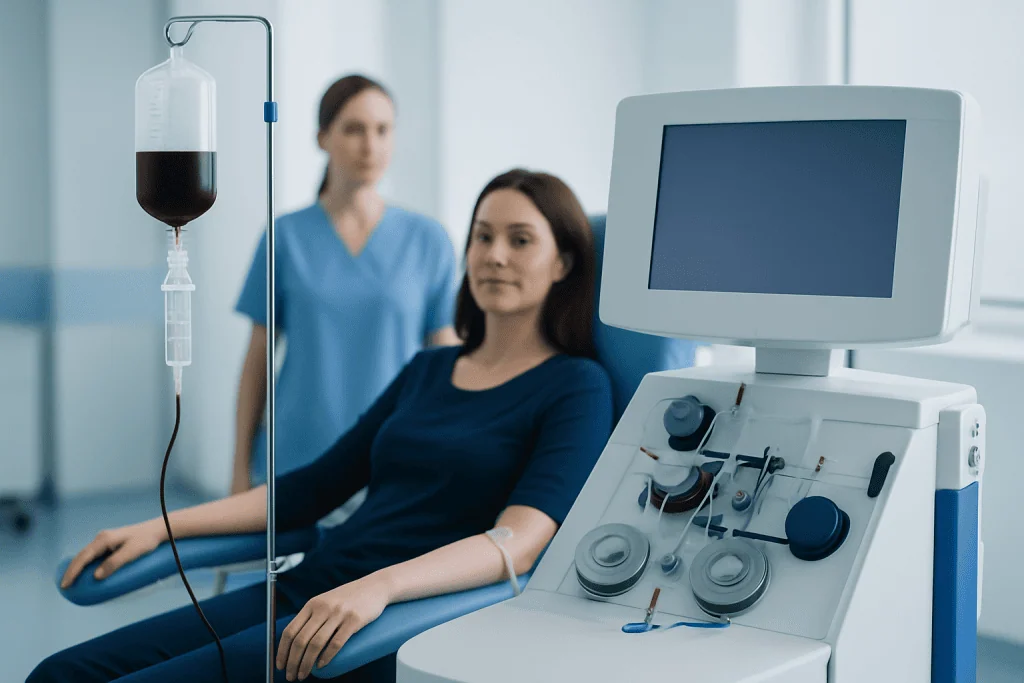
Moderate to severe thalassemia may require regular red blood cell transfusions to maintain healthy hemoglobin levels and support normal growth, activity, and organ function. Repeated transfusions can save lives, but they may also cause iron to build up in the body. To prevent damage to the heart, liver, and endocrine glands, doctors may prescribe iron chelation therapy, which helps remove excess iron.
Other aspects of care can include folic acid in selected cases, vaccination review, infection prevention, bone health support, and treatment of complications involving the spleen, heart, hormones, or liver. Some patients may be assessed by specialists in hematology as part of a structured long-term care plan. Multidisciplinary follow-up is especially important in children and in adults who have had many transfusions over time.
For selected patients, curative treatment may be possible. Hematopoietic stem cell transplantation can offer a potential cure in carefully chosen cases, especially when a suitable donor is available. Newer therapies, including emerging gene-based approaches, are changing care in some centers, but suitability depends on age, disease severity, overall health, and access to specialized evaluation. In advanced cases, doctors may also coordinate with teams experienced in bone marrow transplantation.
Outlook, daily life, and self-care
The outlook for thalassemia has improved significantly with earlier diagnosis, safer transfusion practices, iron chelation, and coordinated specialist care. Many people with thalassemia now live into adulthood and maintain education, work, family life, and daily routines. Prognosis depends on the exact type, how early treatment begins, and how well complications are prevented or managed.
Daily self-care focuses on keeping regular appointments, following prescribed treatment, and discussing any new symptoms promptly. Balanced nutrition, age-appropriate exercise, good sleep, and avoiding smoking can support overall health. Iron supplements should only be taken if a doctor confirms iron deficiency, because not all anemia is caused by low iron.
People receiving regular transfusions may need lifelong monitoring for iron overload, heart function, liver health, bone strength, and hormone balance. Emotional well-being also matters, especially for children, teenagers, and adults managing a chronic condition. Counseling and family education can help reduce stress and improve confidence in self-management.
Near the end of the care pathway, some patients also benefit from coordinated review for related complications such as iron deficiency anemia when symptoms overlap or blood tests are complex. Acibadem International’s multidisciplinary specialists and JCI-accredited hospitals diagnose and treat thalassemia for international patients when advanced evaluation and long-term planning are needed.
When to seek medical care
Medical advice should be sought if a person has ongoing fatigue, pale skin, shortness of breath with normal activity, unexplained jaundice, delayed growth in a child, or a known family history of thalassemia. These symptoms do not always mean thalassemia, but they do justify proper evaluation. Early assessment can help distinguish mild disease from forms that need closer monitoring.
People already diagnosed with thalassemia should contact their doctor if symptoms suddenly worsen, if they develop fever, new abdominal swelling, increasing weakness, chest discomfort, or signs that may suggest complications from anemia or iron overload. Urgent care is especially important for severe breathlessness, fainting, or symptoms of infection in someone who is medically vulnerable.
Anyone planning pregnancy who has a personal or family history of thalassemia may benefit from carrier screening and genetic counseling. A qualified clinician can explain the chances of passing the condition to a child and discuss testing options in a clear, supportive way.
Frequently asked questions
Is thalassemia curable?
Some forms of thalassemia may be potentially cured with hematopoietic stem cell transplantation in carefully selected patients. However, many people are managed with long-term supportive treatment rather than a cure. A specialist can explain which options are appropriate based on disease type, age, and overall health.
Can someone have thalassemia and not know it?
Yes. People with thalassemia trait or other mild forms may have few or no symptoms and may only learn about it during routine blood tests or pregnancy screening. Even mild cases are important to identify because of family planning implications.
What is the difference between thalassemia trait and thalassemia major?
Thalassemia trait usually means a person carries a gene change and may have mild anemia or no symptoms at all. Thalassemia major is a much more severe form that often causes significant anemia early in life and may require regular transfusions and specialist care.
Should people with thalassemia take iron supplements?
Not unless a doctor confirms iron deficiency. Many people with thalassemia are anemic for reasons unrelated to low iron, and unnecessary iron can be harmful, especially if iron overload is already a concern. Blood tests are used to decide whether iron is actually needed.
How is thalassemia inherited?
Thalassemia is passed from parents to children through genes that affect hemoglobin production. A child’s risk depends on whether one or both parents carry altered genes and on the specific type involved. Genetic counseling can help families understand this risk clearly.
Can children with thalassemia live normal lives?
Many children with thalassemia can attend school, play, and grow into adulthood with the right monitoring and treatment. Their needs depend on disease severity, and regular follow-up is important to protect growth, development, and organ health. Early specialist care often improves long-term outcomes.
References
- World Health Organization
- Centers for Disease Control and Prevention
- National Heart, Lung, and Blood Institute
- MedlinePlus
- American Society of Hematology
This article is for general information only and is not a substitute for professional medical advice. Please consult a qualified doctor about your individual situation.
Thalassemia in Turkey — costs, top hospitals & a free quote
JCI-accredited · board-certified surgeons · reply within 24h
Add us as a Preferred Source to see more of our trusted health content across Google Search, AI Overviews and Discover.

Organ Transplantation
Kidney, liver and bone-marrow transplantation programs with dedicated coordination.
4 specialists in this unitMore from the Health Library



Related Specialists

Dr. Hakan Özbay
Orthopedic Surgery & Traumatology
Assoc. Prof. Dr. Bertan Cengiz
Orthopedic Surgery & Traumatology
Mehmet Çakır
Physical Medicine & Rehabilitation
Prof. Dr. Tunç Ovali
Ophthalmology