The Cerebrum and Daily Life: How It Supports Thought, Movement, and Senses

The cerebrum is the brain’s largest region and supports many higher functions. It helps control voluntary movement, language, memory, learning, and emotions.
Key Takeaways
- The cerebrum is the brain’s largest region and supports many higher functions.
- It helps control voluntary movement, language, memory, learning, and emotions.
- Different lobes of the cerebrum handle different tasks, but they work together closely.
- The right and left hemispheres communicate through nerve fibers to coordinate function.
- Many neurological conditions can affect the cerebrum and may cause changes in movement, speech, memory, or sensation.
The cerebrum is the largest part of the brain and plays a central role in daily life. It helps a person think, speak, move, remember, feel emotions, and understand the world through the senses.
Overview: What Is the Cerebrum?
The cerebrum is the largest part of the human brain. It fills most of the upper part of the skull and is responsible for many of the abilities that shape everyday life, including thinking, planning, speaking, movement, memory, and interpreting sensory information. When a person reads, writes, solves a problem, recognizes a face, or chooses how to respond to a situation, the cerebrum is deeply involved.
The outer layer of the cerebrum is called the cerebral cortex. This thin, folded layer contains billions of nerve cells that process information. The folds increase the surface area of the brain, allowing more nerve cells to fit into the available space. Beneath the cortex are deeper structures and connecting nerve pathways that help different brain regions share information quickly and efficiently.
The cerebrum is divided into two halves, called the right and left hemispheres. Each hemisphere helps control and process different functions, and each generally influences the opposite side of the body. Even so, the hemispheres do not work separately. They communicate through a thick band of nerve fibers called the corpus callosum, allowing the brain to combine movement, sensation, language, attention, and emotion into smooth daily function.
How the Cerebrum Supports Daily Life
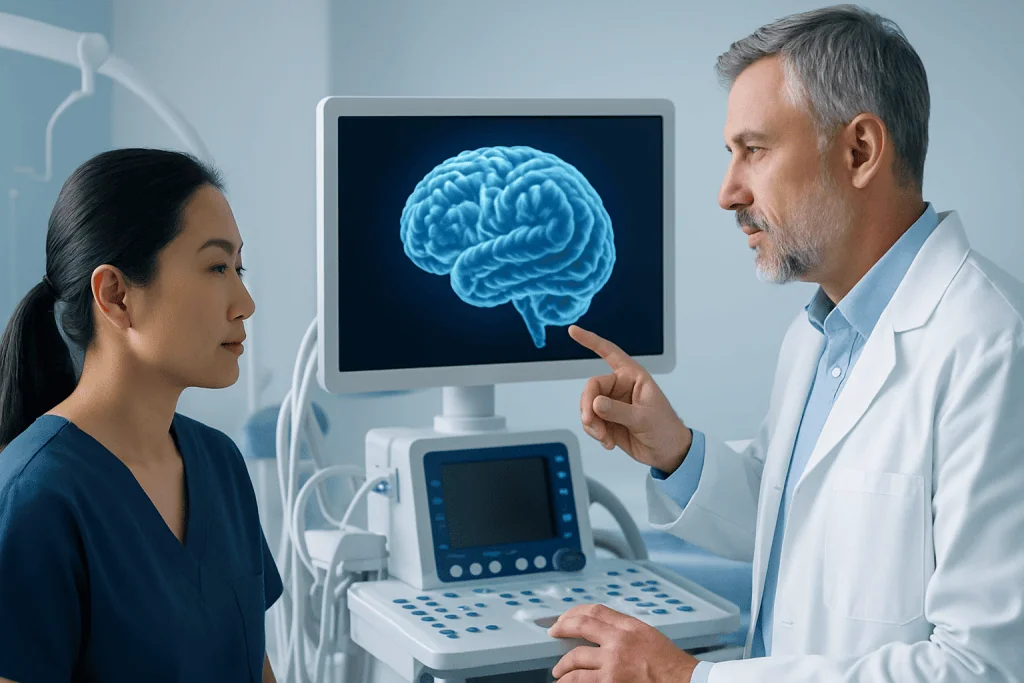
The cerebrum helps a person understand, respond to, and interact with the world. It receives information from the eyes, ears, skin, nose, and tongue, then helps make sense of these signals. This is why the cerebrum is essential not only for the senses, but also for attention, awareness, judgment, and decision-making.
Voluntary movement also depends heavily on the cerebrum. When a person decides to stand up, wave a hand, smile, or walk across a room, motor areas in the cerebrum help plan and send the signals needed for those actions. Other areas refine movement by integrating sensory feedback, such as body position and touch, so actions can be more accurate and coordinated.
Higher mental functions are another key role of the cerebrum. These include language, learning, problem-solving, creativity, social understanding, and emotional regulation. Although other parts of the nervous system also contribute to behavior and mood, the cerebrum helps organize complex thought and enables a person to adapt to changing situations in everyday life.
- Thinking and reasoning
- Speech and language comprehension
- Voluntary movement
- Memory and learning
- Processing touch, vision, hearing, taste, and smell
- Attention, planning, and decision-making
The Lobes of the Cerebrum and What They Do

The cerebrum is commonly divided into four main lobes on each side: frontal, parietal, temporal, and occipital. Each lobe has areas that specialize in certain tasks, although real-life function depends on communication between multiple regions rather than one area working alone.
The frontal lobe is involved in planning, judgment, personality, impulse control, and voluntary movement. It also contains regions important for speech production in many people. The parietal lobe helps process touch, temperature, pain, and body awareness. It also supports spatial understanding, such as knowing where the body is in relation to surrounding objects.
The temporal lobe helps with hearing, language comprehension, and memory. It also plays a role in recognizing objects and faces, and in aspects of emotion. The occipital lobe is mainly responsible for vision, helping the brain interpret shapes, color, motion, and visual patterns. When these lobes work together, a person can see an object, identify it, remember it, and respond appropriately.
In addition to the lobes, deeper cerebral structures support memory, emotion, and movement control. Together, these networks allow the cerebrum to manage both simple and highly complex tasks throughout the day.
Right and Left Hemispheres: Working as a Team
The right and left hemispheres of the cerebrum are similar in structure, but some functions are more dominant on one side than the other. In many people, the left hemisphere is especially important for language skills such as speaking, reading, and writing. The right hemisphere often plays a stronger role in spatial awareness, visual attention, and aspects of nonverbal communication, such as recognizing tone and facial expression.
These patterns are helpful for understanding brain function, but they are not absolute. Most activities rely on both hemispheres. For example, speaking a sentence may involve language networks that are stronger on the left, while emotional tone and social meaning may involve important right-sided contributions.
The corpus callosum allows the hemispheres to exchange information rapidly. This communication is essential for coordinated movement, integrated sensory processing, and balanced thinking. A person does not use one half of the brain alone in daily life; the cerebrum functions as an active, connected whole.
What Can Affect the Cerebrum?
Many medical conditions can affect the cerebrum and change how a person thinks, moves, senses, or communicates. Problems may develop suddenly, as in a stroke or head injury, or gradually, as in some tumors, infections, or neurodegenerative disorders. Symptoms vary depending on the area involved and how much brain tissue is affected.
Common warning signs of cerebral problems may include weakness on one side of the body, numbness, trouble speaking, confusion, severe headache, seizures, vision changes, memory difficulties, or changes in behavior. In some cases, symptoms are mild at first. In others, they may appear suddenly and require urgent evaluation, especially if they suggest stroke.
Examples of conditions that may involve the cerebrum include brain tumor, traumatic brain injury, epilepsy, infections affecting the brain, and conditions such as Alzheimer’s disease. Because many different illnesses can affect similar brain functions, a careful medical assessment is important for accurate diagnosis and treatment planning.
How Doctors Evaluate Cerebrum Function
Doctors evaluate the cerebrum by combining a person’s medical history, symptoms, physical examination, and neurological examination. The neurological exam may assess strength, coordination, sensation, reflexes, speech, vision, memory, attention, and balance. These findings can help identify which areas of the cerebrum may be affected.
Brain imaging is often used when doctors need a closer look at brain structure. Tests may include computed tomography or magnetic resonance imaging, depending on the situation. Imaging can help identify bleeding, stroke, tumors, inflammation, or other structural changes. In some situations, additional tests such as electroencephalography may be used if seizures are suspected, and neuropsychological testing may help assess memory, attention, language, and thinking in more detail.
Evaluation is tailored to the individual. Someone with sudden weakness and speech trouble may need urgent emergency assessment, while someone with gradual memory changes may have a more planned outpatient evaluation. The goal is to understand the cause, protect brain function, and guide the next steps in care.
Treatment, Brain Health, and Recovery
Treatment for conditions affecting the cerebrum depends on the cause. Some problems require urgent care, such as stroke, bleeding, infection, or severe injury. Others may be managed with medicines, rehabilitation, monitoring, or planned procedures. For example, care may include neurosurgery for selected structural problems, stroke treatment in emergency settings, or brain tumor treatment when a growth is found and needs specialist care.
Recovery often involves more than one type of support. Rehabilitation may include physical therapy for movement, occupational therapy for daily activities, and speech-language therapy for communication or swallowing problems. Cognitive rehabilitation may also help some people improve attention, memory, and problem-solving after injury or illness.
Healthy habits can support overall brain health, although they cannot prevent every neurological condition. Helpful steps include regular physical activity, balanced nutrition, quality sleep, blood pressure and diabetes management, avoiding smoking, limiting alcohol when advised, and protecting the head during sports or high-risk activities. Mental activity, social engagement, and regular medical care can also support long-term brain function.
When specialized care is needed, multidisciplinary teams can help coordinate diagnosis and treatment. Acibadem International’s multidisciplinary specialists and JCI-accredited hospitals care for international patients with a range of neurological conditions affecting the cerebrum.
When to Seek Medical Advice
Medical advice is appropriate any time a person notices new or unexplained changes in thinking, speech, memory, sensation, balance, or movement. Even mild changes that persist can be worth discussing with a doctor, especially if they interfere with work, school, daily activities, or relationships.
Urgent medical attention is needed for sudden symptoms such as facial drooping, arm weakness, trouble speaking, sudden confusion, severe headache, sudden vision loss, or a seizure. These may be signs of a serious brain problem and should not be ignored. Fast evaluation can make a major difference in treatment and outcome.
Early assessment is also helpful for gradual changes, including memory decline, personality changes, repeated falls, or worsening concentration. Prompt evaluation can help identify treatable causes, provide reassurance when appropriate, and support timely care when needed.
Frequently asked questions
What is the main function of the cerebrum?
The cerebrum helps control many of the functions that shape daily life, including thinking, memory, language, voluntary movement, and sensory processing. It allows a person to understand information, make decisions, and respond to the environment.
Is the cerebrum the same as the whole brain?
No. The cerebrum is the largest part of the brain, but it is not the entire brain. Other important parts include the cerebellum and brainstem, which help with balance, coordination, breathing, heart rate, and other essential functions.
What do the different lobes of the cerebrum do?
The frontal lobe supports planning, judgment, personality, and movement. The parietal lobe helps process touch and body awareness, the temporal lobe is involved in hearing and memory, and the occipital lobe mainly handles vision.
Can a problem in the cerebrum affect movement and speech?
Yes. Because the cerebrum contains important areas for movement and language, problems in certain regions can lead to weakness, coordination difficulty, trouble speaking, or difficulty understanding speech. The exact symptoms depend on which part of the cerebrum is affected.
How do doctors check whether the cerebrum is working properly?
Doctors use a medical history, neurological examination, and sometimes brain imaging or other tests. They may assess memory, speech, strength, sensation, coordination, and vision to understand whether a certain brain area may be involved.
Can the cerebrum recover after injury or illness?
In some cases, yes. Recovery depends on the cause, the severity of damage, the person’s general health, and how quickly treatment begins. Rehabilitation can help the brain and body adapt, and some functions may improve over time with therapy and support.
References
- National Institute of Neurological Disorders and Stroke
- National Institute on Aging
- MedlinePlus
- Mayo Clinic
- World Health Organization
This article is for general information only and is not a substitute for professional medical advice. Please consult a qualified doctor about your individual situation.
Explore treatments in Turkey — costs, top hospitals & a free quote
JCI-accredited · board-certified surgeons · reply within 24h
Add us as a Preferred Source to see more of our trusted health content across Google Search, AI Overviews and Discover.

More from the Health Library



Related Specialists

Dr. İnci Candan
Dermatology
Assoc. Prof. Dr. Emrullah Hayta
Physical Medicine & Rehabilitation
Dr. Aslıhan Sanem Özata
Anesthesiology
Assoc. Prof. Dr. Ayşe Ebru Bahadır
Ophthalmology