Thyroid Nodule — Explained by Medical Evidence, Not Myths

Most thyroid nodules are benign and many cause no symptoms. Ultrasound and thyroid blood tests are central to evaluating a thyroid nodule.
Key Takeaways
- Most thyroid nodules are benign and many cause no symptoms.
- Ultrasound and thyroid blood tests are central to evaluating a thyroid nodule.
- Fine-needle aspiration biopsy may be recommended based on the nodule’s size and ultrasound appearance.
- Treatment depends on whether the nodule is benign, overactive, growing, or suspicious for cancer.
- New or enlarging neck lumps, swallowing difficulty, and voice changes should be assessed by a doctor.
A thyroid nodule is a growth or lump within the thyroid gland, and most are not cancer. Medical evaluation focuses on two key questions: whether the nodule affects thyroid function and whether its features suggest a need for biopsy or treatment.
What a Thyroid Nodule Really Means
A thyroid nodule is a distinct lump or area of abnormal growth in the thyroid gland, a butterfly-shaped gland at the front of the neck. In many people, a thyroid nodule is found incidentally during a routine examination or on an imaging test done for another reason. Most thyroid nodules are benign, which means they are not cancer, but they still deserve proper evaluation.
The main reason doctors assess a thyroid nodule carefully is not because every nodule is dangerous, but because the thyroid can develop different types of growths. Some nodules are simple fluid-filled cysts, some are solid benign growths, some make too much thyroid hormone, and a smaller number may be malignant. Evidence-based care helps separate common, low-risk nodules from those that need biopsy or treatment.
The evaluation usually focuses on three practical questions: Is the nodule affecting thyroid hormone production? Does it have ultrasound features that make cancer more or less likely? Is it causing symptoms because of its size or location? This approach helps patients avoid both unnecessary worry and unnecessary procedures.
Signs and Symptoms to Watch For
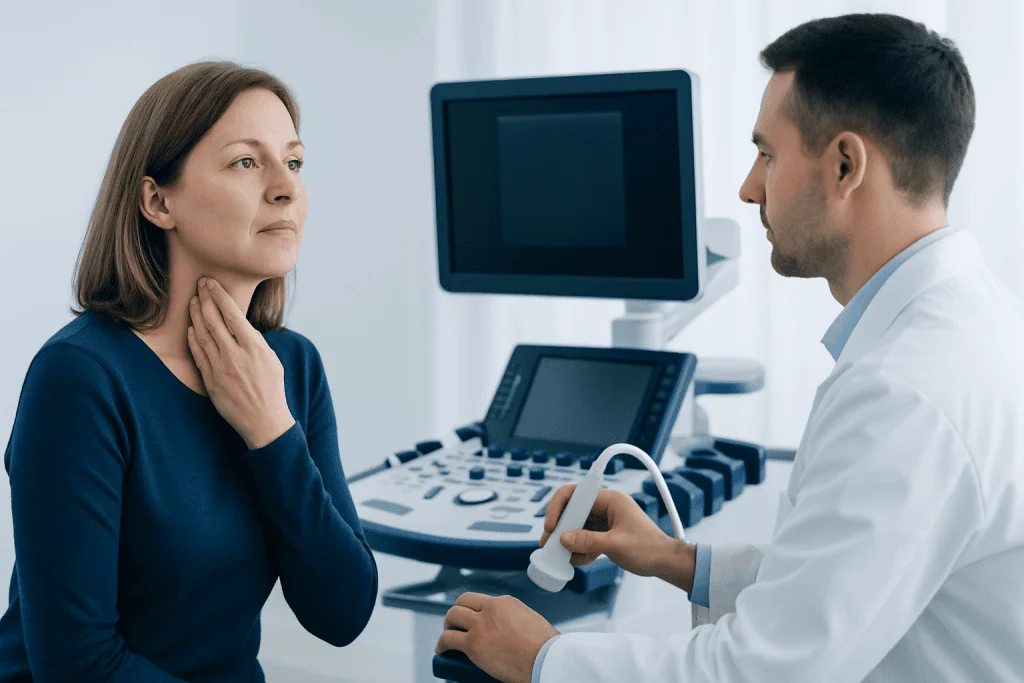
Many thyroid nodules do not cause noticeable symptoms. They may be too small to feel and may only be seen on an ultrasound, CT scan, or MRI performed for another reason. When symptoms do occur, they often relate either to the size of the nodule or to changes in thyroid hormone levels.
A person may notice a visible or palpable lump in the lower front of the neck. Larger nodules can create a feeling of pressure, fullness, or discomfort. Depending on where the nodule sits, it may contribute to trouble swallowing, a sensation of something stuck in the throat, coughing, or rarely shortness of breath when lying flat. Some people also experience voice changes if nearby structures are affected.
If a nodule is overactive and produces excess thyroid hormone, symptoms may resemble hyperthyroidism. These can include palpitations, tremor, heat intolerance, anxiety, unexplained weight loss, and increased sweating. Less commonly, people with thyroid nodules may have an underactive thyroid due to underlying thyroid disease rather than the nodule itself. Related thyroid problems are discussed more broadly on the page about thyroid diseases.
- Neck lump or swelling
- Pressure in the throat
- Difficulty swallowing
- Voice changes or hoarseness
- Symptoms of an overactive thyroid, such as palpitations or tremor
Why Thyroid Nodules Develop

There is no single cause of every thyroid nodule. Some form because of overgrowth of normal thyroid tissue, while others are related to cyst formation, inflammation, autoimmune thyroid disease, or benign tumors such as follicular adenomas. A minority are associated with thyroid cancer. In some cases, multiple nodules develop over time, a pattern often called multinodular goiter.
Risk tends to rise with age, and thyroid nodules are more commonly detected in women. A history of iodine deficiency, previous radiation exposure to the head or neck, certain inherited syndromes, or a family history of thyroid cancer may increase concern. However, many people with a thyroid nodule have no clear risk factor at all.
It is also important to address common myths. A thyroid nodule does not automatically mean cancer, and the presence or absence of pain does not reliably distinguish benign from malignant causes. Likewise, many nodules are not caused by stress, diet choices alone, or everyday mobile phone use. The best way to understand a nodule is through proper clinical assessment rather than assumptions.
How Doctors Diagnose a Thyroid Nodule
Diagnosis begins with a medical history and physical examination. A clinician may ask when the lump was first noticed, whether it has grown, and whether there are symptoms such as swallowing difficulty, hoarseness, or signs of abnormal thyroid function. Family history and prior radiation exposure are also relevant because they can influence the level of suspicion.
Blood tests commonly include thyroid-stimulating hormone, often abbreviated TSH, and sometimes additional thyroid hormone tests. These help determine whether the thyroid is overactive, underactive, or functioning normally. Imaging then plays a central role. Thyroid ultrasound is the key test because it shows the nodule’s size, whether it is solid or cystic, and whether it has features that suggest lower or higher risk.
If TSH is low, a radionuclide thyroid scan may be used to see whether the nodule is producing excess hormone. Overactive, or “hot,” nodules are less likely to be cancerous than nonfunctioning nodules. When an ultrasound raises concern, or when the nodule reaches a size where tissue sampling is advised, doctors may recommend fine-needle thyroid biopsy. This simple procedure uses a thin needle to collect cells for analysis.
In selected cases, cross-sectional imaging or laryngoscopy may be used, especially if there are compressive symptoms or voice changes. When the overall picture suggests a broader thyroid enlargement rather than a single lump, evaluation may overlap with the workup for goiter. The goal is always to match testing to the individual nodule rather than use a one-size-fits-all plan.
Understanding Results and Cancer Risk
Ultrasound findings help guide next steps. Features such as the nodule’s composition, margins, shape, echogenicity, and the presence of tiny calcifications are considered together. Doctors often use structured reporting systems to estimate risk and decide whether biopsy is needed. Size matters, but size alone does not determine risk; a small suspicious nodule may deserve closer attention than a larger simple cyst.
Biopsy results are usually reported in categories that reflect how clearly benign or suspicious the sampled cells appear. A benign result often leads to follow-up ultrasound rather than immediate treatment. An indeterminate result may require repeat biopsy, molecular testing where available, or surgery in selected cases. A suspicious or malignant result typically leads to referral for specialist care.
Even when cancer is diagnosed, many thyroid cancers are highly treatable, especially when found early and managed appropriately. Still, every case is different, and treatment planning depends on the type of cancer, the size of the tumor, whether lymph nodes are involved, and the person’s overall health. Patients who need a broader cancer workup may also be assessed for thyroid cancer in a dedicated specialist setting.
Treatment Options for a Thyroid Nodule
Not every thyroid nodule needs active treatment. Many benign nodules can be safely monitored with periodic ultrasound and clinical review. This is especially common when the nodule is small, does not cause symptoms, and has benign imaging or biopsy findings. Monitoring helps identify any meaningful changes over time without exposing the patient to unnecessary intervention.
If a nodule is causing symptoms because it is large or growing, treatment may be considered even when it is benign. Options depend on the nature of the nodule. Cystic nodules may sometimes be drained, although fluid can return. Overactive nodules may be managed with medication, radioactive iodine, or surgery depending on the situation. When surgery is needed, the approach may involve removing part or all of the thyroid through thyroid surgery.
When cancer is confirmed or strongly suspected, treatment often includes surgery and may sometimes include additional therapies such as radioactive iodine. If thyroid hormone levels are abnormal, this also needs to be addressed as part of the overall plan. Treatment decisions are individualized, balancing symptom relief, cancer risk, thyroid function, and the patient’s preferences.
Near the end of the evaluation and treatment pathway, some patients benefit from care coordinated among endocrinology, radiology, pathology, and surgery specialists. Acibadem International’s multidisciplinary teams in JCI-accredited hospitals diagnose and treat thyroid conditions for international patients when specialist assessment is needed.
Self-care, Follow-up, and Everyday Questions
There is no proven home remedy that can make a true thyroid nodule disappear. Self-care is therefore less about treating the lump directly and more about supporting overall thyroid health and staying consistent with medical follow-up. Patients should take any prescribed thyroid medication exactly as directed and attend recommended ultrasound or clinic visits.
It is reasonable to ask a doctor whether the nodule is benign, whether thyroid function is normal, whether biopsy is recommended, and how often follow-up imaging should be repeated. Keeping a record of test results can also help, especially for people who receive care in more than one clinic. A stable benign nodule may simply need observation over time.
General healthy habits remain valuable: eating a balanced diet, avoiding unnecessary supplements that claim to “shrink” thyroid nodules, and discussing iodine-containing products with a clinician when relevant. People should not start or stop supplements, hormones, or alternative treatments without professional advice, as some can affect thyroid function tests or interfere with treatment decisions.
When to Seek Medical Care
A newly noticed neck lump should be assessed by a qualified doctor, especially if it persists, enlarges, or is associated with other symptoms. Prompt medical review is also appropriate for difficulty swallowing, shortness of breath, persistent hoarseness, or a feeling of pressure in the neck. These symptoms do not necessarily mean cancer, but they do deserve timely evaluation.
People should also seek care if they develop symptoms of thyroid hormone imbalance, such as palpitations, tremor, unexplained weight change, or unusual fatigue. Anyone with a family history of thyroid cancer or a history of head and neck radiation should mention this during assessment. If a biopsy or follow-up scan has already been recommended, keeping that appointment is an important part of safe care.
Urgent assessment is especially important if breathing becomes difficult or if neck swelling develops rapidly. In most cases, however, the process is not an emergency and can be evaluated in a planned, stepwise way. A calm, evidence-based approach helps ensure that the right people receive treatment while others can be reassured and monitored safely.
Frequently asked questions
Is a thyroid nodule usually cancer?
No. Most thyroid nodules are benign and do not turn out to be cancer. Doctors evaluate them carefully because a smaller proportion can be malignant, and imaging plus biopsy help identify which nodules need treatment.
Can a thyroid nodule go away on its own?
Some cystic or very small nodules may change over time, but many thyroid nodules remain stable rather than disappearing completely. This is why follow-up ultrasound is often used to track whether a nodule is unchanged, growing, or developing new features.
What tests are usually done for a thyroid nodule?
The main tests are a physical examination, thyroid blood tests such as TSH, and a thyroid ultrasound. Depending on the results, a doctor may also recommend a radionuclide scan or a fine-needle aspiration biopsy.
Does every thyroid nodule need a biopsy?
No. Biopsy is usually recommended only when the nodule has certain ultrasound characteristics, reaches a size threshold, or raises concern for another reason. Many clearly low-risk nodules can be monitored without immediate biopsy.
Can thyroid nodules cause weight gain or weight loss?
Most thyroid nodules do not affect weight directly. However, if a nodule produces excess thyroid hormone, it can lead to symptoms of hyperthyroidism such as weight loss, palpitations, and heat intolerance. Weight gain may occur if there is underlying hypothyroidism, but that is often related to thyroid disease more broadly rather than the nodule itself.
When is surgery needed for a thyroid nodule?
Surgery may be advised if the nodule is cancerous or strongly suspicious, if it is causing pressure symptoms, or if it is overactive and other treatments are not suitable. The decision depends on biopsy findings, imaging results, thyroid hormone status, and the patient’s overall health.
References
- American Thyroid Association
- National Institute of Diabetes and Digestive and Kidney Diseases
- National Cancer Institute
- Endocrine Society
- British Thyroid Association
This article is for general information only and is not a substitute for professional medical advice. Please consult a qualified doctor about your individual situation.
Oncology care in Turkey — second opinion and treatment plan
JCI-accredited · board-certified surgeons · reply within 24h
Add us as a Preferred Source to see more of our trusted health content across Google Search, AI Overviews and Discover.

More from the Health Library



Related Specialists

Prof. Dr. Gürhan Şişman
Gastroenterology
Assoc. Prof. Dr. Mine Yavuz Taşlıpınar
Clinical Laboratory
Dr. Keramettin Şar
Internal Medicine
Dr. Hasan İnsel
Internal Medicine