Thyroid nodules Treatment Options: From Medication to Surgery

Most thyroid nodules are benign and do not require immediate treatment. Ultrasound and fine-needle aspiration biopsy help assess whether a nodule needs monitoring, further testing or surgery.
Key Takeaways
- Most thyroid nodules are benign and do not require immediate treatment.
- Ultrasound and fine-needle aspiration biopsy help assess whether a nodule needs monitoring, further testing or surgery.
- Medication may treat an overactive thyroid but usually does not make a benign nodule disappear.
- Surgery may be recommended for cancer, concerning biopsy results, significant symptoms or selected large nodules.
- After partial or total thyroid removal, thyroid hormone levels are monitored and some people need lifelong replacement therapy.
Thyroid nodules treatment is individualized: many nodules only need regular monitoring, while treatment may be appropriate for hormone-producing nodules, troublesome pressure symptoms, suspicious biopsy findings or thyroid cancer. An endocrinology and surgical team uses ultrasound, blood tests and, when needed, needle biopsy to help choose the safest option.
Overview: choosing thyroid nodules treatment
Thyroid nodules treatment depends on what the nodule is doing, how it looks on imaging, whether it causes symptoms and whether testing suggests cancer. Many nodules are harmless, do not affect thyroid hormone production and can be followed safely with periodic clinical review and ultrasound rather than treated immediately.
A thyroid nodule is a lump within the thyroid gland, a butterfly-shaped organ at the front of the neck that helps regulate metabolism through thyroid hormones. Nodules may be solid, fluid-filled or mixed. They become more common with age, and most are noncancerous; however, assessment is important because a small proportion require further investigation or treatment.
The goal is not to remove every nodule. It is to identify nodules that need attention, relieve symptoms when they occur and provide timely care if cancer is found or strongly suspected. A clinician may involve an endocrinologist, radiologist, pathologist and endocrine surgeon in making an informed plan.
How thyroid nodules are assessed
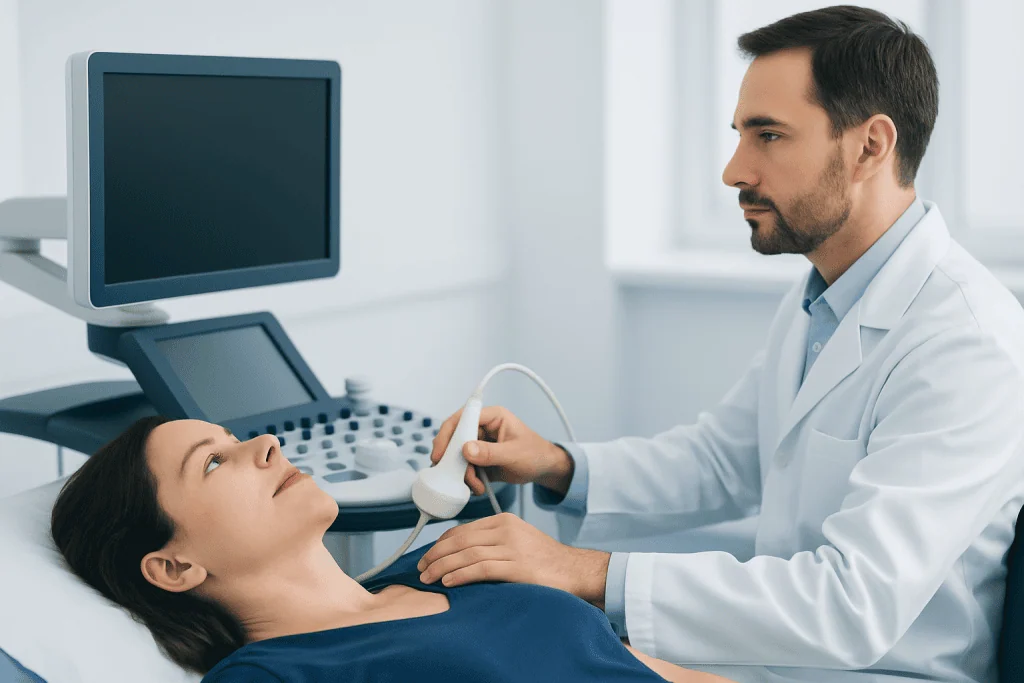
Assessment usually starts with a medical history and examination of the neck. The clinician asks about swallowing or breathing difficulty, voice changes, prior radiation exposure, family history of thyroid cancer and symptoms of too much or too little thyroid hormone. Blood tests commonly include thyroid-stimulating hormone (TSH), with additional hormone tests when indicated.
Neck ultrasound is the main imaging test for thyroid nodules. It measures the nodule and evaluates features such as its composition, margins, shape and small calcium deposits. These findings help determine whether follow-up ultrasound or a fine-needle aspiration (FNA) biopsy is appropriate.
During FNA, a thin needle collects cells from the nodule, usually with ultrasound guidance. The sample is examined under a microscope. Results may be benign, suspicious, malignant, nondiagnostic or indeterminate. An indeterminate result does not necessarily mean cancer; repeat biopsy, molecular testing where available or surgery may be discussed depending on the individual situation.
When TSH is low, a thyroid scan may be used to see whether the nodule is producing excess hormone. A hormone-producing, or “hot,” nodule is rarely cancerous but can cause hyperthyroidism and may require treatment for hormone control.
Monitoring and medication options

Active surveillance is often the most appropriate approach for a benign, small or symptom-free thyroid nodule. Follow-up plans differ according to ultrasound findings and biopsy results, but may include repeat examinations, thyroid blood tests and ultrasound at intervals advised by the treating clinician. A stable benign nodule may need less frequent imaging over time.
Medication is directed at thyroid function rather than routinely shrinking nodules. If a nodule causes hyperthyroidism, medicines that reduce thyroid hormone production may be used to control symptoms and prepare for definitive treatment when appropriate. Beta-blocker medicines may also be used for symptoms such as tremor or a fast heartbeat under medical supervision.
Thyroid hormone replacement is prescribed if hypothyroidism is present, including after thyroid surgery. Routine use of thyroid hormone solely to suppress TSH and reduce benign nodule size is generally not recommended for most people because potential harms, including heart rhythm and bone effects, may outweigh a limited benefit.
For a clearly benign nodule that is growing or causing local symptoms, a specialist may discuss non-surgical treatments in selected settings. These can include image-guided thermal ablation for suitable solid benign nodules, or drainage and other approaches for recurrent cystic nodules. Availability and suitability vary, and biopsy confirmation is generally needed before treating a nodule as benign.
Radioactive iodine and minimally invasive procedures
Radioactive iodine is a possible treatment for an overactive thyroid nodule or toxic multinodular goiter. The thyroid naturally absorbs iodine; the treatment uses a carefully measured radioactive form to reduce the activity of overproducing thyroid tissue. It is not the same as external radiation therapy and is planned by an endocrinology or nuclear medicine team.
Candidacy depends on thyroid function, scan results, pregnancy status, breastfeeding status, nodule characteristics and personal preferences. Radioactive iodine is not used during pregnancy or breastfeeding. People considering pregnancy should discuss timing and individualized precautions with their specialist.
Image-guided ablation may use heat energy, such as radiofrequency or laser energy, to reduce selected benign nodules without removing the thyroid gland. Under ultrasound guidance and local anesthetic, a needle-like device delivers energy into the nodule in carefully controlled areas. The nodule typically decreases in size gradually over months rather than disappearing immediately.
These procedures can offer symptom relief while preserving thyroid tissue for carefully selected patients. They are not appropriate for every nodule, especially when cancer is suspected or confirmed. Potential risks include pain, bruising, temporary voice changes, incomplete reduction and the need for additional treatment.
Thyroid nodule surgery: how it works
Surgery may be advised when biopsy confirms or strongly suggests cancer, when results remain concerning or unclear after assessment, when a nodule causes significant swallowing, breathing or cosmetic concerns, or when an overactive nodule is not suitably managed with other options. The operation may remove one thyroid lobe (lobectomy) or the whole gland (total thyroidectomy), depending on the diagnosis and extent of disease.
Before surgery, the team reviews ultrasound and biopsy findings, thyroid function, medications and general health. Voice assessment and calcium-related blood tests may be appropriate in some cases. The surgeon explains whether lymph nodes need assessment or removal and discusses the expected need for thyroid hormone replacement after the procedure.
Thyroid surgery is performed under general anesthesia. The surgeon makes a small incision in a natural lower-neck crease, carefully identifies structures including the recurrent laryngeal nerves and parathyroid glands, and removes the planned part of the thyroid. The tissue is examined by a pathologist, which can provide a final diagnosis when earlier biopsy findings were uncertain.
For an overview of surgical decision-making and approaches, patients can review thyroid nodule treatment options. Surgery is often highly effective for removing a problematic nodule or treating thyroid cancer, but the most suitable approach should be decided with an experienced thyroid care team.
Recovery, benefits and possible risks
Many people go home the day after thyroid surgery, although the length of stay depends on the procedure, overall health and recovery. Mild neck discomfort, tightness, tiredness and a sore throat are common early experiences. Gentle movement is usually encouraged, while heavy lifting and strenuous activity may need to wait until the surgeon advises it is safe.
The incision generally heals over several weeks. Follow-up visits assess wound healing, voice, pathology results and thyroid hormone levels. After a lobectomy, the remaining thyroid tissue may produce enough hormone, although some people later need replacement medicine. After total thyroidectomy, lifelong thyroid hormone replacement is necessary.
Benefits of surgery can include a definitive diagnosis, removal of cancer or suspicious tissue, relief from pressure symptoms and control of hormone-producing nodules. Risks are uncommon but important to understand. They include bleeding, infection, scar formation, temporary or persistent hoarseness from nerve irritation, low calcium levels due to parathyroid gland disturbance and the need for thyroid hormone treatment.
Urgent medical assessment is needed after surgery for rapidly increasing neck swelling, difficulty breathing, severe trouble swallowing, fever with worsening wound symptoms, or symptoms of very low calcium such as tingling around the mouth or muscle cramps. The surgical team provides individualized discharge instructions and contact information.
Self-care and when to seek medical care
There is no proven home remedy that reliably removes thyroid nodules. People should avoid taking iodine, thyroid hormone or herbal supplements for a nodule unless a qualified clinician recommends them, as unnecessary iodine can worsen some thyroid conditions and supplements may interact with medicines or affect test results.
A balanced diet, smoking avoidance and regular medical follow-up support general health, but they do not replace assessment. It is helpful to keep records of ultrasound results, biopsy reports, blood tests and medication changes. People with a benign nodule should attend planned follow-up appointments even when they feel well.
Medical review should be arranged promptly for a new or enlarging neck lump, persistent hoarseness, trouble swallowing, shortness of breath, neck pressure, unexplained weight change, palpitations or a strong family history of thyroid cancer. These symptoms often have causes other than cancer, but they deserve appropriate evaluation.
Acibadem International’s multidisciplinary specialists and JCI-accredited hospitals diagnose and treat thyroid nodules for international patients, including evaluation, image-guided testing and surgical care when needed.
Frequently asked questions
Do all thyroid nodules need treatment?
No. Most thyroid nodules are benign and do not cause hormone problems or symptoms. Depending on ultrasound and biopsy findings, regular follow-up may be all that is needed.
Can medication shrink a thyroid nodule?
Medication may be used to treat an overactive thyroid or to replace thyroid hormone when levels are low. It does not usually shrink a benign thyroid nodule reliably, and thyroid hormone suppression therapy is not routinely used for this purpose.
When is a biopsy needed for a thyroid nodule?
A fine-needle aspiration biopsy may be recommended based on the nodule’s size and ultrasound appearance. It is used to collect cells and assess whether the nodule is benign, suspicious or cancerous.
Is thyroid nodule surgery always a total thyroidectomy?
No. A lobectomy removes one side of the thyroid and may be suitable for a nodule limited to one lobe. Total thyroidectomy may be recommended for some cancers, extensive nodules or other specific clinical situations.
How long is recovery after thyroid nodule surgery?
Many people return home within one or two days, and routine daily activities can often resume gradually within one to two weeks. Recovery varies with the extent of surgery, overall health and the nature of a person’s work.
Can a benign thyroid nodule become cancerous?
Most benign biopsy results remain benign. However, follow-up may be recommended if a nodule has concerning ultrasound features, grows substantially or causes new symptoms, because reassessment can help confirm the diagnosis over time.
References
- American Thyroid Association
- National Cancer Institute
- National Institute of Diabetes and Digestive and Kidney Diseases
- European Thyroid Association
This article is for general information only and is not a substitute for professional medical advice. Please consult a qualified doctor about your individual situation.
Oncology care in Turkey — second opinion and treatment plan
JCI-accredited · board-certified surgeons · reply within 24h
Add us as a Preferred Source to see more of our trusted health content across Google Search, AI Overviews and Discover.