

Thyroid Nodules: When They Need Ultrasound, Biopsy, or Surgery
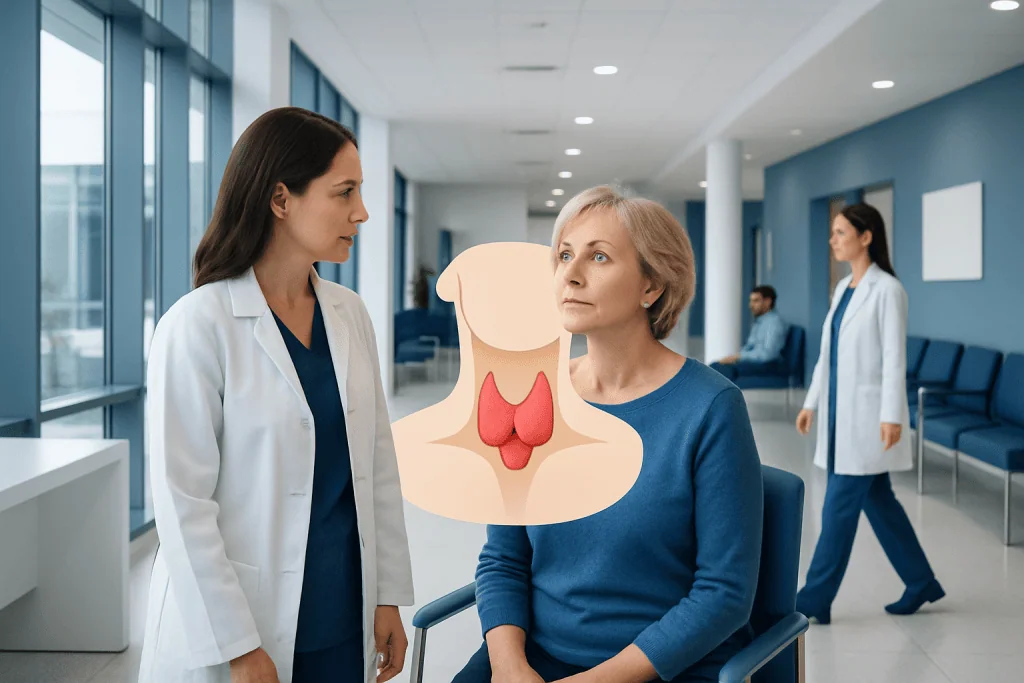
Most thyroid nodules are not cancerous, but they should be assessed properly. Ultrasound is the main test used to examine a thyroid nodule in detail.
Key Takeaways
- Most thyroid nodules are not cancerous, but they should be assessed properly.
- Ultrasound is the main test used to examine a thyroid nodule in detail.
- Fine-needle aspiration biopsy is recommended only for selected nodules based on ultrasound findings and size.
- Surgery is usually reserved for cancer, suspicious biopsy results, troublesome symptoms, or overactive nodules in some cases.
- Regular follow-up is important because some nodules can change over time.
Thyroid nodules are very common and most are benign. The main questions are whether a nodule needs ultrasound, a biopsy, or surgery, and that decision is usually based on its size, appearance, symptoms, and thyroid test results.
Overview: What Are Thyroid Nodules?
Thyroid nodules are lumps or growths that form within the thyroid gland, a small butterfly-shaped gland at the front of the neck. They may be solid, filled with fluid, or partly both. Many thyroid nodules are discovered by chance during a routine exam or an imaging test done for another reason.
In most cases, thyroid nodules are benign, meaning they are not cancer. Some nodules do not cause any symptoms at all, while others may be large enough to be felt or seen. A smaller number can affect thyroid hormone production or cause pressure in the neck.
The purpose of evaluation is not simply to confirm that a nodule is present, but to understand whether it looks harmless, whether it may need a biopsy, and whether treatment is necessary. Careful assessment helps avoid unnecessary procedures while identifying nodules that need closer attention.
Symptoms and Signs to Watch For
Many people with thyroid nodules feel completely well. A nodule may be found when a doctor examines the neck or when an ultrasound, CT scan, or MRI is performed for another reason. This is why thyroid nodules often come as a surprise.
When symptoms do occur, they may include a visible or palpable lump in the neck, a feeling of fullness, trouble swallowing, throat discomfort, or a sense of pressure when lying down. Large nodules can sometimes press on nearby structures and rarely may contribute to breathing difficulty or voice changes.
If a nodule is overactive and produces excess thyroid hormone, symptoms of hyperthyroidism can appear. These may include a fast heartbeat, feeling shaky, weight loss, sweating, anxiety, or heat intolerance. Less commonly, signs of an underactive thyroid may be present if there is an underlying thyroid disorder.
- A new lump in the front of the neck
- Difficulty swallowing or a choking sensation
- Persistent hoarseness or voice changes
- Neck pressure, especially with larger nodules
- Symptoms suggesting too much thyroid hormone
Why Thyroid Nodules Develop and Who Is at Risk
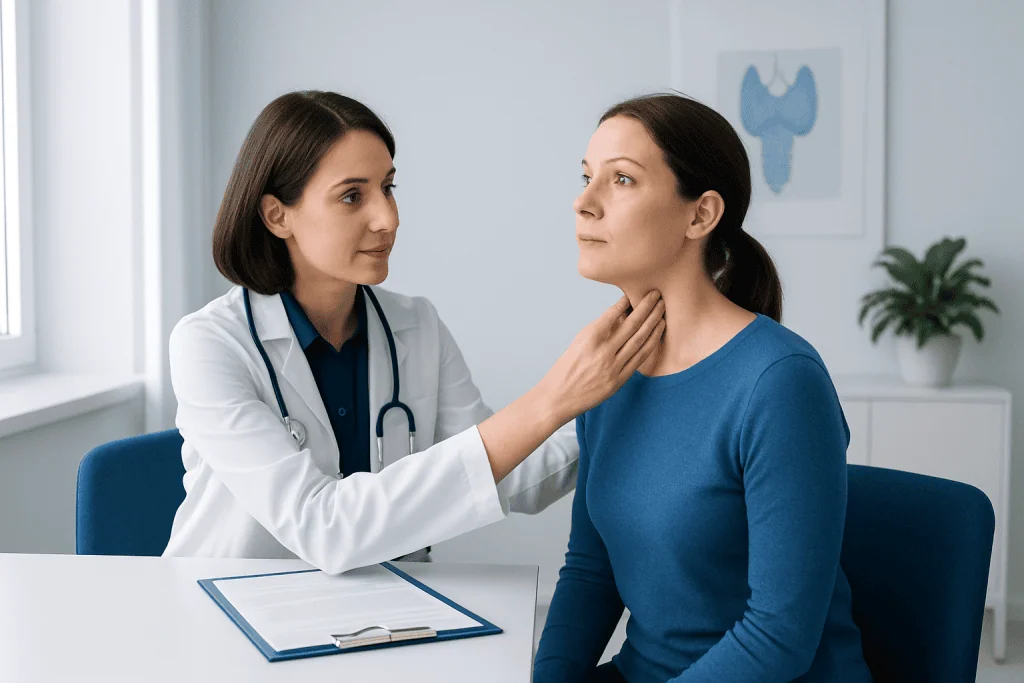
Thyroid nodules can develop for several reasons. Common causes include benign overgrowth of thyroid tissue, fluid-filled cysts, inflammation, multinodular goiter, and certain thyroid conditions such as thyroiditis. Some nodules arise as part of long-standing changes in the gland, while others appear without a clear single cause.
A small proportion of thyroid nodules are cancerous. The goal of medical assessment is to identify the features that make cancer more or less likely. Risk can be influenced by age, sex, a personal or family history of thyroid cancer, prior radiation exposure to the head or neck, and certain inherited syndromes.
Having a thyroid nodule does not mean a person has cancer. Even so, a nodule deserves proper evaluation, especially if it is growing, causing symptoms, or has suspicious features on imaging. People with known thyroid problems, including goiter, may also need monitoring because nodules can appear within an enlarged thyroid gland.
When a Thyroid Nodule Needs Ultrasound
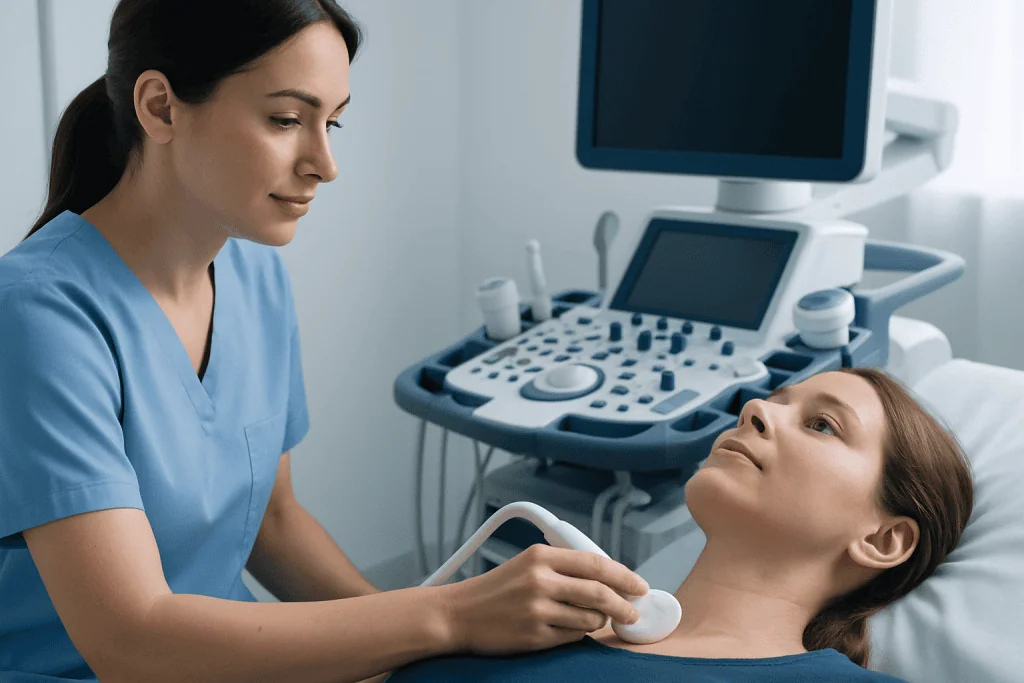
Ultrasound is the most important imaging test for thyroid nodules. It uses sound waves to show the size, shape, and internal structure of the nodule and the surrounding thyroid tissue. Ultrasound can also check nearby lymph nodes, which may provide useful information when cancer is a concern.
A thyroid nodule generally needs ultrasound when it is found on physical examination, noticed by the patient, or seen incidentally on another scan. Ultrasound is also recommended when there are symptoms such as swallowing difficulty, neck pressure, or unexplained changes in the thyroid gland. In some people, blood tests for thyroid function are ordered at the same time.
Ultrasound helps doctors decide whether a nodule appears low risk or whether it has features that deserve closer attention. These features may include a solid appearance, irregular margins, tiny calcifications, marked darkness compared with surrounding tissue, or a shape that is taller than it is wide. Many nodules show reassuring patterns and may only need observation with repeat ultrasound over time.
If thyroid hormone levels suggest an overactive gland, additional testing such as a thyroid scan may be considered. However, ultrasound remains the main first step because it guides the need for follow-up, biopsy, and in some cases referral for thyroid cancer treatment if findings are concerning.
When Biopsy Is Recommended
The most common biopsy for a thyroid nodule is fine-needle aspiration, often called FNA. This procedure uses a very thin needle to collect cells from the nodule, usually with ultrasound guidance. It is generally quick, well tolerated, and does not usually require general anesthesia.
Not every thyroid nodule needs biopsy. The decision depends mainly on ultrasound appearance and size. A small nodule with very reassuring features may not need sampling, while a larger or suspicious-looking nodule may be biopsied even if it causes no symptoms. This selective approach helps balance safety with avoiding unnecessary procedures.
Biopsy results may show that a nodule is benign, suspicious, malignant, or indeterminate. Benign nodules are often monitored with follow-up ultrasound. Suspicious or malignant results may lead to surgery or other treatment. Indeterminate results can be more complex and may prompt repeat biopsy, molecular testing where available, or consultation with a thyroid specialist.
In some centers, FNA is part of a broader evaluation that includes endocrinology, radiology, and pathology review. This team-based approach can be especially helpful when biopsy findings are not straightforward or when symptoms raise concern despite a low-risk ultrasound pattern.
When Surgery May Be Needed
Surgery is not the first treatment for every thyroid nodule, but it plays an important role in selected cases. It may be recommended if biopsy strongly suggests cancer, if the nodule is highly suspicious and diagnosis remains uncertain, or if there are enlarged lymph nodes that raise concern for spread. Surgery may also be appropriate for nodules causing significant compression, swallowing problems, or visible neck enlargement.
Some nodules are removed because they continue to grow or because they produce excess thyroid hormone and other treatments are not suitable. Depending on the case, surgery may involve removing part of the thyroid or the entire gland. The choice is based on biopsy results, nodule size, whether there are one or several nodules, thyroid function, and the person’s overall health.
For benign nodules that still cause symptoms, treatment planning may include surgery or other procedures chosen by a specialist. Patients may also hear about thyroidectomy when discussing removal of part or all of the thyroid, especially if cancer is confirmed or strongly suspected.
Before surgery, doctors usually review imaging, biopsy findings, blood tests, and vocal cord function when needed. After surgery, some people need thyroid hormone replacement, while others keep enough thyroid tissue to maintain normal hormone levels. Treatment decisions are individualized and aim to address both safety and quality of life.
Monitoring, Self-Care, and Follow-Up
Many thyroid nodules can be monitored safely without immediate treatment. Follow-up usually involves repeat ultrasound at intervals recommended by the treating doctor. The timing depends on the nodule’s size, ultrasound pattern, and any previous biopsy results.
Self-care mainly means keeping follow-up appointments and reporting any new symptoms. A person should let their doctor know if the neck lump becomes more noticeable, swallowing becomes harder, the voice changes, or symptoms of thyroid hormone imbalance develop. Blood tests may be repeated to track thyroid function when appropriate.
There is no proven home remedy that can make a thyroid nodule disappear. In general, maintaining overall health, avoiding unnecessary supplements, and not taking iodine or thyroid products without medical advice are sensible steps. If an underlying thyroid disorder is present, proper treatment may help support long-term thyroid health.
For people seeking specialized care, Acibadem International’s multidisciplinary specialists and JCI-accredited hospitals evaluate thyroid nodules for international patients, including imaging, biopsy, and endocrinology and metabolic diseases treatment when needed.
When to See a Doctor
Any new lump in the thyroid area should be assessed by a qualified doctor, even though most nodules are benign. Medical review is especially important if the lump is growing, feels firm, or is associated with pain, swallowing problems, shortness of breath, or persistent hoarseness.
A doctor should also be consulted if there are symptoms of an overactive or underactive thyroid, such as palpitations, tremor, unexplained weight changes, fatigue, or heat or cold intolerance. People with a family history of thyroid cancer or prior radiation exposure to the neck should mention this during the evaluation because it can affect risk assessment.
Prompt evaluation does not mean something serious is likely. Rather, it allows the right tests to be used at the right time, helping to reassure patients when a nodule is harmless and guiding treatment when further action is needed.
Frequently asked questions
Are most thyroid nodules cancer?
No. Most thyroid nodules are benign and do not represent cancer. The reason doctors investigate them is to identify the smaller number that may need biopsy or treatment.
Does every thyroid nodule need an ultrasound?
A thyroid nodule that is felt on examination or found on another scan is usually evaluated with ultrasound. Ultrasound gives important detail about the nodule's size and appearance and helps guide whether follow-up or biopsy is needed.
When is a thyroid biopsy necessary?
A biopsy is usually recommended when a nodule reaches a certain size and has ultrasound features that raise concern. Nodules with reassuring features may simply be monitored instead of biopsied.
Is a fine-needle aspiration biopsy painful?
Most people tolerate fine-needle aspiration very well. It is a short procedure that uses a thin needle, and discomfort is usually mild and brief.
Can a benign thyroid nodule still need surgery?
Yes, sometimes. Even a benign nodule may be removed if it becomes very large, causes pressure symptoms, affects swallowing, or continues to grow despite reassuring test results.
How often should thyroid nodules be checked?
There is no single schedule that fits everyone. Follow-up depends on ultrasound findings, size, growth over time, thyroid function, and whether a biopsy has already shown the nodule to be benign.
References
- American Thyroid Association
- National Institute of Diabetes and Digestive and Kidney Diseases
- National Cancer Institute
- Endocrine Society
- Mayo Clinic
This article is for general information only and is not a substitute for professional medical advice. Please consult a qualified doctor about your individual situation.
Ultrasound in Turkey — costs, top hospitals & a free quote
JCI-accredited · board-certified surgeons · reply within 24h
Add us as a Preferred Source to see more of our trusted health content across Google Search, AI Overviews and Discover.

Check-up & Preventive Medicine
Comprehensive health screenings designed for early detection and prevention.
3 specialists in this unitMore from the Health Library



Related Specialists
Prof. Dr. İkbal Esen Aydingöz
Dermatology
Dr. Hikmet Toy
Ear Nose & Throat
Prof. Dr. Solmaz Balcı Akar
Ophthalmology
Dr. Süreyya Işık Coşkun
Psychiatry