

Tooth Sensitivity After Whitening, Fillings, or Crowns: What Is Normal?

Short-term tooth sensitivity after whitening, fillings, or crowns is common and often improves within days to a few weeks. Sensitivity may feel like a brief sharp response to cold, hot, sweet foods, air, or pressure when biting.
Key Takeaways
- Short-term tooth sensitivity after whitening, fillings, or crowns is common and often improves within days to a few weeks.
- Sensitivity may feel like a brief sharp response to cold, hot, sweet foods, air, or pressure when biting.
- Persistent pain, swelling, fever, or a bite that feels “off” can suggest a problem that needs dental assessment.
- Desensitizing toothpaste, avoiding triggers, and following aftercare advice can help reduce symptoms.
- A dentist can check for causes such as a high filling, gum irritation, enamel exposure, or nerve inflammation.
Tooth sensitivity after whitening, a filling, or a crown is common and is often temporary. Mild discomfort with cold, air, sweets, or biting can happen as the tooth and surrounding tissues settle, but symptoms that are severe, worsening, or long-lasting may need dental evaluation.
Overview: What Is Normal After Dental Treatment?
Teeth can become temporarily sensitive after common dental treatments, especially whitening, fillings, and crowns. This usually happens because the tooth’s outer layers, inner nerve tissue, or surrounding gums have been briefly irritated during the procedure. In many cases, the discomfort is mild, comes in short bursts, and gradually settles as the tooth recovers.
People often describe this sensitivity as a quick sharp feeling with cold drinks, hot foods, sweet items, brushing, or breathing in cool air. After a filling or crown, there may also be tenderness when biting down. These symptoms do not always mean that something has gone wrong. Teeth are living structures, and it can take a little time for them to adapt after treatment.
That said, not every kind of pain is considered normal. Symptoms that become stronger instead of weaker, continue for an extended period, disturb sleep, or come with swelling should not be ignored. A dentist can determine whether the sensitivity is part of normal healing or a sign that the tooth needs adjustment or further care.
Common Symptoms and How They May Feel
Normal post-treatment sensitivity can feel different from person to person. Some notice a brief zing when drinking something cold, while others feel a dull ache after chewing. The discomfort is often intermittent rather than constant, and many people find that it improves gradually.
Common symptoms include:
- Sharp sensitivity to cold air, water, or foods
- Temporary discomfort with hot drinks or sweet foods
- Mild soreness around the gums after dental work
- Tenderness when biting or chewing, especially after a new filling or crown
- A feeling that one tooth is more “aware” or reactive than usual
It also helps to distinguish sensitivity from severe toothache. Sensitivity is usually short-lived and linked to a trigger. Pain that throbs on its own, lingers for a long time after eating or drinking, or wakes a person at night may suggest a deeper issue involving the tooth nerve or surrounding tissues.
After whitening, sensitivity usually affects several teeth rather than one single tooth. After a filling or crown, symptoms are often limited to the treated tooth. This pattern can help a dentist understand the cause.
Why Whitening Can Cause Tooth Sensitivity
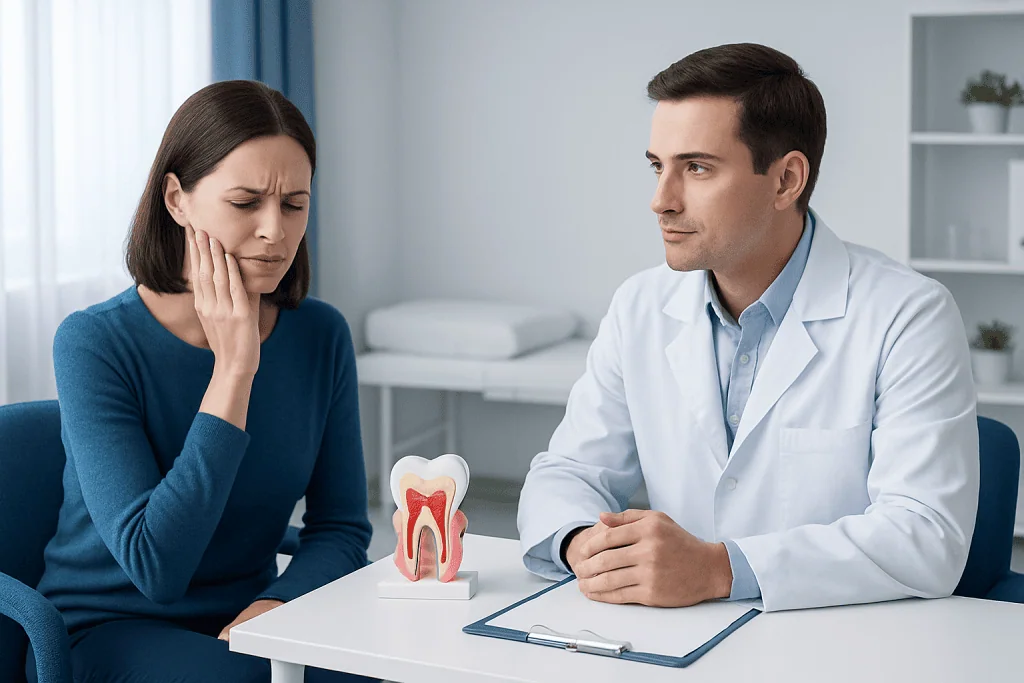
Teeth whitening products work by penetrating the enamel and breaking down stain molecules. During this process, the whitening agent can temporarily increase the movement of fluid within tiny channels in the tooth called dentinal tubules. When these tubules are stimulated, the nerve inside the tooth can react, causing sensitivity.
This type of sensitivity often appears during whitening treatment or within the first day afterward. It is usually more noticeable with cold air or cold drinks and commonly improves within a short period once whitening is paused or completed. People who already have worn enamel, exposed roots, or naturally sensitive teeth may notice stronger symptoms.
Gum irritation can also occur if whitening gel contacts soft tissues. This can add to overall discomfort but is usually temporary. Careful technique, following instructions closely, and choosing professionally guided whitening through aesthetic dentistry can help reduce the risk of unnecessary irritation.
If a person has untreated cavities, cracked teeth, or gum recession, whitening may trigger more intense sensitivity. In these situations, a dentist may recommend addressing the underlying problem first and considering preventive steps such as desensitizing products or a gentler whitening plan.
Why Fillings and Crowns May Trigger Sensitivity
After a filling, a tooth can be sensitive because decayed tissue was removed and the inner part of the tooth was disturbed. Even when treatment goes smoothly, the nerve may remain mildly inflamed for a short time. Sensitivity is more likely if the cavity was deep, close to the nerve, or involved a large portion of the tooth.
A new filling can also change the way the upper and lower teeth meet. If the filling is slightly too high, the treated tooth may take extra pressure during biting. This can cause soreness, especially when chewing. The same can happen after placement of a dental crown, particularly while the mouth adjusts to the new shape and fit.
Crowns may cause temporary sensitivity because the tooth is prepared by removing some outer structure, which can expose or irritate the underlying dentin. The gums around the tooth may also feel tender for a few days. In some cases, a crowned tooth becomes sensitive to heat or cold while the nerve settles.
If the tooth already had a large filling, crack, or previous trauma, it may be more vulnerable to longer-lasting symptoms after treatment. Some teeth eventually need additional care, such as endodontic treatment, if the pulp becomes irreversibly inflamed. However, many cases improve with time and a simple bite adjustment or monitoring.
Causes and Risk Factors for Ongoing Sensitivity
When sensitivity lasts longer than expected, there may be an underlying cause beyond normal healing. Common possibilities include a high filling or crown, exposed root surfaces, worn enamel, untreated decay, a cracked tooth, gum recession, or inflammation of the pulp inside the tooth. Teeth grinding can also increase stress on recently treated teeth and make symptoms more noticeable.
Some people are more likely to experience sensitivity than others. Risk factors include naturally thin enamel, frequent intake of acidic foods or drinks, aggressive brushing, gum recession, and a history of sensitive teeth. Existing conditions such as gum recession can expose the root surface, which is less protected than enamel and more reactive to temperature changes.
Dental habits also matter. Using a hard-bristled brush, whitening too often, clenching the teeth, or delaying regular checkups may all increase the chance of discomfort after treatment. Good preventive care through dental hygiene and routine dental review can help identify these issues early.
Occasionally, pain that seems to come from one tooth may actually be referred from another problem nearby, such as sinus pressure, gum inflammation, or a hidden crack. A careful dental examination is important if symptoms do not follow the expected pattern of improvement.
Diagnosis: How Dentists Find the Cause
When a patient reports sensitivity after whitening, fillings, or crowns, the dentist begins by asking when the discomfort started, what triggers it, how long it lasts, and whether it is improving. These details can help distinguish temporary sensitivity from nerve-related pain or a bite problem.
The examination may include checking the tooth and surrounding gums, testing the bite, and assessing how the tooth responds to cold or gentle tapping. If a recent filling or crown feels high, a small adjustment may bring quick relief. The dentist also looks for cracks, leakage around restorations, signs of decay, or gum recession.
Dental X-rays are sometimes needed, especially if the pain is persistent, spontaneous, or difficult to localize. Imaging can show deep decay, inflammation around the root, or problems under an existing restoration. In some practices, digital dentistry tools may help with precise evaluation of bite and restoration fit.
The goal of diagnosis is not only to find the reason for sensitivity, but also to avoid unnecessary treatment. Many teeth simply need time and protective care. Others need targeted correction, such as smoothing a bite contact, replacing a restoration, or treating the tooth nerve.
Treatment Options and What May Help
Treatment depends on the cause. If sensitivity is mild and follows a recent whitening session or routine restoration, the dentist may recommend observation, avoiding triggers, and using a desensitizing toothpaste. These products can help block pain signals or reduce fluid movement in the dentin over time.
For sensitivity after a filling or crown, adjusting the bite is often helpful if the tooth is taking too much pressure. If the tooth is irritated but otherwise healthy, symptoms may settle with time. A dentist may also suggest fluoride-based products or other office treatments to strengthen and protect the tooth surface.
If the problem is related to gum recession, enamel wear, or a crack, management focuses on addressing that issue directly. In more persistent cases, the restoration may need to be repaired or replaced. If the pulp inside the tooth is significantly inflamed or damaged, root canal treatment may be considered to relieve pain and preserve the tooth.
Self-medication should be cautious and temporary. People should avoid placing aspirin directly on the gum or using unproven home remedies, as these can irritate tissues. A qualified dentist can advise which options are safe and appropriate for the specific situation.
Prevention, Self-care, and When to See a Dentist
Simple habits can lower the chance of sensitivity and support recovery. Brushing gently with a soft toothbrush, using toothpaste for sensitive teeth, and limiting very hot, cold, sweet, or acidic foods for a short time can help. After whitening, spacing treatments appropriately and following product instructions carefully may reduce discomfort.
It is also helpful to avoid clenching or grinding the teeth, especially after a new filling or crown. If a person already has grinding-related symptoms, assessment for bruxism may be useful. Regular dental visits allow early treatment of enamel wear, gum problems, and cavities before they lead to stronger sensitivity.
A dentist should be contacted if sensitivity is severe, lasts longer than expected, becomes worse, or is associated with swelling, fever, a bad taste, or pain on biting that does not improve. A tooth that feels too tall after a filling or crown should also be checked, because a small bite adjustment may prevent prolonged irritation.
International patients seeking dental assessment may also wish to know that Acibadem International’s multidisciplinary specialists and JCI-accredited hospitals diagnose and treat dental conditions, including post-treatment sensitivity, with individualized evaluation and care.
Frequently asked questions
How long is tooth sensitivity normal after whitening?
Mild tooth sensitivity after whitening is often temporary and may improve within hours to a few days. In some people, especially those with naturally sensitive teeth, it can last a little longer. If the discomfort is strong, keeps returning, or does not improve, a dentist should evaluate it.
Is it normal to have sensitivity after a filling?
Yes, some sensitivity after a filling is common, especially if the cavity was deep or close to the tooth nerve. The tooth may react to cold, sweets, or pressure while it settles. If the pain is worsening, lingers for a long time, or chewing feels uneven, the filling may need to be checked.
Why does my new crown hurt when I bite down?
A crown may feel tender at first, but pain on biting can happen if the bite is slightly too high or if the tooth nerve is irritated. Sometimes the gums around the crowned tooth are also sore after the procedure. A dentist can examine the bite and make adjustments if needed.
Can tooth sensitivity mean the nerve is damaged?
Not always. Many cases of sensitivity are caused by temporary irritation and improve without major treatment. However, constant throbbing pain, lingering heat sensitivity, or pain that wakes a person from sleep can suggest more significant pulp inflammation and should be assessed promptly.
What can help calm sensitive teeth after dental work?
Using a soft toothbrush and a toothpaste designed for sensitive teeth can help. Avoiding very cold, very hot, acidic, or sweet foods for a short period may also reduce symptoms. If the tooth remains very reactive, a dentist may recommend fluoride or other desensitizing treatments.
When should someone seek urgent dental advice for sensitivity?
Urgent advice is important if sensitivity comes with facial swelling, fever, pus, a bad taste, or severe pain that is not easing. Care is also needed if a tooth feels cracked, becomes loose, or the pain starts suddenly and intensely. These symptoms may point to infection or another problem that should not wait.
References
- American Dental Association
- National Institute of Dental and Craniofacial Research
- Mayo Clinic
- NHS
- FDI World Dental Federation
This article is for general information only and is not a substitute for professional medical advice. Please consult a qualified doctor about your individual situation.
Explore treatments in Turkey — costs, top hospitals & a free quote
JCI-accredited · board-certified surgeons · reply within 24h
Add us as a Preferred Source to see more of our trusted health content across Google Search, AI Overviews and Discover.

Dental & Oral Health
Full-scope dental care from implants and aesthetics to oral and maxillofacial surgery.
158 specialists in this unitRelated Treatments
More from the Health Library



Related Specialists

Assoc. Prof. Dr. Ferit Bayram
Oral & Dental Health
Dt. Alara Naz Kenir
Oral & Dental Health
Dt. Gonca Katmer
Oral & Dental HealthDt. Doğa Baysal
Oral & Dental Health