Treatment for Ebmd: How It Works, Results and What to Expect

EBMD is a common corneal surface condition in which the outer corneal cells may not adhere normally. Mild EBMD may need only lubrication and follow-up, while recurrent erosions or visual symptoms can require procedures.
Key Takeaways
- EBMD is a common corneal surface condition in which the outer corneal cells may not adhere normally.
- Mild EBMD may need only lubrication and follow-up, while recurrent erosions or visual symptoms can require procedures.
- The best treatment depends on whether pain from erosions, irregular vision, or both are the main concerns.
- After a surface procedure, the corneal epithelium commonly closes over several days, but stable vision can take longer.
- Sudden severe eye pain, light sensitivity, reduced vision, or discharge should be assessed promptly.
Treatment for EBMD is tailored to symptoms and may include lubricating eye drops, ointment, treatment for dry eye, protective contact lenses, or procedures that help the corneal surface attach and heal more reliably. Many people have mild or no symptoms, while recurrent pain, erosions, or blurred vision may require care from an ophthalmologist, particularly a cornea specialist.
Overview: How Treatment for EBMD Works
Treatment for EBMD aims to protect the cornea, improve the attachment of its outer cell layer (the epithelium), and reduce symptoms such as morning pain, grittiness, light sensitivity, fluctuating vision, or recurrent corneal erosions. EBMD, also called epithelial basement membrane dystrophy or map-dot-fingerprint dystrophy, affects the cornea’s basement membrane, a thin layer that helps the epithelium remain securely attached.
Some people with this EBM disease have no symptoms and do not need active treatment. When symptoms occur, an ophthalmologist may begin with eye-surface care and progress to a procedure if erosions recur or irregular corneal shape continues to interfere with vision. The expected EBM results depend on the severity of surface irregularity, coexisting dry eye, and the chosen treatment.
Management is individualized. The purpose is not simply to remove discomfort temporarily, but to create conditions in which the corneal surface can heal and remain stable. An eye examination is important because dry eye, allergy, contact lens problems, infection, and other corneal disorders can produce similar symptoms.
Symptoms, Causes and How EBMD Is Diagnosed
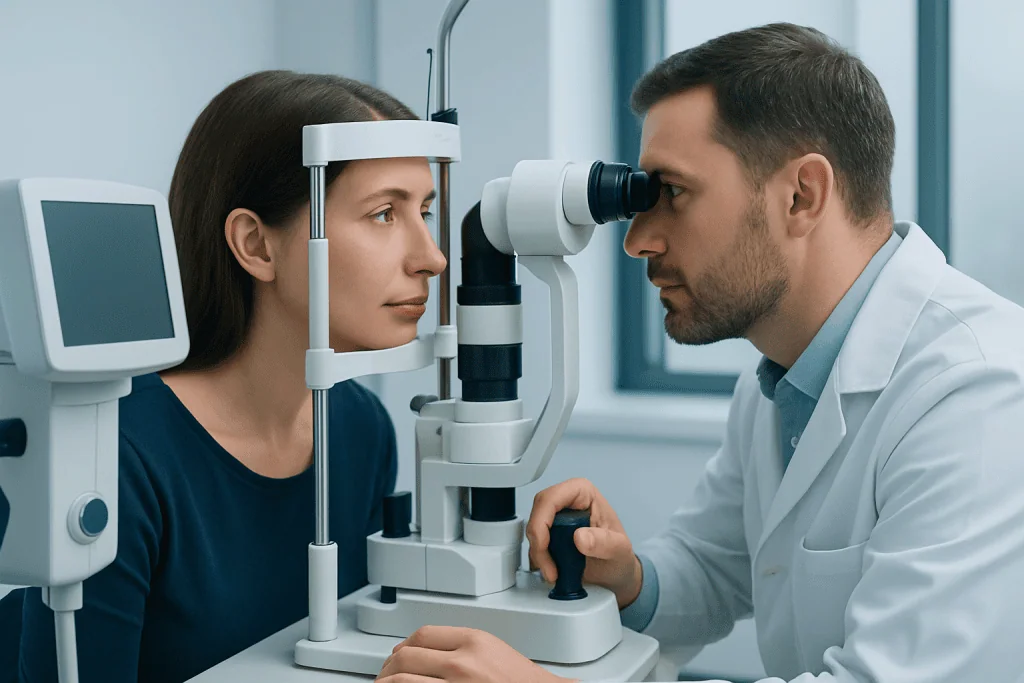
EBMD may cause no noticeable changes, especially when it affects only a small area of the cornea. In symptomatic cases, people may notice blurred or variable vision, glare, a foreign-body sensation, burning, tearing, or discomfort on waking. Recurrent corneal erosion can occur when the eyelid opens and pulls loose epithelium from the corneal surface, often causing sharp pain, redness, tearing, and sensitivity to light.
The condition may occur with age and can be present in more than one eye, although symptoms may be worse on one side. It is not usually caused by something a person did wrong. Previous corneal injury, dry eye, and certain eye-surface stresses can make erosions more likely in someone with underlying epithelial attachment problems.
An ophthalmologist diagnoses EBMD through a slit-lamp examination, often using fluorescein dye to highlight areas where the epithelium is irregular or loose. The characteristic patterns may resemble maps, dots, or fingerprints. Corneal topography or other imaging may be useful when irregularity affects vision or when planning a procedure.
What Is the Best Treatment for Epithelial Basement Membrane Dystrophy?

There is no single best treatment for epithelial basement membrane dystrophy for every person. The best option matches the main problem: lubrication and dry-eye treatment may be appropriate for mild irritation, while recurrent erosions may need protective measures or a corneal surface procedure. If the primary concern is poor-quality vision from an irregular central cornea, a different procedural approach may be considered.
Initial EBMD treatment options can include preservative-free artificial tears during the day and lubricating ointment or gel at bedtime. An ophthalmologist may also recommend treatment for eyelid inflammation or dry eye, because improving the tear film can lessen friction and support epithelial healing. During an acute erosion, short-term protective treatment may include antibiotic drops, pain relief strategies, or a bandage contact lens under medical supervision.
When conservative EBM treatment does not prevent repeated erosions, procedures may be discussed. Options can include epithelial debridement, in which poorly attached surface cells are removed; anterior stromal puncture for selected peripheral erosion areas; and phototherapeutic keratectomy (PTK), a laser procedure that can smooth selected superficial corneal irregularities. The most suitable option depends on the location and pattern of EBMD, visual needs, and the health of the rest of the eye.
Cornea specialists at Acibadem International’s JCI-accredited hospitals assess persistent corneal surface symptoms and discuss appropriate medical or procedural care for international patients.
Procedure-Based EBMD Treatment: Candidacy and Step-by-Step Care
A procedure is generally considered when recurrent erosions continue despite careful lubrication and eye-surface treatment, or when irregular corneal epithelium significantly affects vision. Before recommending intervention, the ophthalmologist checks for dry eye, blepharitis, infection, corneal scarring, and other factors that may affect healing. Pregnancy, certain systemic illnesses, medications, and contact lens use may also be relevant to planning.
For epithelial debridement, numbing drops are used first. The ophthalmologist gently removes loose or abnormal epithelium from the affected area so that healthier cells can grow back on a more stable surface. Depending on the clinical situation, the doctor may also use a polishing technique or another method to improve surface regularity. A bandage contact lens may be placed to protect the eye while the epithelium heals.
PTK is a laser-based surface procedure that may be considered for selected cases, especially where superficial irregularity affects the visual axis. After numbing the eye and removing the epithelium, the laser removes a very thin amount of superficial tissue to help create a smoother surface. The procedure is typically performed on an outpatient basis, but suitability must be determined through a detailed corneal assessment.
After either approach, patients usually receive instructions about prescribed eye drops, bandage lens care if used, avoiding eye rubbing, and follow-up appointments. It is important not to use leftover drops or over-the-counter redness-relief products unless the ophthalmologist approves them.
Can EBMD Get Better?
EBMD can become much more manageable, and many people experience fewer erosions, less discomfort, and clearer vision with appropriate care. However, the underlying tendency for epithelial attachment abnormalities may remain. Symptoms can fluctuate over time, particularly if dry eye or eyelid inflammation is also present.
For people with mild symptoms, regular lubrication and reducing overnight dryness may be enough to maintain comfort. For recurrent erosions, a procedure can improve the corneal surface and reduce episodes for many patients. Even after successful treatment, ongoing eye-surface care and follow-up can be useful because recurrence is possible.
Visual improvement also depends on the reason vision is blurred. If irregular epithelium is the major cause, smoothing or stabilizing the corneal surface may help. If cataract, refractive error, dry eye, or another eye condition is contributing, those issues may need separate evaluation and treatment.
How Long Does It Take for Corneal Epithelium to Grow Back?
After a small corneal abrasion or a surface procedure, the corneal epithelium often begins closing quickly and may cover the treated area within several days. The exact timing varies with the size and depth of the area, the presence of dry eye or inflammation, and the person’s overall health. The treating ophthalmologist confirms healing during follow-up rather than relying on symptoms alone.
Although the surface may close within days, comfort and vision may take longer to settle. Light sensitivity, tearing, foreign-body sensation, and fluctuating blur are common early recovery experiences after epithelial removal. Vision can be temporarily reduced while the new epithelium matures and the tear film stabilizes.
A bandage contact lens, if placed, is removed only by the eye-care team when the surface has healed adequately. Patients should attend scheduled checks even if the eye feels better, because a clinician needs to assess epithelial closure, signs of inflammation, and the risk of infection.
Benefits, Risks and Recovery Expectations
The potential benefits of treatment for EBMD include fewer episodes of recurrent corneal erosion, less morning pain and irritation, improved comfort, and more stable vision when surface irregularity is contributing to blur. Conservative care is less invasive and may control symptoms effectively. Procedures may offer a more durable improvement when symptoms persist despite appropriately used medical treatment.
All corneal treatments have possible risks. These can include temporary pain, light sensitivity, blurred vision during healing, delayed epithelial closure, inflammation, infection, haze, scarring, refractive changes, and recurrence of EBMD symptoms. The likelihood and relevance of these risks vary by procedure and individual eye health, so they should be reviewed carefully with the ophthalmologist.
Recovery plans commonly involve prescribed drops, close attention to hygiene, avoiding swimming or eye makeup until the clinician says it is safe, and protecting the eye from rubbing or trauma. People should ask when they can return to work, drive, exercise, and wear contact lenses, as these recommendations depend on healing and visual function rather than a fixed schedule.
When to Seek Medical Care
Medical care should be sought promptly for new or worsening eye pain, notable redness, light sensitivity, sudden blurred or reduced vision, swelling, discharge, or a feeling that something is stuck in the eye. These symptoms can occur with an erosion but can also signal infection or another urgent corneal problem that needs examination.
Anyone with repeated morning eye pain, recurrent episodes of tearing and sensitivity to light, or persistent fluctuating vision should arrange an assessment with an ophthalmologist. People who wear contact lenses should be especially cautious with painful red eyes and should remove their lenses unless an eye-care professional has specifically advised otherwise.
EBM how-to questions are best addressed with individualized guidance: avoid rubbing the eyes, use only recommended drops, and follow the clinician’s aftercare plan. Self-treating severe pain or using someone else’s antibiotic or steroid drops can delay appropriate diagnosis and may be unsafe.
Frequently asked questions
Is EBMD the same as map-dot-fingerprint dystrophy?
Yes. Epithelial basement membrane dystrophy is commonly called map-dot-fingerprint dystrophy because of the patterns an ophthalmologist may see on the cornea. It can also be described as anterior basement membrane dystrophy.
Does everyone with EBMD need treatment?
No. Many people have EBMD without symptoms and may only need routine eye examinations. Treatment is usually recommended when there is discomfort, recurrent corneal erosion, or visual disturbance related to the corneal surface.
Can eye drops cure EBMD?
Lubricating drops and ointments do not remove the underlying basement membrane changes. They can reduce dryness, friction, and symptoms, and may help prevent erosions in mild cases. Persistent or recurrent symptoms may require further treatment.
Is treatment for EBMD painful?
Surface procedures are performed with anesthetic eye drops, so significant pain is not expected during the procedure itself. Discomfort, tearing, and light sensitivity can occur while the epithelium heals afterward. The ophthalmologist can explain the expected recovery plan and symptom control options.
Can EBMD cause permanent vision loss?
EBMD is often manageable and does not usually cause permanent vision loss. However, recurrent erosions, scarring, infection, or significant corneal irregularity can affect vision and should be assessed promptly. New or sudden vision changes require urgent eye-care advice.
Can EBMD come back after a procedure?
Symptoms and epithelial irregularities can recur after treatment because EBMD reflects an underlying tendency of the corneal surface. A procedure may reduce recurrences and improve vision or comfort, but it cannot guarantee that future symptoms will not occur. Continued follow-up and eye-surface care may be recommended.
References
- American Academy of Ophthalmology
- National Eye Institute
- Mayo Clinic
- Merck Manual Consumer Version
This article is for general information only and is not a substitute for professional medical advice. Please consult a qualified doctor about your individual situation.
Explore treatments in Turkey — costs, top hospitals & a free quote
JCI-accredited · board-certified surgeons · reply within 24h
Add us as a Preferred Source to see more of our trusted health content across Google Search, AI Overviews and Discover.